7 juil. 2026
Explore the desert regions of Namibia, featuring stunning landscapes, unique wildlife, and cultural encounters. Your adventure awaits!
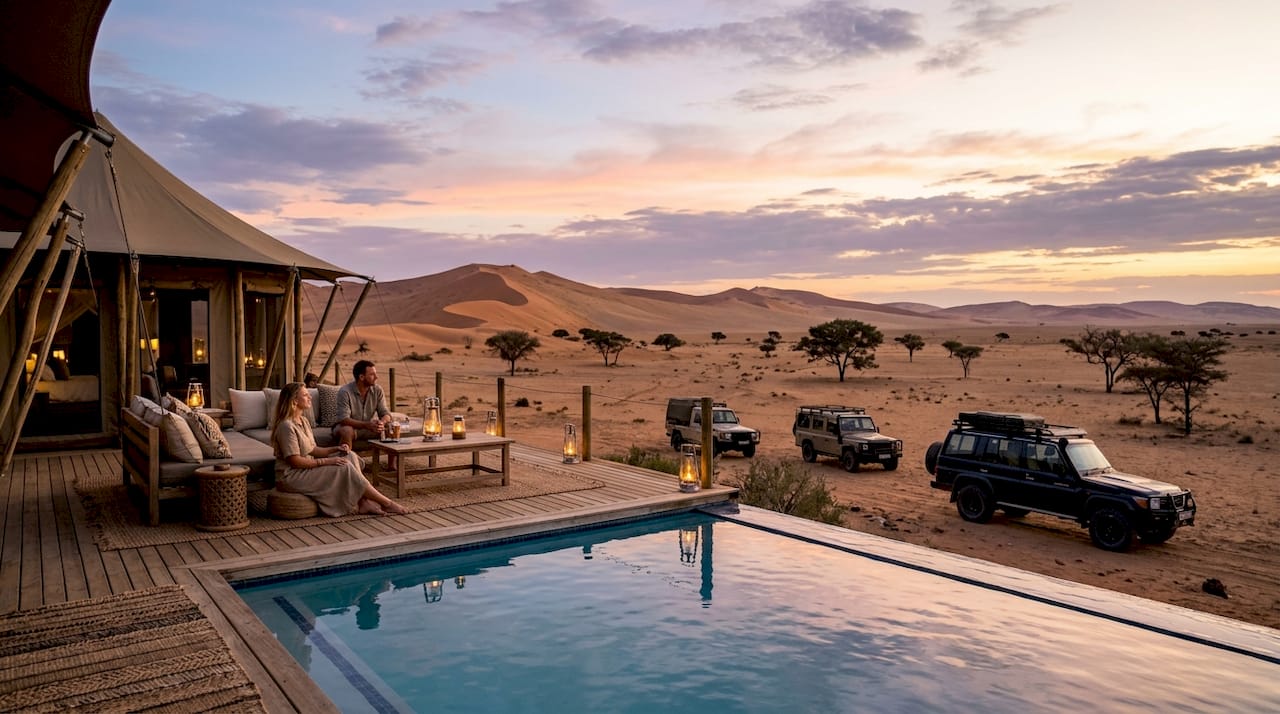
Desert regions of Namibia: the complete traveler’s guide
TL;DR:
Namibia’s deserts include the world’s oldest Namib and the semi-arid Kalahari, each with unique landscapes and wildlife. Conservation efforts and cultural encounters with the Himba and San peoples enhance travel experiences. Planning carefully and respecting fragile ecosystems are essential for a meaningful visit.
The desert regions of Namibia are defined by two of Africa’s most extraordinary arid zones: the Namib and the Kalahari. The Namib Desert is the world’s oldest desert, dating back over 55 million years and stretching approximately 1,930 kilometers along the Atlantic coast. Together, these vast landscapes offer travelers towering dunes, gravel plains, salt pans, and a wildlife spectacle unlike anywhere else on Earth. If you are planning an adventure that combines raw natural beauty with rich cultural encounters, Namibia’s deserts belong at the top of your list.
What are the primary desert regions of Namibia?
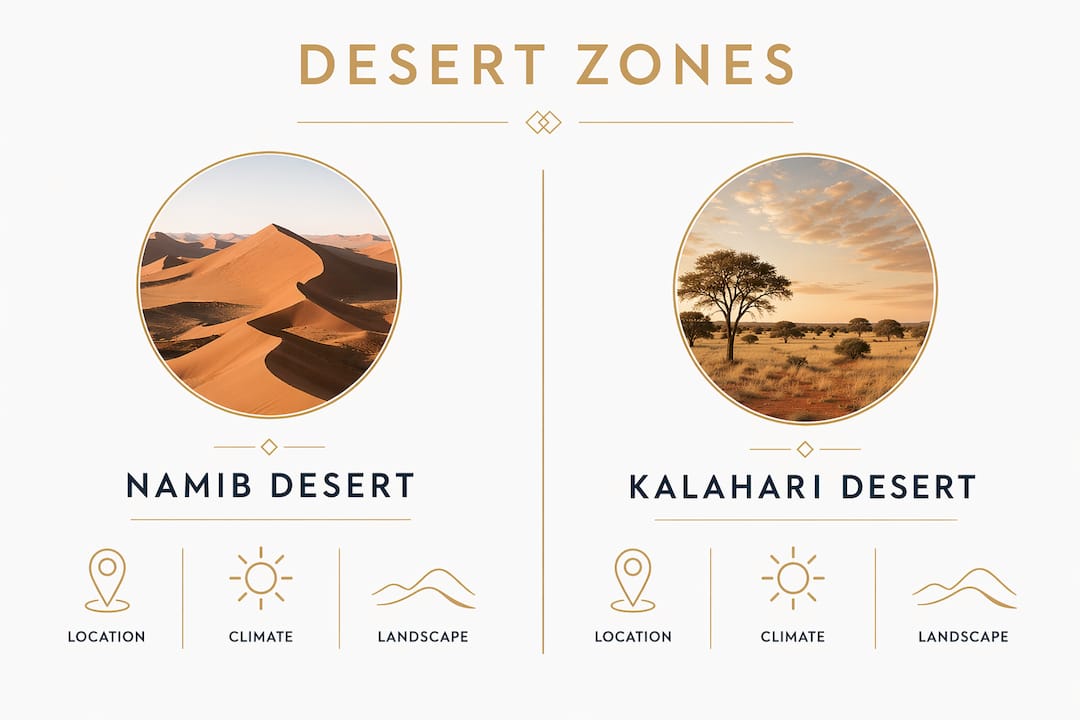
Namibia’s two dominant desert zones differ dramatically in character, climate, and ecology. Understanding those differences shapes how you plan your visit and what you prioritize seeing.
The Namib Desert is the star attraction for most travelers. Namib-Naukluft National Park covers over 50,000 square kilometers and features dunes reaching up to 400 meters high. That scale is genuinely difficult to grasp until you stand at the base of Dune 45 and look up. The Namib divides into two broad zones: the Outer Namib, a hyper-arid coastal strip shaped by Atlantic fog, and the Inner Namib, a gravel and sand plain that transitions toward the country’s interior highlands.
The Kalahari Desert occupies Namibia’s eastern reaches and tells a very different story. The Kalahari is a semi-arid savanna that receives seasonal rainfall, making it greener and more biologically diverse than the Namib. Grasses, shrubs, and acacia trees cover its red sand ridges, and the landscape transforms dramatically after the summer rains.
Two additional zones deserve attention:
Sperrgebiet (Forbidden Territory): A restricted diamond-mining zone along the southern coast, largely untouched and ecologically pristine, with guided access available through licensed operators.
Naukluft Mountains: A rugged quartzite massif rising from the desert floor, offering dramatic hiking and a striking contrast to the surrounding plains.
Desert zone | Location | Key landscape | Climate character |
|---|---|---|---|
Outer Namib | Atlantic coastal strip | Fog-fed gravel plains | Hyper-arid, cool coastal fog |
Inner Namib | Central sand sea | Towering red dunes | Hot days, cold nights |
Kalahari | Eastern Namibia | Red sand savanna | Semi-arid, seasonal rain |
Naukluft Mountains | Central Namibia | Quartzite gorges | Dry, high-altitude |
What unique wildlife and plant life exist in Namibia’s deserts?
Namibia’s desert wildlife is defined by extraordinary adaptation. These are not animals that merely survive in harsh conditions. They thrive, and watching them do so is one of the most memorable experiences Namibia offers.
The Namib Desert supports about 3,500 species of plants, half of which are endemic, sustained largely by coastal fog rather than rainfall. That fog rolls in from the Atlantic each morning, and the entire ecosystem is built around harvesting it. The Welwitschia mirabilis is the most remarkable example: a plant that can live for over a thousand years, drawing moisture directly from fog through its two permanent leaves. You will not find anything like it anywhere else on Earth.
Desert-adapted animals have developed equally fascinating survival strategies:
Oryx (gemsbok): Regulate their body temperature by allowing it to rise during the day, avoiding the need to sweat and lose precious water.
Desert-adapted lions: Found in the Skeleton Coast and Kunene regions, these lions travel vast distances to find prey and drink from desert springs. You can read more about desert-adapted lions and where to spot them on safari.
Namaqua chameleon: Absorbs morning fog through its skin and flattens its body to maximize sun exposure during cold mornings.
Quiver tree (Aloe dichotoma): Stores water in its trunk and branches, and was historically used by San hunters to make quivers for their arrows.
Wildlife viewing in the Namib is best concentrated around Sossusvlei, the Skeleton Coast, and the Naukluft foothills. The Kalahari, meanwhile, hosts gemsbok, springbok, bat-eared foxes, and the famous black-maned Kalahari lions.
Pro Tip: Visit Sossusvlei at first light. The dunes cast long, dramatic shadows in the early morning, and the temperature is cool enough for comfortable walking. By 10:00 AM, the heat becomes intense and the light flattens the landscape.
What cultural experiences can travelers find in Namibia’s deserts?
Namibia’s deserts are not empty. The Himba and San peoples inhabit these regions and offer some of the most authentic cultural encounters available anywhere in Africa. Their presence transforms a landscape visit into a genuinely human experience.
The Himba people live primarily in the Kunene region, on the northern edge of the Namib. They maintain a semi-nomadic pastoral lifestyle, and their distinctive appearance, including ochre-covered skin and elaborate hairstyles, reflects a deep cultural identity. Guided visits to Himba communities are available through licensed operators and provide insight into cattle herding, traditional medicine, and social structure. Approach these visits with respect: ask before photographing, purchase crafts directly from artisans, and follow your guide’s lead on etiquette.
The San people, one of the world’s oldest indigenous cultures, inhabit the Kalahari. Their knowledge of desert survival is extraordinary. San guides can identify edible plants, track animals across sand, and navigate by stars. A guided bush walk with a San tracker is not a tourist performance. It is a genuine education in reading a landscape that most visitors find completely illegible.
Seek out cultural experiences on safari that are community-endorsed and ethically managed.
Purchase crafts directly from artisans rather than from roadside resellers.
Learn a few words of greeting in Otjiherero or a local San language. The response you receive will be worth it.
Pro Tip: If you are planning a Himba community visit, arrange it through your lodge or a certified guide rather than independently. Ethical operators share revenue with the community and brief you on respectful conduct beforehand.
How to plan a visit to Namibia’s deserts: top attractions and travel tips
Namibia’s desert attractions are spread across a large country, so planning your route carefully makes the difference between a rushed trip and a deeply satisfying one.
The must-see Namib Desert attractions
Sossusvlei and Deadvlei: The iconic red dunes surrounding a white clay pan studded with ancient dead camel thorn trees. Deadvlei’s trees are estimated to be around 900 years old, preserved by the extreme aridity. Climb Dune 45 for a panoramic view of the entire dune sea at sunrise.
Sesriem Canyon: A narrow gorge carved by the Tsauchab River, just 1 kilometer from the Sossusvlei gate. It is accessible in the late afternoon when the light turns the rock walls gold.
Skeleton Coast: A hauntingly beautiful stretch of coastline where desert meets ocean, littered with shipwrecks and seal colonies. Fly-in access is the most practical option for most travelers.
Swakopmund: The coastal gateway to the Namib, offering adventure activities including quad biking, sandboarding, and kayaking with seals.
Getting there and getting around
Windhoek is the main international gateway, with direct flights connecting to Johannesburg, Cape Town, Frankfurt, and London. From Windhoek, Sossusvlei is approximately a 5-hour drive on well-maintained tar and gravel roads. Walvis Bay offers a closer coastal entry point for Namib-focused itineraries.
Self-drive is popular and rewarding, but a 4x4 vehicle is strongly recommended for any off-road exploration. Fly-in safaris cut travel time dramatically and open access to remote areas like the Skeleton Coast and Kaokoveld.
Accommodation options
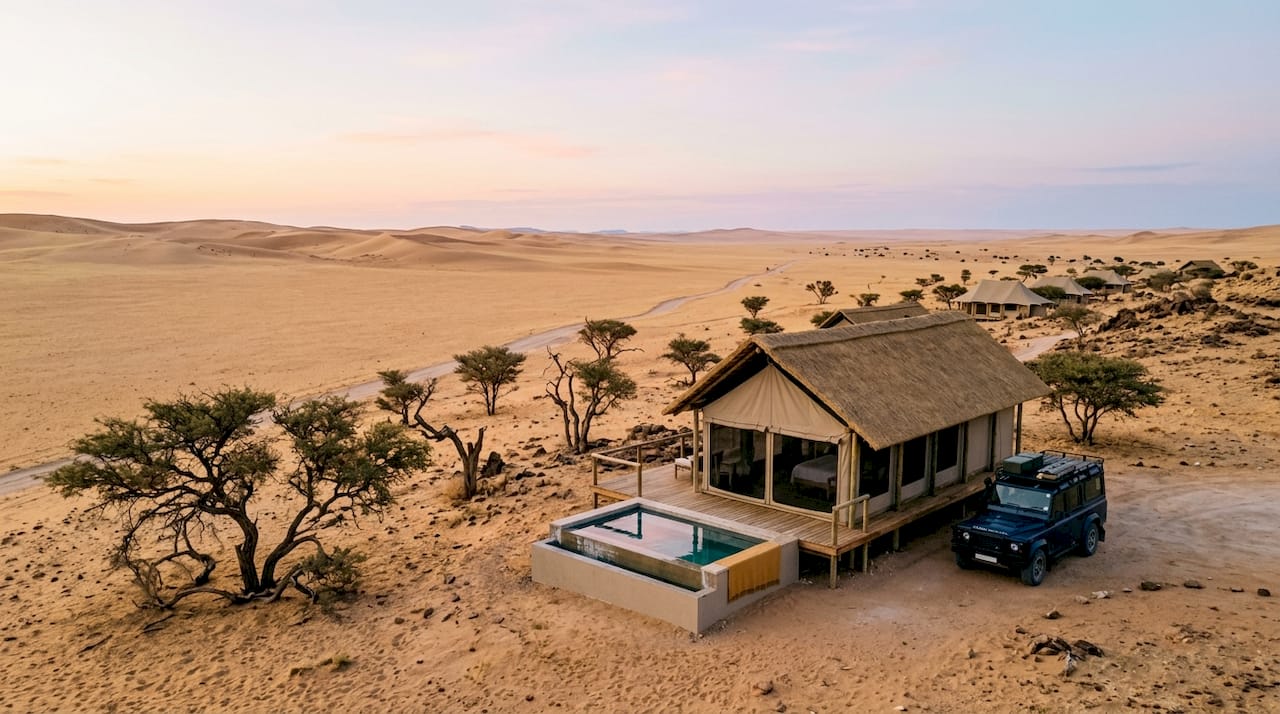
The range of lodges near Namibia’s deserts is impressive. Options span from intimate tented camps within the Namib-Naukluft Park concession area to architecturally striking luxury lodges perched on dune ridges. The Kulala Desert Lodge sits within a private concession bordering Namib-Naukluft, giving guests exclusive early access to Sossusvlei before the park gates open to day visitors. For families, the Desert Homestead Lodge offers comfortable, child-friendly facilities with guided activities suited to all ages.
If sustainable travel matters to you, Namibia leads Africa in community-based conservation. Several eco-friendly stays in Namibia operate within conservancies that return revenue directly to local communities.
Essential safety tips
Extreme temperature fluctuations are the defining physical challenge of desert travel. Daytime temperatures regularly exceed 40°C, while nights can drop close to freezing. Pack layers, carry at least 3 liters of water per person per day, and never underestimate the sun. Start any dune climb before 8:00 AM.
Tracks in fragile desert environments can remain visible for decades, so staying on established trails is not optional. It is the single most important thing you can do to protect the ecosystem you came to see.
Pro Tip: Book accommodation inside the Namib-Naukluft Park concession area rather than outside the gate. The 45-minute drive from the gate to Sossusvlei is beautiful, but staying inside means you reach the dunes at dawn, before the heat and the crowds.
What makes Namibia’s deserts unique among the world’s great deserts?
The Namib’s age alone sets it apart. At 55 million years old, it predates the Sahara by tens of millions of years and the Atacama by a similar margin. That geological seniority has produced a level of endemic biodiversity that younger deserts simply cannot match.
The Namib is not just old. It is the product of 55 million years of evolutionary pressure, producing species found nowhere else on Earth. Its fog-dependent ecosystem is one of the most specialized biological communities on the planet, and it exists because of a precise combination of cold ocean current, prevailing wind, and ancient geology that cannot be replicated.
Conservation in Namibia’s deserts is genuinely world-leading. Namibia was the first country in Africa to enshrine environmental protection in its constitution, and its community conservancy model has become a global template. Travelers who visit responsibly contribute directly to that system. Guided tours that focus on survival adaptations significantly enrich traveler appreciation of the desert’s dynamic ecosystem, and they support the local guides and communities who make conservation viable.
Key takeaways
The Namib Desert, at 55 million years old and stretching 1,930 kilometers along the Atlantic coast, is the world’s oldest desert and the defining feature of Namibia’s extraordinary arid landscape.
Point | Details |
|---|---|
Two distinct desert zones | The Namib and Kalahari differ sharply in climate, landscape, and wildlife, requiring separate planning considerations. |
Fog-dependent biodiversity | The Namib supports 3,500 plant species, half endemic, sustained by Atlantic fog rather than rainfall. |
Cultural depth | The Himba and San peoples offer authentic cultural encounters that transform a landscape trip into a human experience. |
Safety essentials | Temperature swings from 40°C days to near-freezing nights demand layered clothing, ample water, and early starts. |
Conservation responsibility | Tracks persist for decades in fragile desert soils, making trail adherence the most important visitor behavior. |
Why Namibia’s deserts reward those who slow down
Most travelers rush Sossusvlei. They arrive at the gate, climb one dune, photograph Deadvlei, and leave by noon. I understand the impulse. The scale of the place can feel overwhelming, and the heat pushes you back toward your vehicle. But the desert reveals itself slowly, and the travelers who stay longer, who walk with a guide at dusk, who sit quietly near a desert spring at dawn, those are the ones who come home changed.
What I have found, after years of guiding and planning trips through these landscapes, is that the desert’s real power lies in its silence. The Namib at 5:30 AM, before the wind picks up, is one of the quietest places on Earth. That silence is not empty. It is full of the sounds of fog beetles harvesting moisture, of oryx hooves on sand, of wind beginning to move the dune crests. You need time to hear it.
My honest advice: build at least three nights into any Namib itinerary, and pair your dune experience with a guided walk focused on desert ecology. The step-by-step safari itinerary that Secretnamibia offers is a good starting framework, but the best trips are the ones shaped around your pace, not a fixed schedule. Ask for flexibility. The desert will reward it.
— Secret
Namibia’s deserts, tailored to you
Secretnamibia specializes in crafting luxury Namibia safari experiences that go well beyond the standard Sossusvlei day trip. Whether you are drawn to a fly-in expedition along the Skeleton Coast, a family-friendly lodge stay in the dune sea, or an intimate tented camp within a private desert concession, the team at Secretnamibia builds itineraries around what you actually want to see and do.

Every safari is planned with expert knowledge of seasonal conditions, lodge access, and cultural experiences that most travelers never find on their own. If you are ready to plan your desert adventure, enquire with Secretnamibia and start building an itinerary that matches your vision of Namibia.
FAQ
How old is the Namib Desert?
The Namib Desert is the world’s oldest desert, dating back over 55 million years. That age has produced a level of endemic biodiversity unmatched by any other desert on Earth.
What is the best time to visit Namibia’s deserts?
The cooler, dry months from may through september offer the most comfortable conditions for dune climbing and wildlife viewing. The summer months bring heat exceeding 40°C but also dramatic thunderstorms and green Kalahari landscapes.
What wildlife can I see in the Namib Desert?
The Namib is home to oryx, desert-adapted lions, Namaqua chameleons, and over 3,500 plant species including the ancient Welwitschia mirabilis. Wildlife sightings concentrate around water sources and the park’s interior plains.
Is a 4x4 vehicle necessary for exploring Namibia’s deserts?
A 4x4 is strongly recommended for any off-road or gravel road driving in Namibia’s desert regions. The main road to Sossusvlei is accessible by sedan, but most lodges and remote attractions require high clearance.
How do I visit Himba or San communities ethically?
Book community visits through your lodge or a certified guide who shares revenue with the community and briefs you on respectful conduct. Avoid independent visits and always ask permission before taking photographs.
Recommended
LIÉ
Guides Safari
30 oct. 2025
Understanding What is Included in Luxury Safaris
Explore what is included in luxury safaris, from exclusive accommodations to bespoke experiences that cater to discerning travelers.
24 févr. 2026
Why Namibia Adventures Matter: An In-Depth Look
Discover why Namibia adventures are essential for luxury travelers seeking unique, immersive experiences in nature and wildlife exploration.
23 févr. 2026
What to Expect on a Luxury Safari: A Comprehensive Guide
Discover what to expect on a luxury safari and gain a deeper understanding of the unique experiences that await you in the wild.
22 févr. 2026
Understanding Namibia Safari Costs Explained
Explore Namibia safari costs explained to uncover what influences pricing and what it means for your adventure.
21 févr. 2026
Understanding the Role of Safari Experts in Wildlife Travel
Explore the role of safari experts and gain a comprehensive understanding of how they enhance wildlife travel experiences for all types of travelers.
20 févr. 2026
Guide organisation safari all inclusive : vivez l'aventure de vos rêves
Découvrez notre guide organisation safari all inclusive étape par étape pour planifier un voyage inoubliable au cœur de la nature.