Apr 8, 2026
Discover Namibia's Skeleton Coast: 1,000 shipwrecks, desert-adapted wildlife, and dramatic landscapes. Your guide to exploring this iconic wilderness in luxury.
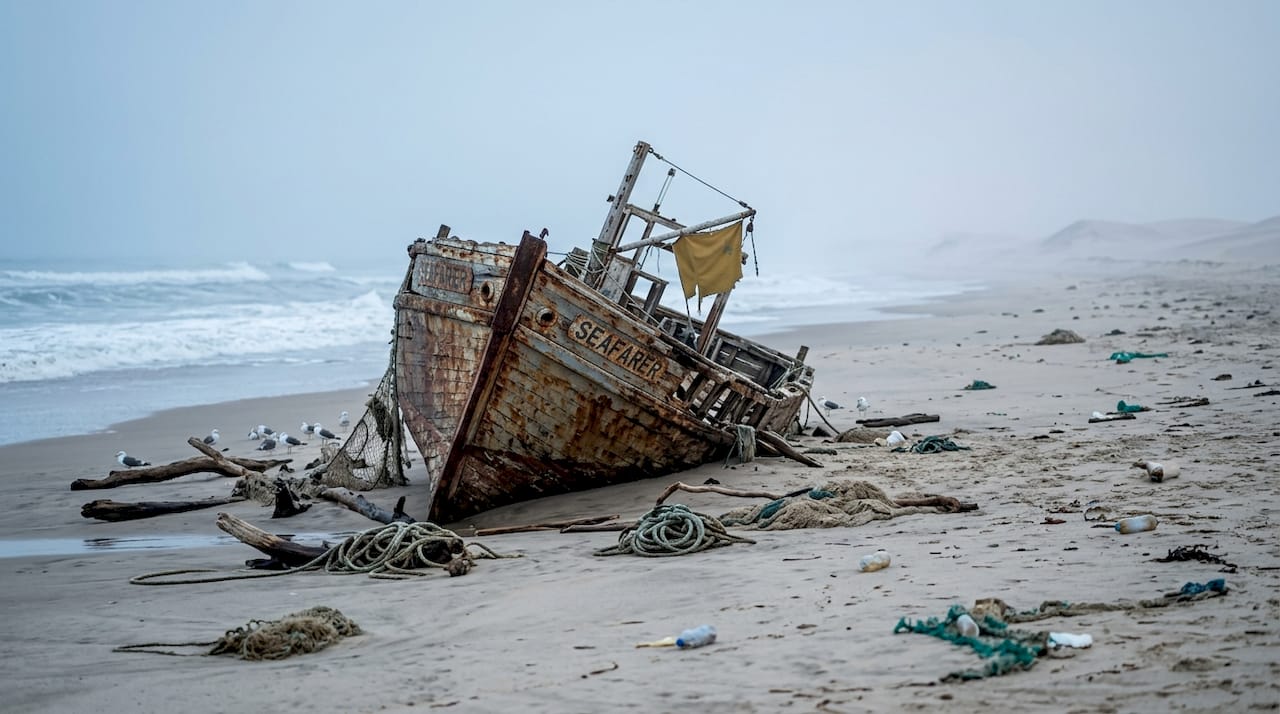
Skeleton Coast Namibia: 1,000 shipwrecks and wild beauty
TL;DR:
The Skeleton Coast stretches 500 km along Namibia’s Atlantic shoreline, featuring dramatic landscapes and shipwrecks.
Its ecosystems host desert-adapted wildlife, including elephants, lions, and large seal colonies.
Access is primarily through guided safaris and lodges, emphasizing conservation and responsible tourism.
Over 1,000 shipwrecks lie scattered along Namibia’s Skeleton Coast, a stretch of Atlantic shoreline so unforgiving that indigenous San people named it ‘The Land God Made in Anger.’ Yet this is no bleak wasteland to be avoided. It is one of Africa’s most extraordinary destinations, where desert meets ocean, ancient history collides with raw wilderness, and desert-adapted wildlife defies every expectation. If you’ve ever been drawn to places that feel genuinely untamed, the Skeleton Coast will exceed anything you imagined. This guide covers everything you need to know: its geography, remarkable landscapes, infamous shipwrecks, incredible wildlife, and how to experience it all in comfort and style.
Table of Contents
Where is the Skeleton Coast?
The landscape: Desolation and natural wonders
Why ‘Skeleton’? Shipwrecks, bones, and infamous history
Wildlife and the fragile Skeleton Coast ecosystem
Experiencing the Skeleton Coast: Modern adventures and luxury
A perspective on the Skeleton Coast’s allure and conservation
Experience the Skeleton Coast with a luxury safari
Frequently asked questions
Key Takeaways
Point | Details |
|---|---|
Vast and dramatic location | The Skeleton Coast stretches along 500 km of Namibia’s northern shoreline, offering stark, unique landscapes. |
Unmatched shipwreck history | Over 1,000 shipwrecks and animal bones gave the region its name and legendary reputation for peril. |
Rich wildlife and ecology | Despite arid conditions, desert-adapted animals, massive seal colonies, and rare plants thrive along the coast. |
Adventure with care | Guided tours and strict conservation guidelines allow travelers to explore responsibly and safely. |
Where is the Skeleton Coast?
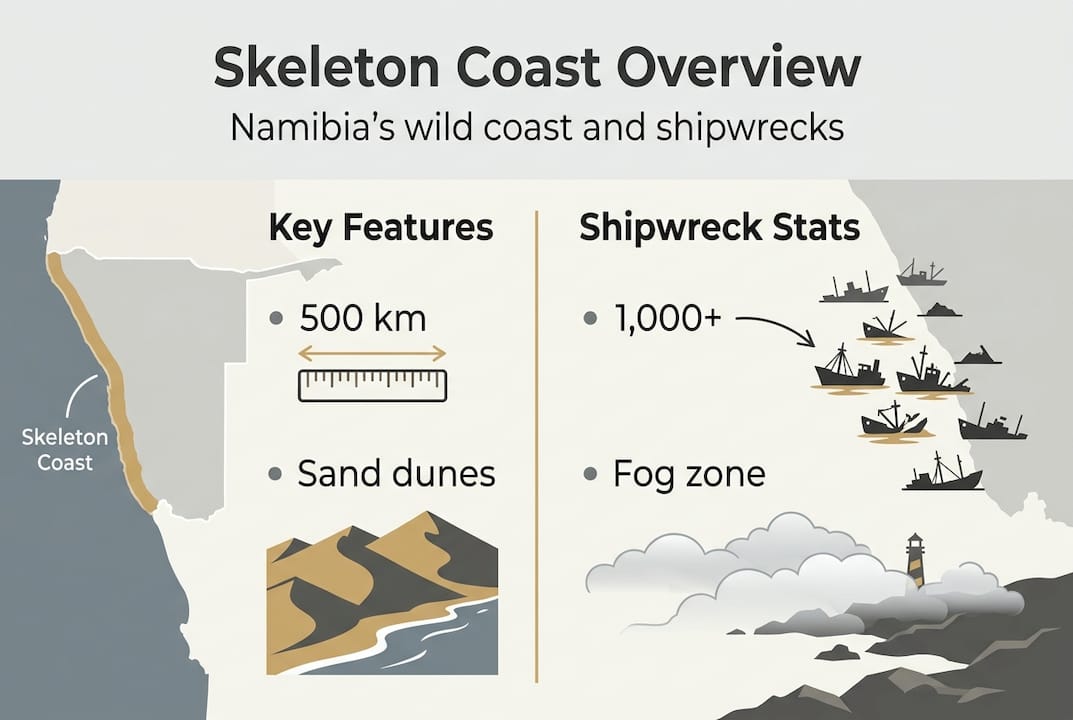
Now that you know why the Skeleton Coast is famed worldwide, let’s pinpoint exactly where it lies and how its geography shapes its legend. The Skeleton Coast stretches approximately 500 km along the northern Atlantic coastline of Namibia, running from the Kunene River in the north, which forms the border with Angola, down to the Ugab or Swakop River in the south. It is bounded to the west by the cold, churning South Atlantic Ocean and to the east by the vast Namib Desert interior.
This remarkable Skeleton Coast region is divided into two distinct zones. The southern section, between the Ugab and Hoanib rivers, is more accessible and forms part of the broader Skeleton Coast National Park. The northern section, from the Hoanib River to the Kunene, is a strictly controlled wilderness area where access is limited to licensed fly-in operators only. That exclusivity alone makes it one of the most coveted destinations in all of Africa.
Feature | Detail |
|---|---|
Total length | Approximately 500 km |
Northern boundary | Kunene River (Angola border) |
Southern boundary | Ugab or Swakop River |
Park area | 16,000 sq km |
Northern zone access | Licensed fly-in operators only |
Climate | Extremely arid, under 10mm rainfall per year |
The landscape transitions dramatically as you travel north. Gravel plains and rocky outcrops give way to towering sand dunes, and the rivers that cut through the terrain create unexpected ribbons of green. Experiencing Skeleton Coast in its full geographic range is genuinely like visiting two different worlds within one extraordinary place.
The landscape: Desolation and natural wonders
Having set the scene geographically, let’s journey through the Skeleton Coast’s distinctive landscapes and discover their stark beauty. The terrain here is unlike anywhere else on earth, shaped by the collision of desert aridity and Atlantic moisture into something that feels almost otherworldly.
The natural highlights of the Skeleton Coast include a remarkable variety of landforms:
Southern gravel plains: Vast, flat expanses of wind-polished stone that shimmer under the desert sun
Northern sand dunes: Towering formations that shift and reshape with the prevailing winds
Rocky outcrops and inselbergs: Ancient granite formations rising abruptly from flat terrain
Hoarusib and Hoanib river canyons: Dramatic gorges carved by seasonal floodwaters, sheltering surprising pockets of life
Clay castles: Uniquely eroded formations sculpted by wind and rare rainfall into haunting, castle-like shapes
The landscape features gravel plains, high sand dunes, rocky outcrops, canyons, and clay castles that together create a visual drama you simply cannot find elsewhere. Rainfall here averages under 10mm per year, making it one of the driest inhabited coastlines on the planet. Yet the Atlantic fog rolls in almost daily, coating the landscape in a ghostly mist that sustains an entire ecosystem of fog-dependent plants and animals.
“The Skeleton Coast is not empty. It is full — full of silence, full of ancient forces, and full of life that has learned to thrive where nothing should survive.”
For those who appreciate raw, elemental beauty, the Shipwreck Lodge positions you perfectly within this landscape, offering an immersive base from which to absorb the drama of the terrain. The things to see and do in this region are as varied as the landforms themselves, from canyon walks to dune explorations at golden hour.
Why ‘Skeleton’? Shipwrecks, bones, and infamous history
The lifeless beauty of the wilderness is rivaled only by its deadly reputation. Let’s explore the shipwrecks and stories that shaped its ominous name. The coast earned its grim title from the whale and seal bones that once littered the beaches, later joined by the wreckage of countless ships caught out by treacherous conditions.
The cold Benguela Current sweeps northward along the coast, creating dense fog, strong winds, and heavy surf that made navigation extraordinarily dangerous for centuries. Sailors who survived a wreck faced an equally grim fate: an arid desert with no fresh water and no escape route. The indigenous San called it ‘The Land God Made in Anger’, while Portuguese explorers named it ‘Gates of Hell,’ both names reflecting the same brutal reality.
Some of the most iconic Skeleton Coast attractions are the wrecks themselves:
Eduard Bohlen (1909): Perhaps the most photographed, this rusting hulk now sits hundreds of metres inland as the desert has claimed the shoreline around it
Dunedin Star (1942): A dramatic wartime rescue story unfolded here, with the rescue ship also running aground
Bom Jesus (~1533): The oldest known wreck on the coast, discovered in 2008 with a remarkable cargo of copper ingots and gold coins
Montrose: A haunting silhouette visible at low tide, slowly being consumed by sand and sea
Pro Tip: The Eduard Bohlen wreck is best visited in the early morning when the light is soft and the desert fog creates an almost surreal atmosphere around the rusting hull. A guided excursion from Shipwreck Lodge makes this experience truly unforgettable.
Wreck | Year | Claim to fame |
|---|---|---|
Bom Jesus | ~1533 | Oldest known wreck on the coast |
Eduard Bohlen | 1909 | ‘Ship in the desert,’ now inland |
Dunedin Star | 1942 | Famous wartime rescue drama |
Wildlife and the fragile Skeleton Coast ecosystem
Beyond its grim past, the Skeleton Coast teems with remarkable life. Animals and plants uniquely adapted to the most challenging conditions on earth call this place home, and encountering them is one of the great privileges of visiting this region.
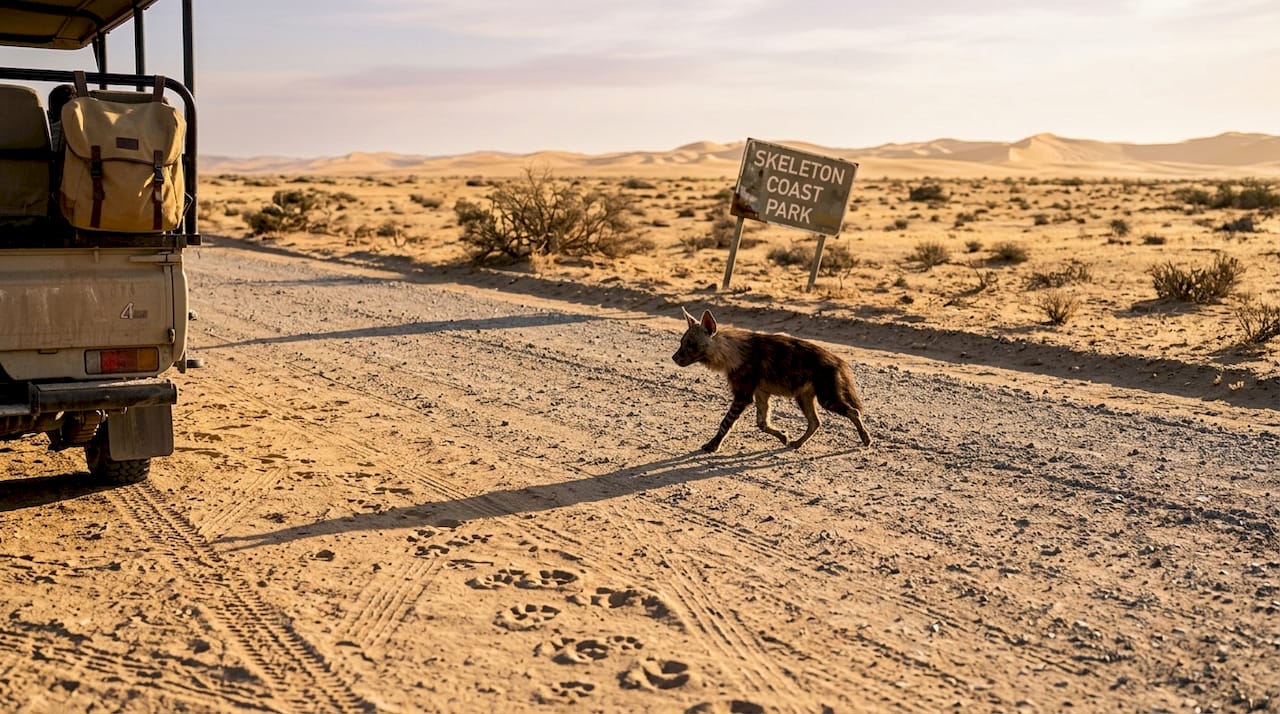
Skeleton Coast National Park covers 16,000 sq km, protecting an extraordinary array of desert-adapted wildlife including elephants, lions, brown hyenas, oryx, jackals, and giraffes. The Cape fur seal colonies at Cape Fria and Cape Cross are among the largest in the world, with tens of thousands of seals hauling out on the rocky shores. Watching them is a spectacle that is simultaneously chaotic, noisy, and utterly magnificent.
Key wildlife highlights include:
Desert-adapted elephants: These remarkable animals travel vast distances to find water, digging in dry riverbeds with their feet
Desert lions: Among the rarest large predators on earth, these desert lions have adapted to survive on coastal prey including seals
Brown hyenas and black-backed jackals: Skilled scavengers that patrol the shoreline for stranded marine life
Cape fur seals: Enormous colonies that attract predators and provide extraordinary wildlife viewing opportunities
Did you know? The cold Benguela Current that makes navigation so dangerous also creates nutrient-rich upwelling that feeds the massive seal colonies and supports the entire coastal food chain.
The ecosystem here is genuinely fragile. Ancient lichen fields, some thousands of years old, can be destroyed by a single tyre track. Pro Tip: Always follow your guide’s instructions precisely when moving through lichen-covered terrain, and book guided excursions with operators who take conservation seriously.
Experiencing the Skeleton Coast: Modern adventures and luxury
With all these wonders and challenges in mind, how can you actually explore the Skeleton Coast for yourself, safely and meaningfully? The good news is that access has never been better, provided you choose the right approach.
Here are the best ways to experience this iconic wilderness:
Fly-in luxury safaris: The northern wilderness zone is accessible only by light aircraft, making fly-in safaris the ultimate way to reach the most remote and spectacular areas in complete comfort
Guided lodge-based exploration: Staying at a dedicated lodge such as Shipwreck Lodge or Hoanib Skeleton Coast Camp gives you expert guides, exclusive access, and a genuinely immersive base
Self-drive southern section: The southern zone between Ugab and Hoanib rivers can be explored by self-drive, though a 4x4 vehicle and solid navigation skills are absolutely essential
Guided walking and quad excursions: Many lodges offer guided walks and adventure activities that get you close to the landscape in ways a vehicle simply cannot
Shipwreck tours: Dedicated excursions to iconic wrecks like Eduard Bohlen are a highlight of any visit and require expert guidance for both access and context
Modern risks are low with experienced guides, but the fragile lichen fields and remote terrain mean strict track adherence and conservation awareness remain non-negotiable. This is not a destination for improvisation. It rewards those who plan carefully and travel with respect.
A perspective on the Skeleton Coast’s allure and conservation
Here is something worth considering honestly: the Skeleton Coast’s greatest luxury is not the lodges or the fly-in access, remarkable as those are. It is the emptiness. The vast, uncompromised, almost confrontational emptiness that so few places on earth still offer.
Most celebrated destinations have been softened for mass consumption. The Skeleton Coast has not, and cannot be. Its climate, its remoteness, and its fragile ecosystems enforce a natural exclusivity that no velvet rope or price point could replicate. That is precisely why it attracts travelers who have seen much of the world and still hunger for something genuinely unrepeatable.
Responsible travel here is not a marketing phrase. It is the only reason this wilderness remains what it is. When you choose conservation-conscious operators and follow every guideline your expert sets, you are not simply being a good tourist. You are actively preserving the conditions that make the experience extraordinary in the first place. As we explore luxury Namibia exploration more broadly, the Skeleton Coast stands as the clearest reminder that the most precious experiences are those that demand something of you.
Experience the Skeleton Coast with a luxury safari
If the Skeleton Coast has captured your imagination, Secret Namibia is ready to help you turn that fascination into an unforgettable journey. Our expertly curated Namibia luxury safaris are designed to place you in the heart of this remarkable wilderness with the comfort, safety, and expert knowledge that make every moment count.
From fly-in expeditions to the remote northern wilderness to lodge-based adventures along the southern coast, our tailored adventure safaris are built around your interests and travel style. Encounter desert-adapted elephants, photograph iconic shipwrecks, and witness seal colonies in their thousands. Discover the unforgettable Skeleton Coast with guides who know every dune, canyon, and wreck intimately. Get in touch with our team today to start planning your bespoke Skeleton Coast experience.
Frequently asked questions
Why are there so many shipwrecks on the Skeleton Coast?
The cold Benguela Current generates dense fog and dangerous surf that made coastal navigation treacherous for centuries, resulting in over 1,000 estimated shipwrecks along this stretch of coastline.
What wildlife can you see on the Skeleton Coast?
The 16,000 sq km national park protects desert-adapted elephants, lions, brown hyenas, jackals, giraffes, oryx, and enormous Cape fur seal colonies at Cape Cross and Cape Fria, alongside unique fog-dependent plant communities.
How can travelers explore the Skeleton Coast safely?
The safest and most rewarding approach is to travel with expert guides or stay at dedicated safari lodges, as the remote terrain, fragile lichen fields, and restricted northern zones all require local knowledge and strict conservation adherence.
Why is the Skeleton Coast known as ‘The Land God Made in Anger’?
The indigenous San people used this name to capture the region’s extreme inhospitality, a sentiment echoed by Portuguese explorers who called it the ‘Gates of Hell,’ both reflecting the near-impossible survival conditions for shipwreck survivors.
Recommended
RELATED
Safari Guides
Oct 30, 2025
Understanding What is Included in Luxury Safaris
Explore what is included in luxury safaris, from exclusive accommodations to bespoke experiences that cater to discerning travelers.
Feb 24, 2026
Why Namibia Adventures Matter: An In-Depth Look
Discover why Namibia adventures are essential for luxury travelers seeking unique, immersive experiences in nature and wildlife exploration.
Feb 23, 2026
What to Expect on a Luxury Safari: A Comprehensive Guide
Discover what to expect on a luxury safari and gain a deeper understanding of the unique experiences that await you in the wild.
Feb 22, 2026
Understanding Namibia Safari Costs Explained
Explore Namibia safari costs explained to uncover what influences pricing and what it means for your adventure.
Feb 21, 2026
Understanding the Role of Safari Experts in Wildlife Travel
Explore the role of safari experts and gain a comprehensive understanding of how they enhance wildlife travel experiences for all types of travelers.
Feb 20, 2026
Guide organisation safari all inclusive : vivez l'aventure de vos rêves
Découvrez notre guide organisation safari all inclusive étape par étape pour planifier un voyage inoubliable au cœur de la nature.