
Apr 14, 2026
Discover what UNESCO World Heritage Sites really mean, how sites earn the status, and why Namibia's two inscribed wonders belong on your luxury safari itinerary.
UNESCO World Heritage Sites: meaning, criteria & Namibia
TL;DR:
UNESCO World Heritage Sites are locations of exceptional cultural or natural value that belong to all humanity.
The designation involves a rigorous multi-year process, including evaluation by international experts and community involvement.
Namibia’s two sites, Twyfelfontein and the Namib Sand Sea, offer unique cultural and natural experiences that benefit from responsible tourism.
You’ve probably seen the phrase ‘UNESCO World Heritage Site’ on a travel brochure or a trailhead sign and nodded approvingly, assuming it simply means ‘impressive place worth visiting.’ But there’s a remarkable story behind that designation, one involving global committees, rigorous scientific evaluation, and a profound commitment to preserving our shared human and natural legacy. This guide breaks down exactly what UNESCO World Heritage status means, how a site earns it, and why Namibia’s two inscribed sites deserve a prominent place on your luxury safari itinerary. By the end, you’ll plan your travels with a far richer understanding.
Table of Contents
What is a UNESCO World Heritage Site?
How does a site earn UNESCO World Heritage status?
The global landscape: How many sites and what types?
Namibia’s World Heritage Sites: Unique stories and travel inspiration
Why UNESCO status matters: Preservation, tourism, and the ‘Five Cs’
What most travelers miss about UNESCO World Heritage Sites
Craft your luxury Namibian heritage adventure
Frequently asked questions
Key Takeaways
Point | Details |
|---|---|
UNESCO designation explained | World Heritage Sites are protected places of global culture or nature, chosen for their unique value. |
Strict selection criteria | A site must meet at least one of ten demanding UNESCO criteria to earn its place on the list. |
Namibia’s unique sites | Namibia boasts two outstanding World Heritage Sites—perfect additions to luxury safari itineraries. |
Travel impact and responsibility | UNESCO status brings both opportunity and challenge, making responsible tourism vital for sustaining these treasures. |
What is a UNESCO World Heritage Site?
The term gets used loosely in travel circles, but its official meaning is precise and weighty. A UNESCO World Heritage Site is a cultural, natural, or mixed site of outstanding universal value inscribed on the World Heritage List under the 1972 Convention concerning the Protection of the World Cultural and Natural Heritage. That phrase, ‘outstanding universal value,’ is the gold standard. It means a site’s significance transcends national borders and belongs, in a very real sense, to all of humanity.
The UNESCO official site describes three broad categories. Cultural sites include monuments, groups of buildings, and landscapes shaped by human creativity and history. Natural sites encompass geological formations, ecosystems, and habitats of exceptional biodiversity. Mixed sites carry both cultural and natural significance simultaneously.
“Outstanding universal value means cultural and/or natural significance which is so exceptional as to transcend national boundaries and to be of common importance for present and future generations of all humanity.” — UNESCO World Heritage Convention
What makes this designation so powerful is the responsibility it places on host countries. Once a site is inscribed, the government commits to protecting and preserving it for future generations, not just for its own citizens but for the world. This is why travelers often notice stricter access rules, conservation measures, and community involvement programs at these locations. The prestige is real, but so is the obligation. For travelers, visiting a World Heritage Site means engaging with something genuinely irreplaceable.
How does a site earn UNESCO World Heritage status?
The path to inscription is far more demanding than most travelers realise. It’s a multi-year process that requires governments, scientists, local communities, and international experts to work in close collaboration.
Here’s how the nomination process unfolds:
The country (called a State Party) identifies potential sites and adds them to a Tentative List, which can span years of preparation.
The State Party prepares a detailed nomination file, a document that can run hundreds of pages, covering history, significance, management plans, and conservation strategies.
Independent advisory bodies evaluate the file. ICOMOS (International Council on Monuments and Sites) assesses cultural nominations, while IUCN (International Union for Conservation of Nature) reviews natural ones.
The World Heritage Committee, made up of representatives from 21 elected countries, meets annually to make the final inscription decision.
The ten UNESCO criteria that sites must satisfy are split into cultural (i to vi) and natural (vii to x) categories. A site needs to meet at least one.
Category | Criteria | Focus |
|---|---|---|
Cultural | i to vi | Human creativity, interchange of values, civilisations, traditions, heritage, living traditions |
Natural | vii to x | Natural beauty, geological processes, biodiversity, ecosystems |
Pro Tip: Many people focus on the grandeur of a site and overlook two factors that can make or break a nomination: the management plan and community engagement. Evaluators scrutinise whether local communities are involved in stewardship. Sites that exclude communities rarely succeed, and those that do succeed are often more rewarding to visit because local voices shape the experience.
The global landscape: How many sites and what types?
The sheer scale of the World Heritage programme is staggering. Over 1,200 World Heritage Sites exist across 196 countries, and the list continues to grow each year as new nominations are evaluated.
Type | Approximate number | Ratio |
|---|---|---|
Cultural | ~950 | ~78% |
Natural | ~220 | ~18% |
Mixed | ~40 | ~4% |
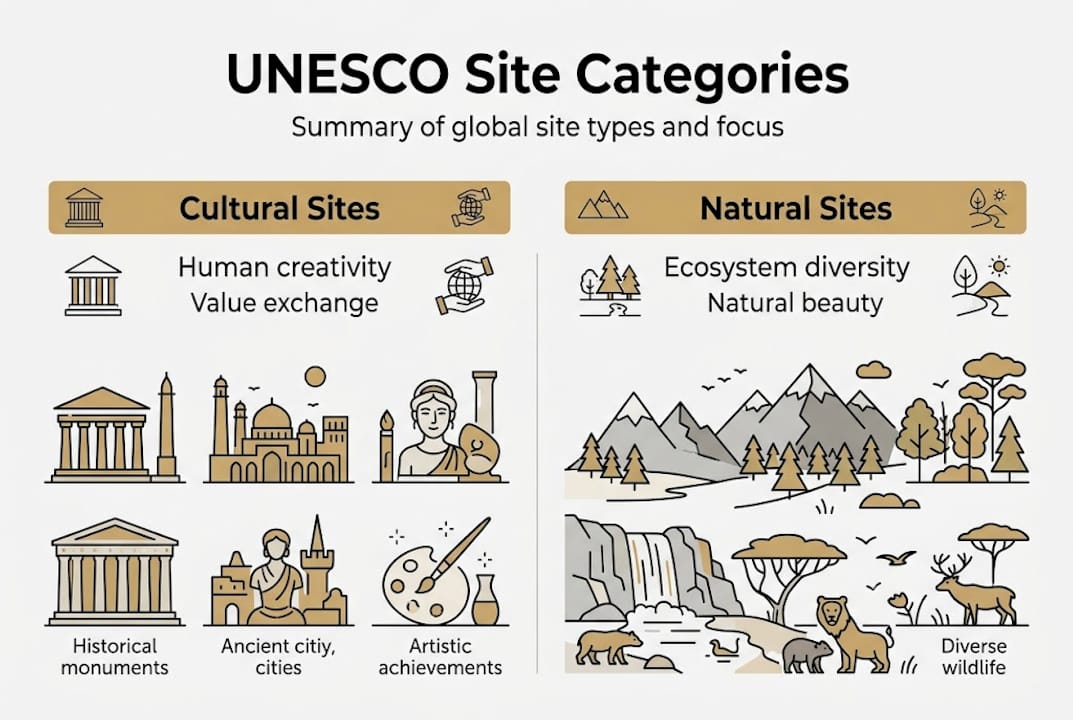
Cultural sites dominate the list at roughly a 3:1 ratio over natural ones. This reflects the sheer volume and diversity of human history across continents, from ancient temples to living cultural landscapes. Natural sites, though fewer, are often the most visually dramatic.
Here are some famous examples across each type:
Cultural: The Great Wall of China, Machu Picchu, the Acropolis of Athens, Angkor Wat
Natural: The Serengeti, the Great Barrier Reef, the Galápagos Islands, the Namib Sand Sea
Mixed: Machu Picchu (Peru), Mount Athos (Greece), Tongariro National Park (New Zealand)
One fascinating and counter-intuitive fact: Europe and North America hold a disproportionately large share of inscribed sites compared to Africa and the Pacific, largely because wealthier nations have more resources to prepare the complex nomination files. This means Africa’s inscribed sites, including Namibia’s, represent a particularly significant achievement and carry extraordinary rarity value for the discerning traveler.
Namibia’s World Heritage Sites: Unique stories and travel inspiration
Understanding the global picture makes Namibia’s entries feel even more special. Namibia has two inscribed sites: Twyfelfontein or /Ui-//aes, inscribed in 2007 as a cultural site, and the Namib Sand Sea, inscribed in 2013 as a natural site. Each is remarkable in its own right.
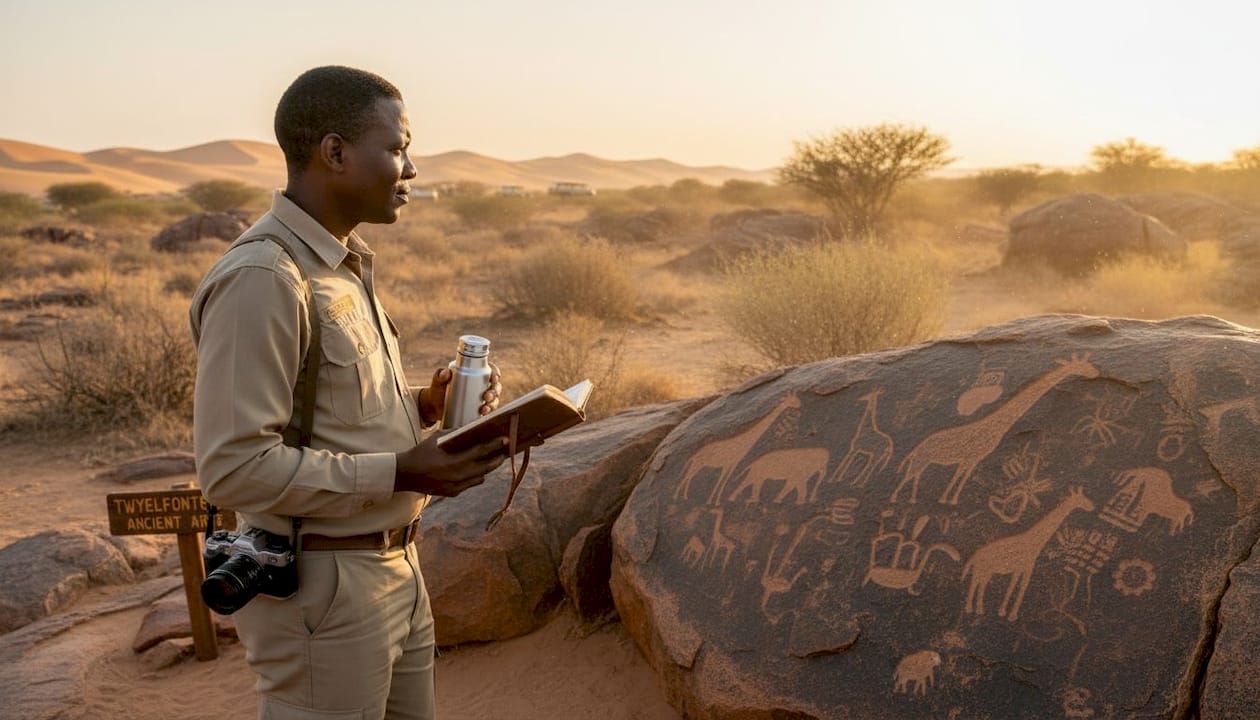
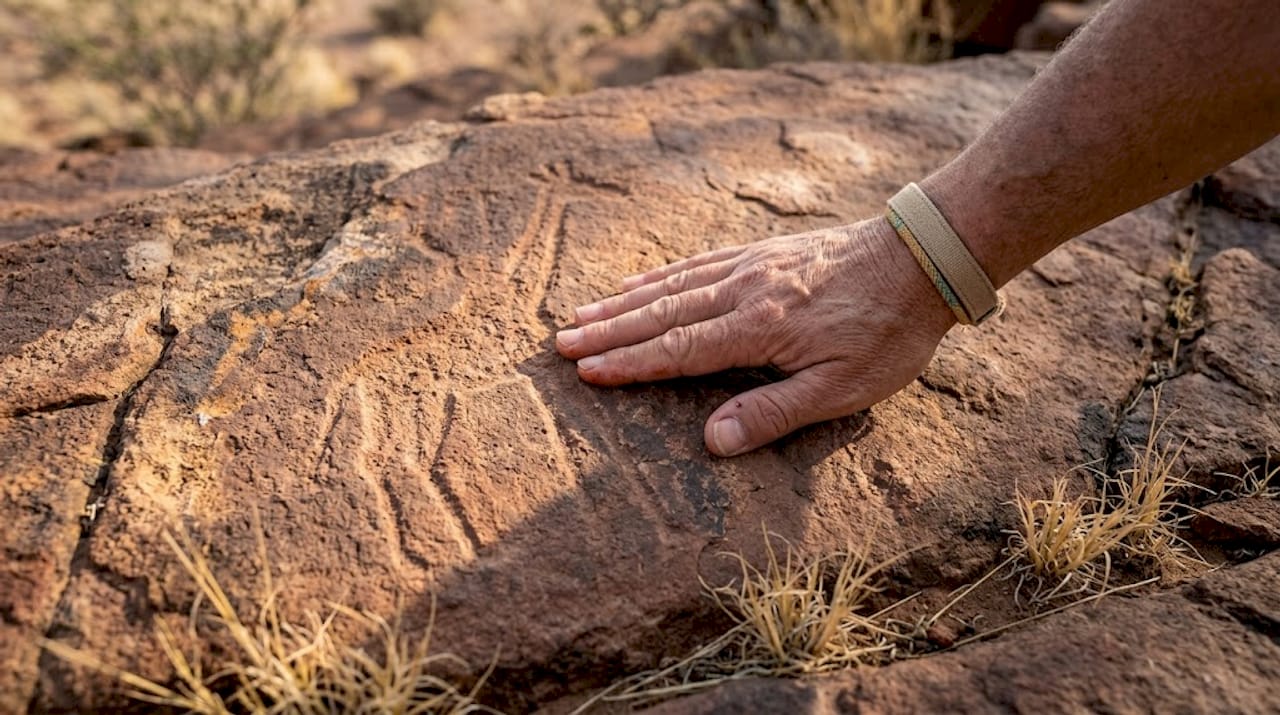
Twyfelfontein is home to one of the largest concentrations of rock engravings in Africa, with over 2,500 individual petroglyphs carved by San hunter-gatherers over thousands of years. These images of lions, elephants, rhinos, and geometric patterns are not mere decoration. They are a spiritual and communicative record of an ancient way of life. If you’re passionate about San cultural experiences, Twyfelfontein is genuinely moving.
The Namib Sand Sea is the world’s only coastal desert ecosystem where fog-driven moisture sustains extraordinary biodiversity. The towering dunes, some reaching over 300 metres, create a landscape of breathtaking natural beauty. A visit to Sandwich Harbour, where dunes plunge dramatically into the Atlantic, is one of the most spectacular experiences on the continent.
Here’s how to weave both sites into a unique luxury safari experience:
Stay at an exclusive fly-in camp near Damaraland for Twyfelfontein access with a private guide
Pair it with a luxury lodge in the Sossusvlei area for Namib Sand Sea exploration at sunrise
Request guided interpretive walks rather than self-guided visits for genuine depth
Pro Tip: The best time to visit both sites is during the cooler months of May to September. Morning light at Twyfelfontein makes the engravings dramatically visible, and Sossusvlei’s dunes glow their most vivid orange at dawn.
Why UNESCO status matters: Preservation, tourism, and the ‘Five Cs’
UNESCO status is not simply a badge of honour. It comes with a strategic framework built around what UNESCO calls the Five Cs: Credibility, Conservation, Capacity-building, Communication, and Communities. These objectives shape how inscribed sites are managed and how tourism is structured around them.
Benefit | Risk |
|---|---|
International conservation funding | Overtourism and environmental pressure |
Global visibility and tourism growth | Commercialisation diluting authenticity |
Community economic empowerment | Displacement of local communities |
Scientific research opportunities | Bureaucratic delays in urgent conservation |
“UNESCO status boosts tourism and conservation funding but can also lead to overtourism pressures. In Namibia, the designation actively supports community entrepreneurship around the Namib Sand Sea for sustainable safaris.” — UNESCO
Namibia’s approach is genuinely inspiring. Rather than allowing unchecked tourism growth, community entrepreneurship around the Namib Sand Sea has been actively supported through UNESCO-linked projects. Local communities benefit economically from tourism while also serving as the most knowledgeable stewards of the land.
For responsible travelers, this matters enormously. Choosing operators who support community-led San cultural experiences means your visit contributes to preservation rather than degradation. A few practical tips for responsible visits to UNESCO sites:
Always book through operators with verified community partnerships
Follow site-specific access rules without exception
Prioritise quality time over rushing through multiple sites in a single day
What most travelers miss about UNESCO World Heritage Sites
Here’s an honest observation we’ve gathered from years of crafting Namibian itineraries: the travelers who get the most from World Heritage Sites are rarely the ones ticking boxes on a checklist. The ‘I’ve been there’ approach is genuinely limiting.
The real value of a site like Twyfelfontein isn’t the petroglyphs themselves. It’s standing in the silence of that ancient landscape with a knowledgeable local guide who explains what those images meant to the people who carved them. That context transforms a rock face into a living document of human experience. Similarly, watching the Namib Sand Sea shift colours through a morning at Sossusvlei is a meditation, not a photo opportunity.
We’d also gently challenge the idea that more sites equals a better trip. Travel fatigue is real, and rushing between World Heritage Sites leaves you with a blur of impressive images rather than meaningful memories. Consider essential cultural experiences that slow you down and draw you in. Quality over quantity always pays off on a luxury safari.
Craft your luxury Namibian heritage adventure
Inspired to see these wonders for yourself? There’s a world of difference between visiting a UNESCO site and truly experiencing it.
At Secret Namibia, we design luxury Namibia safaris that weave World Heritage Sites into bespoke itineraries built around your interests, pace, and style. From private guided walks at Twyfelfontein to exclusive sunrise experiences in the Namib Sand Sea, every detail is curated with care. Our expert team connects you with community guides, luxury camps, and luxury wildlife experiences that go far beyond sightseeing. Get in touch and let us craft your perfect Namibian heritage journey.
Frequently asked questions
What does ‘outstanding universal value’ mean for World Heritage Sites?
It means a site has exceptional cultural or natural significance that matters to all of humanity, not just its home country. This global importance is the core reason UNESCO inscribes and protects these places.
Can visitors access all UNESCO World Heritage Sites?
Most sites welcome visitors, but some areas within them are restricted to protect fragile ecosystems or sacred community spaces. Management plans under the Five Cs framework guide these access decisions.
How does a site get nominated as a UNESCO World Heritage Site?
A country’s government proposes a site, prepares a detailed nomination file, and submits it for evaluation by global expert bodies. The UNESCO Committee decides during annual sessions whether the site meets the required criteria.
Why are there more cultural sites than natural sites?
Human history is extraordinarily diverse and well-documented across many regions, producing a large volume of cultural nominations. Cultural sites outnumber natural ones at roughly a 3:1 ratio globally.
Recommended
RELATED
Safari Guides
Oct 30, 2025
Understanding What is Included in Luxury Safaris
Explore what is included in luxury safaris, from exclusive accommodations to bespoke experiences that cater to discerning travelers.
Feb 24, 2026
Why Namibia Adventures Matter: An In-Depth Look
Discover why Namibia adventures are essential for luxury travelers seeking unique, immersive experiences in nature and wildlife exploration.
Feb 23, 2026
What to Expect on a Luxury Safari: A Comprehensive Guide
Discover what to expect on a luxury safari and gain a deeper understanding of the unique experiences that await you in the wild.
Feb 22, 2026
Understanding Namibia Safari Costs Explained
Explore Namibia safari costs explained to uncover what influences pricing and what it means for your adventure.
Feb 21, 2026
Understanding the Role of Safari Experts in Wildlife Travel
Explore the role of safari experts and gain a comprehensive understanding of how they enhance wildlife travel experiences for all types of travelers.
Feb 20, 2026
Guide organisation safari all inclusive : vivez l'aventure de vos rêves
Découvrez notre guide organisation safari all inclusive étape par étape pour planifier un voyage inoubliable au cœur de la nature.