
Aug 19, 2026
Discover unmissable adventures in Namibia for 2026, from breathtaking dunes at sunrise to safari experiences at Etosha's waterholes.
22 unmissable things to do in Namibia for 2026
Sossusvlei’s dunes at sunrise, big game at Etosha’s waterholes, sandboarding above the Atlantic in Swakopmund, the wreck-strewn Skeleton Coast, the abandoned diamond town of Kolmanskop, the sheer drop of Fish River Canyon, desert elephants in Damaraland, and star-drenched nights in NamibRand: these are the things to do in Namibia that separate a good trip from an unforgettable one. Each rewards a different kind of traveller. Photographers chase the dunes for that first raking light over Deadvlei. Families gravitate to Etosha, where the wildlife comes to you. Adventure seekers want Fish River Canyon’s multi-day trail or a hot-air balloon drifting over the Namib before dawn. Luxury travellers want the same landscapes without the compromise: private reserves, fewer vehicles, and guides who know exactly which waterhole the leopard favours this week.
The common thread is scale. Namibia rewards travellers who give it room to breathe, which is why the sequence of a trip matters as much as the checklist itself.
Pro Tip: Book your lodges before your flights. The best desert camps near Sossusvlei and the private reserves bordering Etosha have limited rooms, and peak season (June through October) sells out months in advance.
Key Takeaways
The most rewarding Namibia trips combine iconic landscapes like Sossusvlei and Etosha with at least one private reserve stay for closer, guided wildlife encounters.
Point | Details |
|---|---|
Prioritize sunrise timing | Hike Sossusvlei and Deadvlei at first light to beat both heat and crowds. |
Match transport to time budget | Choose self-drive for flexibility, fly-in for speed, or guided transfers for comfort. |
Plan around dry season | Visit July to October for concentrated wildlife viewing at Etosha’s waterholes. |
Add a private reserve | Stays at reserves like Ongava or Okonjima add off-road tracking and conservation-backed guiding. |
Let Secret Namibia customize it | Secret Namibia builds tailored itineraries pairing these bucket-list stops with private-reserve lodges and curated transfers. |
Table of Contents
Why private game reserves beat national parks for this kind of trip
The Namibia bucket list, in order
How should you get around Namibia?
When should you visit and how long should you stay?
Matching accommodation to the experience
How to visit Namibia’s wildlife and communities responsibly
Why the drive itself might be the best part of your trip
Sample itineraries by trip length
What are Namibia’s entry requirements and visa rules?
What does Namibian food actually taste like?
What should you know before visiting Himba villages?
Why Secret Namibia keeps coming back to these experiences
Ready to turn this list into an itinerary?
Where to read more before you go
Frequently asked questions
Sources
Why private game reserves beat national parks for this kind of trip
National parks like Etosha are essential, and rightly famous, but they operate under fixed rules: designated roads, shared sightings, gates that close at sunset. A private reserve removes those constraints. Guides can go off road to follow a pride of lions, run drives after dark when nocturnal species emerge, and radio between vehicles so a guest never misses a sighting a few kilometres away.
The difference shows up in the details. Vehicle numbers at a single sighting stay low. Ranger-to-guest ratios stay tight. And because many reserves fund their own research and anti-poaching units, a stay there often supports the same wildlife you have come to see. Private reserves near Etosha such as Ongava and Okonjima combine that flexibility with genuine conservation work, including telemetry-assisted tracking of leopards and black rhino that public park visitors rarely get close to.
For travellers weighing a national park safari against a private reserve stay, the honest answer is both: use Etosha for scale and volume of sightings, then add a reserve for depth, access, and a guide’s undivided attention.
The Namibia bucket list, in order
1. Sossusvlei, Deadvlei and Big Daddy at sunrise. Namibia’s most photographed landscape lives in the southern Namib, where 300-metre dunes turn from purple to burnt orange as the sun clears the horizon. Arrive at the gates before dawn and you will have Deadvlei’s blackened camel thorn trees almost to yourself before the tour buses arrive. Climbing Big Daddy, the tallest dune in the immediate vicinity, takes two to three hours up and a joyous ten-minute sprint down through soft sand into Deadvlei itself. Budget a full morning; the heat by midday makes the climb miserable. National Geographic ranks this sunrise dune hike among Namibia’s essential experiences, and it is the one image most visitors come for.
2. Etosha National Park’s waterholes. Etosha’s salt pan spans roughly 1,800 square miles, about 22,000 square kilometres, and its floodlit waterholes turn game viewing into something closer to theatre. Self-drive visitors can park at a waterhole for hours and watch elephant, rhino, and lion cycle through without lifting a finger. Guided drives, particularly through private concessions, get you closer and later into the evening. Two to three nights lets you rotate through several camps and waterhole styles. Families do well here because sightings come to the vehicle rather than requiring long treks.
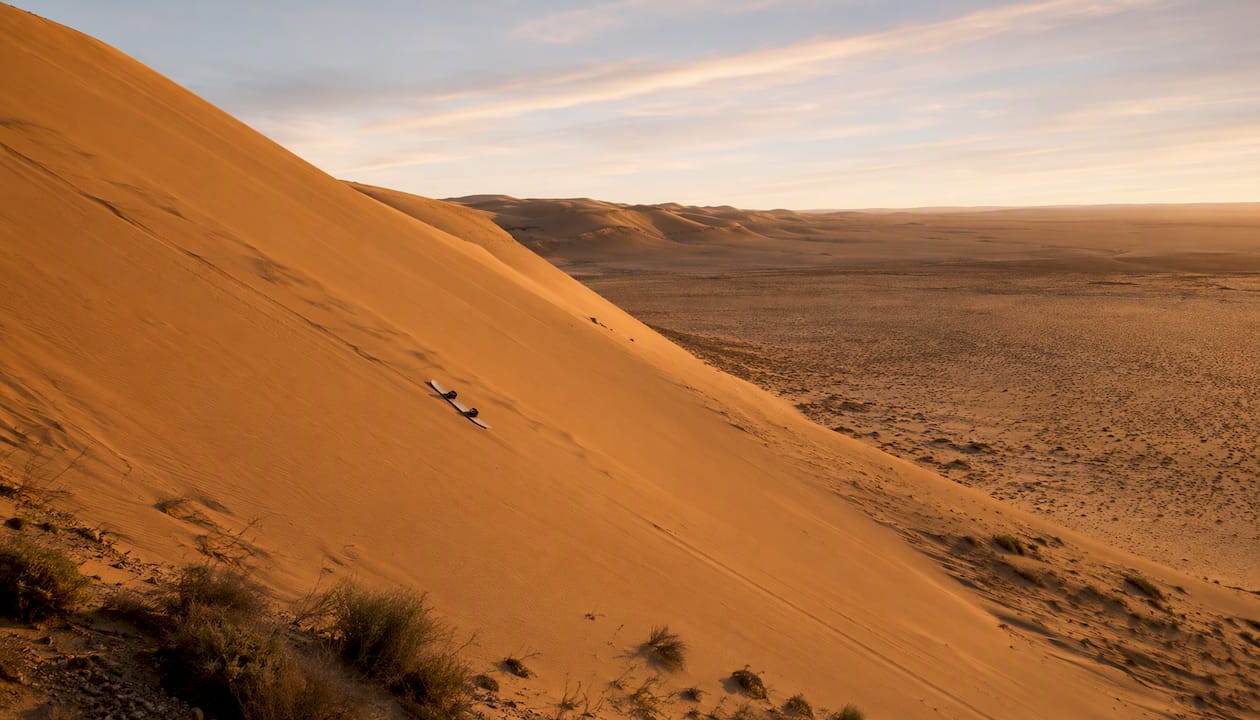
3. Swakopmund and Walvis Bay’s coastal mix. Namibia’s coast trades desert heat for Atlantic fog, and the contrast is part of the appeal. Swakopmund is the adventure hub: sandboarding down towering dunes, quad biking, and 4x4 dune excursions all launch from town. Walvis Bay, twenty minutes south, delivers flamingo-lined lagoons and boat trips that regularly encounter seals, dolphins, and the occasional whale. Lonely Planet flags Sandwich Harbour, where dunes tumble directly into the ocean, as one of the coast’s most dramatic half-day excursions, best done with a guided 4x4 operator since the tidal approach demands local knowledge.
4. Skeleton Coast and Kolmanskop ghost town. The Skeleton Coast earned its name from shipwrecks and whale bones scattered along a fog-bound shore, and its stark, otherworldly emptiness is worth the detour for travellers who want Namibia at its most haunting. Closer to Lüderitz, Kolmanskop offers a different kind of eerie: a diamond boomtown abandoned in the 1950s, now half swallowed by dunes that spill through doorways and pile against pianos in bedrooms. Morning light works best for photography, before the wind picks up sand haze. Both sites suit a half-day, ideally combined with the coastal drive north or south.
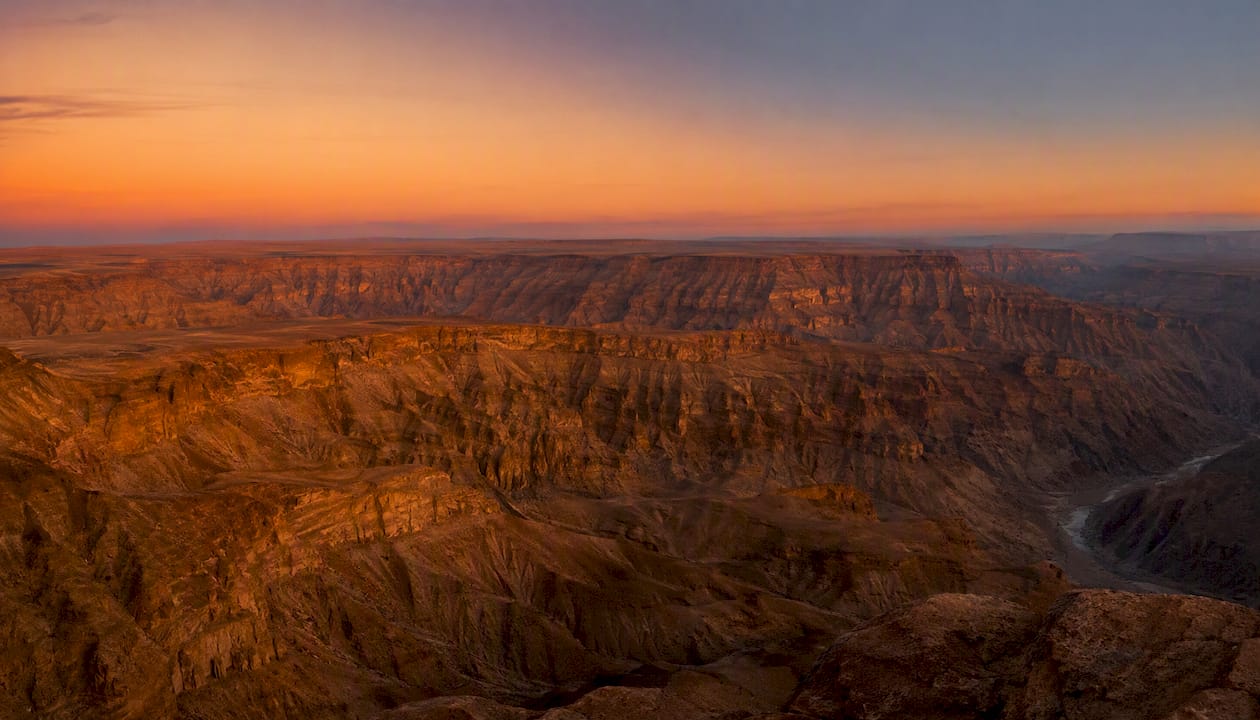
5. Fish River Canyon. Africa’s largest canyon carves a vast gorge through southern Namibia, and its main viewpoint alone justifies the drive. Serious hikers can tackle the multi-day trail along the canyon floor, a route Lonely Planet describes as one of the region’s classic multi-day treks, though it only opens during the cooler months (May through September) for safety reasons. Even a sunset stop at the rim, without a single step down, delivers one of Namibia’s most photographed panoramas.
6. Damaraland, Kunene and Twyfelfontein. This is where Namibia gets genuinely strange in the best way: desert-adapted elephants that have learned to survive on almost no water, ancient rock engravings at Twyfelfontein, a UNESCO World Heritage Site, and quiver trees that look imported from another planet. Guided elephant tracking here runs a half to full day and requires a local guide, since the herds range widely across dry riverbeds. Twyfelfontein itself takes about an hour on a marked trail through thousands of engravings, some over 6,000 years old.
7. NamibRand, Tok Tokkie Trails and stargazing. NamibRand Nature Reserve holds International Dark Sky Reserve status, and on a moonless night the Milky Way casts a visible shadow. The multi-day Tok Tokkie Trails walk guests across dune fields and gravel plains, sleeping in simple dune camps under that same sky, and National Geographic singles the experience out for revealing desert life a vehicle safari simply drives past: beetles, geckos, and tracks invisible from a moving car. A single night of stargazing needs nothing more than a clear evening and a reserve far from town lights; the full trail needs two to three days.
8. A hot-air balloon flight over the Namib. Launching before sunrise from near Sossusvlei, balloon flights drift silently over dune fields as the light changes colour beneath you. It is the one activity on this list with no physical demand at all, which makes it a strong fit for travellers who want the visual reward of the dunes without the climb.
9. Okonjima and Ongava: guided predator tracking. These private reserves specialise in something few public parks can offer: hands-on, radio-collar-assisted tracking of leopard, pangolin and rhino, led by researchers rather than general guides. Okonjima, home to the AfriCat Foundation, runs dedicated leopard and cheetah tracking excursions that double as conservation education. Expect a half to full day, small groups, and a real chance of an up-close, ethically managed sighting that a self-drive itinerary through Etosha alone would rarely produce.
10. Boat and kayak trips at Walvis Bay. Beyond the flamingos, Walvis Bay’s lagoon supports a thriving population of Cape fur seals and bottlenose dolphins, and sea kayaking trips paddle within metres of both. Morning departures see calmer water and better wildlife activity. It pairs naturally with a Swakopmund base and needs only half a day.
Pro Tip: Climb Big Daddy before 8am. The sand stays firm and cool in early morning; by mid-morning it softens and the heat turns a manageable hike into a genuine slog.
Pro Tip: Book desert elephant or predator tracking through a licensed guide rather than attempting it independently. These animals range across unfenced terrain, and local trackers read signs (dung age, footprint direction) that keep both you and the animals safe.
How should you get around Namibia?
Namibia rewards decisiveness about transport, because the country is enormous and the wrong choice eats travel days. Three options dominate.
Self-drive gives total flexibility and suits confident drivers comfortable with gravel roads and a 4x4. It is also the slowest option, and distances are longer than they look on a map.
Fly-in safaris connect remote lodges by light aircraft, cutting a full day’s drive to forty minutes. They cost more but suit travellers with limited time or multiple regions to cover.
Guided transfers sit in between: a driver-guide handles the road while narrating the landscape, geology, and wildlife along the way, without the pressure of self-navigation.
Distances tell the real story. Windhoek to Sossusvlei runs about five hours on mostly good gravel. Sossusvlei to Swakopmund adds another four to five hours through changing desert terrain. Swakopmund to Etosha’s southern gates takes roughly four hours more. A traveller trying to self-drive all three legs in a week will spend more time behind the wheel than in front of wildlife, which is exactly why self-drive itineraries need honest day-by-day planning before booking.
Pro Tip: If you self-drive, carry a spare tyre and repair kit, plan fuel stops in advance since service stations thin out fast between towns, and always tell your lodge your planned route and ETA. Remote stretches can leave you without help for hours.
When should you visit and how long should you stay?
Namibia works year-round, but the calendar shifts what you will see and how comfortable the roads feel.
Season | Months | Best for |
|---|---|---|
Dry season | July to October | Concentrated wildlife at waterholes, clearest game viewing |
Green/rainy season | November to April | Birding, dramatic skies, ephemeral pan fills in Etosha |
Cool months | May to August | Dune photography, comfortable hiking temperatures |
Clear dry nights | Year round, best May to September | Stargazing in NamibRand with minimal cloud cover |
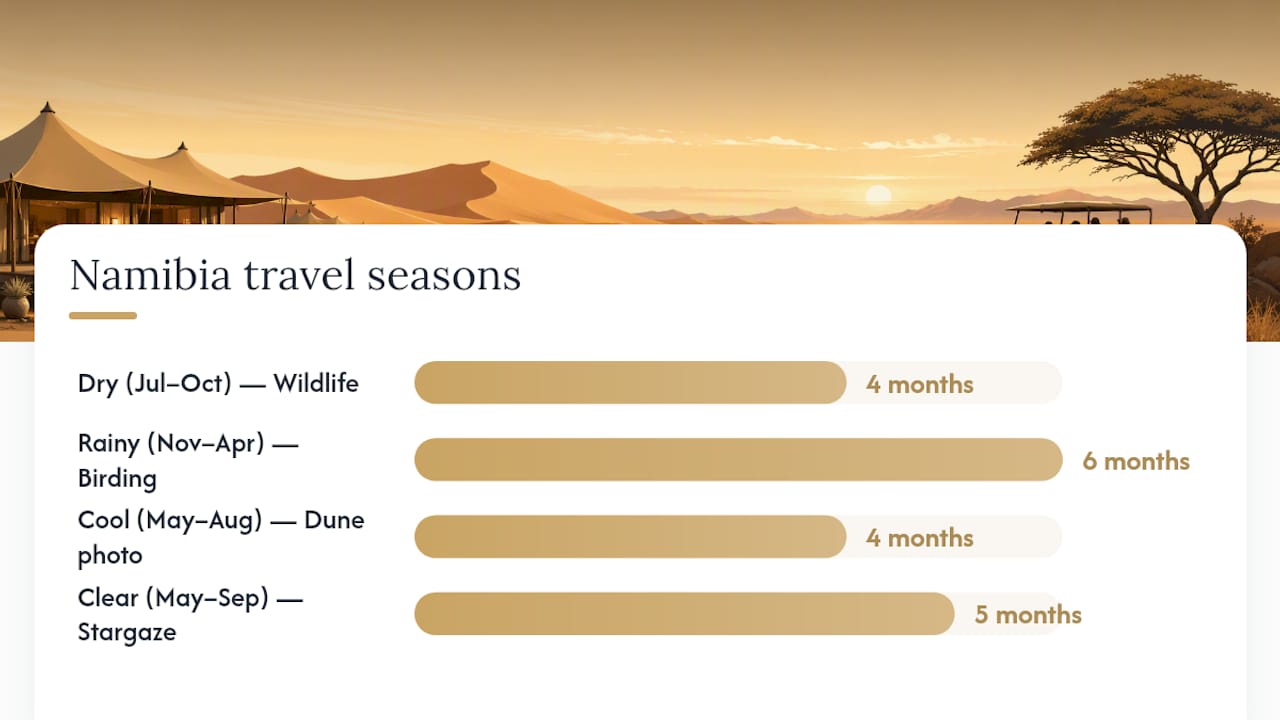
The dry season concentrates animals at fixed water sources, which is why most safari-focused visits cluster between July and October. The rainy season trades some road difficulty for lush landscapes and migratory birds.
Trip length should match ambition. Three days covers Sossusvlei and one other highlight. Seven days handles a classic loop of desert, coast, and Etosha. Ten or more days allows Damaraland, Fish River Canyon, and a private reserve stay without rushing.
A short packing list covers most needs: broad-spectrum sun protection, layers for desert nights that drop sharply after dark, sturdy closed shoes for dune and gravel walking, binoculars, and spare camera batteries (cold desert mornings drain them fast).
Pro Tip: Desert regions often have no mobile signal for hours at a time. Share your route with your lodge each morning and carry a satellite communicator if you are self-driving through Damaraland or the Skeleton Coast.
Matching accommodation to the experience
Where you sleep shapes what you see. A lodge on the edge of a waterhole delivers wildlife before breakfast; a desert camp near Sossusvlei puts you at the dune gates before the day-trippers arrive.
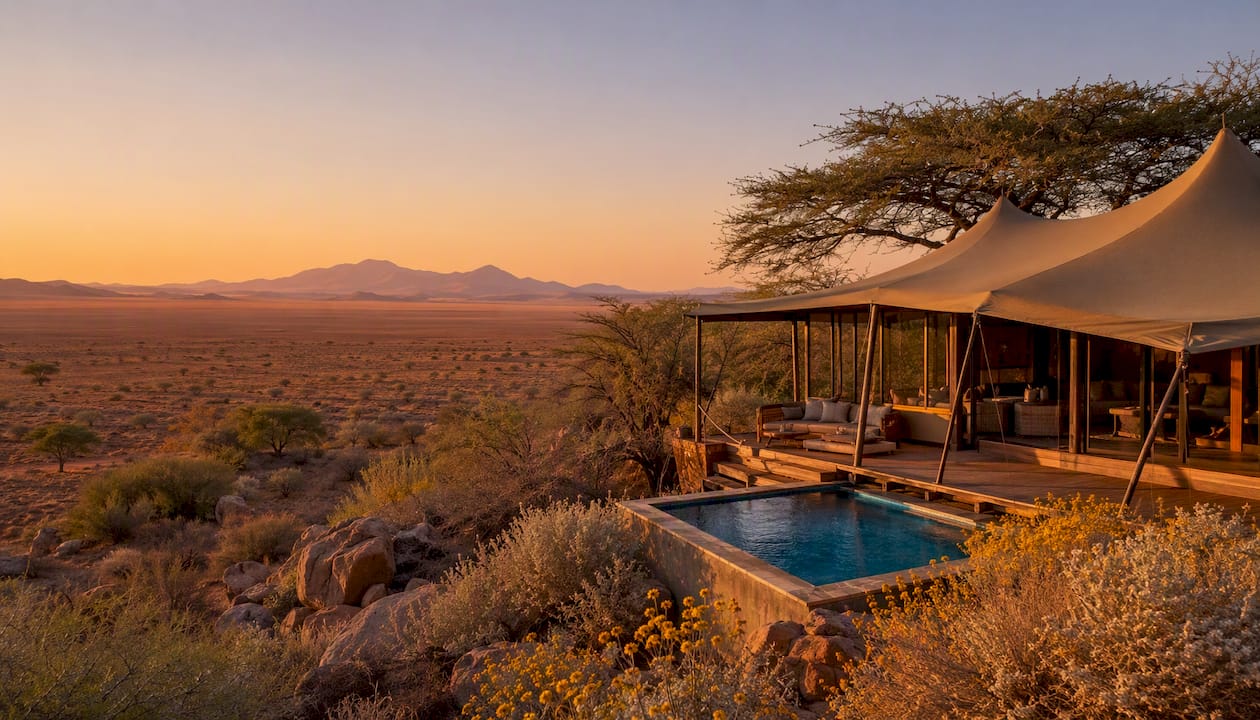
Sossusvlei area: desert lodges and tented camps positioned inside or near the park gates, so you beat the crowds at sunrise.
Etosha: waterhole-facing lodges for passive game viewing, or private reserves like Ongava for off-road access and night drives.
Swakopmund/Walvis Bay: coastal hotels and guesthouses, since most activities here are day excursions rather than remote stays.
Damaraland: community-linked lodges that fund local conservancies and elephant-monitoring programmes.
Experience | Recommended lodging | Why |
|---|---|---|
Sunrise dunes | In-park or gate-adjacent desert camp | Shortest drive to Sossusvlei at opening time |
Etosha wildlife | Waterhole lodge or private reserve | Passive viewing plus off-road access on reserves |
Coastal activities | Town-based hotel | Easy access to tour operators and the lagoon |
Predator tracking | Private reserve lodge (Okonjima, Ongava) | Guide access, smaller groups, research tie-ins |
Pro Tip: Private-reserve lodges near Etosha book out furthest in advance because room counts stay deliberately low to protect the guest experience. Reserve those first if a personalised wildlife encounter is your priority.
How to visit Namibia’s wildlife and communities responsibly
Namibia’s conservation model relies heavily on tourism revenue reaching the land it protects, so how you travel matters almost as much as where.
Stay on marked roads and tracks inside parks; off-road driving damages fragile desert vegetation that takes decades to recover.
Keep a respectful distance from wildlife and never feed animals, even habituated ones near lodges.
Choose community-run campsites, craft markets, and conservancies where tourism income flows directly to local residents.
Follow park entry and exit times strictly; they exist partly for your safety and partly to limit disturbance to nocturnal species.
Himba villages in the Kunene region welcome visitors, but a respectful visit means going through a guide who has an existing relationship with the community, asking before photographing anyone, and treating the stop as a cultural exchange rather than a photo opportunity.
Pro Tip: Reserves that fund active research, such as Okonjima’s AfriCat Foundation, put part of your lodge fee directly into rhino and leopard conservation. Choosing them turns your trip into a small contribution to the species you came to see.
Why the drive itself might be the best part of your trip
Ask returning visitors what they remember most, and it is often not a single sighting but the hours in between: a gravel road disappearing into heat shimmer, mountains changing colour as the sun moves, total silence broken only by wind.
Travel experts repeatedly note that while individual highlights are spectacular, the vast, changing landscapes seen between them — long desert roads, solitude and evolving geology — are often the emotional core of a Namibian trip.
Planning around that insight changes an itinerary for the better:
Build in extra travel time rather than treating drives as dead time to minimise.
Schedule overnight stops at scenic vantage points instead of pushing straight through.
Add short walks or guided nature interpretation stops along long routes to break the drive and add texture.
This is part of why Secret Namibia builds itineraries around private reserves and curated transfers rather than back-to-back long drives. A well-timed transfer with the right stops turns dead travel time into some of the trip’s most memorable hours.
Sample itineraries by trip length
3 days, quick highlights (moderate activity level). Day 1: fly or drive to Sossusvlei area, afternoon at leisure. Day 2: sunrise at Deadvlei and Big Daddy, drive to Swakopmund (about 4.5 hours). Day 3: sandboarding or Sandwich Harbour 4x4, departure.
7 days, classic loop (easy to moderate). Days 1 to 2: Sossusvlei and dune hiking. Days 3 to 4: Swakopmund and Walvis Bay coastal activities, including a boat trip. Days 5 to 7: Etosha National Park, with an optional swap into a private reserve like Ongava for closer wildlife encounters and night drives.
10+ days, deep-dive adventure (moderate to strenuous). Add Damaraland for desert elephant tracking and Twyfelfontein, plus Fish River Canyon in the south for hiking and viewpoint photography. Fly-in legs between Sossusvlei, the coast, and Etosha can cut two to three driving days if time matters more than the scenic route.
Every version of this itinerary flexes well: swap a national park game drive for a private reserve stay wherever you want fewer vehicles and more personal guiding.
What are Namibia’s entry requirements and visa rules?
Entry rules vary by nationality, so check them against your own passport before booking flights. Many visitors from the European Union, the United Kingdom, the United States, and several other countries can enter visa-free for short tourist stays, while travellers from other nations need to apply for a visa in advance through a Namibian embassy or consulate.
Every visitor needs a passport valid for at least six months beyond the planned departure date, with at least one blank page for entry stamps. Proof of onward travel and accommodation details are sometimes requested at the border, so keep booking confirmations accessible, whether printed or on your phone.
Namibia does not currently require a specific vaccination certificate for most travellers, though yellow fever documentation may be requested if arriving from a country with risk of transmission. Standard travel health precautions, including routine vaccinations and malaria prevention for northern regions like Etosha and Damaraland during wetter months, are worth discussing with a travel health provider before departure.
Because visa rules change and depend on nationality, confirm current requirements with Namibia’s official immigration authority or your nearest embassy well before your trip, rather than relying on general guides alone.
What does Namibian food actually taste like?
Namibia’s cuisine reflects its German colonial history layered onto Southern African tradition, and the result surprises most first-time visitors. Expect hearty game meat, fresh seafood on the coast, and bakery traditions that would not look out of place in Bavaria.
Biltong and dried game meats like kudu and oryx appear everywhere, from farm stalls to lodge dinner tables, as a legacy of a country where meat preservation predates refrigeration. Swakopmund and Walvis Bay serve some of the freshest seafood in Southern Africa, oysters and linefish in particular, pulled straight from the cold Benguela current offshore. Windhoek’s German-influenced bakeries and beer halls serve schnitzel, sausages, and pretzels alongside local lager, a genuinely odd but enjoyable contrast against a desert backdrop.
Mahangu, a pearl millet porridge, remains a staple in northern and rural communities, often served alongside stewed meat or vegetables, and lodges increasingly include it as a way to introduce guests to everyday Namibian cooking rather than only colonial-era dishes. Game meat, including springbok and oryx steaks, appears on most lodge menus, sourced from sustainably managed farms and reserves.
For travellers who want the fullest picture, pairing a night in Windhoek’s bakeries and beer halls with a coastal seafood dinner in Swakopmund covers the range in a single trip.
What should you know before visiting Himba villages?
Himba communities in the Kunene region, near Damaraland, maintain a semi-nomadic lifestyle and a distinct visual identity, most notably the ochre and butterfat mixture Himba women apply to their skin and hair. Visiting a village offers a rare, direct cultural encounter, but it works best, and respects the community most, when arranged properly.
Go through a guide with an established relationship to the specific village, not an impromptu roadside stop. Established relationships mean the community expects and welcomes visitors, and a share of any fee typically supports the village directly rather than an unrelated intermediary. Ask before photographing individuals, and understand that some communities request a small fee for photos as part of the visit structure, which is standard practice rather than an imposition.
Beyond Himba visits, community-run cultural tours elsewhere in Namibia, including San cultural experiences in the Kalahari region, offer guided walks and demonstrations of traditional tracking, plant knowledge, and craft-making led by community members themselves. These tours tend to run half a day and combine naturally with a broader itinerary through central or southern Namibia.
Approaching either experience as a genuine exchange, rather than a photo stop, tends to produce the richer memory. Guides who know the community well will also tell you plainly what is and is not appropriate to ask or photograph.
Why Secret Namibia keeps coming back to these experiences
Namibia’s bucket list holds up because the country rarely oversells itself. The dunes really are that dramatic at sunrise, Etosha’s waterholes really do deliver sightings other parks work harder for, and the drives between them really do become part of the story travellers tell afterward.
Secret Namibia builds itineraries around that reality: private reserves for closer, more personal wildlife encounters, curated transfers that treat the journey as part of the experience rather than dead time, and lodges chosen for both comfort and conservation commitment. If any of the experiences above caught your attention, our sample safari itineraries show how they fit together in practice.
Ready to turn this list into an itinerary?
You have the shortlist. Turning it into a real trip means solving the parts that do not show up in a bucket list: which lodges have availability during your travel window, how to sequence Sossusvlei, the coast, and Etosha without wasted driving days, and whether a private reserve or a national park suits your priorities better.
Secret Namibia builds custom itineraries around exactly these decisions, drawing on relationships with private reserves like Ongava and Okonjima and conservation-minded lodge partners across the country. Whether you want a self-drive route with detailed daily distances or a fully guided luxury safari with fly-in transfers between highlights, the planning starts with a conversation about what you actually want from the trip. Browse the private reserve planning guide for a closer look at how these stays work, or go ahead and send us an enquiry with your travel dates and priorities, and we will put together a sample itinerary built around them.
Where to read more before you go
The Etosha National Park overview on Wikipedia gives quick facts on park size and geography.
National Geographic’s Namibia adventures guide covers must-do experiences from a travel-editorial perspective.
Lonely Planet’s best places in Namibia breaks down regional highlights and travel logistics.
The Visit Namibia travel planning guide covers official seasonality, road conditions, and safety advice.
Frequently asked questions
How many days do you need for things to do in Namibia? Seven days covers a solid loop of Sossusvlei, the coast, and Etosha. Ten or more days allows Damaraland and Fish River Canyon without rushing between stops.
What is the single best thing to do in Namibia? Most repeat visitors point to hiking Sossusvlei and Deadvlei at sunrise, though Etosha’s waterhole game viewing runs a close second for wildlife-focused travellers.
Is self-drive safe for first-time visitors to Namibia? Yes, with preparation. Namibia’s road network is generally solid, but self-drivers should carry spare tyres, plan fuel stops carefully, and tell lodges their route and arrival time.
When is the best time to see wildlife in Namibia? July through October, the dry season, concentrates animals around waterholes, making sightings more predictable at Etosha and nearby reserves.
Do I need a visa to visit Namibia? It depends on your nationality. Many travellers from the EU, UK, and US enter visa-free for short stays, while others need to apply in advance, so confirm requirements with Namibia’s immigration authority before booking.
Sources
Recommended
RELATED
Safari Guides
Oct 30, 2025
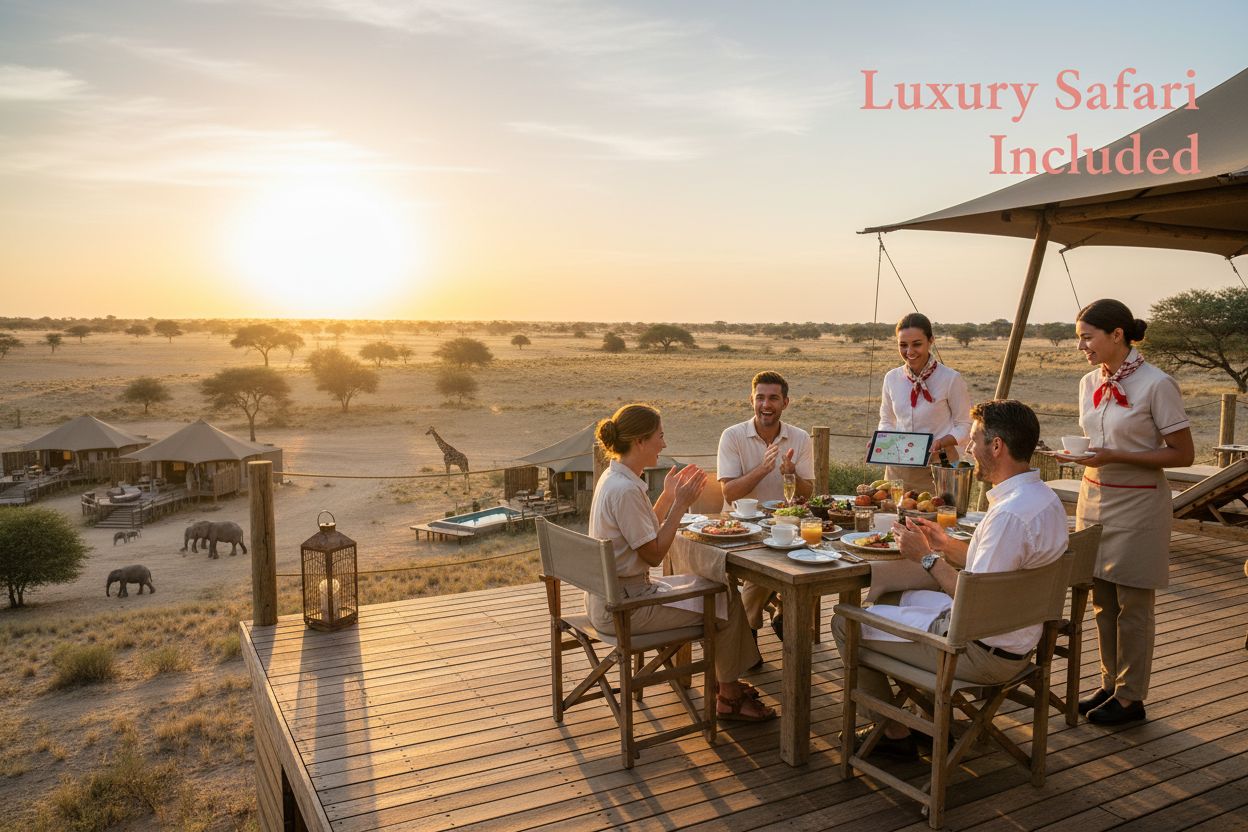
Understanding What is Included in Luxury Safaris
Explore what is included in luxury safaris, from exclusive accommodations to bespoke experiences that cater to discerning travelers.
Feb 24, 2026
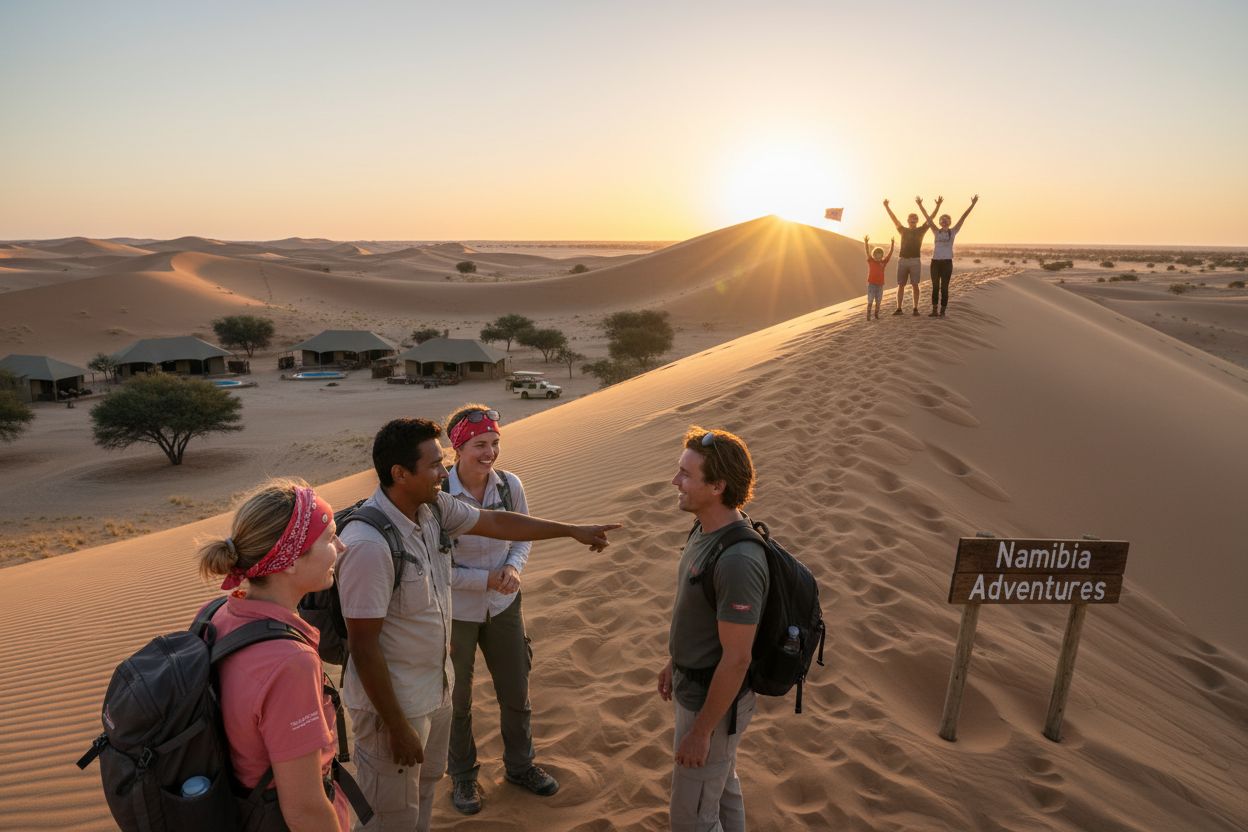
Why Namibia Adventures Matter: An In-Depth Look
Discover why Namibia adventures are essential for luxury travelers seeking unique, immersive experiences in nature and wildlife exploration.
Feb 23, 2026
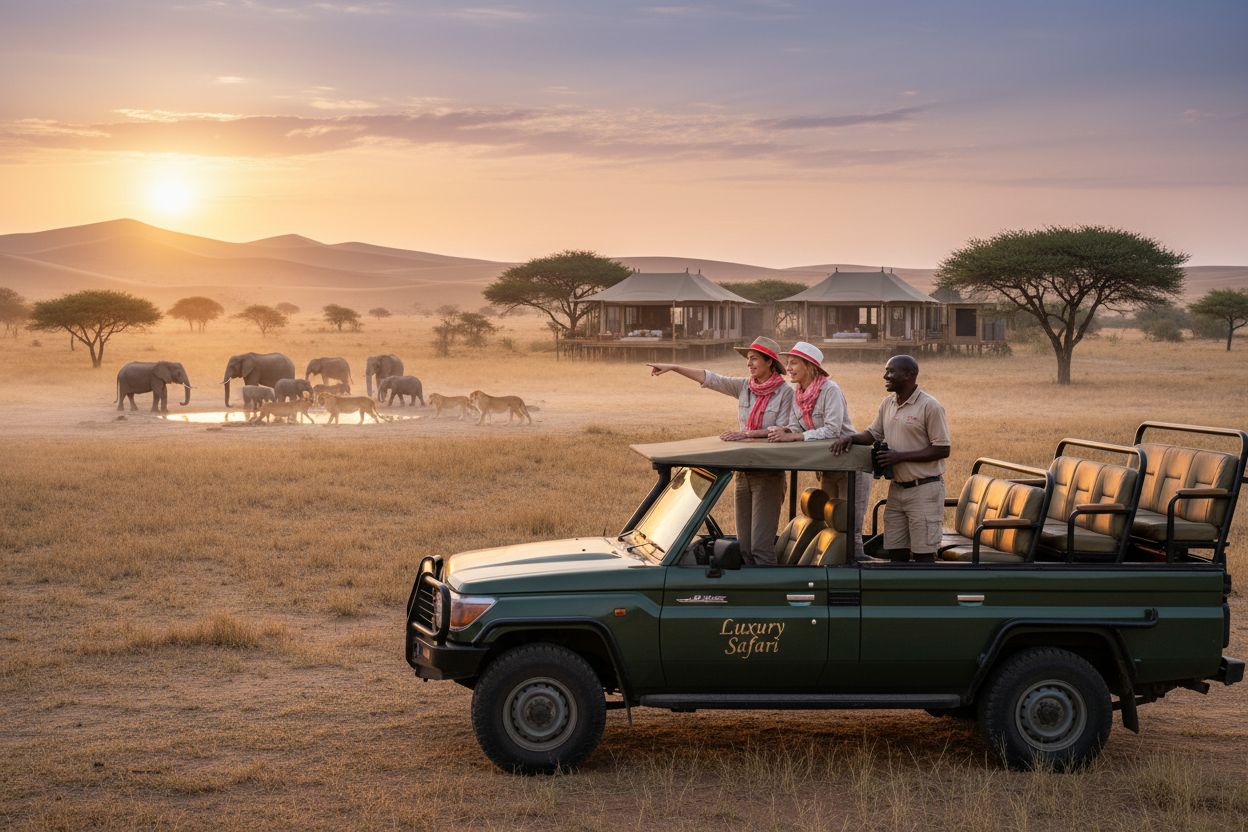
What to Expect on a Luxury Safari: A Comprehensive Guide
Discover what to expect on a luxury safari and gain a deeper understanding of the unique experiences that await you in the wild.
Feb 22, 2026
Understanding Namibia Safari Costs Explained
Explore Namibia safari costs explained to uncover what influences pricing and what it means for your adventure.
Feb 21, 2026
Understanding the Role of Safari Experts in Wildlife Travel
Explore the role of safari experts and gain a comprehensive understanding of how they enhance wildlife travel experiences for all types of travelers.
Feb 20, 2026
Guide organisation safari all inclusive : vivez l'aventure de vos rêves
Découvrez notre guide organisation safari all inclusive étape par étape pour planifier un voyage inoubliable au cœur de la nature.