
Apr 16, 2026
Discover expert wildlife photography tips for your Namibia safari, from the best Etosha waterholes to gear prep and composition strategies for iconic shots.
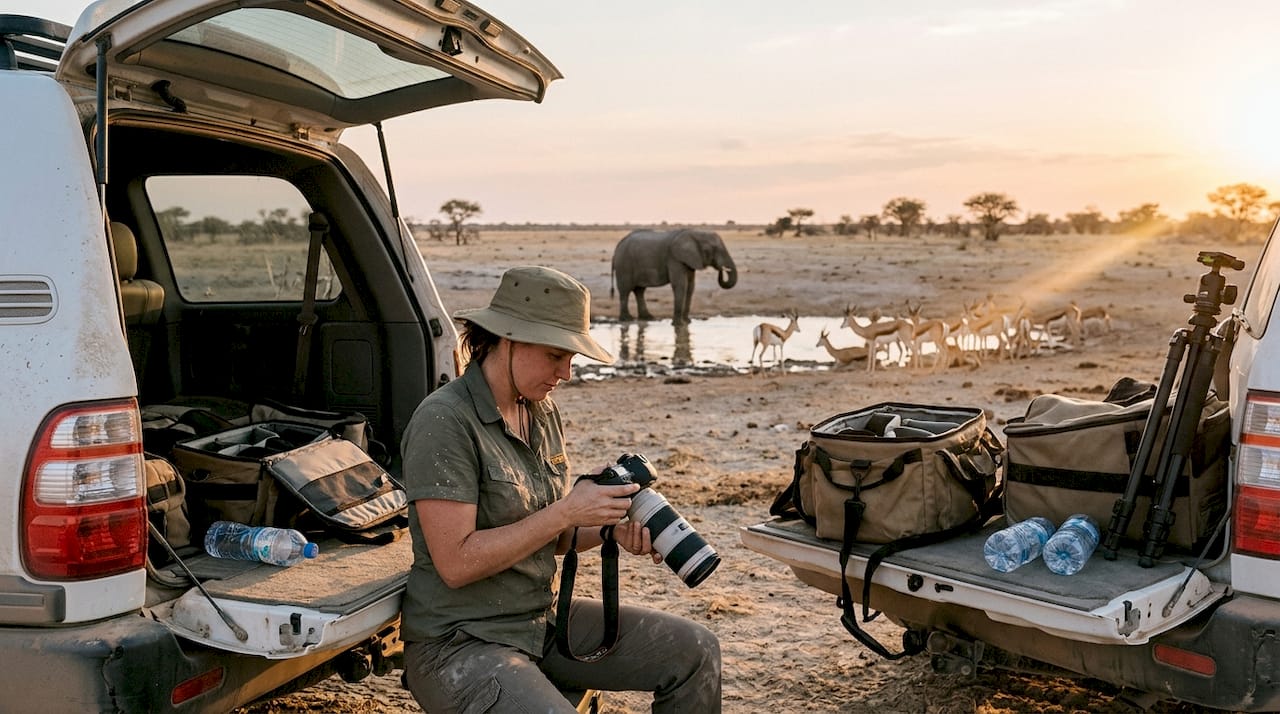
Wildlife photography tips for your Namibia safari 2026
TL;DR:
Namibia’s dry season from May to October offers concentrated wildlife at waterholes for prime photography.
Key waterholes like Okaukuejo and Nebrownii provide unique lighting and species for iconic shots.
Patience, understanding animal behavior, and local guide insights are essential for exceptional wildlife images.
Namibia is one of Africa’s most magnificent wildlife photography destinations, where vast arid pans meet crimson dunes and Etosha’s waterholes teem with elephants, lions, and black rhinos. Yet capturing those once-in-a-lifetime images means far more than pointing a camera at whatever crosses your path. The dry season from May to October is widely considered prime time for wildlife photography in Etosha, where animals concentrate predictably around waterholes. Timing, technique, and location knowledge work together to produce extraordinary results. This guide brings you insider tips and pro-backed strategies so you can return home with a portfolio that truly does justice to Namibia’s remarkable wildlife.
Table of Contents
Understanding Namibia’s wildlife seasons and behavior
Picking the best locations and waterholes for iconic shots
Essential gear prep and field techniques for Namibia’s conditions
Capturing action, composition, and storytelling moments
Why patience and local knowledge are your ultimate tools
Explore luxury safaris designed for photographers
Frequently asked questions
Key Takeaways
Point | Details |
|---|---|
Choose timing wisely | Dry season maximizes wildlife concentration and visibility for photography. |
Focus on key waterholes | Target Etosha’s iconic locations for vibrant animal interactions and scenes. |
Prep gear for Namibia | Plan dust/heat protection, shoot during golden hour, and pair telephoto with wide lenses. |
Anticipate and compose stories | Use local knowledge, patience, and burst modes to capture dramatic, storytelling moments. |
Luxury safaris boost experience | Tailored trips place you in the best spots with expert guidance for unforgettable images. |
Understanding Namibia’s wildlife seasons and behavior
Namibia’s wildlife rhythms follow two distinct seasons, and understanding them shapes everything about your photographic approach. Choosing the right season is not simply about weather comfort. It determines your subjects, your compositions, and ultimately the quality of your images.
The dry season offers concentrated wildlife from May to October, when water sources shrink and animals gather predictably at waterholes. Visibility is superb, vegetation is low, and you can plan your compositions in advance. Multi-species scenes become possible, with elephants, zebras, and lions sharing the same frame. The wet season, from November to April, transforms Namibia into a lush, atmospheric canvas. Bird migration peaks, newborn calves appear, and the landscape turns vivid green. However, wildlife disperses widely, making individual sightings less predictable.
Season | Wildlife concentration | Atmosphere | Best for |
|---|---|---|---|
Dry (May-Oct) | High, predictable | Clear, dusty | Multi-species, close-up shots |
Wet (Nov-Apr) | Dispersed, variable | Lush, dramatic | Birds, calving, landscapes |
If you’re serious about wildlife photography and want consistent, concentrated subjects, prioritise the dry season. That said, if dramatic skies and lush greenery inspire your creativity, the wet season rewards photographers who embrace uncertainty.
Anticipating animal behavior is just as important as timing your visit correctly. Watch for circling vultures above the tree line. Notice when the bush goes suddenly, eerily silent. Fresh tracks or trampled vegetation around a waterhole signal recent activity. These subtle signs tell you that something remarkable is about to unfold.
Circling vultures often indicate a kill nearby
Sudden silence suggests a predator has entered the area
Fresh tracks and disturbed dust point to imminent arrivals
Restless behaviour in prey species signals nearby danger
Pro Tip: Use burst mode when action erupts at a waterhole. For Namibia’s high-contrast landscapes at sunrise and sunset, bracket your exposures to capture detail in both the bright sky and the shadowed foreground. Missing either extreme means losing the story the light is telling.
“The most powerful wildlife images are not taken by chance. They are earned through understanding animal behavior and committing to the moment.” A sentiment shared by experienced wildlife photographers across Southern Africa.
For a deeper look at locations and shooting strategies, our photographers guide to Namibia offers excellent supplementary insights.
Picking the best locations and waterholes for iconic shots
Knowing how seasons affect animal behavior, the next step is deciding where to aim your lens for Africa’s iconic wildlife encounters. Etosha National Park is the jewel of Namibia’s wildlife photography scene, and its waterholes are legendary. But not all waterholes are created equal. Each has its own character, its own resident species, and its own ideal time of day.
According to field experience and top waterhole rankings, these are the locations you should plan your days around:
Waterhole | Highlight species | Best time | Special feature |
|---|---|---|---|
Okaukuejo | Rhinos, elephants | Night | Floodlit for after-dark shooting |
Nebrownii | Elephants | Late afternoon | Dusty golden light scenes |
Chudop | Mixed species | Morning | Multi-species compositions |
Salvadora | Lions | Late afternoon | Predator activity |
Rietfontein | Rhinos | Morning | Reliably good rhino sightings |
Okaukuejo is a genuinely special waterhole because it is floodlit at night, giving you rare opportunities to photograph rhinos and elephants under soft artificial light after dark. Very few places in Africa offer this experience. Chudop rewards patient photographers with extraordinary multi-species frames, where zebras, giraffes, and springbok share the water simultaneously.
Arrive at least 30 minutes before your target activity window
Commit to staying at a single waterhole for 20 to 30 minutes minimum
Position your vehicle so the light falls on the animals, not behind them
Keep your engine off and windows down to eliminate vibration and noise
Pro Tip: Plan to be at Nebrownii in the late afternoon during the dry season. Elephants arrive in large breeding herds and kick up dramatic dust clouds against the golden light. The combination of warm tones, swirling dust, and enormous subjects creates images that genuinely stop people in their tracks.
For practical itinerary planning around Etosha and Namibia’s finest wildlife zones, our Namibia photo safari advice page is an invaluable resource. If you’re thinking about a broader journey, our classic safari route combines Etosha with Sossusvlei and the Skeleton Coast for a truly diverse portfolio.
Essential gear prep and field techniques for Namibia’s conditions
Once you’ve chosen your locations, prepping your gear and mastering local field techniques ensures every shot survives Namibia’s wild extremes. Namibia is not a gentle environment for camera equipment. Fine silica dust infiltrates everything, temperatures regularly exceed 35 degrees Celsius, and the contrast between blazing sky and shadowed ground tests every sensor.
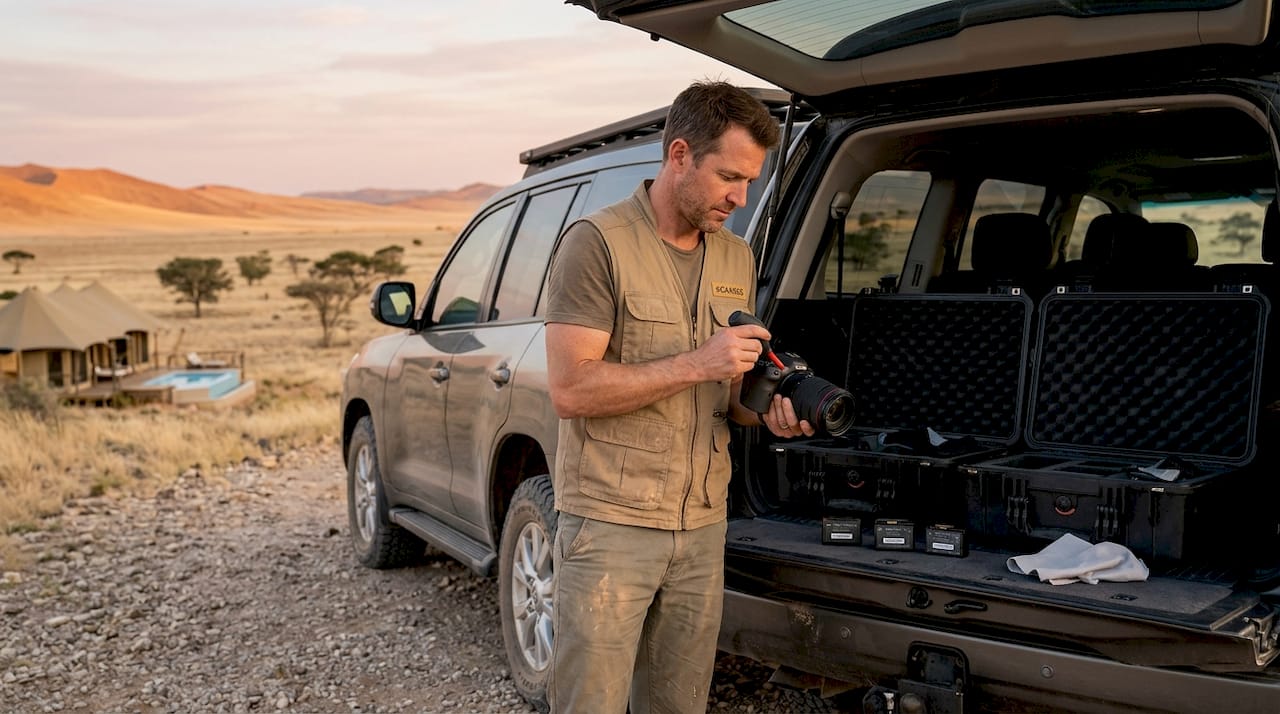
Dust management is non-negotiable. Use camera rain covers even in dry conditions, because Namibian dust behaves like water and gets everywhere. Change lenses inside your vehicle with windows up, never outside. Clean your sensor and lenses every evening at camp. An air blower is worth its weight in gold here.
Essential gear for Namibia’s conditions:
A telephoto lens of at least 400mm for close-up wildlife portraits
A wide-angle lens for sweeping landscape and environmental storytelling shots
A sturdy bean bag for vehicle-mounted stability
Dust-proof camera covers or dry bags
Spare batteries, as heat significantly reduces battery performance
A quality air blower and microfibre cloths for nightly cleaning
Field technique priorities:
Shoot during the golden hours: dawn from around 6am and dusk from around 4pm in the dry season
Avoid midday shooting unless cloud cover softens the harsh shadows
Pair your telephoto shots with wide environmental frames for visual storytelling diversity
Use your vehicle as a mobile hide, keeping movements slow and deliberate
Set your ISO conservatively in golden light, then raise it confidently in low-light waterhole situations
Pro Tip: Always carry a fully charged spare battery on your person, not in your bag. Heat drains batteries 30 to 40 percent faster than normal, and the last thing you want is a flat battery when a leopard strolls into your frame.
For photographers seeking a base that truly understands your needs, Wolwedans Dunes Lodge in the NamibRand Nature Reserve offers extraordinary landscape photography opportunities in one of Namibia’s darkest night skies.
Capturing action, composition, and storytelling moments
With your gear ready, it’s time to elevate your images by capturing stories, action, and the beauty of Namibia’s magnificent fauna. Technical preparation gets you to the moment. What you do in the moment determines the image.
Action photography in Namibia rewards those who anticipate behavior through signs like sudden vulture activity or unusual silence, rather than simply reacting when movement erupts. When a herd of elephants breaks into a run or a lion lunges at the waterhole’s edge, burst mode is your best friend. Fire continuous shots and choose the decisive frame in post.
Composition principles that transform good shots into great ones:
Apply the rule of thirds: place your subject off-centre with space to move into
Include environmental context, a lone oryx against the white Etosha pan, to tell a richer story
Frame predators low in the frame to emphasise scale and dominance
Capture interactions between animals for genuine storytelling depth
Seek multigenerational shots, a mother elephant guiding her calf, for emotional resonance
A storytelling sequence to shoot at any waterhole:
Arrival: wide shot showing the approaching animals and landscape context
Tension: medium shot of wary body language before drinking
Action: close portrait during drinking, dust-kicking, or interaction
Departure: wide shot of animals receding into the landscape
“One image shows you an animal. A sequence of images tells you who that animal is.”
Pro Tip: Watch for early behavioral signals before action begins. A zebra raising its head sharply, or a jackal slinking away, often signals that a predator is approaching a waterhole. These moments of tension, before the action, often produce your most compelling frames.
For inspiration on where to base your photography journey, our guide to the best lodges for wildlife photographers highlights properties with outstanding wildlife access and photographic infrastructure.
Why patience and local knowledge are your ultimate tools
Here is something most photography guides won’t tell you directly: the photographers who return from Namibia with portfolio-defining images are rarely the ones with the most expensive gear. They are the ones who stayed at the waterhole for an extra 20 minutes when everyone else drove away. They listened to their guide when he said, quietly, “wait here.”
Local guides carry years of pattern recognition that no app or map can replicate. They know which waterhole the big male lion visited last Tuesday. They notice the subtle flick of an ear above the grass line. Building a relationship with your guide, asking questions, and genuinely listening transforms a standard safari into a rare photographic opportunity.
Rushing is the single biggest mistake photographers make in Etosha. Patience is not passive. It is an active strategy. Our expert safari photography tips reinforce this principle throughout, and the photographers who internalize it always leave with stronger images.
Explore luxury safaris designed for photographers
Ready to put these pro tips into practice on a tailor-made luxury adventure? Secret Namibia specialises in crafting bespoke safari experiences that put you in exactly the right place at exactly the right time.
From luxury wildlife experiences centred on premier game viewing to fully custom safaris in Namibia designed around your photography goals and schedule, we handle every detail. Whether you’re chasing golden-hour elephant herds at Nebrownii or seeking the floodlit drama of Okaukuejo at midnight, our tailored luxury safaris ensure you arrive prepared, supported, and inspired. Get in touch with our team today to start building your perfect photographer’s itinerary.
Frequently asked questions
When is the best time to photograph wildlife in Namibia?
The dry season from May to October offers the highest animal concentration at waterholes, making it the optimal window for wildlife photography in Namibia.
What are the top waterholes for wildlife photography in Etosha?
Okaukuejo, Nebrownii, Chudop, Salvadora, and Rietfontein are the standout waterholes, each offering distinct species, lighting conditions, and photographic opportunities.
How can I protect my camera gear in Namibia’s harsh conditions?
Use dust covers and blowers, change lenses inside your vehicle, clean all gear nightly, and pack at least two spare batteries to handle the heat.
What is the most useful expert tip for action wildlife shots in Namibia?
Learn to anticipate behavior via signs like vulture movement or sudden silence, then engage burst mode the moment action begins to ensure you capture the decisive frame.
Recommended
RELATED
Safari Guides
Oct 30, 2025
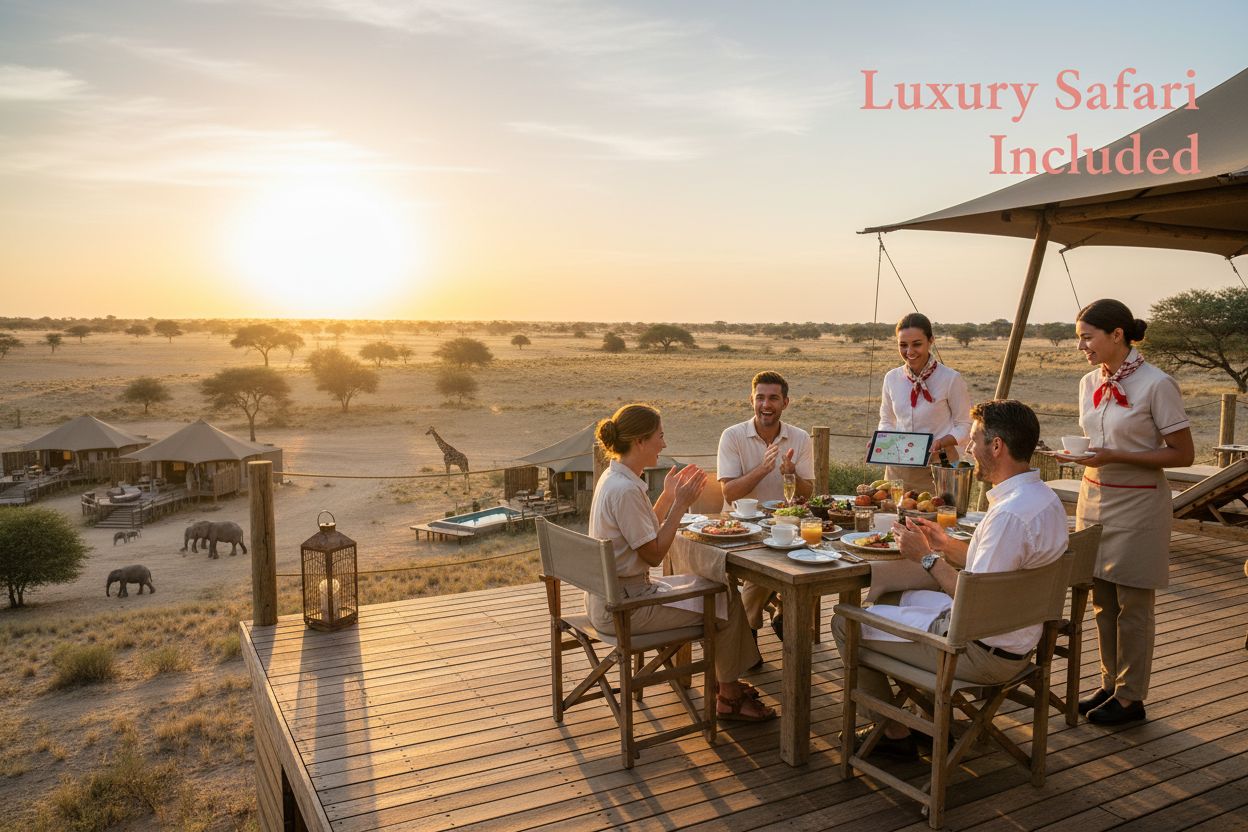
Understanding What is Included in Luxury Safaris
Explore what is included in luxury safaris, from exclusive accommodations to bespoke experiences that cater to discerning travelers.
Feb 24, 2026
Why Namibia Adventures Matter: An In-Depth Look
Discover why Namibia adventures are essential for luxury travelers seeking unique, immersive experiences in nature and wildlife exploration.
Feb 23, 2026
What to Expect on a Luxury Safari: A Comprehensive Guide
Discover what to expect on a luxury safari and gain a deeper understanding of the unique experiences that await you in the wild.
Feb 22, 2026
Understanding Namibia Safari Costs Explained
Explore Namibia safari costs explained to uncover what influences pricing and what it means for your adventure.
Feb 21, 2026
Understanding the Role of Safari Experts in Wildlife Travel
Explore the role of safari experts and gain a comprehensive understanding of how they enhance wildlife travel experiences for all types of travelers.
Feb 20, 2026
Guide organisation safari all inclusive : vivez l'aventure de vos rêves
Découvrez notre guide organisation safari all inclusive étape par étape pour planifier un voyage inoubliable au cœur de la nature.