
Apr 2, 2026
Discover what makes a photo safari in Namibia extraordinary. From essential gear and techniques to guided vs self-drive options, plan your perfect photography adventure.
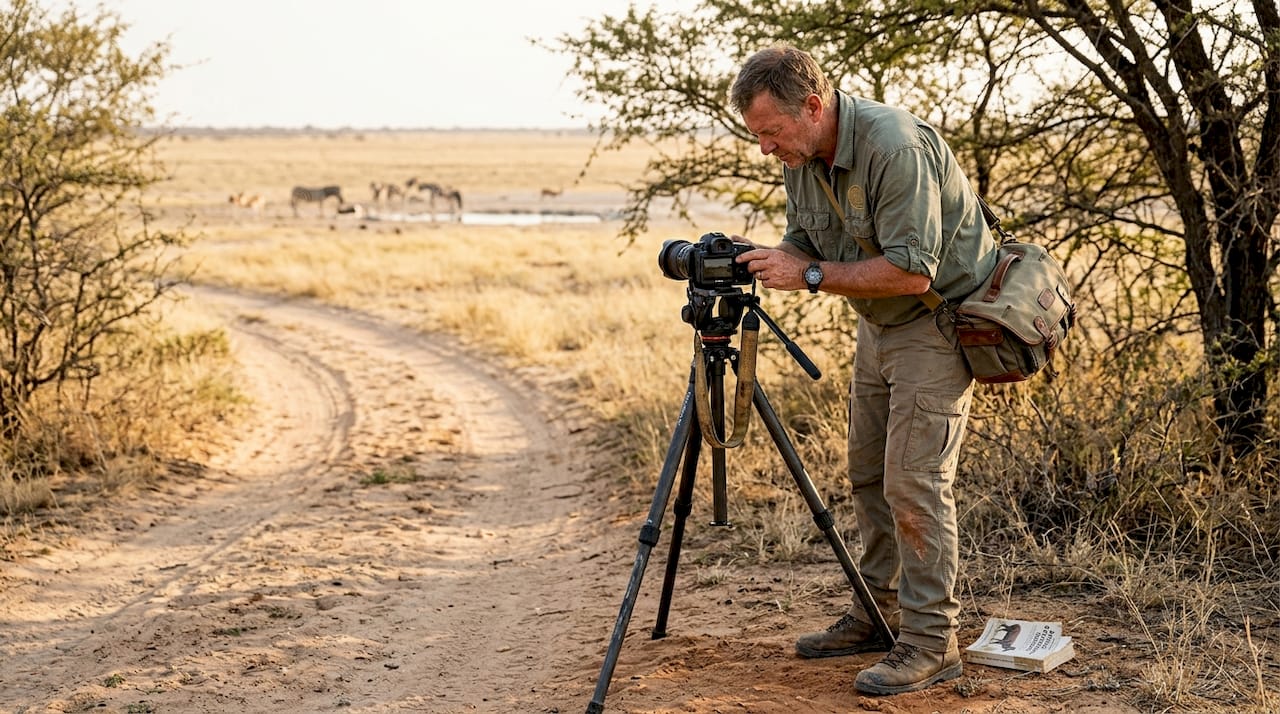
Discover the magic of a photo safari in Namibia
A regular safari and a photo safari might sound like the same adventure, but they are worlds apart. One is about witnessing Namibia’s magnificent wildlife; the other is about capturing it in a way that tells a story long after you’ve returned home. Namibia’s vast open landscapes, golden desert light, and extraordinary wildlife make it one of the most rewarding destinations on earth for photography. Whether you’re an experienced photographer or simply someone who wants to return with images that truly reflect the wonder of this remarkable country, this guide covers everything you need to know.
Table of Contents
What defines a photo safari
Essential gear and photography techniques
Choosing between guided and self-drive photo safaris
Maximising your Namibia photo safari experience
The overlooked art of storytelling in photo safaris
Elevate your Namibian photo safari with expert guides
Frequently asked questions
Key Takeaways
Point | Details |
|---|---|
Photo safaris explained | A photo safari is a specialized wildlife adventure focused on capturing the best possible images, different from a classic safari. |
Essential techniques matter | Expert camera settings and the right equipment are key for stunning wildlife photos. |
Choose your experience | Guided safaris offer expert access while self-drive options provide maximum flexibility in Namibia’s unique landscapes. |
Maximize your shots | Plan for lighting, comfort, and ethical wildlife distances to capture unforgettable moments. |
Story over snapshot | The most powerful safari photos tell a story—focusing on narrative and emotion, not just the subject. |
What defines a photo safari
A photo safari is a purposefully designed travel experience where photography is the central focus, not just a bonus activity. Every decision, from vehicle choice to departure times, is made to maximise your photographic opportunities. This is a fundamentally different experience from a classic safari, where the goal is primarily observation and enjoyment of wildlife in its natural setting.
On a unique safari experiences focused on photography, you’ll typically find smaller groups, vehicles with open sides or custom camera mounts, and itineraries that revolve around golden hour light rather than fixed meal schedules. Expert photographer guides don’t just help you spot animals; they help you understand light, composition, and timing in the field.
Namibia is particularly well suited to this style of travel. The country’s open, uncluttered landscapes allow for dramatic wide shots that simply aren’t possible in densely forested destinations. From the sculpted red dunes of Sossusvlei to the vast salt pans of Etosha, every environment here offers something visually extraordinary.
Standard safari vs photo safari: a quick comparison
Feature | Standard safari | Photo safari |
|---|---|---|
Primary focus | Wildlife observation | Photography and storytelling |
Group size | Often larger | Small, typically 4 to 6 people |
Timing | Fixed schedules | Flexible, light-driven |
Vehicle setup | Standard game vehicle | Camera mounts, beanbags, open sides |
Guide expertise | Wildlife tracking | Wildlife tracking plus photography |
Pace | Activity-driven | Patience-driven |
Key things that set a photo safari apart include:
Itinerary flexibility to stay longer at a sighting when the light is perfect
Expert instruction from guides who understand both animal behaviour and camera technique
Specialised vehicles designed to minimise camera shake and obstruction
Low-light access including dawn and dusk drives when wildlife is most active
As guided vs self-drive comparisons show, both approaches offer real photographic value, but the structure of your experience shapes the kind of images you’ll come home with.
Essential gear and photography techniques
Now that you know what sets a photo safari apart, let’s look at what gear and photography skills you truly need.
You don’t need to arrive with a studio’s worth of equipment, but the right tools make an enormous difference in Namibia’s challenging and varied conditions. The country’s intense midday light, dusty roads, and fast-moving wildlife all demand specific preparation.
Here’s what experienced photographers recommend bringing:
Telephoto zoom lens (100 to 500mm or 200 to 600mm range) for wildlife at distance
Wide-angle lens for sweeping landscape shots in the Namib Desert or Etosha
Backup batteries and memory cards as charging points can be scarce in remote areas
Sturdy beanbag or travel tripod for stability in a moving vehicle
Weather-sealed camera body to handle dust and occasional rain
Lens cloths and sealed bags to protect gear on dusty tracks
On the technical side, safari photography techniques consistently point to a few non-negotiable settings: use manual mode with auto ISO for fast adaptability, keep shutter speeds above 1/1000s to freeze animal movement, and always shoot in RAW format. RAW files retain far more data than JPEGs, giving you much greater flexibility when editing exposure and colour in post-processing.
Golden hours, the first hour after sunrise and the last before sunset, produce the warm, directional light that makes Namibia’s landscapes look almost otherworldly. Plan your most ambitious shots around these windows. For luxury photo safaris, guides will often build the entire day’s schedule around these moments.
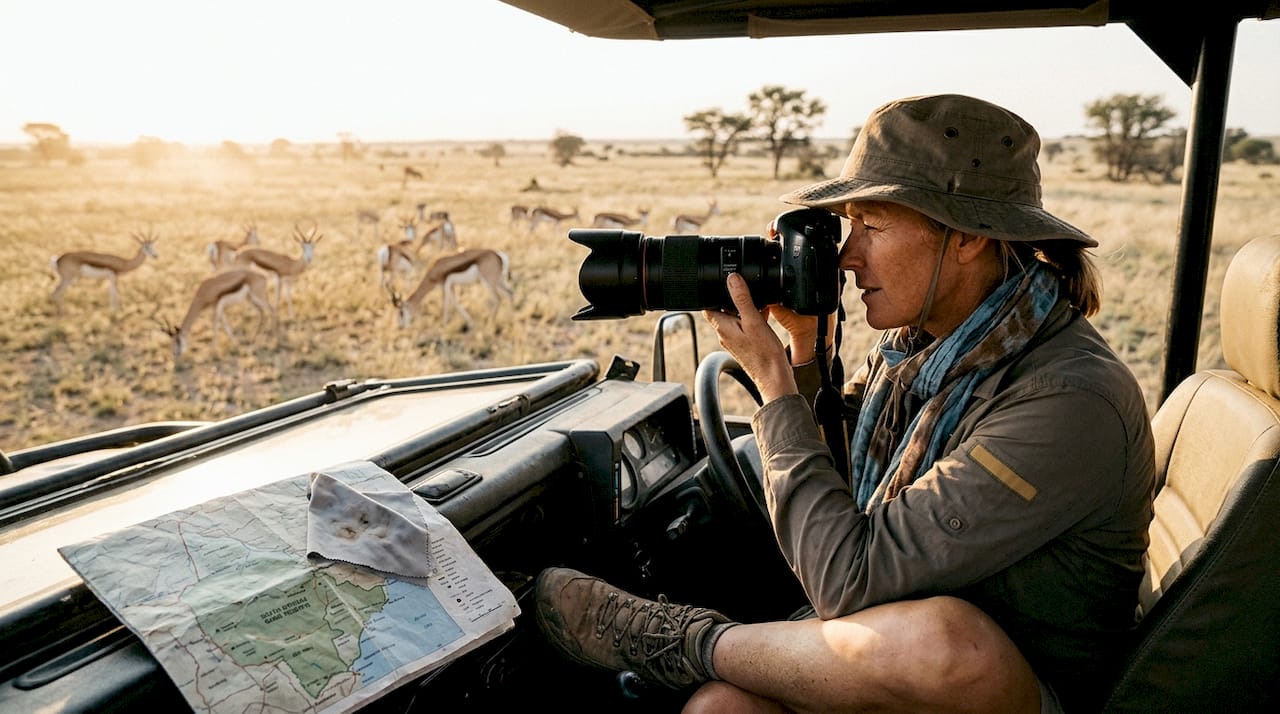
Low and eye-level shots are another powerful technique. Getting the camera down to an animal’s eye level, even from a vehicle, creates a sense of intimacy and connection that high-angle shots simply cannot match.
Pro Tip: Namibia’s roads are notoriously dusty, and fine red sand will find its way into everything. Keep lens cloths in your pocket at all times, and store your camera in a weather-sealed bag between shoots. A single grain of sand in the wrong place can ruin a lens.
Choosing between guided and self-drive photo safaris
With the right gear in hand, the next big decision is how you’ll experience your photo safari.
Both guided and self-drive options have genuine merit in Namibia, and the right choice depends on your experience level, photography goals, and appetite for adventure. Understanding the key differences will help you plan more effectively.
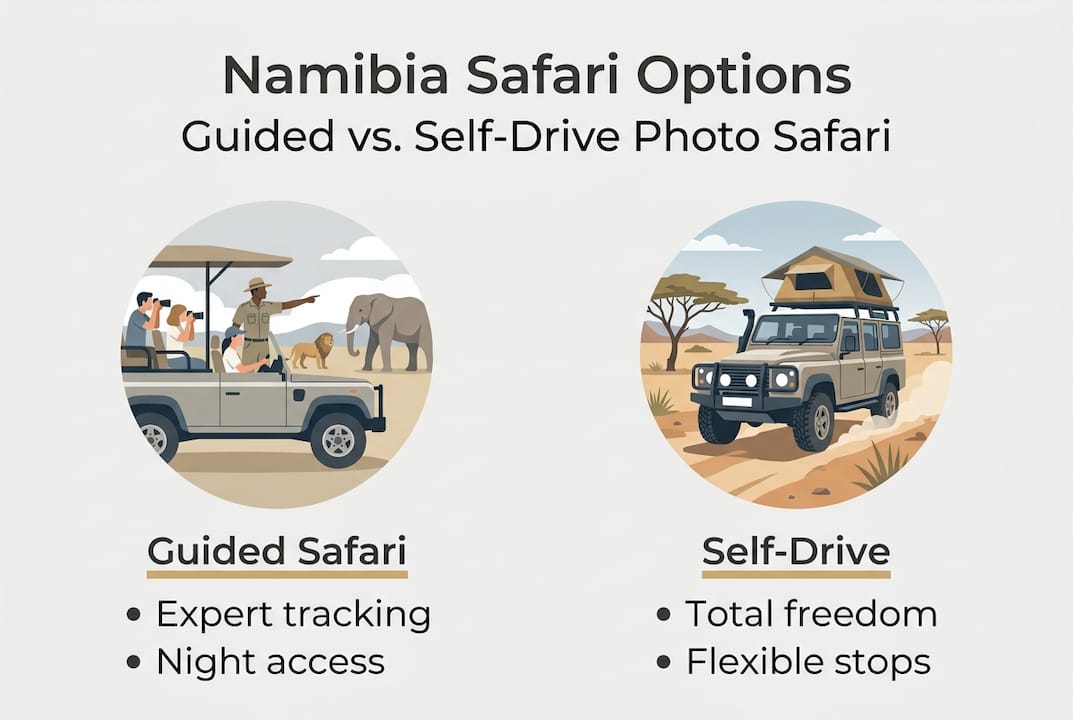
Guided photo safaris offer a structured, expert-led experience. Your guide handles tracking, logistics, and safety, while you focus entirely on photography. Many private reserves allow off-road driving and night drives, opening up sightings and lighting conditions that public parks simply don’t permit. The group dynamic can also be inspiring, with fellow photographers sharing techniques and enthusiasm.
Self-drive photo safaris give you total freedom. You stop when you want, stay as long as the light holds, and explore at your own pace. Etosha National Park is one of Namibia’s finest self-drive destinations, with well-maintained roads, excellent waterhole hides, and reliable wildlife concentrations. The trade-off is that you carry full responsibility for navigation, safety, and route planning.
Consideration | Guided safari | Self-drive safari |
|---|---|---|
Expert tracking | Yes | No |
Off-road access | Often available | Restricted in national parks |
Night drives | Available on private reserves | Not permitted in most parks |
Flexibility | Moderate | Very high |
Cost | Higher | More budget-friendly |
Ideal for | First-timers, specialist photography | Experienced travellers |
For itinerary planning, consider which parks and regions suit each approach. Etosha and the Namib Desert work beautifully for self-drive, while Damaraland and private concessions reward the guided experience with rare and exclusive sightings.
As photo safari types research confirms, guided safaris offer off-road and night access with expert tracking, while self-drive delivers maximum flexibility for landscape work.
Pro Tip: Consider a hybrid approach. Book a guided experience for specialist wildlife sightings in private areas, then add a self-drive leg through Etosha or the Namib for flexible landscape photography. Many luxury safari booking options can be tailored to combine both styles seamlessly.
Maximising your Namibia photo safari experience
Once you’ve chosen your safari style, here’s how to make every moment count in Namibia’s unique settings.
Timing is everything. Wildlife is most active and most photogenic at dawn and dusk, when temperatures are cooler and the light is extraordinary. Plan your mornings around being in position before sunrise, not after. The green season in Namibia brings dramatic storm skies and lush greenery that transform the visual character of the landscape, though conditions are hotter and more humid. The dry season concentrates wildlife around waterholes, making it easier to predict and frame your shots.
“Namibia’s light is unlike anywhere else in Africa. The combination of open skies, minimal humidity, and vast flat landscapes creates photographic conditions that professional photographers travel thousands of miles to experience.”
Here’s a practical morning checklist to set yourself up for success:
Wake before first light and check your camera settings from the previous evening
Charge batteries overnight and load fresh memory cards before heading out
Pack water, snacks, and sun protection before departure
Position yourself at a waterhole or known wildlife corridor before sunrise
Set your shutter speed above 1/1000s and switch to burst mode for action shots
Stay quiet and patient; sudden noise disturbs animals and ruins sightings
Comfort matters more than most photographers admit. Namibia’s sun is relentless, and dehydration affects both your concentration and your creativity. Wear neutral, earth-toned clothing to avoid startling wildlife, and always carry more water than you think you’ll need.
For luxury safari ideas that combine comfort with extraordinary photography, the right safari package options can make a significant difference to your overall experience and the quality of images you capture.
The overlooked art of storytelling in photo safaris
Beyond logistics and gear, here’s why your approach to photography truly matters.
The most technically perfect image of a lion at golden hour is not necessarily the most powerful photograph from your trip. What separates a memorable photo safari image from a forgettable one is rarely the equipment or even the subject. It’s the intention behind the shot.
Affluent travellers who invest in tailored safari adventures often arrive focused on ticking off the “big five” in photographic form. That’s understandable. But the images that genuinely move people tend to capture mood, atmosphere, and a sense of place rather than just a sharp wildlife portrait. A lone oryx standing against a blood-red Sossusvlei dune at dusk tells a story. A technically crisp close-up of the same animal in flat midday light does not.
Ask yourself before each shot: what am I actually trying to say with this image? Is it the scale of the landscape? The vulnerability of a young animal? The silence of the desert at dawn? That question changes everything about how you frame, expose, and time your photographs.
Pro Tip: Keep a short daily log of what you saw, felt, and noticed beyond the camera. Unexpected details, the smell of rain on dry earth, the sound of silence at a waterhole, become the richest material for captions, stories, and memories that outlast any image.
Elevate your Namibian photo safari with expert guides
If you’re ready to turn inspiration into unforgettable memories, expert guidance can make all the difference.
Namibia’s landscapes reward those who know where to look and when to be there. Planning a photo safari that delivers both luxury wildlife experiences and genuine photographic opportunity takes local knowledge, insider access, and meticulous attention to detail.
At Secret Namibia, we specialise in crafting bespoke itineraries that place you in the right location at the right moment, whether that’s a private waterhole at sunrise or a remote desert dune at golden hour. Our luxury safari planning service is built around your photography goals, your comfort, and your sense of adventure. Get in touch with our team to start designing your perfect Namibia photo safari today.
Frequently asked questions
What is the difference between a regular safari and a photo safari?
A photo safari optimises every aspect of the trip, from timing to vehicle setup, specifically to help travellers capture high-quality wildlife and landscape images, while a regular safari is primarily centred on observation. As photo safari approaches show, the difference lies in expert guidance and intentional planning for photography.
Do I need a professional camera to enjoy a photo safari?
Many travellers enjoy photo safaris with high-end smartphones or entry-level DSLRs, and what matters most is capturing the moment well. Expert techniques apply regardless of camera, though telephoto zooms offer meaningful extra reach for distant wildlife.
Is Namibia a good destination for self-drive photo safaris?
Absolutely. Namibia’s open landscapes and parks like Etosha are ideal for self-drive photo safaris, offering excellent flexibility and reliable wildlife sightings. Self-drive photo safaris are particularly popular here for the freedom they provide.
What season is best for a photo safari in Namibia?
The dry season concentrates wildlife around waterholes for predictable, dramatic shots, while the green season offers spectacular storm skies and lush scenery, though conditions are hotter. Both seasons offer genuinely rewarding photographic opportunities depending on your subject preference.
What’s the most important tip for first-timers on a photo safari?
Patience and preparation are everything. Expert recommendations consistently highlight that readiness for unexpected moments, combined with a calm and observant mindset, produces the most memorable wildlife images.
Recommended
RELATED
Safari Guides
Oct 30, 2025
Understanding What is Included in Luxury Safaris
Explore what is included in luxury safaris, from exclusive accommodations to bespoke experiences that cater to discerning travelers.
Feb 24, 2026
Why Namibia Adventures Matter: An In-Depth Look
Discover why Namibia adventures are essential for luxury travelers seeking unique, immersive experiences in nature and wildlife exploration.
Feb 23, 2026
What to Expect on a Luxury Safari: A Comprehensive Guide
Discover what to expect on a luxury safari and gain a deeper understanding of the unique experiences that await you in the wild.
Feb 22, 2026
Understanding Namibia Safari Costs Explained
Explore Namibia safari costs explained to uncover what influences pricing and what it means for your adventure.
Feb 21, 2026
Understanding the Role of Safari Experts in Wildlife Travel
Explore the role of safari experts and gain a comprehensive understanding of how they enhance wildlife travel experiences for all types of travelers.
Feb 20, 2026
Guide organisation safari all inclusive : vivez l'aventure de vos rêves
Découvrez notre guide organisation safari all inclusive étape par étape pour planifier un voyage inoubliable au cœur de la nature.