
Apr 17, 2026
Discover the best time to travel to Namibia for luxury safaris. Seasonal insights on wildlife, regions, and bespoke planning for affluent travelers.
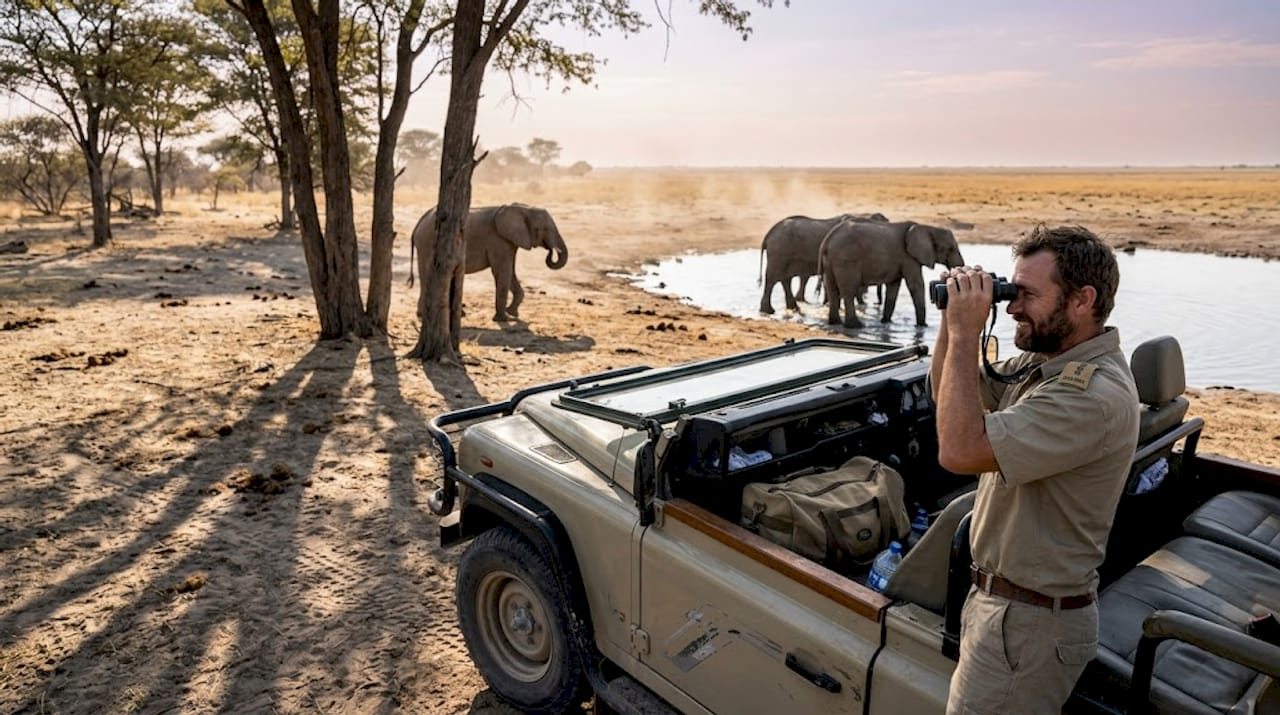
Best time to travel to Namibia for luxury safaris
TL;DR:
Namibia’s dry season from April to October offers optimal wildlife viewing with animals drawn to water sources.
The green season from November to March provides lush landscapes, vibrant birdlife, and fewer crowds.
Planning requires early booking, considering regional climate variations, and tailoring experiences to seasonal highlights.
Namibia is one of those rare destinations where the calendar genuinely transforms your experience. The same landscape that bakes under a fierce July sun becomes an emerald tapestry of life by January, and the wildlife spectacles shift just as dramatically. Many luxury travelers assume the dry season is the only window worth booking, but that thinking leaves extraordinary experiences on the table. Whether you’re dreaming of desert-adapted lions prowling ancient riverbeds or vast floodplains alive with migratory birds, timing your trip correctly is the single most powerful decision you’ll make. This guide breaks down every season, region, and practical consideration so you can plan with confidence.
Table of Contents
Understanding Namibia’s climate and safari seasons
Wildlife encounters: When and where to go for extraordinary sights
Luxury safari logistics: Planning around the best season
Region-by-region breakdown: Best months to visit each Namibian icon
Our take: Defining your best season for ultimate safari luxury
Unlock luxury safari experiences tailored to your season
Frequently asked questions
Key Takeaways
Point | Details |
|---|---|
Peak wildlife season | June to October delivers the most abundant wildlife viewing in Namibia’s top parks. |
Green season exclusivity | November to March is perfect for solitude, dramatic scenery, and unique luxury experiences. |
Regional variation | The best month varies by location—Etosha, Skeleton Coast, and Caprivi each shine at different times. |
Advance planning pays | Booking luxury safaris early ensures access to premium lodges and custom itinerary options. |
Understanding Namibia’s climate and safari seasons
Namibia’s weather follows two broad rhythms that shape everything from road access to animal behaviour. The dry season runs from April through October, while the wet season (locally called the green season) spans November through March. Understanding the climate impact on safaris is the foundation of any well-planned luxury itinerary.
During the dry season, vegetation thins out and permanent water sources become magnets for wildlife. Animals concentrate around waterholes in predictable patterns, making sightings almost effortless. Namibia’s dry season brings exceptional wildlife viewing, and this is when most luxury lodges reach full occupancy. Temperatures are comfortable during the day, though nights in the desert can drop sharply, so packing a warm layer is essential.
The green season flips the script entirely. Rainfall transforms the arid landscape into a lush oasis for wildlife, flowers bloom across the Namib, and the light for photography becomes spectacularly soft. Crowds thin noticeably, and many premium lodges offer more flexible rates. If exclusivity and intimacy are high on your wishlist, this is a season worth serious consideration.
A few edge cases are worth noting:
The Skeleton Coast experiences dense fog from June through October, which creates a hauntingly atmospheric setting but can limit visibility in the mornings.
The Caprivi Strip (Zambezi Region) receives significantly more rainfall in summer, making it lush and ideal for birding but occasionally challenging for vehicle access.
Coastal regions remain cooler year-round due to the cold Benguela Current.
Season | Months | Wildlife viewing | Landscape | Crowds |
|---|---|---|---|---|
Dry | April–October | Excellent | Golden and sparse | High |
Green | November–March | Good to great | Lush and dramatic | Low |
Shoulder | April–May, October | Very good | Transitional beauty | Moderate |
Pro Tip: The shoulder months of April to May and October are arguably the sweet spot for luxury travelers. You get strong wildlife sightings, pleasant temperatures, and fewer fellow guests at the lodges.
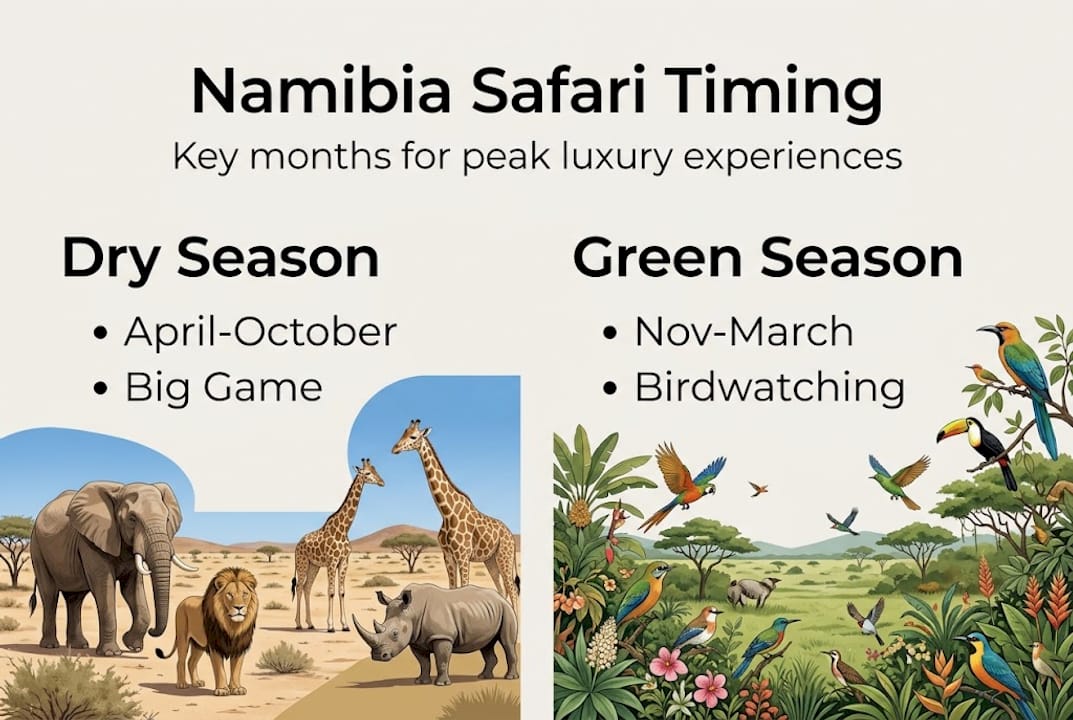
Packing essentials by season: Dry season calls for light, neutral-coloured clothing, a warm fleece for early morning game drives, and quality sunscreen. Green season requires a waterproof layer, insect repellent, and a sense of adventure for those dramatic afternoon thunderstorms.
Wildlife encounters: When and where to go for extraordinary sights
Now that climate patterns are clear, let’s map them to Namibia’s unrivalled wildlife spectacles. The peak window for game viewing runs from May through October, when animals are easiest to spot and track. However, the green season from December through March offers its own remarkable rewards that many luxury travelers overlook entirely.
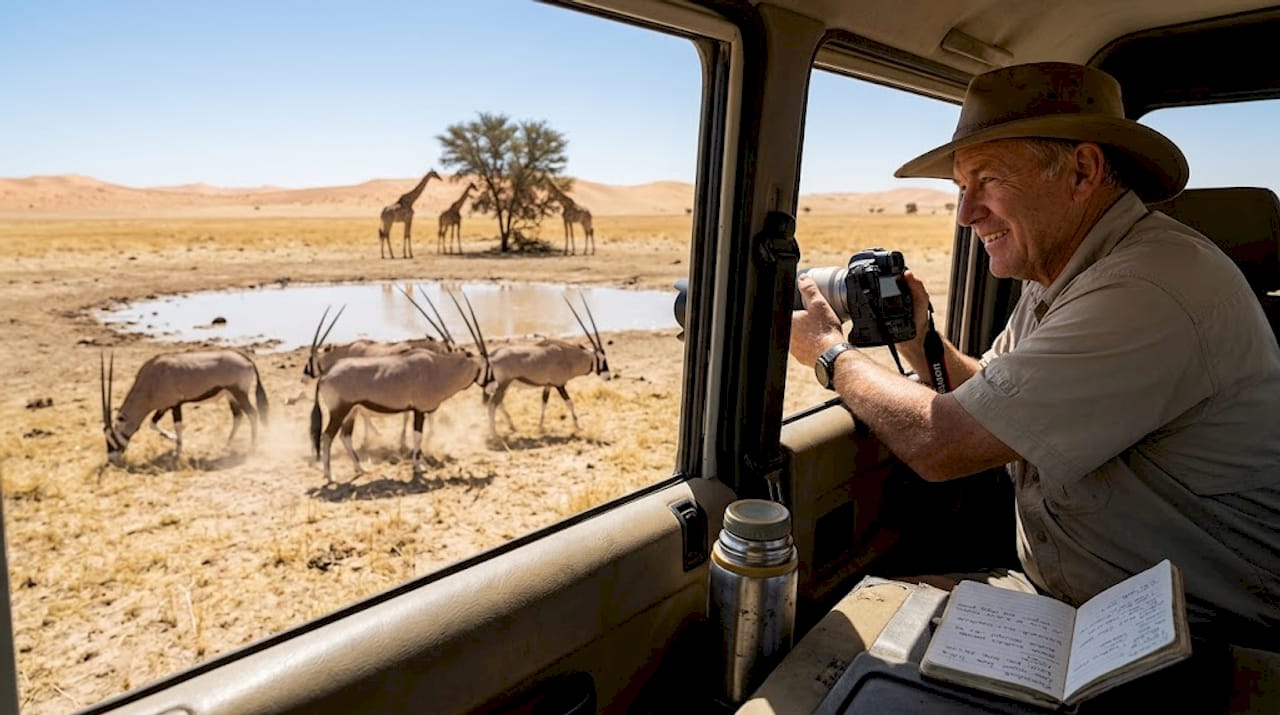
Etosha National Park is Namibia’s crown jewel for wildlife density, and its dry season performance is simply magnificent. Elephant herds, black rhino, lion, and giraffe all converge at the famous floodlit waterholes. For something genuinely rare and unforgettable, the desert adapted lions of the Hoanib and Hoarusib riverbeds can be encountered year-round, though the dry months make tracking far easier.
The green season delivers its own spectacle. Over 600 bird species have been recorded in Namibia, and the summer months bring a flood of Palearctic and intra-African migrants. The Caprivi Strip transforms into a birder’s paradise, with species like the African skimmer and Pel’s fishing owl drawing serious wildlife enthusiasts from around the world.
Region | Best season | Key species | Luxury highlight |
|---|---|---|---|
Etosha | June–September | Elephant, lion, rhino | Floodlit waterhole viewing |
Skeleton Coast | Year-round | Brown hyena, seals, desert lion | Remote fly-in access |
Caprivi Strip | November–March | 600+ bird species, hippo | Private river lodges |
Damaraland | May–October | Desert elephant, black rhino | Guided tracking experiences |
For those seeking unique safari experiences, timing your visit around specific events adds extraordinary depth. Zebra and wildebeest migrations occur in Etosha during the wet season, a spectacle far less publicised than East Africa’s famous crossings but genuinely impressive.
May to July: Ideal for predator activity as prey animals concentrate at waterholes.
August to October: Peak dry season; maximum wildlife density but also peak lodge prices.
December to February: Green season birding at its finest; dramatic storm skies for photographers.
March to April: Late rains bring newborn animals and abundant food for predators.
Pro Tip: Ask your guide to focus on riverbeds during the dry season. Even in the driest months, underground water sustains vegetation along ancient watercourses, and elephants in particular dig for water in these channels, creating extraordinary close-up encounters.
Luxury safari logistics: Planning around the best season
With wildlife and climate understood, logistical strategy ensures your trip matches your aspirations. The most common mistake affluent travelers make is underestimating how quickly Namibia’s top-tier lodges fill up, particularly during the peak dry season months of July through September.
Booking early in Namibia is not just advisable, it is essential for securing your first-choice accommodation. The finest private camps and luxury lodges often sell out 12 to 18 months in advance for the peak season. If your dates are flexible, the shoulder seasons of April to May and October reward spontaneity with availability and value.
Here are the key logistical considerations for planning a seamless luxury safari:
Book 12 to 18 months ahead for peak season (July to September) at top lodges.
Consider charter flights between regions to save time and access remote areas like the Skeleton Coast and Damaraland, which are impractical by road for some itineraries.
Opt for a 4x4 vehicle if you plan any self-drive during the green season, as roads in wet season require higher clearance on gravel tracks.
Build flexibility into your itinerary for weather-related adjustments, especially in the Caprivi during summer.
Pair regions strategically: Combine Etosha in the dry season with Sossusvlei’s dunes for a classic itinerary, or link the Caprivi with Damaraland for a green season adventure.
For luxury safari planning, working with a specialist who has personal relationships with lodge managers makes a tangible difference. Access to exclusive experiences, private vehicle game drives, and behind-the-scenes conservation activities are rarely available through standard booking channels.
Private guiding upgrades are often negotiable when booking through specialists.
Some lodges offer exclusive-use buyouts during the green season at competitive rates.
A luxury boutique hotel in Windhoek makes an excellent start or end point for any itinerary, combining comfort with easy airport access.
Pro Tip: Always request a private vehicle for game drives rather than sharing with other guests. In Namibia’s top concessions, this is often included in luxury rates and transforms your sighting time from rushed to deeply immersive.
Region-by-region breakdown: Best months to visit each Namibian icon
For travelers who want every icon to shine, here’s how to match location with month. Namibia’s regions are diverse enough that a single trip can span multiple climate zones, each with its own seasonal character.
Etosha National Park is at its magnificent best from June through September. Animals gather at the famous waterholes in extraordinary concentrations, and the flat, white pan creates a surreal backdrop for photography. Night drives reveal leopard, aardvark, and brown hyena in the golden beam of a spotlight.
Sossusvlei and the Namib Desert offer striking photographic conditions from April through October, when the dunes glow in shades of amber and crimson under clear skies. The green season brings a rare and fascinating perspective: occasional rains cause the white clay pan to flood, creating mirror-like reflections of the surrounding dunes that feel almost otherworldly.
“The Skeleton Coast is foggiest from June through October, while the Caprivi receives its heaviest rainfall in summer, creating two very different but equally compelling seasonal experiences.”
The Skeleton Coast is foggiest June through October, but late afternoons typically clear to reveal dramatic coastal scenery. Cape fur seal colonies, desert-adapted brown hyena, and the raw, shipwrecked coastline are accessible year-round via fly-in safaris.
Caprivi Strip: November through March for birding and lush floodplains. Hippo and crocodile are visible year-round along the Chobe and Kwando rivers.
Damaraland: May through October for desert elephant and black rhino tracking on foot.
Fish River Canyon: April through September for hiking and dramatic canyon views in comfortable temperatures.
For those beginning or ending their journey in the capital, exploring Windhoek highlights adds cultural depth to any itinerary. Central Namibia also offers fascinating stops between major safari regions, including cheetah conservation centres and historic German colonial architecture. If you prefer to stay in a characterful property, boutique hotels in Namibia offer intimate alternatives to large chain hotels throughout the country.
Our take: Defining your best season for ultimate safari luxury
After examining popular seasons and regions, here’s our candid advice: the concept of a single “best time” is a myth that does a disservice to Namibia’s extraordinary range of experiences. The dry season delivers undeniable wildlife density and ease of viewing, but it is also the most crowded and expensive window. Treating it as the only valid option means missing out on some of the most intimate and visually stunning experiences this country offers.
The green season, in our experience, consistently surprises travelers who arrive with modest expectations and leave utterly captivated. Lush scenery, dramatic skies, and the sense of having a vast wilderness almost entirely to yourself are genuinely rare luxuries. When customising your safari, we always encourage clients to articulate their priorities first: is it maximum wildlife sightings, photographic light, exclusivity, or a combination? The answer shapes the timing far more precisely than any generic seasonal guide. Our hard-won lesson: always ask your lodge contact which specific weeks they personally consider the most magical. That insider knowledge is worth more than any published calendar.
Unlock luxury safari experiences tailored to your season
Choosing the right season is just the beginning. The real magic lies in crafting an itinerary that aligns every detail, from lodge selection to private guiding and charter flights, with your personal vision of the perfect safari.
At Secret Namibia, we specialise in exactly this kind of bespoke planning. Whether you’re drawn to the golden silence of the dry season or the electric energy of the green season, our team has the relationships and expertise to unlock experiences that simply aren’t available off the shelf. Explore our range of luxury wildlife experiences and discover how tailored luxury safaris can be shaped around your ideal season, pace, and wishlist. Your most extraordinary African adventure starts with a conversation.
Frequently asked questions
When is Namibia’s dry season and why is it best for wildlife?
Namibia’s dry season runs from April to October, concentrating animals around scarce water sources and stripping vegetation back so sightings become far more frequent and predictable.
Is the green season worth considering for luxury travelers?
Absolutely. The green season from November through March offers lush, photogenic landscapes, significantly fewer tourists, and exceptional birding, making it a genuinely compelling choice for discerning travelers.
Are road conditions a concern during the wet season?
Most main roads remain accessible year-round, but a 4x4 in wet season is strongly recommended for reaching remote lodges and off-road safari areas safely.
What is the best month to visit Etosha National Park?
June through September is peak season in Etosha, when wildlife at waterholes reaches its most concentrated and spectacular, offering extraordinary sightings of elephant, lion, and black rhino.
Recommended
RELATED
Safari Guides
Oct 30, 2025
Understanding What is Included in Luxury Safaris
Explore what is included in luxury safaris, from exclusive accommodations to bespoke experiences that cater to discerning travelers.
Feb 24, 2026
Why Namibia Adventures Matter: An In-Depth Look
Discover why Namibia adventures are essential for luxury travelers seeking unique, immersive experiences in nature and wildlife exploration.
Feb 23, 2026
What to Expect on a Luxury Safari: A Comprehensive Guide
Discover what to expect on a luxury safari and gain a deeper understanding of the unique experiences that await you in the wild.
Feb 22, 2026
Understanding Namibia Safari Costs Explained
Explore Namibia safari costs explained to uncover what influences pricing and what it means for your adventure.
Feb 21, 2026
Understanding the Role of Safari Experts in Wildlife Travel
Explore the role of safari experts and gain a comprehensive understanding of how they enhance wildlife travel experiences for all types of travelers.
Feb 20, 2026
Guide organisation safari all inclusive : vivez l'aventure de vos rêves
Découvrez notre guide organisation safari all inclusive étape par étape pour planifier un voyage inoubliable au cœur de la nature.