
Jul 30, 2026
Discover the ultimate safari camp experience! Enjoy luxury, privacy, and thrilling wildlife encounters in picturesque settings.
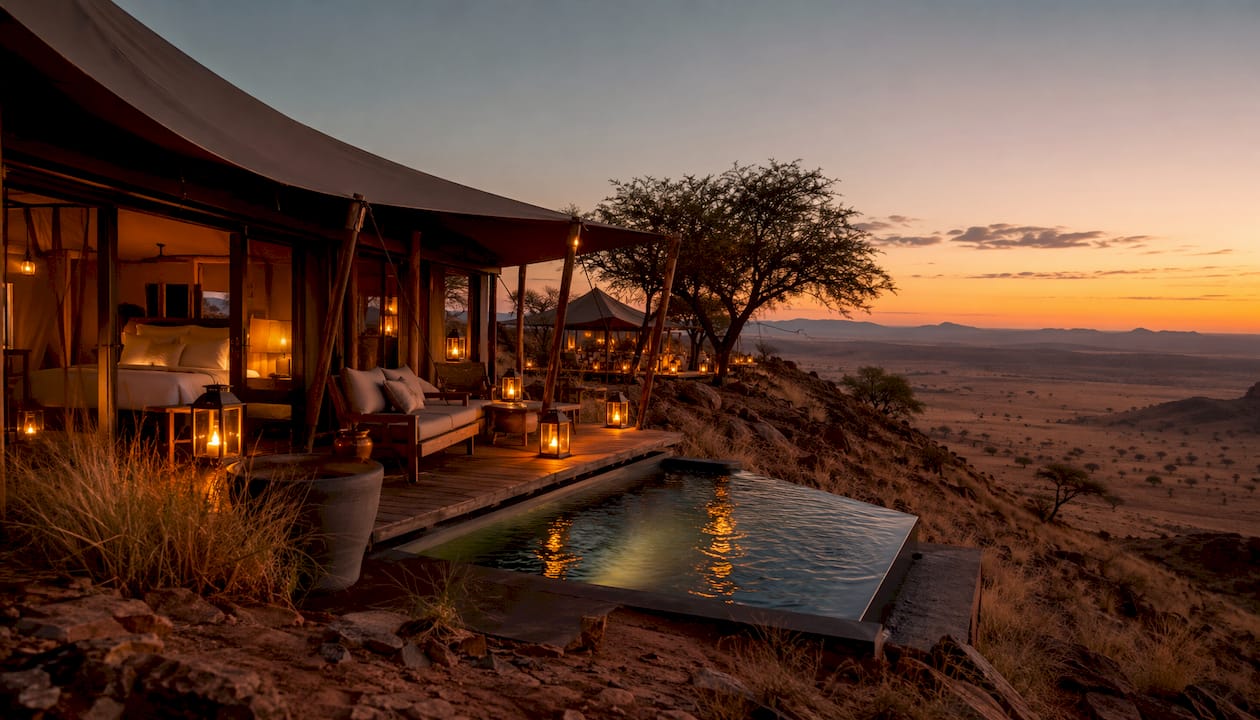
Safari camp experience: the luxury traveller’s guide
TL;DR:
A safari camp offers an immersive experience inside or near wilderness, combining wildlife viewing with genuine downtime.
Choosing the right camp type and region depends on your comfort, wildlife priorities, and adventure level, and should be booked early.
A safari camp experience is an immersive overnight stay inside or adjacent to protected wilderness, where guided game drives, bush activities, and camp-based hospitality create a multi-day rhythm of wildlife viewing and genuine downtime. It is not a hotel with animals nearby. It is the animals nearby, with a thoughtfully designed camp around you.
TL;DR: First-timers and families do best at permanent tented camps or lodges with structured routines and reliable wildlife. Luxury travellers seeking privacy and personalised service should look at exclusive fly-in camps or private-reserve lodges. Adventurous travellers who want raw immersion will find mobile tented camps the most memorable option of all.
Every authentic safari camp experience shares a handful of defining elements:
Accommodation: canvas tents, open-air lodges, or bush bandas positioned within or on the edge of wilderness
Guided activities: morning and afternoon game drives, bush walks, night drives, or water-based excursions led by professional guides
Dining: all meals prepared and served at camp, often around a communal fire or under open skies
Transfers: light aircraft, 4x4 road transfers, or boat connections between camps and airstrips
Inclusions: most mid-range and luxury camps bundle meals, activities, and laundry; park fees and drinks vary by property
Read on for a full comparison of camp types, regions, budgets, and how Secretnamibia designs bespoke Namibia luxury experiences for US travellers.
Table of Contents
What types of safari camps can you choose from?
Where should you go? Key African safari regions explained
What actually changes when you upgrade to a luxury camp?
What does a typical day at a safari camp look like?
How do you choose the right camp and book from the US?
What do safari camps cost, and what do sample itineraries look like?
Why Namibia, and how does Secretnamibia design the experience?
Key takeaways
What actually makes a safari camp unforgettable?
Plan your Namibia luxury safari camp with Secretnamibia
Useful sources and further reading
What types of safari camps can you choose from?
The camp type you choose shapes everything: how close you sleep to wildlife, how much comfort surrounds you, and how flexible your itinerary can be. There are five main styles, each suited to a different kind of traveller.
Permanent tented camps
These are fixed-location canvas structures with en-suite bathrooms, solid floors, and year-round operations. Governors’ Camp in Kenya’s Masai Mara, established in 1972 as Africa’s first permanent luxury tented camp, is the archetype: tents overlooking the Mara River, professional guides, and up to three game drives per day. Permanent camps suit first-timers who want reliability and families who need predictable routines.
Pros: consistent amenities, experienced guiding teams, year-round access
Cons: less flexibility to follow wildlife movements, more guests on-site
Mobile tented camps
Mobile camps move with the seasons and the animals, setting up in remote areas that permanent infrastructure cannot reach. Canvas tents, campfire meals, and off-grid locations mean wildlife steps from your tent and no permanent footprint. Photographers and thrill-seekers love them.
Pros: extraordinary wildlife proximity, intimate atmosphere, unique locations
Cons: fewer amenities, seasonal availability, not ideal for young children or those with mobility needs
Luxury lodges
Stone, timber, and thatch construction with private plunge pools, butler service, and curated menus. These are the most comfortable option and often sit on exclusive private reserves where vehicle numbers are capped. Romance travellers and those celebrating milestone trips gravitate here.
Pros: highest comfort, privacy, personalised service
Cons: highest price point, sometimes less “wild” in feel
Bush camps
Smaller, simpler, and more affordable than luxury lodges, bush camps prioritise proximity to nature over amenities. Shared facilities are common. They attract budget-conscious travellers and those who want a genuine wilderness feel without the full luxury price tag. Secretnamibia’s African bush camp experiences page covers this style in detail.
Pros: affordable, intimate, close to nature
Cons: limited facilities, variable guiding quality
Fly-in exclusive camps
Accessible only by light aircraft, these camps sit in remote wilderness that road vehicles cannot reach. Guest numbers are tiny, sometimes as few as six to ten rooms, and the exclusivity is total. Privacy seekers and repeat safari travellers who have “done” the classic parks choose these.
Pros: unmatched exclusivity, pristine wildlife areas, personalised attention
Cons: highest cost, limited accessibility for elderly travellers or those with health considerations
Dimension | Permanent tented | Mobile | Luxury lodge | Bush camp | Fly-in exclusive |
|---|---|---|---|---|---|
Comfort level | High | Moderate | Very high | Basic–moderate | Very high |
Wildlife proximity | High | Very high | High | High | Very high |
Price range shape | Mid–luxury | Mid–luxury | Luxury | Budget–mid | Ultra-luxury |
Family accessibility | Good | Limited | Good | Moderate | Limited |
Typical seasonality | Year-round | Seasonal | Year-round | Year-round | Seasonal |
Pro Tip: If you are torn between mobile and permanent tented camps, ask yourself one question: do you want the camp to find the wildlife, or the wildlife to find the camp? Mobile camps chase the animals; permanent camps let the animals come to them over years of habituation.
Where should you go? Key African safari regions explained
Region choice is as important as camp type. Each ecosystem shapes what you see, when you go, and how you get there.
Namibia
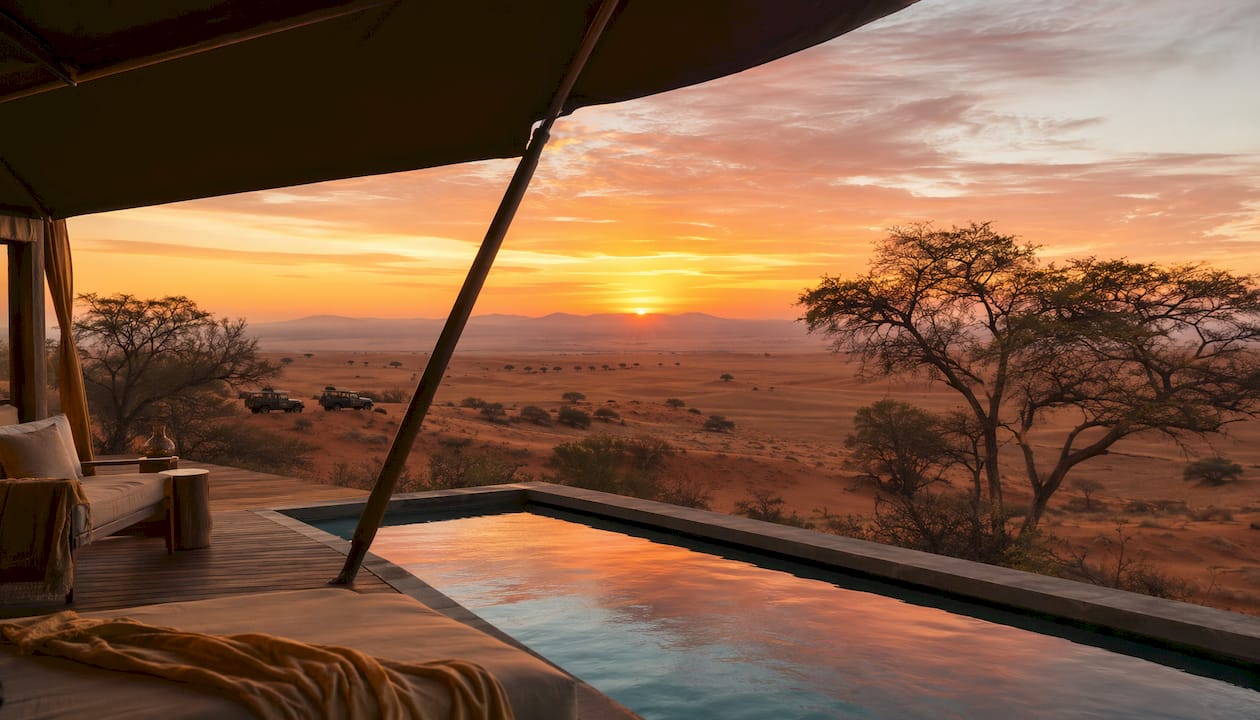
Namibia is the standout choice for travellers who want desert-meets-wilderness drama. Vast arid pans, towering red dunes, and extraordinary open skies create a safari backdrop unlike anywhere else in Africa. Etosha National Park offers remarkable concentrations of elephant, lion, and black rhino around floodlit waterholes, while the Namib Desert and Damaraland deliver landscapes of almost surreal beauty. Fly-in camps and luxury tented properties dominate the premium end; self-drive options make Namibia unusually accessible for independent travellers too. Secretnamibia specialises in this region, and the luxury Namibia safari collection covers the full range of camp styles.
Seasonality: The dry season (May–October) is peak for wildlife concentration around waterholes. The green season (November–April) brings dramatic skies and fewer visitors, with significant price reductions at many properties.
Okavango Delta, Botswana
Water-based and land-based activities combine in one of Africa’s most extraordinary ecosystems. Mokoro canoe trips, boat safaris, and walking excursions alongside game drives make the Delta genuinely multi-dimensional. Mobile camps and fly-in exclusives thrive here because road access is limited or impossible in many areas.
Seasonality: The annual flood (June–August) is peak season, when wildlife concentrates on islands and water levels are high. Dry-season months (September–October) offer excellent land-based game viewing.
Serengeti and Maasai Mara
The Great Wildebeest Migration draws more visitors to this ecosystem than any other single wildlife event in Africa. The dry season (June–October) brings the migration to the Mara River crossings in Kenya; February marks the calving season on the southern Serengeti plains. Permanent tented camps and lodges dominate, with mobile camps following the migration for the most intimate experience.
Seasonality: Peak demand is July–October and February. Green-season travel (November–May) can reduce camp rates by 20–60% while offering newborn wildlife and dramatic skies.
Kruger and Greater Kruger, South Africa
South Africa’s flagship safari destination combines accessibility with extraordinary wildlife density. The Greater Kruger private reserves, including Sabi Sand and Timbavati, offer some of Africa’s finest leopard sightings. Self-drive options within Kruger National Park make this the most budget-accessible major safari destination on the continent. Luxury lodges on private concessions sit alongside mid-range rest camps inside the park.
Seasonality: The dry winter months (June–September) are best for game viewing as vegetation thins. Summer (November–February) is lush and hot, with excellent birding.
South Luangwa, Zambia
Walking safaris were pioneered here, and the tradition remains the park’s defining experience. Night drives are also permitted, revealing civets, genets, and nocturnal predators. Permanent tented camps and intimate bush camps suit the style of travel here. The Luangwa River draws extraordinary concentrations of hippos and crocodiles.
Seasonality: The dry season (June–October) is the only viable time for most camps; many close during the green season when roads flood.
Ngorongoro Crater, Tanzania
The crater floor holds one of the densest concentrations of wildlife on earth, including a resident population of black rhino. Day visits from lodges on the crater rim are the standard format; overnight camping inside the crater is restricted. The compact geography means sightings are almost guaranteed.
Logistics note: Most Ngorongoro visits combine a road transfer from Arusha with crater-rim lodge accommodation. Fly-in access is available via Manyara airstrip for those combining with Serengeti camps.
What actually changes when you upgrade to a luxury camp?
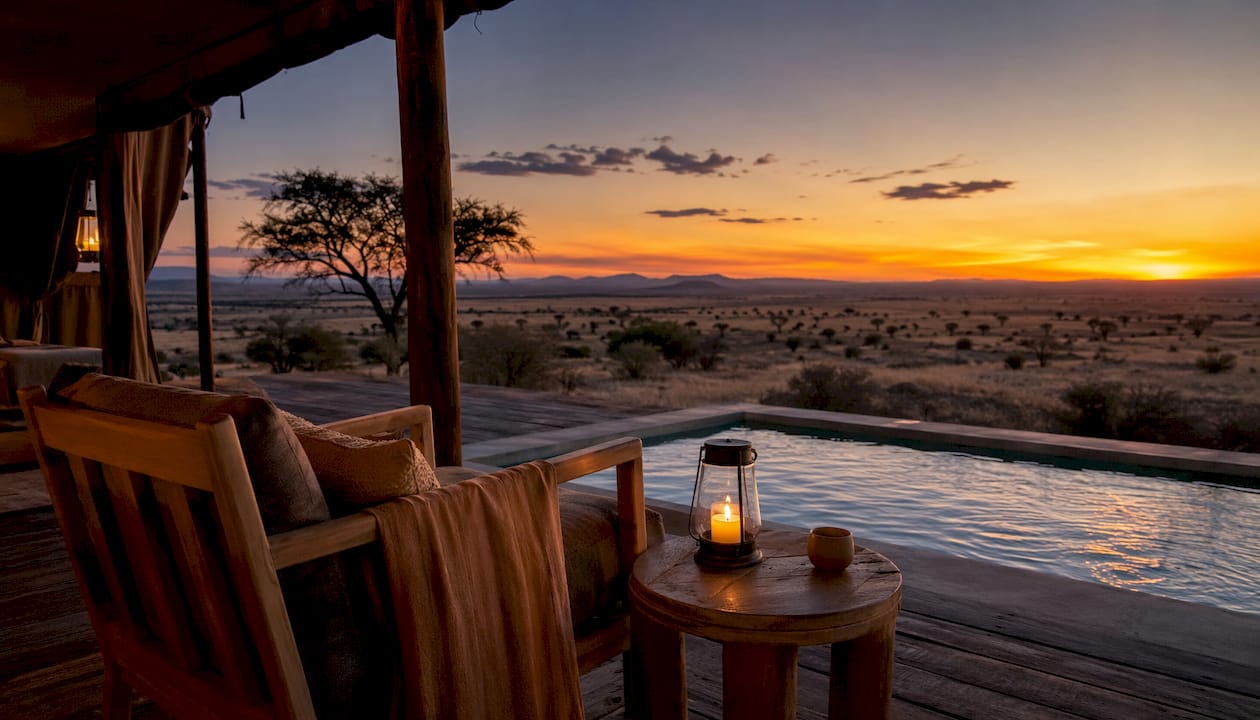
The honest answer: privacy, location, and the quality of human attention. Luxury camps are not simply more comfortable versions of standard camps. They are fundamentally different products.
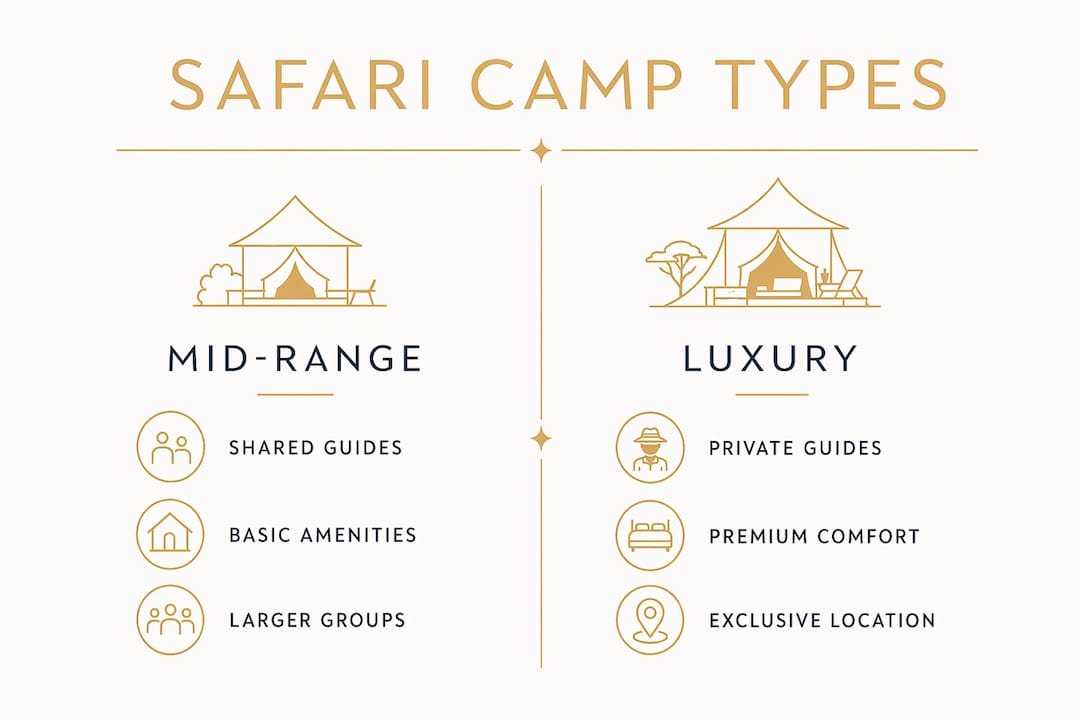
At a mid-range camp, you share a guide with a vehicle of six to eight guests. At a luxury property, you often have a private vehicle and guide from day one. The guide becomes your interpreter of the bush, and guides are the product — the wildlife is the raw material. That distinction shapes every hour of your trip.
Location exclusivity is the other major differentiator. Many luxury camps sit on private concessions where no other vehicles operate. You will not arrive at a leopard sighting to find twelve other Land Cruisers already parked. The silence around a sighting, the ability to stay as long as you want, and the freedom to go off-road are privileges that only private land can offer.
Other concrete differences at the luxury end:
Higher staff-to-guest ratios, often approaching one-to-one
Culinary standards that rival fine restaurants, with menus adapted to dietary needs
Curated activities beyond game drives: bush walks, cultural visits, star-gazing, spa treatments
Personalised itinerary adjustments mid-trip based on your interests and wildlife movements
Pricing shape: Mid-range daily costs run roughly $450–$600 per person; luxury camps commonly start at $1,000 or more per person per day, reaching much higher for ultra-exclusive fly-in properties.
Sustainability is increasingly a genuine differentiator at the luxury end, not just a marketing claim. Governors’ Camp, for example, operates on 100% solar power. Credible luxury operators support anti-poaching units, employ local communities in skilled roles, and hold third-party eco-certifications. When a camp claims to be eco-friendly, ask for specifics: what percentage of staff are from local communities, which conservation programmes receive direct funding, and whether the camp holds a recognised certification such as Rainforest Alliance or Fair Trade Tourism.
What does a typical day at a safari camp look like?
Most camps include meals, two daily game activities, laundry service, and transfers between camps. International flights, some premium drinks, gratuities, and certain park fees are typically excluded. Here is how a standard day unfolds:
5:00–5:30 AM Wake-up call; tea, coffee, and light snacks served before departure
5:30–6:30 AM Morning game drive departs; wildlife is most active around sunrise
9:30–10:30 AM Return to camp; full cooked breakfast served
10:30 AM–3:30 PM Midday rest; pool time, reading, optional spa, or guided nature walks near camp
3:30–4:00 PM Afternoon tea and light refreshments before the second activity
4:00–7:00 PM Afternoon game drive, often ending with sundowners in the bush
7:30–9:00 PM Dinner around the campfire or in the dining area; guide debrief and star-gazing
The midday rest is not dead time. Experienced operators note that the rhythm of the bush — the long pauses, the guide’s interpretation, the sounds of camp at noon — often becomes the most memorable part of a trip for guests who arrive expecting non-stop sightings.
Safety and camp rules
Always follow your guide’s instructions around wildlife; never stand up in the vehicle or extend limbs outside
Walk between tents only with a camp escort after dark; predators move through camp areas
In tsetse fly zones (common across central and southern Africa, excluding the Namib Desert), avoid wearing black or dark blue clothing, as these colours attract the flies
Keep tent zips closed at all times to prevent small animals and insects from entering
What to pack
Clothing colour matters more than most travellers expect. Khaki, olive, tan, and muted green help you blend into the environment and avoid startling wildlife. Bright colours and bold patterns are best left at the lodge. Beyond colour:
SPF 50+ sunscreen, reapplied during morning drives; UV levels on open plains are intense even in cooler months
Lightweight long-sleeved shirts and a warm fleece or jacket for pre-dawn drives
Closed-toe shoes for bush walks
Wide-brimmed hat and UV-protective sunglasses
Binoculars (though wildlife on private reserves often approaches vehicles closely enough that you may not need them)
A portable power bank for long game drives
Pro Tip: Dehydration on safari is insidious — the dry heat and excitement of early starts mean you rarely feel thirsty until you are already behind. Carry an electrolyte mix and drink consistently throughout the morning drive, not just when you notice thirst.
How do you choose the right camp and book from the US?
Start with what matters most to you: the wildlife you most want to see, your comfort threshold, your travel dates, and your budget. Match those priorities to a region and camp type, then work backwards to logistics. That sequence prevents the common mistake of falling in love with a camp before checking whether it fits the trip.
Decision checklist
Trip length: plan for at least three nights per location; shorter stays rarely allow wildlife to habituate to your presence
Age and accessibility: families with young children need camps with minimum age policies and child-friendly activities; elderly travellers should confirm vehicle accessibility and medical evacuation coverage
Wildlife priorities: specific species (rhino, wild dog, gorilla) require specific regions and sometimes permits booked separately
Private vs shared vehicle: private vehicles cost more but transform the experience, especially for photographers
Single-camp vs multi-camp: one camp for seven nights gives depth; two or three camps for three to four nights each gives breadth
Questions to ask any camp or operator
What is included in the daily rate, and what is charged separately?
How long is the transfer from the nearest airstrip or road access point?
What is the minimum stay, and are there single-supplement charges?
What is the children’s policy and minimum age for game drives?
Does the rate include medical evacuation insurance, or should I arrange my own?
What is the guide-to-guest ratio, and are guides assigned privately or shared?
Red flags to watch for
Vague inclusions lists that do not specify whether park fees, activities, or transfers are covered
Extremely low staff-to-guest ratios at properties claiming to be luxury
Conservation claims with no named programme, certification, or community partner
No mention of medical evacuation coverage or emergency protocols
Booking from the US, you have two main routes: direct with the camp, or through a specialist operator like Secretnamibia. Direct booking works for straightforward single-camp trips; a specialist adds value when you are combining multiple regions, need visa and vaccination guidance, or want someone to manage logistics if something changes on the ground. Pre-travel requirements for most African safari destinations include yellow fever vaccination (required for some border crossings), malaria prophylaxis, travel insurance with medical evacuation cover, and passport validity of at least six months beyond your return date.
Top camps book 12–18 months in advance for peak season. If you are targeting July–October in the Serengeti or Okavango, or the February calving season, start planning now.
What do safari camps cost, and what do sample itineraries look like?
The biggest cost drivers are season, location remoteness, transfer type (road vs fly-in), and what the daily rate includes. A fly-in camp in a remote Botswana concession will always cost more than a road-accessible lodge in Greater Kruger, even at the same comfort level.
Band | Daily rate per person | Typical inclusions | Recommended minimum nights |
|---|---|---|---|
Budget | — | Accommodation, some meals | 2–3 nights |
Mid-range | — | Accommodation, all meals, two activities | 3–4 nights |
Luxury | — | All-inclusive, private vehicle, laundry | 3–5 nights |
Sample itinerary A: 6-night introductory Namibia tented camp
Days 1–2: Fly into Windhoek; road transfer to Etosha National Park; two nights at a permanent tented camp with morning and afternoon game drives
Days 3–4: Fly to Sossusvlei; two nights at a desert lodge with dune walks and guided nature excursions
Days 5–6: Transfer to a private Damaraland camp; two nights with rhino tracking and San cultural experiences
Sample itinerary B: 9-night multi-site luxury
Days 1–3: Fly into Windhoek; fly-in transfer to a private Etosha concession camp; three nights with private vehicle and guide
Days 4–6: Fly to Okavango Delta; three nights at a luxury water-based camp with mokoro and game drive activities
Days 7–9: Fly to Chobe; three nights at a river-front luxury lodge with boat safaris and elephant-rich game drives
Sample itinerary C: 5-night mobile tented experience
Days 1–2: Fly into Maun, Botswana; helicopter or light aircraft transfer to a seasonal mobile camp in a remote Delta concession
Days 3–5: Daily game drives and mokoro excursions; camp relocates between days 3 and 4 to follow wildlife movements; fly out from a bush airstrip on day 5
Hidden costs to budget for: international flights (typically the largest single expense for US travellers), gratuities for guides and camp staff (usually $15–$25 per person per day is customary), visas for Tanzania and some other destinations, vaccinations, and comprehensive travel insurance with medical evacuation cover. Peak camps book 12–18 months ahead; build that lead time into your planning calendar.
Why Namibia, and how does Secretnamibia design the experience?
Namibia offers something no other safari destination quite replicates: the collision of ancient desert, open wilderness, and extraordinary wildlife in a country with some of Africa’s lowest visitor numbers. You can stand on a red dune at Sossusvlei at sunrise and see no other person. You can track desert-adapted elephant through Damaraland with a guide who has known those herds for years. You can sleep in a luxury tented camp in Etosha and wake to lion calling across the pan. That combination of scale, solitude, and wildlife density is what makes Namibia the destination of choice for discerning travellers.
Secretnamibia specialises in tailoring these experiences from the ground up, matching each traveller’s priorities to the right camps, the right seasons, and the right pace.
Sample Namibia luxury itinerary snapshot
Day 1: Arrive Windhoek; overnight at a boutique city lodge
Day 2: Fly to Etosha; private vehicle and guide; afternoon game drive around the floodlit waterhole
Days 3–4: Full-day game drives; black rhino and lion sightings are the highlights of this region
Day 5: Fly to Sossusvlei; afternoon dune walk and photography session at Deadvlei
Day 6: Guided desert nature walk; transfer to a Damaraland wilderness camp
Days 7–8: Rhino tracking on foot; San cultural experiences with a local community guide; sundowners on a granite kopje
Day 9: Fly back to Windhoek; depart
Secretnamibia handles every element: camp selection and booking, light aircraft transfers, conservation-minded operator vetting, and on-the-ground support if plans change. The enquiry process is straightforward: share your travel dates, group size, and priorities, and the team builds a custom itinerary around them.
Pro Tip: Namibia’s 7 unique luxury safari experiences page is worth reading before you enquire — it gives a clear picture of what distinguishes Namibia’s camps from those in more heavily visited destinations.
Key takeaways
The single most important planning decision is matching your camp type and region to your wildlife priorities and comfort level, then booking early enough to secure the best properties.
Point | Details |
|---|---|
Book early | Peak camps fill well in advance; start planning well before your target travel window. |
Stay longer per location | Three or more nights per camp improves sightings and reduces transit fatigue. |
Budget realistically | Mid-range daily costs run roughly $450–$600 per person; luxury camps commonly start at $1,000 or more per person per day and rise sharply for fly-in exclusives. |
Pack for the bush | Neutral colours, SPF 50+, layers for pre-dawn drives, and closed-toe shoes are non-negotiable. |
Secretnamibia | Designs bespoke Namibia luxury camp itineraries, handling transfers, operator selection, and custom planning from enquiry to return. |
What actually makes a safari camp unforgettable?
The sightings matter, of course. But the travellers who come back from a safari camp genuinely changed are rarely the ones who saw the most animals. They are the ones who surrendered to the rhythm of it: the 5 AM alarm that felt brutal until the first golden light hit the plains, the guide’s quiet voice explaining a track in the dust, the way a campfire shrinks the world to the people around it and the sounds pressing in from the dark beyond.
There is a particular quality to the silence between sightings on a great safari. Not emptiness, but density. Wind through dry grass. A hornbill landing. The distant percussion of something large moving through scrub. Experienced operators are right when they say the bush rhythm itself is the experience, not just the headline moments. The travellers who feel this most acutely are the ones who chose remote camps, stayed long enough to stop counting animals, and resisted the urge to pack in too many locations.
That is the planning insight worth holding onto: fewer camps, more nights, and a region with genuine wilderness around you. Namibia, for all its drama and scale, rewards exactly that approach.
Plan your Namibia luxury safari camp with Secretnamibia
Secretnamibia builds tailor-made Namibia luxury safari itineraries for US travellers who want the real thing: remote camps, private guides, conservation-minded operators, and an experience designed around their specific interests rather than a standard package.
What Secretnamibia handles: custom itinerary design, light aircraft and road transfer logistics, vetted camp selection across Namibia and Southern Africa, and on-the-ground support throughout your trip
What to expect after enquiring: a personalised itinerary proposal within a few days, with camp options matched to your dates, group size, and priorities, and no obligation to commit until you are ready
Start your enquiry here and tell the team when you want to travel, who is coming, and what matters most to you. Every itinerary is built from scratch.
Useful sources and further reading
Planning a safari camp trip well means going beyond inspiration to practical preparation. The sources below cover the full range, from vaccination requirements to camp photography.
Resource | Type | Best used for |
|---|---|---|
Safari Planner: How to Plan an African Safari | Practical planning | Vaccinations, visas, travel insurance, medevac checklist |
Travo: Complete Guide for First-Timers | Planning and budgets | Seasonality, cost ranges, booking lead times |
Go Safaris Africa: First Safari Guide | Inspiration and mindset | What to expect emotionally and experientially |
Bobby Safaris: First-Time Safari Guide | Practical tips | Dehydration, guides, what no one tells you |
Luxury Escapes: What to Expect on Safari | Inspiration | Clothing, wildlife proximity, game drive expectations |
Secretnamibia: Luxury Namibia Safaris | Booking | Browse camp packages and start an enquiry |
Secretnamibia: What to Expect on a Luxury Namibia Safari | Planning | Namibia-specific camp expectations and inclusions |
Secretnamibia: Enquiry Page | Booking/contact | Submit a custom itinerary request |
This article is general travel information, not professional medical or legal advice. Confirm current visa, vaccination, and entry requirements with the relevant embassy or a qualified travel health professional before you depart.
Recommended
RELATED
Safari Guides
Oct 30, 2025
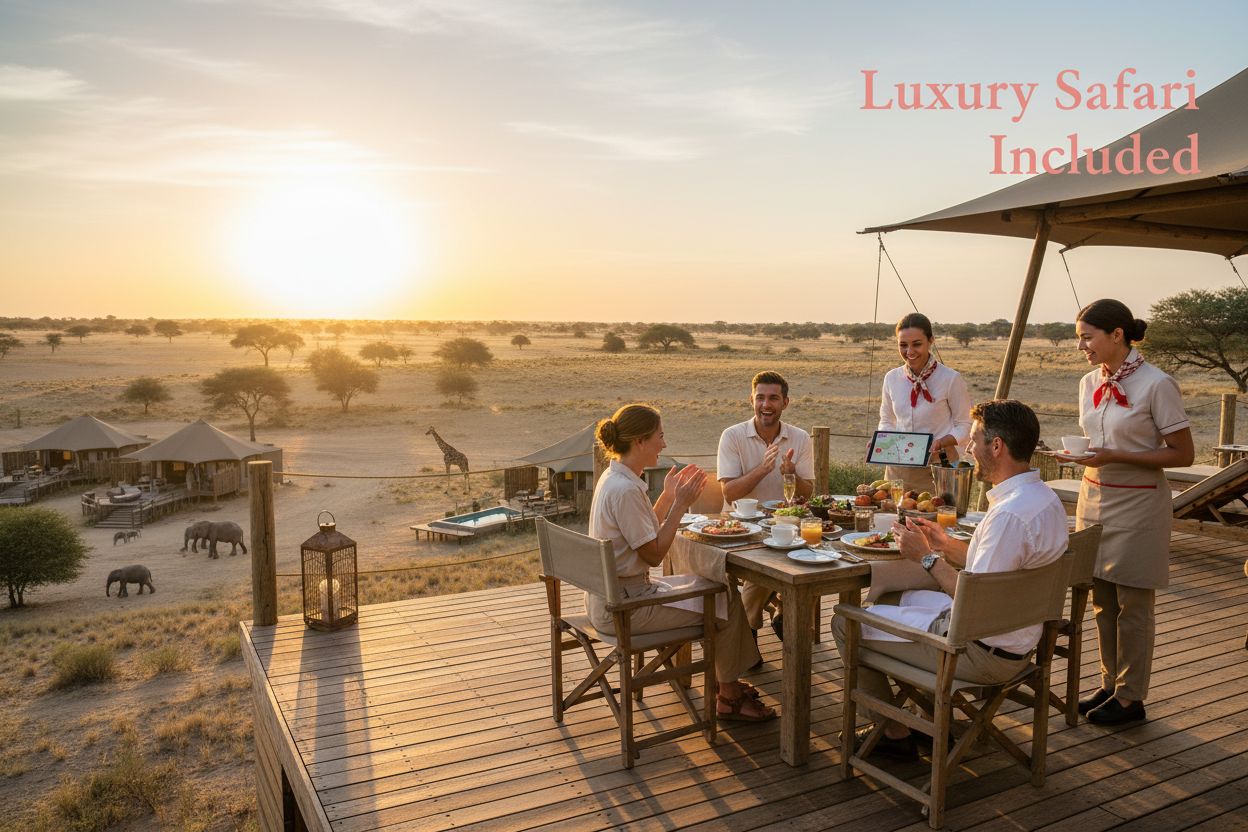
Understanding What is Included in Luxury Safaris
Explore what is included in luxury safaris, from exclusive accommodations to bespoke experiences that cater to discerning travelers.
Feb 24, 2026
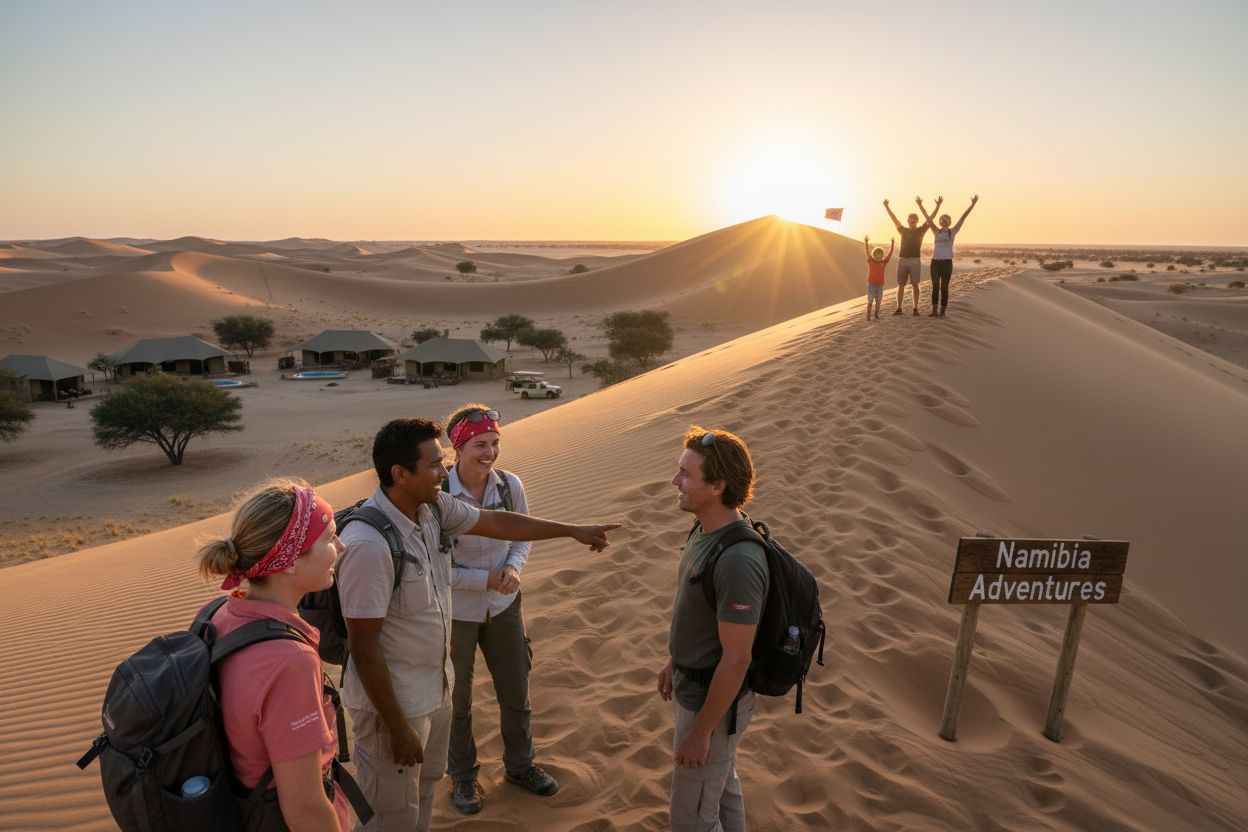
Why Namibia Adventures Matter: An In-Depth Look
Discover why Namibia adventures are essential for luxury travelers seeking unique, immersive experiences in nature and wildlife exploration.
Feb 23, 2026
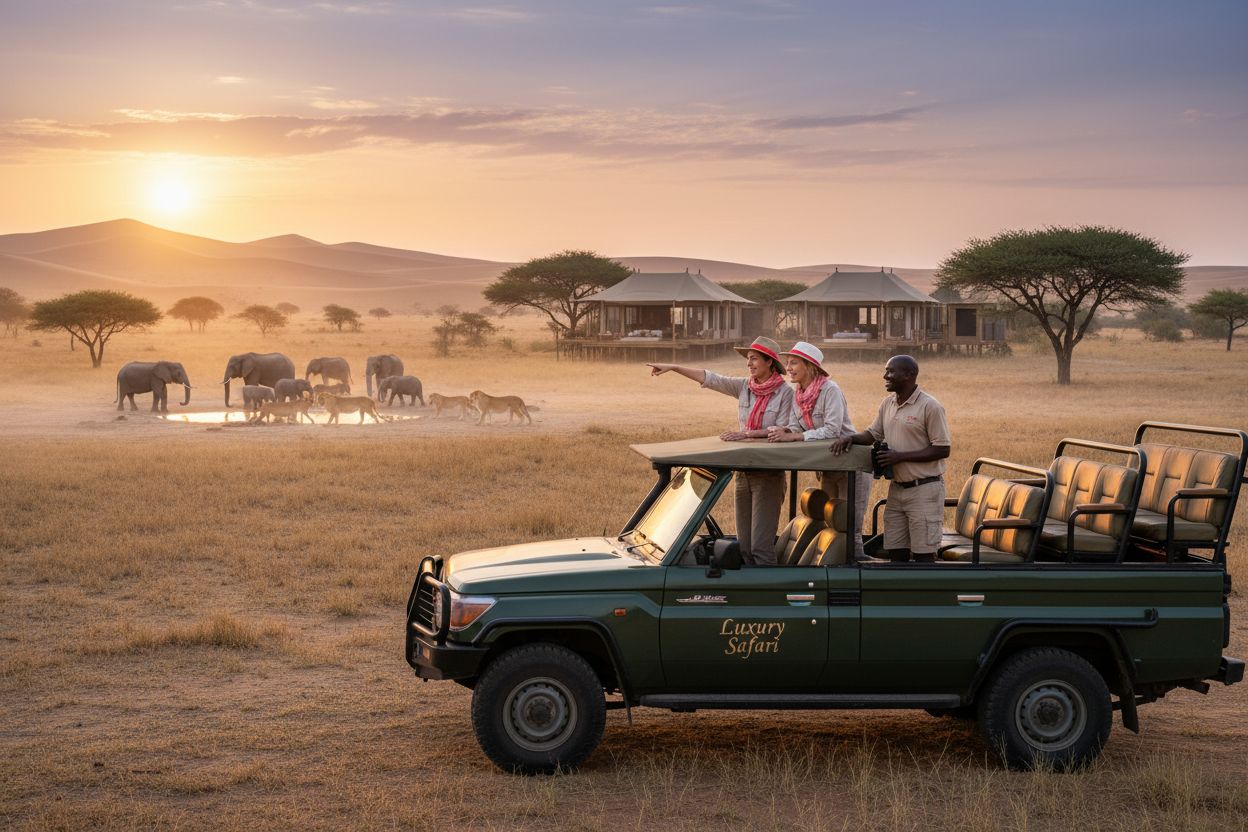
What to Expect on a Luxury Safari: A Comprehensive Guide
Discover what to expect on a luxury safari and gain a deeper understanding of the unique experiences that await you in the wild.
Feb 22, 2026
Understanding Namibia Safari Costs Explained
Explore Namibia safari costs explained to uncover what influences pricing and what it means for your adventure.
Feb 21, 2026
Understanding the Role of Safari Experts in Wildlife Travel
Explore the role of safari experts and gain a comprehensive understanding of how they enhance wildlife travel experiences for all types of travelers.
Feb 20, 2026
Guide organisation safari all inclusive : vivez l'aventure de vos rêves
Découvrez notre guide organisation safari all inclusive étape par étape pour planifier un voyage inoubliable au cœur de la nature.