
Mar 18, 2026
Discover what makes stargazing safaris in Namibia unique for luxury travelers. Learn about Gold Tier dark skies, guided sessions, optimal timing, and exclusive experiences.
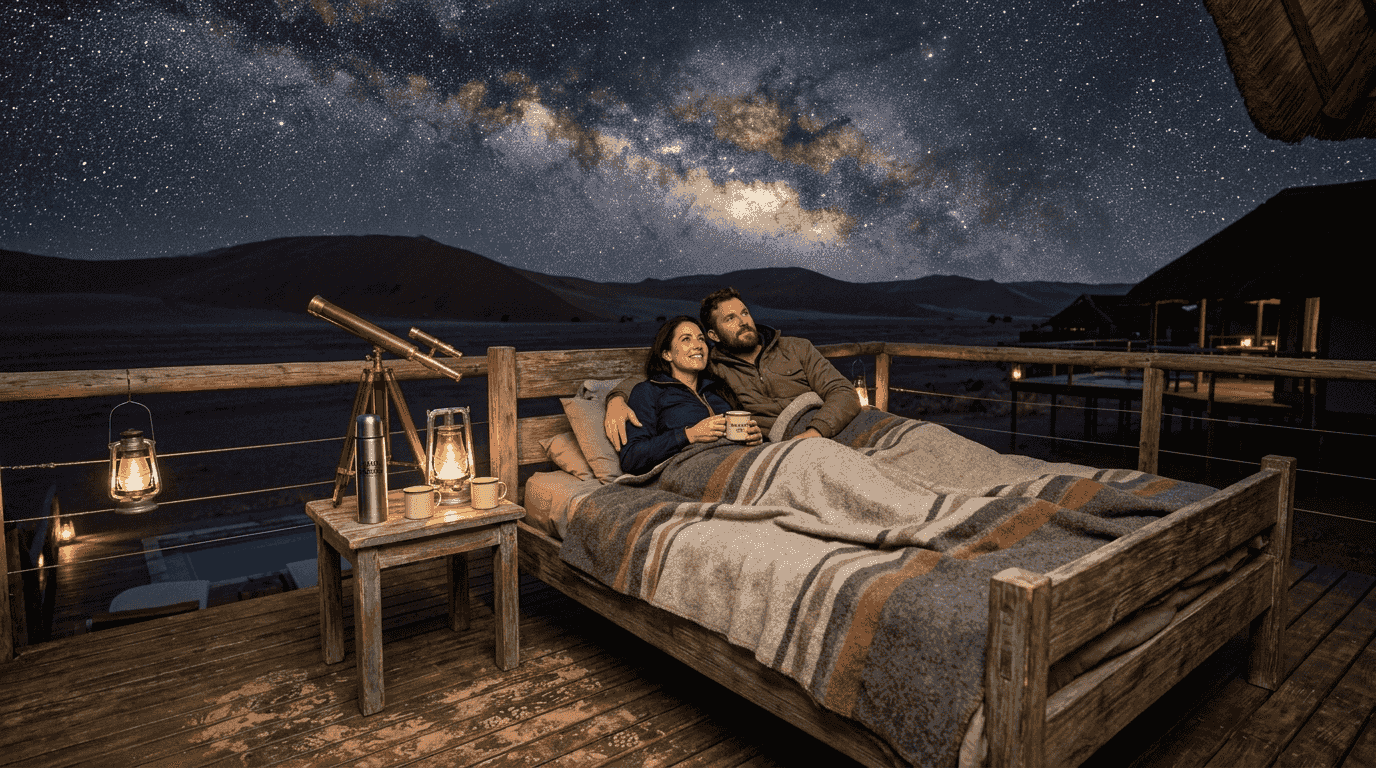
What is a stargazing safari in Namibia for luxury travelers
Most travelers think safaris are purely daytime wildlife adventures, but Namibia shatters this expectation with luxury stargazing safaris that blend adventure with astronomy. These exclusive experiences combine the thrill of exploring pristine wilderness with world-class celestial viewing in some of Earth’s darkest skies. Africa’s only Gold Tier Dark Sky Reserve offers over 300 clear nights annually, creating unparalleled opportunities to witness the cosmos. This guide reveals what stargazing safaris entail, how they work, optimal timing, and why Namibia stands as the premier destination for affluent travelers seeking this rare fusion of luxury and astronomical wonder.
Table of Contents
What Is A Stargazing Safari And Why Namibia?
How Do Stargazing Safaris Work: Mechanics And Technology
Optimal Conditions And Techniques For The Best Stargazing Safari
Comparing Stargazing Safari Experiences: Guided Vs. Self-Drive And Unique Integrations
Experience Luxury Stargazing Safaris In Namibia With Secret Namibia
FAQ
Key takeaways
Point | Details |
|---|---|
Gold Tier certification | NamibRand Nature Reserve is Africa’s only Gold Tier International Dark Sky Reserve with over 300 clear nights per year |
Guided astronomy sessions | Professional astronomers lead post-dinner viewings using advanced telescopes, laser pointers, and comfortable star beds |
Optimal viewing conditions | New moon phases during dry winter months (May to October) provide the darkest skies for maximum visibility |
Luxury integration | Stargazing safaris combine seamlessly with dune climbs, hot-air balloon rides, and rhino tracking experiences |
Night preparation | Cold desert temperatures require layered clothing and red light use to preserve night vision during sessions |
What is a stargazing safari and why Namibia?
A stargazing safari represents a sophisticated evolution of traditional wildlife adventures, merging high-end accommodations and expert-guided astronomy into unforgettable nocturnal experiences. Unlike conventional safaris focused solely on daytime animal encounters, these journeys position celestial observation as a central luxury activity. You’ll spend evenings under pristine skies with professional astronomers who reveal cosmic wonders through powerful telescopes and engaging narration.
Namibia’s geography creates exceptional conditions for astronomical viewing. The country’s vast desert landscapes, sparse population density, and minimal light pollution produce some of Earth’s darkest skies. The NamibRand Nature Reserve earned Africa’s only Gold Tier International Dark Sky Reserve certification, recognizing its extraordinary darkness and commitment to preserving natural night environments. This designation places Namibia among the world’s elite stargazing destinations.
The region’s climate delivers remarkable consistency. Over 300 cloudless nights annually ensure reliable viewing opportunities throughout most of the year. Remote locations like Sossusvlei and NamibRand offer exclusive lodges and camps positioned strategically within certified dark sky zones, eliminating artificial light interference.
Typical stargazing safari features include:
Guided evening sessions with resident astronomers
Access to professional-grade telescopes and observation equipment
Star beds rolled onto private verandas for comfortable viewing
Open-air sleepouts under unobstructed skies
Laser pointer constellation tours
Photography assistance and equipment recommendations
These experiences cater specifically to affluent travelers seeking unique adventures beyond standard wildlife viewing. The combination of scientific expertise, cutting-edge technology, and luxurious comfort creates an immersive educational journey. You’ll gain deep appreciation for celestial mechanics while enjoying the same high-end service standards expected from premium safari experiences. Remote desert settings amplify the sense of isolation and connection to the universe, transforming abstract astronomical concepts into visceral, memorable encounters.
How do stargazing safaris work: mechanics and technology
The typical stargazing experience follows a carefully orchestrated evening sequence designed to maximize comfort and viewing quality. After sunset, you’ll enjoy dinner at your lodge before transitioning to astronomy activities around 8 pm when darkness deepens and celestial objects become visible. Professional astronomers lead these sessions, providing context about Southern Hemisphere constellations, planetary movements, and deep-sky phenomena visible that evening.
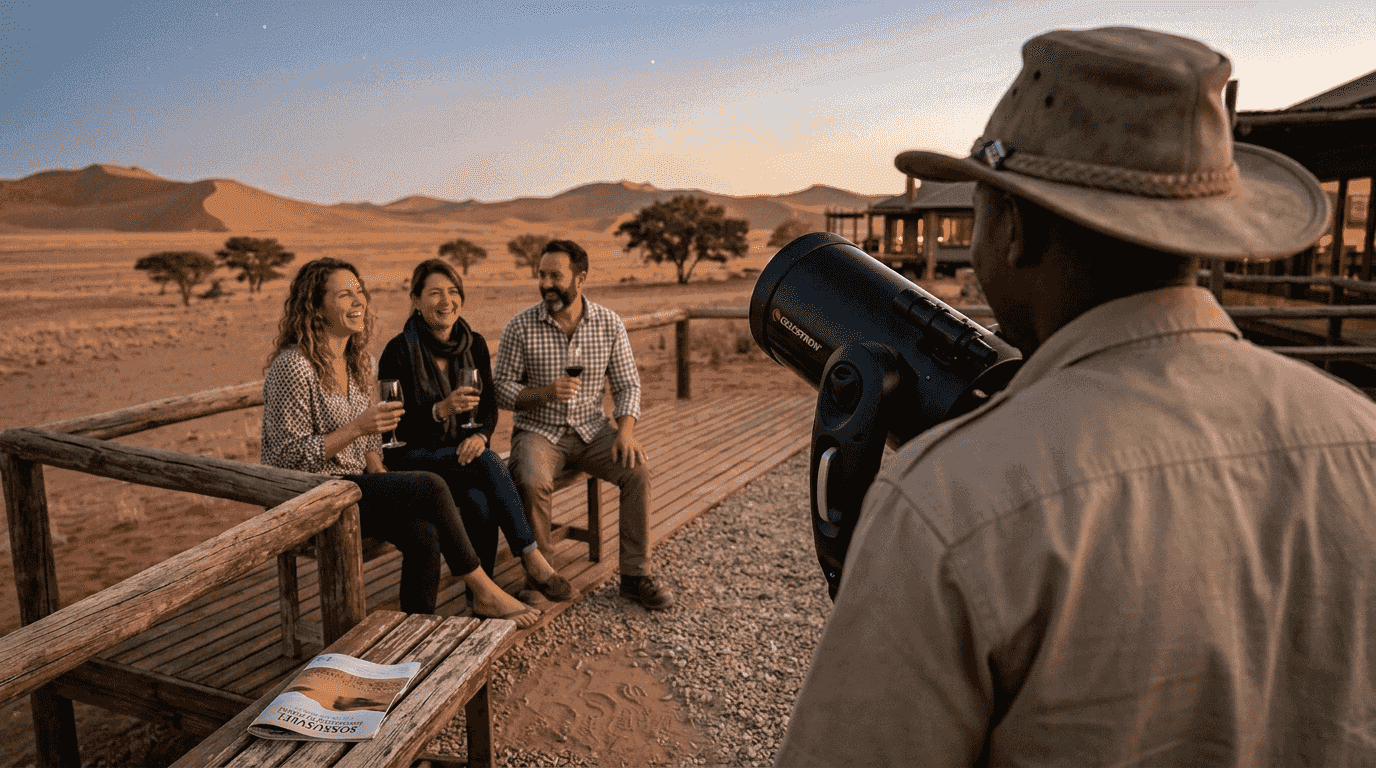
Equipment sophistication varies by location but consistently exceeds amateur standards. Rooisand Desert Lodge features a 430mm PlaneWave telescope housed in an observatory dome, enabling detailed planetary surface observations and nebula imaging. Computer-controlled mounts track celestial objects automatically, compensating for Earth’s rotation to maintain steady views during extended observations. This technology allows you to examine Saturn’s rings, Jupiter’s moons, and distant galaxies with clarity impossible through handheld binoculars.
Many lodges provide star beds as an alternative to observatory sessions. Staff roll these comfortable platforms onto private verandas or open desert locations, positioning you directly under the Milky Way’s arc. Thick mattresses, warm bedding, and strategic placement away from structure lights create intimate viewing conditions. You’ll experience the sky’s vastness without barriers, hearing nocturnal desert sounds while watching meteor streaks and satellite passes.
Guided sessions employ laser pointers to highlight specific constellations and trace mythological patterns across the sky. These green beams remain visible for hundreds of meters, creating clear reference points as astronomers narrate stories behind star groupings. Computer displays show real-time telescope feeds, allowing groups to view the same celestial object simultaneously while discussing its characteristics.
Open-air sleepouts represent the most immersive option. Some camps offer elevated platforms or ground-level setups in protected areas where you’ll spend the entire night outdoors. This extended exposure reveals subtle sky changes as Earth rotates, showing different constellations rising and setting throughout the night. The experience connects you viscerally to astronomical cycles that ancient navigators relied upon.
Pro Tip: Desert temperatures plummet after sunset, often dropping below 5°C even during summer months. Wear thermal layers, insulated jackets, and warm hats to remain comfortable during multi-hour sessions. Guides provide red flashlights that preserve your night vision by avoiding the pupil constriction caused by white light. Your eyes need 20 to 30 minutes to fully adapt to darkness, so minimizing light exposure maximizes what you’ll see.
Optimal conditions and techniques for the best stargazing safari
Timing dramatically influences stargazing quality, with specific conditions producing superior visibility and photographic opportunities. Strategic planning around lunar cycles and seasonal weather patterns ensures you’ll witness the cosmos at its most spectacular.
Optimal viewing conditions in priority order:
New moon phases: The darkest skies occur during new moons when no lunar light washes out faint stars and the Milky Way’s core appears most vivid.
Dry winter months: May through October offers clear skies with minimal cloud cover and stable atmospheric conditions that reduce twinkling.
Evening timing: Sessions between 8 pm and 11 pm capture the Milky Way’s galactic center positioned optimally for Southern Hemisphere viewing.
Weather stability: Avoid periods following rain when residual moisture and dust particles scatter light and reduce clarity.
Environmental factors require preparation beyond timing. Namibia’s desert climate creates extreme temperature swings, with daytime heat exceeding 30°C while nights drop near freezing. Multiple clothing layers allow you to adjust as temperatures fall throughout evening sessions. Guides ensure safety during outdoor activities, though wildlife encounters remain rare in stargazing zones due to sparse vegetation and water sources.
Moon Phase | Visibility Impact | Best For |
|---|---|---|
New Moon | Maximum darkness, Milky Way visible | Deep sky objects, astrophotography |
Crescent | Minimal interference | General stargazing, planet viewing |
Half Moon | Moderate light pollution | Bright planets, major constellations |
Full Moon | Significant brightness, washes out stars | Lunar surface observation only |
Modern technology enhances real-time identification and learning. Stellarium and similar mobile apps use GPS and gyroscopes to overlay constellation maps on your screen as you point toward different sky regions. These tools answer immediate questions about bright objects or unusual formations without waiting for guide assistance.
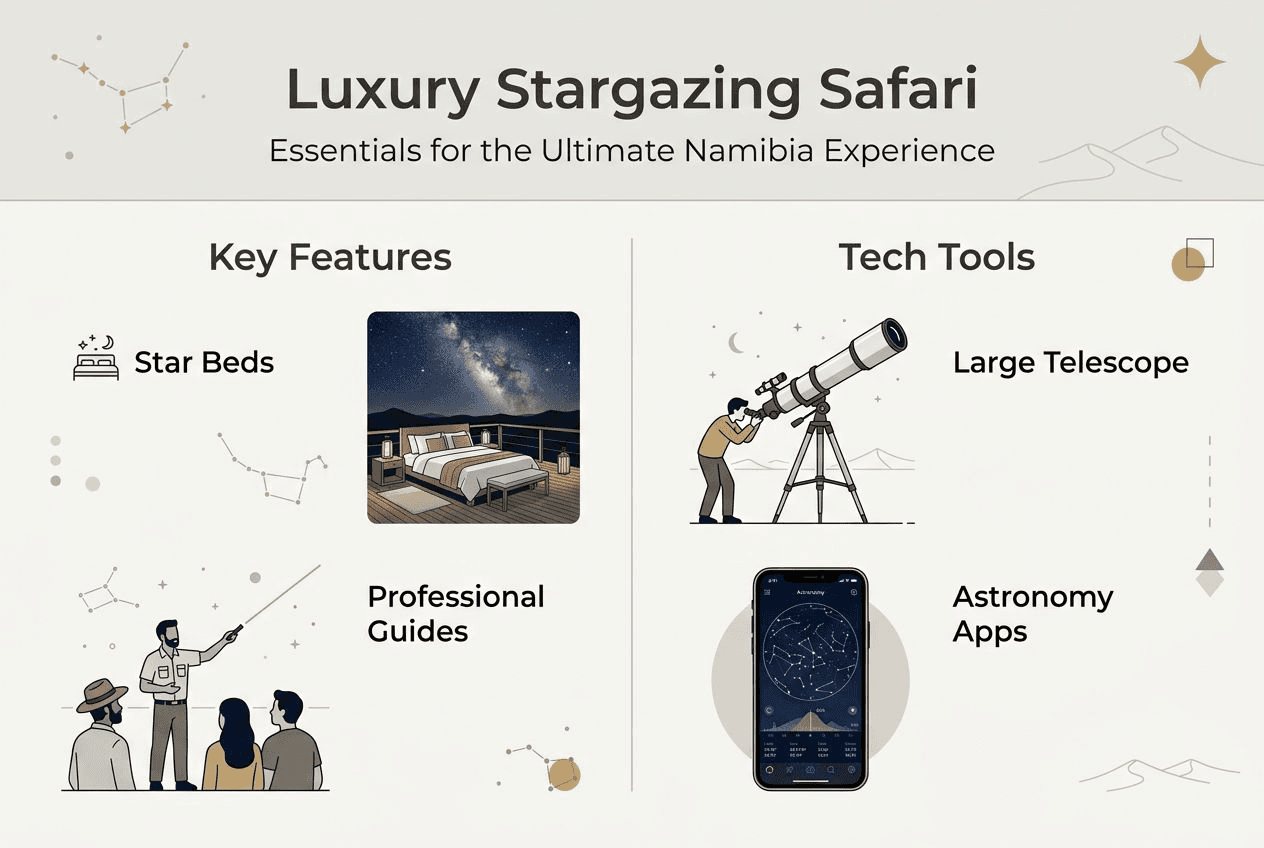
Pro Tip: Download astronomy apps before arriving at remote lodges where internet connectivity may be limited or unavailable. Pre-load star charts and celestial event calendars for your travel dates to maximize learning opportunities during independent viewing time.
Astrophotography captures stunning memories but requires specific techniques. Camera settings of f/2.8 aperture, 15 to 25 second exposures, and ISO 1600 to 3200 produce sharp star images without trailing. The 500 Rule calculates maximum exposure time: divide 500 by your lens focal length to determine seconds before Earth’s rotation causes visible star movement. Wide-angle lenses between 14mm and 24mm capture expansive Milky Way scenes, while tripods prevent camera shake during long exposures.
Manual focus set to infinity ensures sharp stars, though autofocus struggles in darkness. Test shots help dial in correct exposure balance between capturing faint stars and avoiding overexposed bright objects. Many best stargazing locations provide foreground elements like acacia trees or desert dunes that add compositional interest to celestial photographs.
Comparing stargazing safari experiences: guided vs. self-drive and unique integrations
Stargazing safari styles vary significantly, each offering distinct advantages for different traveler preferences and adventure levels. Understanding these variations helps you select experiences aligned with your comfort requirements and desired immersion depth.
Feature | Guided Observatory Tours | Self-Drive 4x4 Safaris |
|---|---|---|
Astronomer Access | Resident experts provide nightly sessions | Limited to own knowledge or apps |
Equipment Quality | Professional telescopes, observatory domes | Personal binoculars or portable scopes |
Accommodation | Luxury lodges with full amenities | Rooftop tents, camping setups |
Flexibility | Scheduled sessions, structured itineraries | Complete freedom in timing and locations |
Learning Depth | Comprehensive education, Q&A opportunities | Self-directed exploration |
Cost | Premium pricing for full-service experience | Budget-friendly with gear investment |
Guided tours through established lodges provide turnkey luxury. You’ll access sophisticated equipment maintained by professionals, eliminating the need to transport delicate telescopes across rough terrain. Astronomers tailor presentations to group interests, answering questions and adjusting focus based on celestial events occurring during your stay. This structured approach suits travelers prioritizing comfort and expert interpretation over independent exploration.
Self-drive 4x4 adventures offer maximum flexibility for experienced travelers comfortable with remote navigation and basic camping. You’ll determine your own schedule, selecting viewing locations based on weather and personal preference. Rooftop tents position you directly under stars without lodge structure interference, creating intimate connections to the environment. This approach requires more preparation but rewards adventurous spirits with authentic wilderness immersion.
Unique integrations elevate stargazing beyond standalone astronomy:
Hot-air balloon flights at dawn following overnight stargazing sessions
Sossusvlei dune climbs timed for sunset, transitioning into evening sky observation
Rhino tracking expeditions during daytime combined with nocturnal celestial viewing
Photography workshops teaching both landscape and astrophotography techniques
Cultural experiences with local communities sharing indigenous astronomy knowledge
These combinations create unique safari experiences that blend multiple adventure elements into cohesive journeys. You’ll appreciate how daytime activities complement nighttime astronomy, with each experience enriching the other. Morning wildlife drives gain new context after learning about nocturnal animal navigation using celestial cues.
East African destinations offer stargazing but lack Namibia’s dark sky certification and infrastructure. Some Kenyan and Tanzanian camps provide basic telescope access or “star cube” transparent accommodations, though light pollution from nearby communities and less consistent weather reduce viewing quality. Namibia’s combination of certified reserves, expert astronomers, and purpose-built facilities remains unmatched across the continent.
The choice between guided luxury and self-drive adventure depends on your priorities. Guided experiences maximize learning and comfort while self-drive options emphasize freedom and budget consciousness. Many travelers combine both approaches, starting with guided sessions to build foundational knowledge before attempting independent exploration in different regions.
Experience luxury stargazing safaris in Namibia with Secret Namibia
Transforming astronomical interest into unforgettable reality requires expert planning and local knowledge that only specialized operators provide. Secret Namibia curates luxury safari experiences that seamlessly integrate world-class stargazing with Namibia’s diverse adventures, ensuring every element aligns with your expectations for comfort and discovery.
Our team designs custom itineraries positioning you at premier dark sky locations during optimal viewing periods while incorporating complementary activities that enrich your journey. Whether you envision observatory sessions at exclusive lodges, open-air sleepouts under the Milky Way, or photography-focused expeditions, we’ll craft experiences matching your astronomical interests and adventure preferences. Tailor-made safaris allow flexibility to adjust pacing, accommodation standards, and activity combinations based on your group’s unique dynamics.
Explore our curated collections to discover how professional planning maximizes your safari experience, transforming celestial wonder into tangible memories that last lifetimes. Contact our specialists to begin designing your personalized stargazing adventure across Namibia’s most spectacular landscapes.
FAQ
What is included in a typical stargazing safari?
Typical stargazing safaris include guided evening astronomy sessions led by professional astronomers, access to high-quality telescopes and observation equipment, and comfortable viewing setups like star beds or observatory facilities. Most experiences occur after dinner in protected dark sky zones such as NamibRand Nature Reserve, where minimal light pollution ensures optimal visibility. Lodges provide safety briefings and equipment orientation before sessions begin. Warm layered clothing is essential as desert temperatures drop significantly after sunset, often reaching near-freezing levels even during warmer months. Some packages include astrophotography instruction and equipment recommendations for capturing celestial images.
When is the best time to go on a stargazing safari in Namibia?
The optimal period for stargazing safaris runs from May through October during Namibia’s dry winter months when clear skies dominate and atmospheric moisture remains minimal. New moon phases within this window provide the darkest conditions, allowing faint stars and the Milky Way’s core to appear most vividly. Avoid scheduling around full moons as bright lunar light washes out dimmer celestial objects and reduces overall visibility. Weather patterns with stable high-pressure systems produce the clearest nights, while post-rain periods may introduce dust and moisture that scatter light and diminish viewing quality.
What should travelers bring for a stargazing safari?
Pack warm, insulated layers including thermal underwear, fleece jackets, and windproof outer shells to combat cold desert nights that frequently drop below 5°C. Bring a personal red flashlight to preserve night vision, though most lodges provide these during guided sessions. Photography enthusiasts should pack a DSLR or mirrorless camera with manual controls, a sturdy tripod for long exposures, and wide-angle lenses between 14mm and 24mm for capturing expansive sky scenes. Download astronomy identification apps like Stellarium before arriving at remote locations where internet connectivity may be unreliable. Personal binoculars complement lodge telescopes for independent viewing, though professional equipment typically exceeds amateur gear quality.
Recommended
RELATED
Safari Guides
Oct 30, 2025
Understanding What is Included in Luxury Safaris
Explore what is included in luxury safaris, from exclusive accommodations to bespoke experiences that cater to discerning travelers.
Feb 24, 2026
Why Namibia Adventures Matter: An In-Depth Look
Discover why Namibia adventures are essential for luxury travelers seeking unique, immersive experiences in nature and wildlife exploration.
Feb 23, 2026
What to Expect on a Luxury Safari: A Comprehensive Guide
Discover what to expect on a luxury safari and gain a deeper understanding of the unique experiences that await you in the wild.
Feb 22, 2026
Understanding Namibia Safari Costs Explained
Explore Namibia safari costs explained to uncover what influences pricing and what it means for your adventure.
Feb 21, 2026
Understanding the Role of Safari Experts in Wildlife Travel
Explore the role of safari experts and gain a comprehensive understanding of how they enhance wildlife travel experiences for all types of travelers.
Feb 20, 2026
Guide organisation safari all inclusive : vivez l'aventure de vos rêves
Découvrez notre guide organisation safari all inclusive étape par étape pour planifier un voyage inoubliable au cœur de la nature.