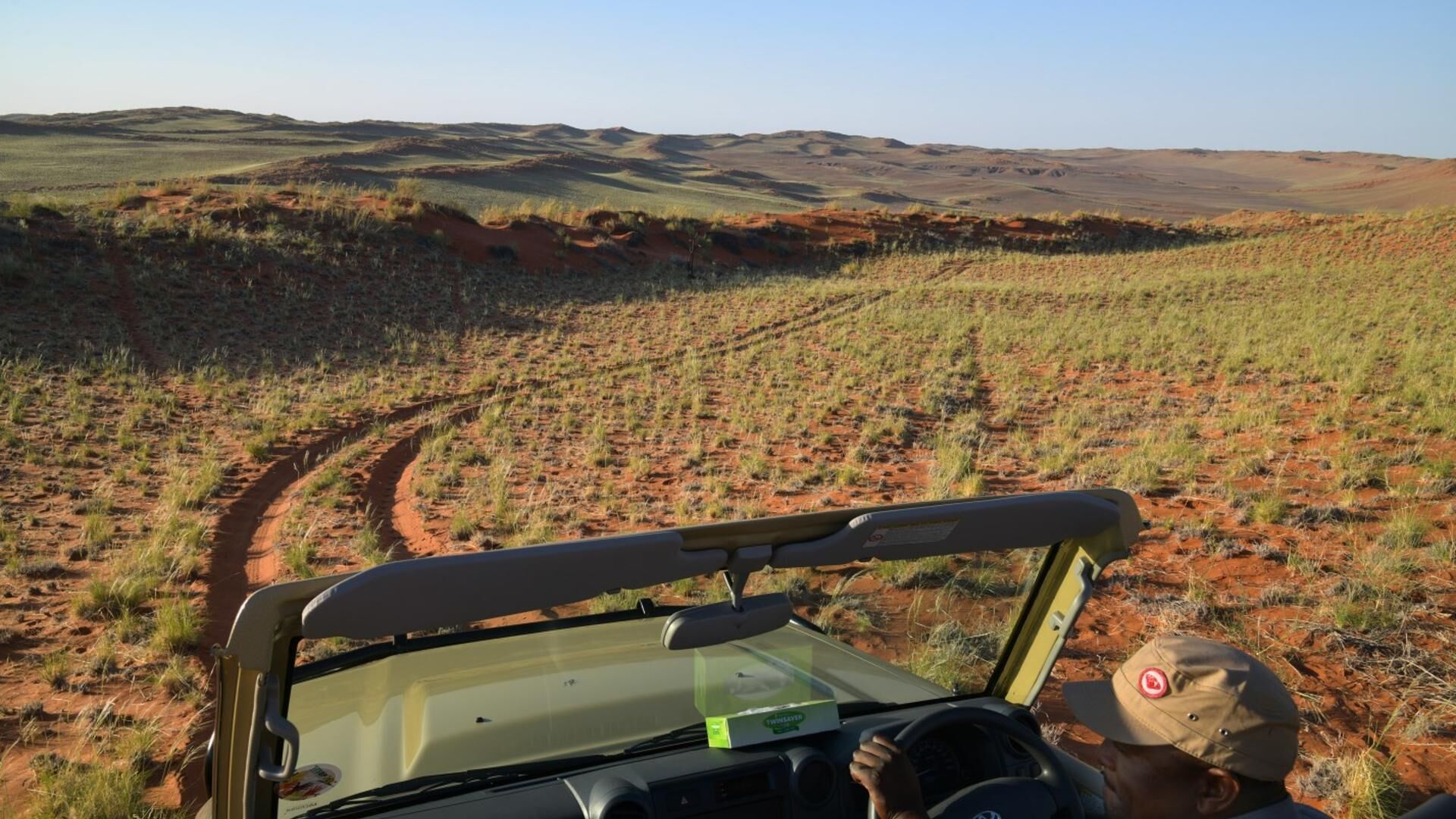
Namibia self-drive versus fly-in choices shape every aspect of a journey across its vast landscapes. One path follows ribbons of gravel where tyre changes become routine companions, adding days to the itinerary. The other compresses distances into short hops aboard light aircraft, delivering travellers swiftly to remote corners where the focus shifts entirely to wildlife and wilderness immersion. A Namibia self-drive versus fly-in decision ultimately hinges on available time, appetite for independence, and tolerance for the practical realities of long-distance travel on unpaved roads.
This comparison draws on three decades of combined experience guiding visitors through the country. We book directly with camps and lodges rather than through layers of agents, designing tailor-made journeys for individuals, couples, families and private groups of up to eight guests. Namibia rewards two distinct rhythms. One places you behind the wheel on endless gravel, tyre changes included, stretching your journey across extra days. The other lifts you above the dunes in minutes. We compare real costs in time, comfort and suitability so you can choose the Namibia that fits. Encounters Africa, our sister brand, designs seamless extensions into Botswana and beyond with three decades of combined experience, booking directly with camps for tailored journeys.
The Gravel Road Reality: What Self-Drive Namibia Actually Demands
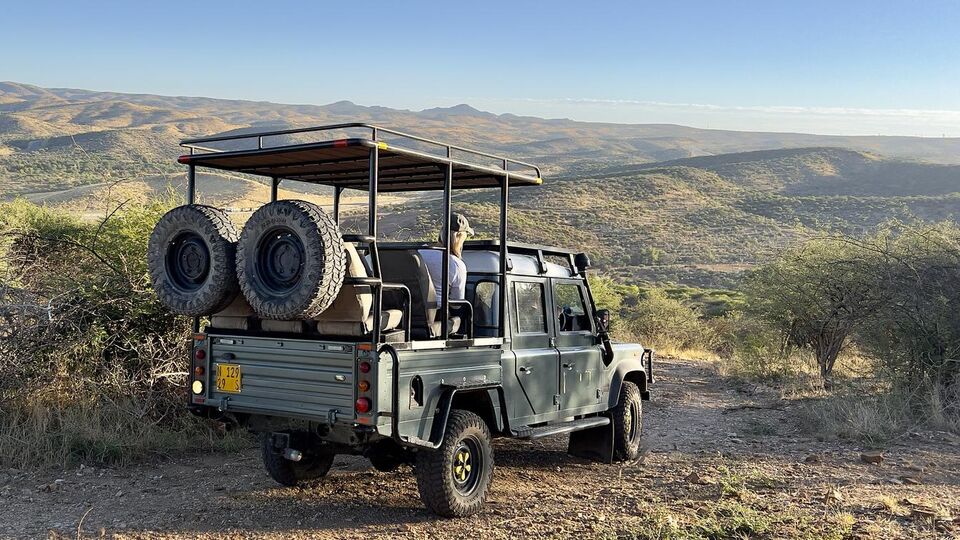
Self-driving across Namibia means embracing distances that dwarf most European countries. A typical loop from Windhoek to Sossusvlei, then on to Swakopmund and Etosha can cover over 1,500 kilometres, much of it on corrugated gravel surfaces that test both vehicle and driver. These roads demand steady speeds between 60 and 80 kilometres per hour to avoid punctures, yet even cautious pacing rarely prevents the occasional blowout.
Tyre changes on remote stretches become a practical skill rather than theoretical knowledge. Most rental 4x4s carry two spare wheels precisely because one puncture often leads to another on sharp stones scattered across the C19 or D roads. Travellers should factor in at least half a day for each major leg, not simply the driving hours shown on maps. Dust infiltrates every crevice, from camera lenses to clothing seams, while afternoon winds can reduce visibility to a few hundred metres.
The rhythm of a self-drive journey reveals Namibia gradually, through changing light on endless plains and the sudden appearance of oryx against red dunes, yet it extracts its price in fatigue and mechanical vigilance.
Independent explorers gain flexibility to pause at viewpoints or linger at waterholes without schedule pressure. This approach particularly suits those who relish plotting their own course and absorbing the subtle shifts in scenery that unfold only at ground level. However, it requires mechanical confidence, careful route planning around fuel ranges of 400 to 500 kilometres between stations, and acceptance that a single breakdown can consume an entire day waiting for assistance.
Light Aircraft Hops: The Efficiency of Wings Over Namibia
Fly-in safaris transform the mathematics of distance. A flight from Windhoek to Sossusvlei covers in 90 minutes what might require six hours by road, while the journey from there to the northern concessions near Etosha shrinks from two full days of driving into little more than an hour aloft. These transfers use small aircraft seating between four and twelve passengers, with luggage limits typically set at 15 to 20 kilograms in soft bags.
The real value emerges in conserved energy. Instead of arriving at camp after hours of vibration and dust, travellers step from the airstrip into guided activities the same afternoon. This allows for more game drives, nature walks and sundowner excursions within the same number of nights. Many camps coordinate seamless connections so that the aircraft schedule aligns precisely with morning or afternoon activities.
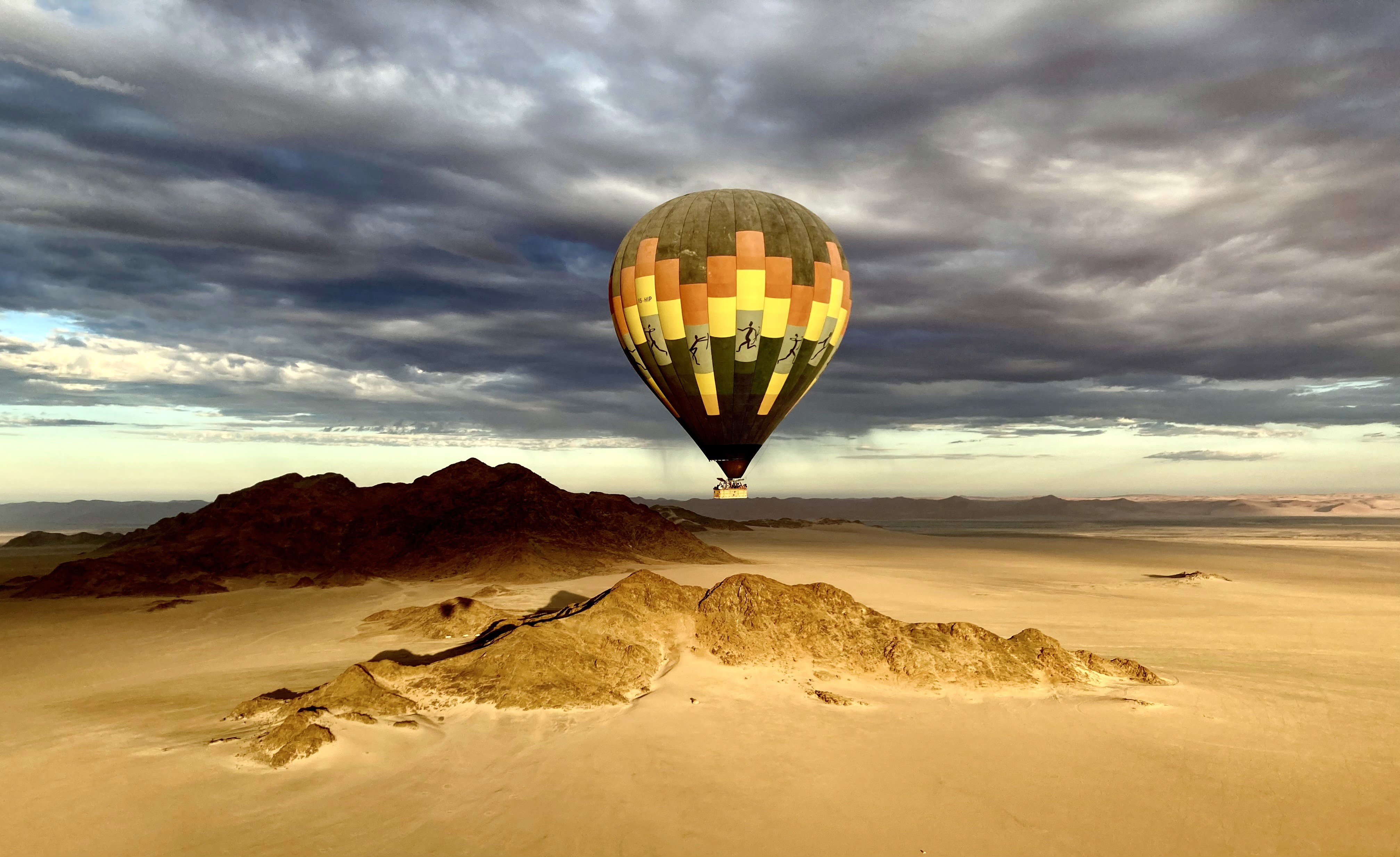
From above, Namibia's scale becomes comprehensible in a single glance, the ochre dunes giving way to pale grasslands and then the vast white expanse of Etosha's pan in rapid succession.
Comfort comes at the cost of spontaneity. Flight schedules, though reliable, follow fixed timetables that limit last-minute changes. Weather can occasionally delay departures by a few hours, particularly during the November to March thunderstorm season. Yet for those whose time in country is limited to seven to ten days, the hours saved translate directly into deeper wildlife encounters rather than additional kilometres covered.
Is it better to self-drive or fly between Namibia's highlights?
The answer depends entirely on your priorities, available days and personal temperament. Self-drive suits independent explorers with time and mechanical confidence; fly-in safaris better serve those prioritising wildlife depth over driving distance. A self-drive itinerary typically requires 14 to 21 days for a comprehensive circuit that includes the Namib Desert, Atlantic coast and northern wildlife regions, allowing for realistic daily distances of 300 to 400 kilometres. In contrast, a fly-in journey can deliver the same highlights in seven to twelve days by eliminating transit fatigue and maximising time spent in each ecosystem.
Cost comparisons reveal further nuance. Self-drive options generally appear lower on paper, with vehicle rental and fuel adding roughly 30 to 40 percent to the total budget compared with fly-in transfers. However, the additional nights required to cover the same ground often erase much of this saving, particularly when factoring in extra accommodation, meals and park fees. Fly-in packages, while carrying higher per-day rates, frequently deliver better value for shorter journeys by concentrating experiences rather than spreading them thinly across additional travel days.
Practical considerations extend beyond finances. Self-drive travellers must navigate varying road conditions that change with recent rainfall, maintain constant awareness of wildlife on the roads, especially kudu and warthog at dawn and dusk, and carry sufficient water and emergency supplies for remote stretches. Fly-in visitors trade this responsibility for the limitations of luggage weight and predetermined transfer days. Those with mobility considerations or young children often find the reduced driving hours of a fly-in itinerary significantly more comfortable.
Time Costs: How Many Extra Days Each Option Truly Requires
A classic self-drive circuit visiting Sossusvlei, Swakopmund and Etosha typically spans 16 to 18 days when allowing proper recovery between long drives. The journey from Sesriem to Swakopmund alone consumes most of a day, while the stretch from the coast to Etosha demands either a night in Damaraland or a very long driving day exceeding ten hours. These realities mean that roughly 40 percent of the total journey time passes behind the wheel or managing vehicle logistics.
Fly-in alternatives compress the same route into nine to eleven days by replacing driving segments with 45-minute to two-hour flights. This frees entire days previously lost to transit, allowing for two full mornings in the dunes instead of one, or additional tracking excursions in search of desert-adapted elephants. The difference becomes particularly pronounced when including remote areas such as the Skeleton Coast or southern concessions, where road access might require two days of travel each way.
Season affects these calculations. During the dry months from May to October, shorter days and cooler temperatures make driving more manageable, though dust remains constant. The wetter summer period brings dramatic landscapes but also the risk of flooded roads that can extend journey times unpredictably. Fly-in operations adjust schedules accordingly, with some routes operating less frequently during peak rainy months.
Who Each Approach Genuinely Suits
Self-drive Namibia appeals most to travellers who value autonomy and possess both time and temperament for independent exploration. Couples or small groups comfortable reading maps, changing tyres in 35 degree heat and maintaining their own schedule often find this format deeply rewarding. It particularly suits repeat visitors already familiar with African driving conditions or those seeking a genuine sense of journey across dramatic landscapes.
Fly-in safaris better serve first-time visitors to Namibia, families with varied ages and abilities, or professionals with limited annual leave. The reduced physical demands and increased time with expert guides create space for genuine relaxation and observation. Photographers particularly benefit from arriving at locations with full daylight hours available rather than exhausted after a long drive.
Neither choice is inherently superior. The correct rhythm depends on whether your ideal Namibia unfolds gradually through the windscreen or reveals itself suddenly from the air.
Those planning to combine Namibia with neighbouring countries may find fly-in connections simplify complex border crossings. For travellers wishing to continue their African journey after Namibia, our sister brand Encounters Africa specialises in seamless extensions across the region.
Choosing Your Namibian Rhythm
The decision between self-drive and fly-in ultimately reveals what you seek from Namibia itself. One approach emphasises self-reliance and the satisfaction of reaching each destination under your own steam. The other prioritises immersion in wild places with energy preserved for the experiences that matter most. Both deliver memorable encounters with this ancient land, though in distinctly different keys.
Many travellers now combine elements of both, perhaps self-driving the more accessible southern routes before switching to aircraft for the final northern leg. This hybrid approach captures the advantages of each while mitigating their respective drawbacks. Careful planning with experienced operators ensures that whichever path you choose, the journey aligns with your expectations rather than testing your limits.
For discerning travellers seeking a private safari beyond our set itineraries, we invite you to contact us directly. We specialise in designing exceptional, tailor-made journeys for individuals, couples, families, and private groups of up to eight guests. Drawing on our handpicked network of distinguished camps and lodges, we curate every detail with precision and care, creating a seamless, deeply personal safari experience shaped entirely around your preferences, pace, and budget.
Read our self-drive planning guide or explore why many now choose wings for their Namibian adventure. Those looking further afield might consider extending with a 7-day Okavango Delta fly-in safari to experience another of Africa's iconic wilderness regions.
Plan your safari: Enquire with Secret Namibia for tailor-made Namibia journeys. For safaris beyond Namibia, in Botswana, South Africa, Kenya, Tanzania, Rwanda, Uganda, Zambia and Zimbabwe, speak to the travel designers at Encounters Africa, Secret Namibia's sister company for the rest of Africa.