
2026年8月25日
Discover Namibia's best parks for a luxury safari experience. Enjoy private wildlife encounters away from the crowds in stunning landscapes.
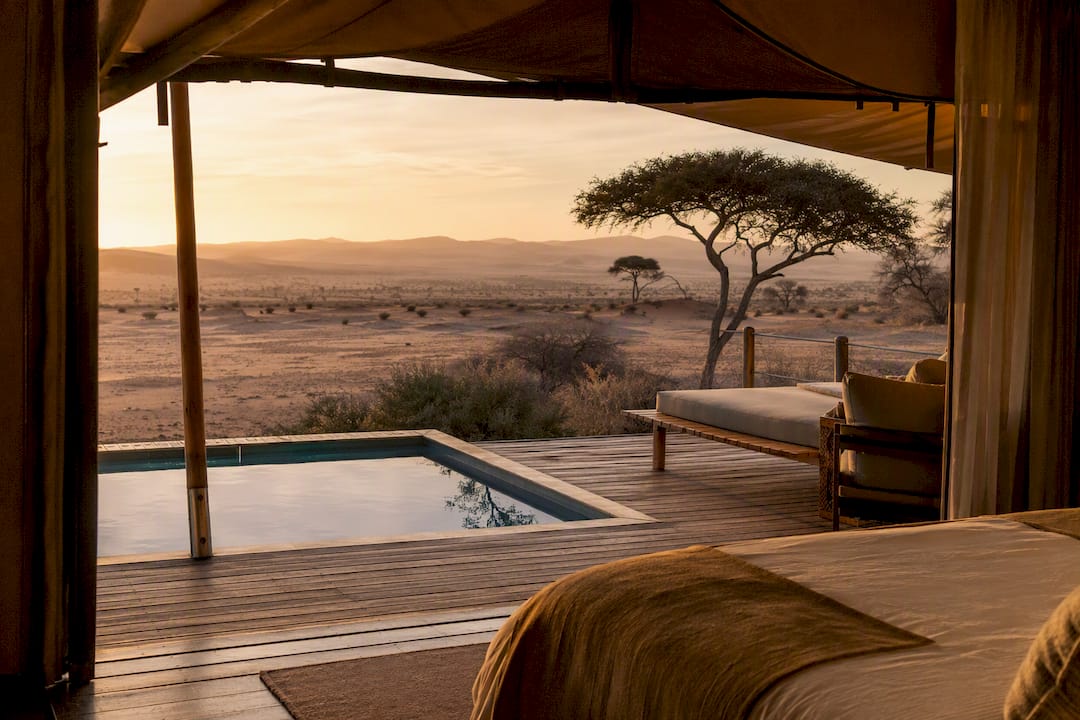
The best parks in Namibia for a private, luxury safari
Namibia’s finest wildlife experiences do not happen inside crowded gates or from a queue of safari trucks at a waterhole. They happen on private land, where a black rhino ambles past your suite at dawn and the only other vehicle you will see is your own. For travellers who want the best parks in Namibia without the compromises of public access, the shortlist starts here:
Ongava Game Reserve – Etosha’s private southern border, built for rhino sightings and low-vehicle drives
Okonjima Nature Reserve – leopard and pangolin tracking alongside the AfriCat Foundation’s carnivore research
Wolwedans (NamibRand Nature Reserve) – dune-country desert suites under one of the world’s darkest skies
Ohorongo Private Game Reserve – a family-run black rhino sanctuary with intimate tented camps
GocheGanas – wildlife and wellness minutes from Windhoek, ideal for a short luxury stopover
Indicative nightly rates: private-reserve lodges typically run from about $700 to $1,500 per night at mid-range camps, climbing toward $2,000 or more for signature suites in peak season.
The fastest way to lock in the right combination for your dates is to enquire directly with Secretnamibia.
Key Takeaways
Private reserves like Ongava, Okonjima, Wolwedans, Ohorongo, and GocheGanas deliver better wildlife encounters than public parks through capped vehicle numbers, dedicated guiding, and direct conservation access.
Point | Details |
|---|---|
Match reserve to priority | Choose Ongava for rhino density, Okonjima for carnivore tracking, Wolwedans for desert solitude. |
Book suites early | Signature villas and small-suite properties often need nine to twelve months of lead time. |
Budget realistically | Expect $700 to $2,000+ per night depending on lodge and season. |
Combine regions, not everything | Pair one bushveld reserve with one desert reserve rather than covering the whole country. |
Let Secretnamibia handle logistics | Secretnamibia arranges private-suite access, transfers, and scenic flights across a multi-reserve itinerary. |
Table of Contents
Why private game reserves outshine public parks for luxury travel
The top private reserves for a bespoke Namibia safari
What to expect from a private-reserve safari
Planning your route: seasons, logistics and booking timing
Cuisine and dining options at private reserve lodges
Privacy and exclusivity beyond low vehicle numbers
Cultural and community engagement on a private reserve safari
Why the private-reserve model gets underrated
Let Secretnamibia build your private-reserve itinerary
Sources
Why private game reserves outshine public parks for luxury travel
A public national park is managed for volume. A private reserve is managed for you. That distinction shapes everything about the experience, from how close your guide can get to a leopard to whether you can walk the bush at all instead of watching it from a vehicle window.
Three practical advantages separate private reserves from their public counterparts:
Fewer vehicles, better sightings. Reserves like Onguma cap vehicle numbers and coordinate guides by radio, which reduces animal disturbance and gives you unhurried time at a sighting instead of a five-minute scramble before the next truck arrives.
Access to activities public parks restrict. Night drives, guided walking safaris, and specialised tracking on foot are routinely available on private land, where public parks tend to keep visitors confined to daylight, vehicle-based routes.
Direct conservation involvement. Staying at a reserve like Okonjima puts your visit within reach of active research, not a fenced enclosure viewed from a distance.
Pro Tip: Ask about private waterhole hides when booking. Several lodges maintain sunken or elevated hides reserved for their own guests, which is where the most memorable rhino and elephant encounters tend to happen.
The top private reserves for a bespoke Namibia safari
Each of these reserves solves a different part of the luxury safari equation, from rhino density to dark-sky isolation. Here is what distinguishes them.
Ongava Game Reserve
Ongava sits directly against Etosha’s southern boundary, sharing the same mopane woodland and open plains that make the wider region one of Namibia’s best wildlife parks, but without the crowds. The reserve is privately owned and runs its own guided drives at deliberately low vehicle density, which is why it has built a reputation for reliably close rhino sightings that public-park self-drivers rarely get.
Accommodation ranges from classic safari tents to private villa suites with their own plunge pools, including options like Little Ongava, a small, exclusive-use property built for parties wanting total privacy. Expect thatched roofs, muted earth tones, and open-sided lounges that frame the plains rather than compete with them.
Best season: May through October, when animals concentrate at waterholes
Minimum stay: three nights, to allow for both dawn and dusk drives
Price guidance: roughly $700 to $1,500 per night, with villa suites at the top of that range
Okonjima Nature Reserve
Okonjima covers roughly 22,000 hectares of central Namibian bushveld, and its identity is built around one thing: large carnivores. The reserve hosts the AfriCat Foundation, a long-running research programme focused on leopard, cheetah, and pangolin conservation, and guests regularly join guides on tracking expeditions tied directly to that work.
Lodging spans private villas to family-oriented suites, each designed with wide decks facing the bush and interiors that lean into natural stone and timber rather than heavy ornamentation. The reserve’s own Okonjima destination page details the villa options in more depth for travellers weighing which camp suits their group.
Best season: year-round for carnivore tracking, though the dry winter months make walking safaris more comfortable
Minimum stay: two nights, three if pangolin tracking is a priority
Price guidance: $800 to $2,000+ per night depending on suite and season
Wolwedans and the NamibRand Nature Reserve
Wolwedans occupies a private slice of the NamibRand, a reserve of towering red dunes and grass plains that reads like a different planet after the bushveld of Okonjima or Ongava. This is where Namibia’s desert-adapted wildlife (oryx, springbok, and the occasional brown hyena) moves against a backdrop of dune shadows that stretch for what feels like miles at sunset.
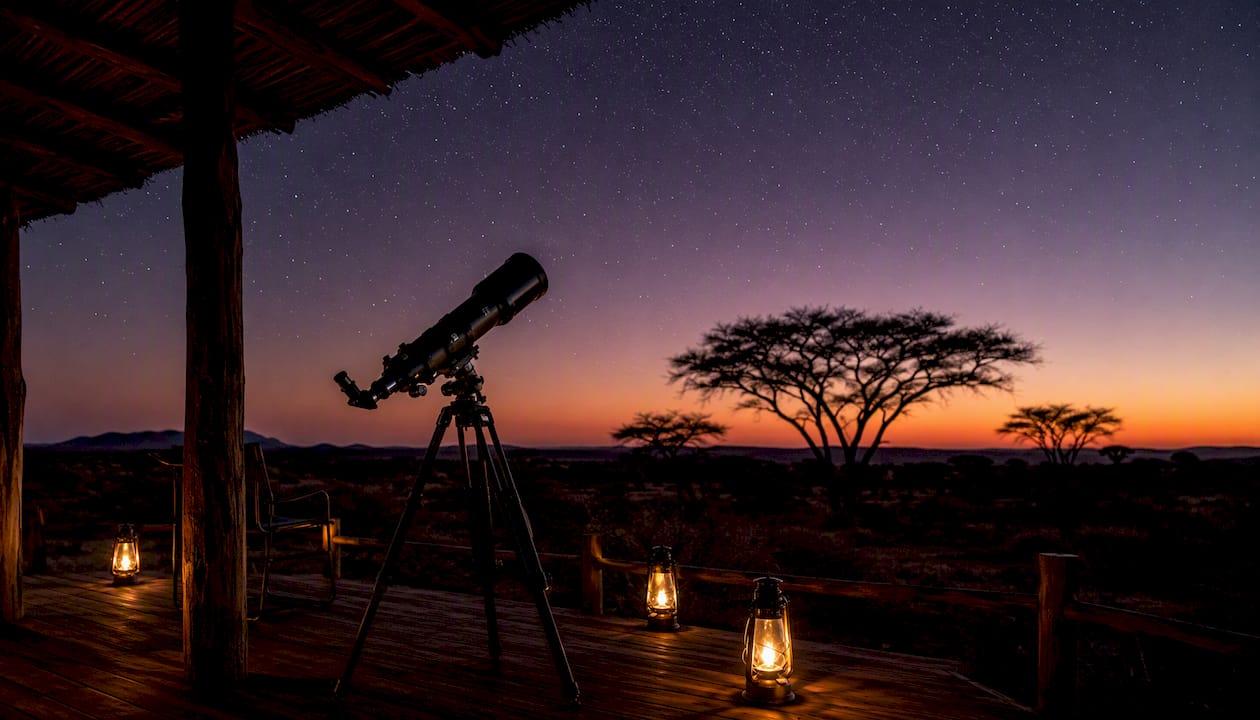
The lodges here favour open-air, canvas-and-timber suites designed to disappear into the landscape rather than dominate it, and the region holds International Dark Sky Reserve status, making stargazing from your private deck a genuine highlight rather than an afterthought. Many guests pair a NamibRand stay with a scenic flight over Sossusvlei, turning the transfer itself into part of the experience.
Best season: April through October for cooler nights and clearer skies
Minimum stay: two nights minimum, three if combining with a scenic flight
Price guidance: $800 to $2,000+ per night at the top desert camps
Ohorongo Private Game Reserve
Ohorongo is smaller and more intimate than the reserves above, run as a family conservation project centred on protecting black rhino. Its tented camps trade scale for intimacy: expect a handful of suites rather than dozens, refined canvas interiors, and guided walks led by staff who know individual animals by name and history.
This is the reserve for travellers who want the emotional weight of rhino conservation work without the larger infrastructure of a flagship property.
Best season: dry months (May to October) for the clearest walking conditions
Minimum stay: two nights
Price guidance: comparable to mid-range private reserve camps, generally in the $700 to $1,500 per night band
GocheGanas Private Nature Reserve
GocheGanas sits just outside Windhoek, which makes it the obvious choice for bookending a longer itinerary rather than anchoring one. The reserve blends wildlife drives and nature walks with wellness facilities, so it suits travellers wanting to decompress before flying home or ease into safari mode after a long-haul arrival. Its wellness-and-wildlife model is unusual among Namibia’s private reserves and worth building into a first or last night.
Best season: year-round, given its role as a transit stop
Minimum stay: one night is enough; two allows a spa treatment and a drive
Price guidance: generally below the flagship reserves, making it an accessible add-on
What to expect from a private-reserve safari
Every one of these reserves is solving the same problem in a different landscape: how to give a small number of guests an outsized, personal connection to the animals and the land. That shows up as a handful of recurring themes once you are actually on the ground.
Expect your day to be built around light, not a schedule board. Dawn and dusk drives follow the animals’ own rhythm, and because vehicle numbers are capped, your guide can linger at a sighting for as long as it holds interest rather than moving on to make room for the next truck. Expect accommodation that treats design as part of the wildlife experience, with decks, plunge pools, and lounges oriented toward a waterhole or a dune field rather than a car park. And expect conservation to be visible, not decorative. At Okonjima that means possibly meeting an AfriCat researcher; at Ohorongo it means a guide who has tracked the same rhino for years.
Personalised wildlife encounters replace fixed viewing points with private hides, off-road tracking, and guides who adjust plans hour by hour.
Design-led luxury stays favour open, natural materials over formal hotel styling, letting the landscape stay the focal point.
Active conservation ties guest activity directly to research or protection work, rather than positioning wildlife as backdrop.
Planning your route: seasons, logistics and booking timing
Namibia rewards travellers who plan their route around light and rainfall rather than a fixed list of stops. The dry season, roughly May through October, concentrates wildlife around permanent waterholes and delivers the classic golden-plains imagery most people picture. The green season, November through April, brings dramatic storm skies, newborn animals, and far fewer other travellers, though some roads become harder going after heavy rain.
Getting between reserves is part of the decision. Fly-in camps depend on light charter aircraft, which typically cap checked luggage at around 15 kilograms in a soft duffel bag rather than a hard suitcase. Reaching Ongava or Okonjima by road is straightforward in a well-driven 4x4, while more remote desert camps and coastal extensions almost always call for a private transfer or scenic flight.
A well-built itinerary rarely tries to cover the whole country. Pairing Ongava on Etosha’s border with Wolwedans in the NamibRand, and adding an optional fly-in extension to the Skeleton Coast for desert-adapted elephant and lion, gives a far richer experience than a rushed loop through every region.
Decide your priority: rhino tracking, carnivore research, or desert scenery
Choose two or three regions to combine, not five
Confirm fly-in versus road transfer for each leg
Book the signature suites first, since they sell out fastest
Reserve high-season dates and small-suite properties nine to twelve months ahead
Book six months out for standard camps outside peak months
Confirm charter flight schedules once lodge dates are locked
Cuisine and dining options at private reserve lodges
Dining at Namibia’s private reserves tends to follow the same philosophy as the accommodation: intimate, seasonal, and built around the setting rather than a fixed menu card. Most lodges serve set multi-course dinners featuring game meats like oryx and kudu alongside fresh vegetables from lodge gardens where the climate allows, plus South African wines chosen to match the kitchen’s style.
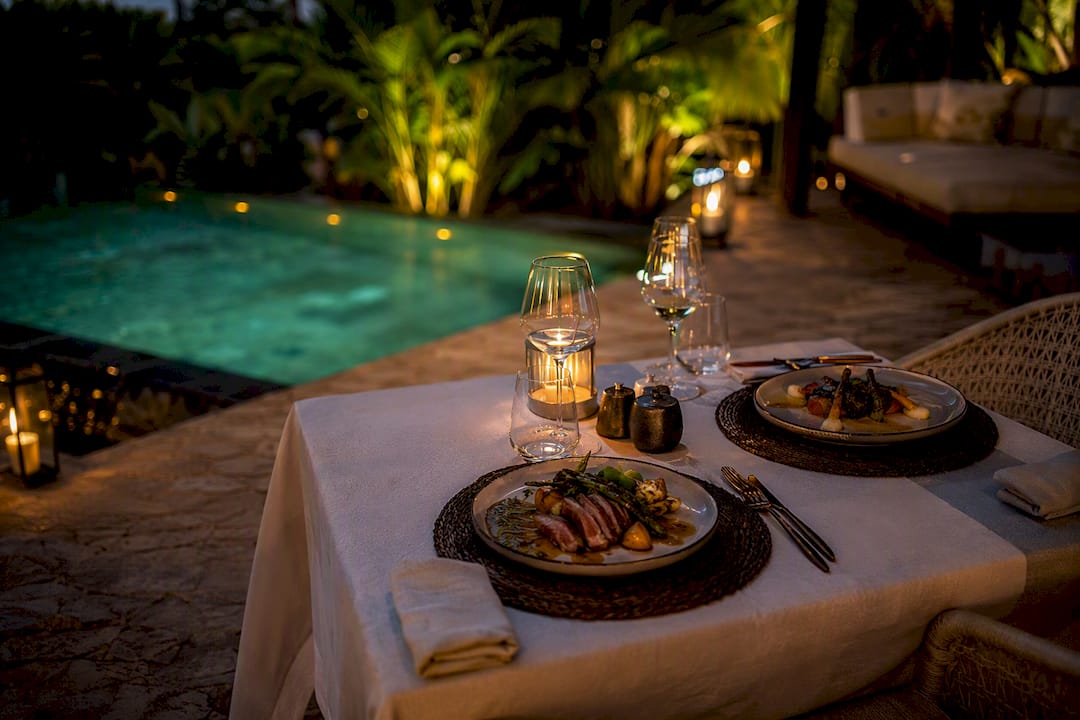
Meals are frequently taken outdoors, whether that means a table set beside a floodlit waterhole at Ongava or a private dune-top dinner arranged at a Wolwedans camp for a special occasion. Breakfast often shifts to fit the morning drive, with early coffee and rusks served before departure and a full spread waiting on return.
Dietary requirements are handled directly by lodge kitchens rather than through a standard menu, which matters for travellers with allergies or specific preferences. It is worth flagging any requirements at the time of booking so kitchens can plan ahead, particularly at smaller camps with limited pantry space. Private villa guests at reserves like Okonjima can often request in-suite dining, turning a private plunge pool deck into a dinner table with no other guests in sight.
Privacy and exclusivity beyond low vehicle numbers
Capped vehicle density gets most of the attention, but it is only one layer of privacy on offer at Namibia’s private reserves. Several properties allocate a dedicated private guide for the length of a stay, meaning the same person who greets you on arrival is the one tracking rhino with you three days later, rather than a rotating pool shared across the lodge.
Group sizes at signature suites and villas are often capped at a single family or party, with entire wings or standalone units built for exclusive use, such as the villa arrangement at Little Ongava. Activities can be scheduled around a single group’s preferences instead of a fixed lodge timetable, so a dawn walking safari or a private sundowner at a remote lookout becomes a matter of asking rather than fitting into someone else’s slot.
Some reserves extend privacy to the sensory experience itself. Wolwedans, sitting inside an International Dark Sky Reserve, offers stargazing sessions from private decks with no ambient light competing for attention. Okonjima’s tracking activities are frequently arranged in small, dedicated groups tied to AfriCat’s own research schedule rather than a general lodge activity board, which keeps the experience personal rather than performative.
Cultural and community engagement on a private reserve safari
Wildlife draws travellers to these reserves, but Namibia’s private conservation model is built on partnerships with surrounding communities, and several lodges weave that relationship directly into the guest experience. Guided visits to nearby communities, craft demonstrations, and conversations with local staff about traditional land use are commonly available on request, particularly at reserves with long-standing community conservation agreements.
Staff at family-run properties like Ohorongo often come from the immediate area, and guides are frequently the best source of insight into how conservation and local livelihoods intersect on private land. That connection tends to feel more organic than a scheduled cultural stop, since it comes up naturally during a drive or a walk rather than as a separate itinerary line.
Reserves tied to research programmes, such as Okonjima’s relationship with AfriCat, also extend engagement into education. Guests can sometimes join briefings on current carnivore or pangolin research, giving a working understanding of what conservation on private land actually involves day to day rather than a summarized plaque at a viewpoint. For travellers who want their safari to leave something behind, asking a lodge directly about community partnerships before booking is the most reliable way to build that into the itinerary.
Why the private-reserve model gets underrated
Most safari planning still treats national parks as the default and private reserves as the upgrade for people with money to spend. That framing gets it backwards. The real value of a private reserve is not luxury for its own sake. It is that low vehicle density and dedicated guiding produce fundamentally better wildlife encounters, the kind public parks are simply not built to deliver at scale.
Where conventional advice falls short is treating all private reserves as interchangeable “luxury add-ons.” They are not. Ongava’s strength is rhino density and Etosha access; Okonjima’s is carnivore research; Wolwedans solves for solitude and sky. Choosing based on which experience matters most to you, rather than which lodge photographs best, is what separates a forgettable trip from one worth the price.
If there is one thing worth prioritising first, it is sequencing: pick your core wildlife interest, then build the region and reserve around it, not the reverse.
— Secret
Let Secretnamibia build your private-reserve itinerary
Booking a handful of Namibia’s finest private reserves independently means juggling separate lodge availability calendars, charter schedules, and transfer logistics across multiple regions, often for suites that sell out months before you even start planning. Secretnamibia removes that friction by handling it all as one connected itinerary rather than a string of separate bookings.
Our planners work directly with lodge partners at Ongava, Okonjima, and the NamibRand reserves, which gives access to private-suite inventory that rarely appears on general booking platforms. That includes arranging scenic flights between regions, private road transfers, and 24/7 support once you are on the ground, so a rhino-tracking morning at Okonjima and a dune-country sunset at Wolwedans can sit in the same seamless week instead of two disconnected trips. Our guide to selecting the right combination of destinations walks through how we sequence regions for the best pacing.
If any of the reserves above have caught your interest, the next step is simple: enquire with Secret Namibia about your dates and priorities, and we will build a private-reserve itinerary around them.
Sources
Recommended
相关
萨法里指南
2025年10月30日
Understanding What is Included in Luxury Safaris
Explore what is included in luxury safaris, from exclusive accommodations to bespoke experiences that cater to discerning travelers.
2026年2月24日
Why Namibia Adventures Matter: An In-Depth Look
Discover why Namibia adventures are essential for luxury travelers seeking unique, immersive experiences in nature and wildlife exploration.
2026年2月23日
What to Expect on a Luxury Safari: A Comprehensive Guide
Discover what to expect on a luxury safari and gain a deeper understanding of the unique experiences that await you in the wild.
2026年2月22日
Understanding Namibia Safari Costs Explained
Explore Namibia safari costs explained to uncover what influences pricing and what it means for your adventure.
2026年2月21日
Understanding the Role of Safari Experts in Wildlife Travel
Explore the role of safari experts and gain a comprehensive understanding of how they enhance wildlife travel experiences for all types of travelers.
2026年2月20日
Guide organisation safari all inclusive : vivez l'aventure de vos rêves
Découvrez notre guide organisation safari all inclusive étape par étape pour planifier un voyage inoubliable au cœur de la nature.