
2026年8月7日
Discover the incredible animals to see in Namibia, from desert-adapted elephants to iconic oryx, and experience Africa's wildlife like never before.
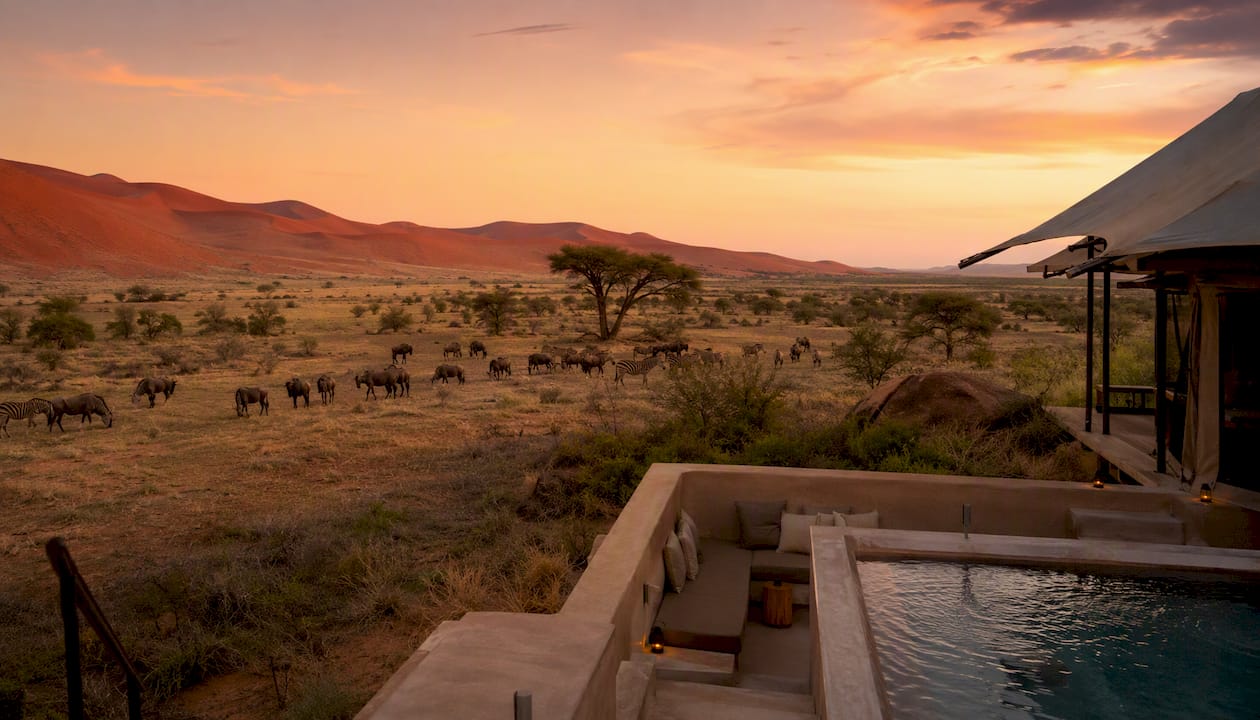
Animals to see in Namibia: what safari travellers should expect
Namibia delivers one of Africa’s most extraordinary wildlife spectacles, and the animals you’re most likely to encounter on safari here include oryx (gemsbok), springbok, Hartmann’s mountain zebra, desert-adapted elephant, lion, giraffe, cheetah, black rhinoceros, plains zebra, kudu, and Cape fur seal. Wildlife of Namibia records roughly 200 terrestrial mammal species across the country, 14 of them endemic, alongside approximately 645 bird species — a species base that rivals far more celebrated safari destinations.
A few animals you can expect to see on almost any Namibia trip:
Oryx (gemsbok) — the iconic desert antelope, visible in dunes and open plains across the Namib
Springbok — vast herds, especially around Etosha and the southern plains
Hartmann’s mountain zebra — a Namibian endemic, found in rocky terrain near Damaraland and Namib-Naukluft
Desert-adapted elephant — smaller-footed, longer-ranging relatives of savanna elephants, seen in Damaraland and Kaokoland
Black rhinoceros — rare but genuinely sightable at Etosha National Park’s famous waterholes
Cape fur seal — hundreds of thousands at Cape Cross on the Skeleton Coast
Picture yourself at an Etosha waterhole as the sun drops behind the salt pan, a procession of elephant, zebra, and lion converging in the amber light. Or standing at Sossusvlei in Namib-Naukluft Park, watching a lone oryx move silently across a towering red dune. These are not postcard fantasies — they are the everyday reality of a well-planned Namibia safari. What separates a good trip from an unforgettable one is often access: private reserves like NamibRand Nature Reserve offer exclusivity, flexible drive schedules, and night drives that national parks simply cannot match.
Key takeaways
Namibia’s combination of desert-adapted wildlife, reliable waterhole viewing, and a world-leading community conservancy model makes it one of Africa’s most rewarding and distinctive safari destinations.
Point | Details |
|---|---|
Most likely animals to see | Oryx, springbok, Hartmann’s mountain zebra, elephant, lion, giraffe, and Cape fur seal are all highly sightable. |
Top regions to prioritise | Etosha for waterholes and predators; Namib-Naukluft and NamibRand for desert specialists; Skeleton Coast for seals. |
Best season for wildlife | May through October (dry season) concentrates animals at waterholes and gives the clearest sightings. |
Private reserves add real value | Night drives, flexible schedules, and exclusivity on private land consistently improve sighting quality and variety. |
Conservation-minded booking matters | Choosing lodges linked to community conservancies supports the model that has helped recover black rhino and cheetah populations. |
Table of Contents
Where to find the best wildlife in Namibia’s parks and private reserves
1. Oryx (gemsbok) — Namibia’s desert icon
2. Springbok — the plains antelope you’ll see everywhere
3. Hartmann’s mountain zebra — a Namibian endemic
4. Desert-adapted elephant — the long-distance wanderers
5. Lion — the predator that defines Etosha nights
6. Giraffe — the tallest silhouette on the horizon
7. Cheetah — speed across open ground
8. Black rhinoceros — a conservation triumph
9. Plains zebra — stripes in every direction
10. Greater kudu — the spiral-horned ghost
11. Cape buffalo, hippo, and crocodile — the Caprivi surprise
12. Leopard — the elusive prize
What to look for along Namibia’s Atlantic coastline
Birds and smaller wildlife that make Namibia’s safari richer
Why Namibia’s wildlife behaves differently from other African destinations
When to visit Namibia for the best wildlife sightings
Conservation in Namibia: what’s working and why it matters to you
What to realistically expect on a Namibia safari
Practical tips for U.S. travellers heading to Namibia
Why Namibia feels unlike any other African safari
Plan your Namibia safari with Secretnamibia
Sources
Where to find the best wildlife in Namibia’s parks and private reserves
Namibia’s wildlife is spread across dramatically different ecosystems, and knowing which region to visit for which species saves you both time and disappointment.
National parks at a glance
Etosha National Park (north-central): Namibia’s flagship park, centred on a vast salt pan. Home to 114 mammal species and over 400 bird species, with waterholes like Okaukuejo delivering lion, elephant, black rhino, and giraffe sightings year-round. The Etosha South and Etosha East regions each offer distinct habitats worth exploring.
Namib-Naukluft Park (south-west): The world’s oldest desert, encompassing Sossusvlei’s towering dunes. Gemsbok, Hartmann’s mountain zebra, brown hyena, and dune-adapted reptiles thrive here.
Skeleton Coast National Park (north-west coast): A hauntingly beautiful wilderness of fog, shipwrecks, and raw Atlantic shoreline. Desert-dwelling elephants and lions roam inland; seal colonies and offshore marine life define the coast.
Damaraland and Kaokoland (north-west): Unfenced communal conservancy land, home to the famous desert-adapted elephants and black rhino. Remote, dramatic, and deeply rewarding.
Waterberg Plateau Park (north-east): A sandstone plateau that shelters sable antelope, roan antelope, and white rhino — species relocated here for protection.
Bwabwata, Mudumu, and Nkasa Rupara (Caprivi Strip, north-east): Riverine and wetland parks with buffalo, hippo, crocodile, and rich birdlife — the closest Namibia gets to a classic Botswana-style safari.
Private reserves: why luxury travellers choose them
National parks are magnificent, but they operate on fixed rules: no off-road driving, no night drives, set gate hours. Private reserves remove those constraints entirely.
Exclusivity: far fewer vehicles, often just your own guide and vehicle on a given drive
Flexibility: drives timed to golden-hour light, extended waterhole waits, and routes adjusted to fresh tracks
Night drives: the only legal way to see aardvark, brown hyena, porcupine, and other nocturnal species — available through nocturnal game drives on private land
Lodge-based immersion: world-class accommodation within the reserve, so you are in the wildlife corridor from the moment you wake
Top private reserves for luxury travellers:
NamibRand Nature Reserve (south-west, Namib Desert): Four distinct desert habitats, exceptional oryx and springbok populations, and a strict low-impact tourism model. NamibRand is one of southern Africa’s largest private reserves and holds an International Dark Sky Reserve designation — the night sky alone is worth the journey. Lodges here are architecturally stunning, designed to dissolve into the landscape.
Damaraland private concessions (north-west, semi-arid mountains): Exclusive camps set against ancient rock-art sites and desert-elephant corridors. Guided walks and vehicle-based tracking give you access that no national park can replicate.
Ongava Private Game Reserve (adjacent to Etosha South): Shares a boundary with Etosha, giving guests the best of both worlds — private drives on the reserve and day access into the park. White and black rhino, lion, and cheetah are all present.
Erindi Private Game Reserve (central Namibia): A large, well-stocked reserve with the full Big Five and a strong conservation programme. Excellent for families and first-time safari travellers who want reliable sightings.
Pro Tip: If you’re planning a luxury safari that combines Etosha with a private reserve, position the private reserve at the end of your trip — you’ll arrive with sharper eyes and a better sense of what you’re tracking.
1. Oryx (gemsbok) — Namibia’s desert icon
The oryx is arguably the most photogenic animal in Namibia, its black-and-white face mask and rapier horns unmistakable against a red dune backdrop. Oryx can tolerate body temperatures that would kill most mammals, allowing them to survive without drinking water for extended periods by extracting moisture from dry vegetation. Sighting likelihood: very likely across Namib-Naukluft, NamibRand, and Etosha.
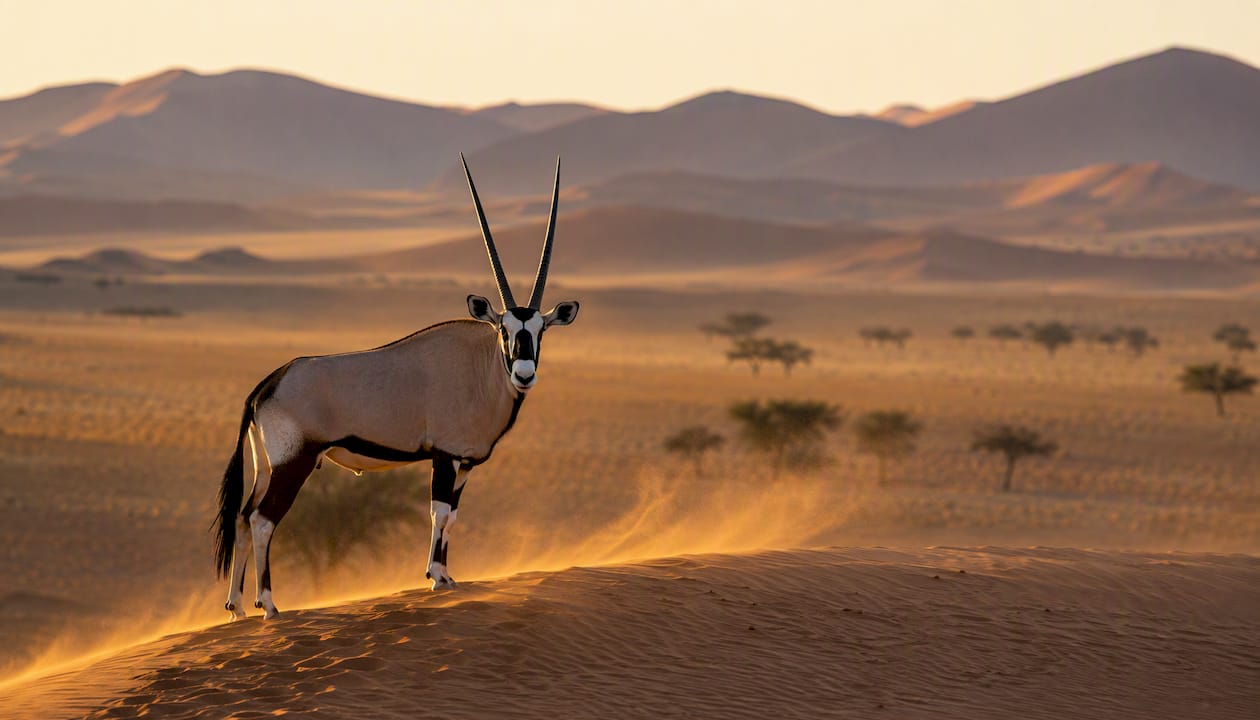
2. Springbok — the plains antelope you’ll see everywhere
Springbok are the most abundant antelope in Namibia, and you’ll encounter them in herds of dozens to thousands across open grassland and semi-arid plains. Their characteristic “pronking” — stiff-legged vertical leaps — is a display worth watching for. Best seen around Etosha and the southern Kalahari plains. Sighting likelihood: very likely.
3. Hartmann’s mountain zebra — a Namibian endemic
Unlike the plains zebra, Hartmann’s mountain zebra has a white belly with no shadow stripe and is built for rocky, steep terrain. It’s endemic to Namibia and south-western Angola, making it a genuine must-see for wildlife enthusiasts. Look for it in the rocky escarpments of Namib-Naukluft Park and the Brandberg area. Sighting likelihood: likely with a guide who knows the terrain.
4. Desert-adapted elephant — the long-distance wanderers
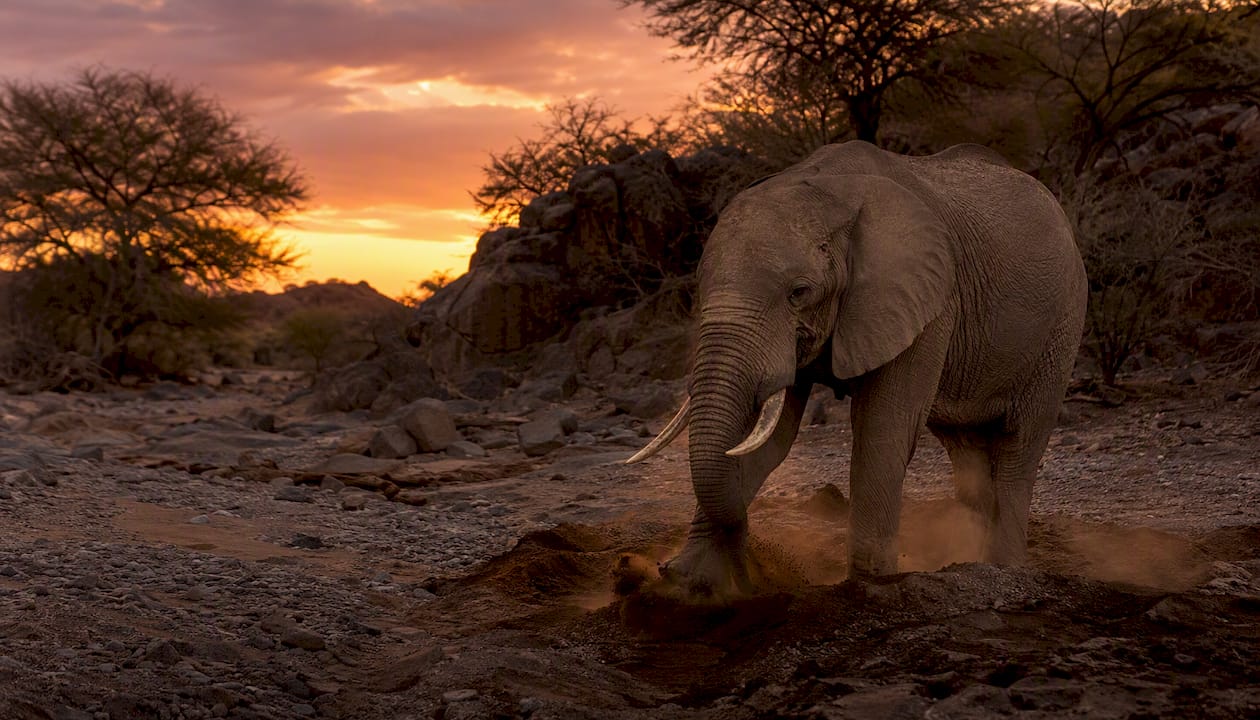
These elephants are not a separate subspecies, but generations of living in arid Damaraland and Kaokoland have shaped their behaviour profoundly. They travel up to 70 kilometres a day in search of water, have broader, flatter feet suited to sand, and are generally calmer around vehicles than their Etosha counterparts. Tracking them on a guided drive through a dry river valley is one of the most moving wildlife experiences in Africa. Sighting likelihood: likely with a specialist guide in Damaraland.
5. Lion — the predator that defines Etosha nights
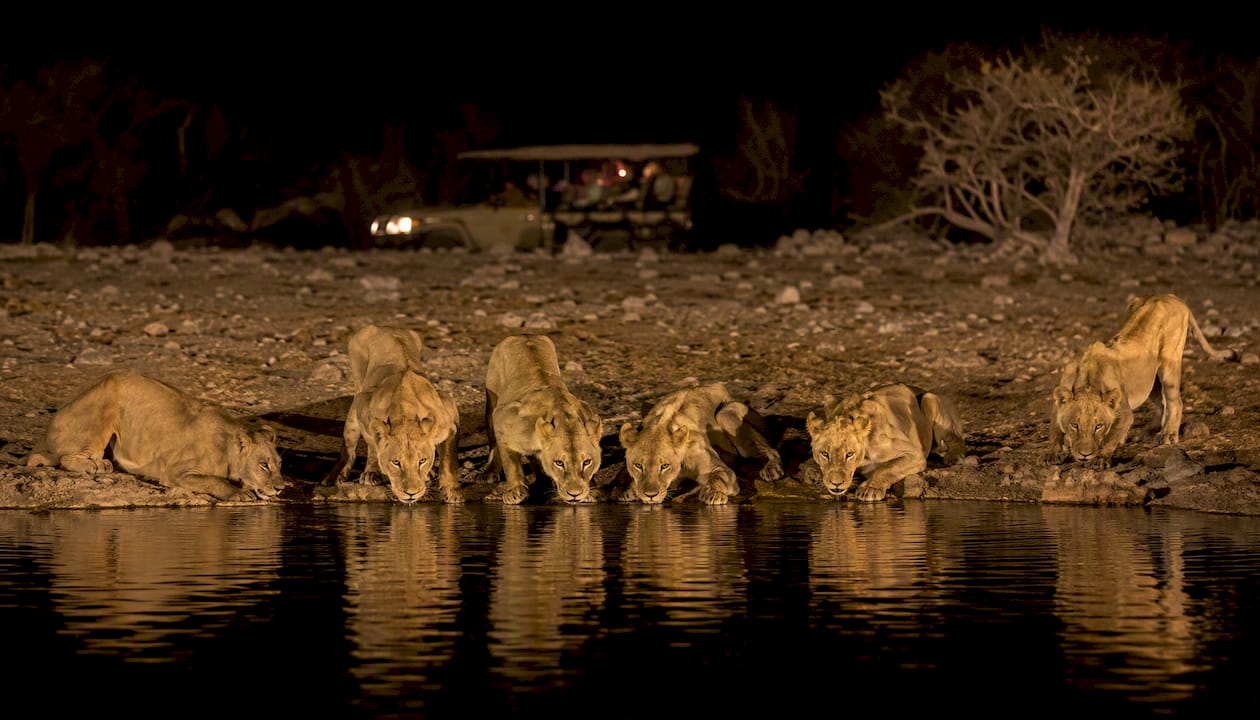
Etosha’s lions are among the most reliably sighted in southern Africa, largely because the park’s waterholes act as natural gathering points. Sitting at Okaukuejo waterhole after dark, listening to a pride drink in the floodlit water, is an experience that stays with you. Desert-adapted lions also occur in the Skeleton Coast hinterland, though sightings there require serious effort. Sighting likelihood: likely at Etosha waterholes, occasional elsewhere.
6. Giraffe — the tallest silhouette on the horizon
Namibia’s giraffe population is healthy, and you’ll spot them browsing acacia canopies across Etosha and the north-central regions. Their sheer scale against a flat pan horizon makes for extraordinary photography. Sighting likelihood: very likely in Etosha.
7. Cheetah — speed across open ground
Namibia holds one of the world’s largest free-ranging cheetah populations, though most live outside protected areas on commercial farmland. Inside Etosha, cheetah sightings are genuine but not guaranteed — early morning drives on open plains give the best odds. Community conservancies have played a meaningful role in reducing human-wildlife conflict and supporting cheetah numbers in some regions. Sighting likelihood: occasional in parks, likely on specialist cheetah-focused private reserves.
8. Black rhinoceros — a conservation triumph
Black rhino are critically endangered globally, but Namibia’s population is one of the largest and best-protected in the world. Etosha’s waterholes, particularly Okaukuejo, are among the most reliable places on Earth to see black rhino in the wild. The species is solitary and often approaches water at night, so a floodlit waterhole vigil dramatically improves your odds. Sighting likelihood: occasional to likely at Etosha’s key waterholes.
9. Plains zebra — stripes in every direction
Plains zebra are abundant in Etosha and the northern parks, often moving in mixed herds with wildebeest and springbok. Their social interactions — grooming, sparring, foaling — make them endlessly watchable. Sighting likelihood: very likely in Etosha.
10. Greater kudu — the spiral-horned ghost
Kudu are masters of disappearing into thornbush, but their towering spiral horns and white-striped flanks give them away when they step into the open. Males are particularly striking. Found across Etosha, Waterberg, and the Caprivi parks. Sighting likelihood: likely in wooded areas.
11. Cape buffalo, hippo, and crocodile — the Caprivi surprise
If your itinerary extends to the Caprivi Strip’s Bwabwata, Mudumu, or Nkasa Rupara parks, you enter a completely different Namibia. Buffalo herds, hippo pods, and Nile crocodiles inhabit the Okavango and Kwando river systems here, alongside a rich wetland bird community. It’s a side of Namibia that many visitors miss entirely, and it rewards those who make the detour.
12. Leopard — the elusive prize
Leopard are present in Namibia’s rocky terrain and riverine woodland but are genuinely difficult to see. Night drives on private reserves give the best chance. Sighting likelihood: rare to occasional, but unforgettable when it happens.
Hard-to-see but worth knowing about
Brown hyena: nocturnal and shy, found in the Namib and Kalahari; night drives on private reserves are your best option
Aardvark: almost exclusively nocturnal; private reserve night drives occasionally yield sightings
Pangolin: critically threatened and rarely seen; specialist conservation operators offer the best chance
What to look for along Namibia’s Atlantic coastline
Namibia’s 1,500-kilometre Atlantic coast is as wild as any game reserve, and the marine and coastal wildlife here is genuinely spectacular.
Cape fur seals at Cape Cross: The Cape Cross Seal Reserve on the Skeleton Coast hosts one of the largest Cape fur seal colonies in the world, with numbers reaching into the hundreds of thousands during peak breeding season. The noise, smell, and sheer scale of the colony is overwhelming in the best possible way.
Heaviside’s dolphins: These small, striking dolphins are endemic to the Benguela Current and are regularly seen on boat cruises out of Walvis Bay, often riding bow waves.
Common dolphins and bottlenose dolphins: Both species are frequent in Walvis Bay, particularly on morning catamaran cruises.
Southern right whales and humpback whales: Seasonal visitors, typically June through November, seen from shore at Lüderitz and from boats at Walvis Bay.
Greater and lesser flamingos: Walvis Bay lagoon holds tens of thousands of flamingos year-round, turning the shallows pink at sunrise. The lagoon holds Ramsar Wetland status, recognising its international importance for migratory shorebirds.
Seabirds: African penguin, Cape gannet, and a wide variety of terns and cormorants are all present along the coast.
Boat cruises from Walvis Bay are the most popular way to see dolphins and flamingos together, and most operators combine both in a single morning. Walking at Cape Cross is free-roaming and shore-based. Ethical viewing at seal colonies means keeping a respectful distance and following guide instructions — the animals are wild, and bulls can be aggressive during breeding season.
Birds and smaller wildlife that make Namibia’s safari richer
Namibia’s 645 bird species reward anyone who looks beyond the big mammals. For dedicated birders, the country is extraordinary; for general safari travellers, the birds add colour and movement to every drive.
Standout species to watch for:
Greater and lesser flamingos at Walvis Bay and Sandwich Harbour — a spectacle of pink and crimson in the shallows
Lappet-faced vulture — Africa’s largest vulture, present at carcasses across Etosha and the Kalahari
Martial eagle and bateleur — two of Africa’s most dramatic raptors, regularly seen soaring over Etosha
Crimson-breasted shrike — a vivid splash of red in dry thornbush, one of Namibia’s most photographed small birds
Rosy-faced lovebird — endemic to Namibia and south-western Angola, found in rocky desert terrain
Kori bustard — the world’s heaviest flying bird, stalking open grassland in Etosha
Reptiles and desert specialists:
Namaqua chameleon: a slow-moving, colour-shifting resident of the Namib gravel plains, fascinating to watch hunting
Peringuey’s adder: a sidewinding viper that buries itself in loose dune sand with only its eyes exposed
Fog-basking beetle (Stenocara gracilipes): harvests moisture from Atlantic fog by tilting its body to channel water droplets toward its mouth — one of the natural world’s most elegant survival solutions
Dune-adapted lizards: several species sprint across hot sand on alternating legs to minimise contact with the surface
For a deeper dive into Namibia’s birding hotspots and seasonal timing, the ultimate guide to birdwatching in Namibia covers species, locations, and gear in detail.
Pro Tip: Carry binoculars rated at least 8x42 — Namibia’s open terrain means birds are often distant, and the extra light-gathering makes a real difference in the low-angle morning sun.
Why Namibia’s wildlife behaves differently from other African destinations
The animals you see in Namibia are not simply the same species you’d find in the Serengeti or Kruger, transplanted into a drier setting. Many have genuinely adapted to arid conditions in ways that make their behaviour fascinating to observe.
Oryx and the heat: The gemsbok can allow its body temperature to rise to 45°C without brain damage, a feat achieved by a specialised blood-cooling network called the carotid rete. This means oryx are active in the midday heat when other species shelter, which is why you’ll spot them crossing dunes at noon while everything else is invisible. Dawn and late afternoon remain the best times for photography, when the low light catches their coats against the sand.
Desert elephants and water: Damaraland’s elephants have learned to dig in dry riverbeds to reach sub-surface water, and they pass this knowledge between generations. They also strip bark from trees more selectively than savanna elephants, minimising damage to sparse vegetation. Watching a herd excavate a waterhole in a bone-dry riverbed is a privilege that few safari destinations can offer.
Hartmann’s mountain zebra and terrain: These zebra are built for steep, rocky ground — their hooves are harder and more pointed than those of plains zebra, and they navigate cliff faces with surprising agility. Guides in Namib-Naukluft typically scan rocky ridgelines at dawn, when the animals move down to graze before the heat builds.
Pro Tip: For the most striking oryx photographs, position yourself at a Namib dune crest in the hour after sunrise. The raking light turns the sand copper-red, and oryx moving along the slip face create silhouettes that are impossible to replicate at any other time of day.
When to visit Namibia for the best wildlife sightings
Timing your trip well can be the difference between a good safari and a truly magnificent one.
May to October (dry season): the prime wildlife-viewing window. Water sources shrink, and animals concentrate around permanent waterholes and rivers. Etosha’s waterholes are at their most productive from June through September, with lion, elephant, rhino, and zebra often visible within minutes of arriving at a waterhole. Vegetation is low and sparse, making animals easier to spot. Temperatures are comfortable during the day, though nights can be cold in June and July.
November to April (wet season): newborns, birds, and green landscapes. The rains transform Namibia’s palette from gold to green. Springbok, zebra, and wildebeest drop their young from November onward, attracting predators and creating dramatic hunting sequences. Bird migration peaks between November and March, with Etosha’s pans flooding to attract vast numbers of waterbirds. The Caprivi wetlands are at their most spectacular from February through April.
June to August: peak photography season. The combination of dry conditions, concentrated wildlife, and clear skies makes this the most popular period for photographers. Private reserve lodges book out months in advance, so plan early.
Coastal wildlife timing: Flamingos at Walvis Bay are present year-round, but numbers peak in summer. Whale watching runs roughly June through November. Cape fur seal pups are born from November onward, making December and January particularly lively at Cape Cross.
Regional note: the Caprivi Strip receives more rainfall than the rest of Namibia and is best visited in the dry season (May to October) when roads are passable and wildlife concentrates near the rivers. The Namib dunes are accessible year-round, though summer heat (December to February) can be extreme.
Conservation in Namibia: what’s working and why it matters to you
Namibia’s conservation story is one of the most compelling in Africa, and understanding it makes your safari richer.
The country pioneered community-based natural resource management in the 1990s, returning rights over wildlife and tourism revenue directly to local communities. WWF’s assessment credits this model with helping recover populations of black rhino and cheetah in some areas, by giving communities a direct financial incentive to protect rather than poach wildlife. Today, Namibia’s communal conservancy network covers a substantial portion of the country’s land area.
Key conservation highlights:
Black rhino recovery: Etosha National Park has been central to Namibia’s black rhino conservation programme, with waterhole-based monitoring supporting one of Africa’s most stable populations of this critically endangered species.
Cheetah: Namibia holds a significant share of the world’s free-ranging cheetah population, many living on private farmland. Community conservancies and farmer-education programmes have reduced retaliatory killing.
Large carnivore pressure: Research on Namibia’s carnivore community notes that large carnivores (those above 20 kilograms) tend to face greater threat levels than smaller species, reflecting the pressure apex predators face in arid, human-adjacent landscapes.
NamibRand’s model: NamibRand Nature Reserve demonstrates what private conservation can achieve — four distinct desert habitats managed for wildlife recovery and low-impact tourism, with no hunting and strict visitor limits.
Conservation note: Choosing a lodge or operator that supports community conservancies puts tourism revenue directly into wildlife protection. Look for operators affiliated with the Namibian Association of CBNRM Support Organisations (NACSO) or those with explicit community benefit agreements.
Pro Tip: When booking, ask your operator which conservancy or conservation programme your lodge fee supports. Reputable luxury operators will answer this question without hesitation. For a curated list of conservation-positive stays, the top sustainable stays in Namibia guide is a useful starting point.
The Ministry of Environment, Forestry and Tourism (MEFT) governs all national parks and wildlife regulations in Namibia. Follow guide instructions at all times, remain in your vehicle unless explicitly told otherwise, and never approach wildlife independently.
What to realistically expect on a Namibia safari
Are the Big Five in Namibia? Namibia has four of the Big Five: lion, leopard, elephant, and black rhino. Cape buffalo are present in the Caprivi parks but absent from Etosha. If seeing all five is your priority, combining Namibia with a Caprivi extension or a Botswana add-on covers the gap. Etosha’s four-species lineup is still exceptional.
What is a must-see in Namibia? The Etosha waterhole experience at sunset, oryx on the Sossusvlei dunes at dawn, the flamingo spectacle at Walvis Bay, and a desert-elephant tracking drive in Damaraland. These four experiences are genuinely unlike anything else in Africa.
Is Namibia or Tanzania better for safari? They serve different travellers. Tanzania’s Serengeti offers the Great Migration and the highest density of predator-prey interaction on the continent. Namibia offers space, solitude, desert drama, and wildlife adaptations you won’t see anywhere else. For luxury travellers who want exclusivity and a more intimate experience, Namibia often wins.
Is it safe to visit Namibia now? Namibia is one of Africa’s most stable and visitor-friendly countries. The U.S. State Department rates it as a Level 1 destination (exercise normal precautions). Standard safari safety rules apply: follow guide instructions, stay in your vehicle in unfenced parks, and take sensible precautions in urban areas.
Must-see experiences for luxury travellers:
Etosha waterhole vigil at sunset and after dark
Sossusvlei dunes at first light with oryx in the foreground
Walvis Bay flamingo and dolphin boat cruise
Cape Cross seal colony on the Skeleton Coast
Desert-adapted elephant tracking in Damaraland
Night drive on a private reserve for nocturnal species
Private reserve access and early-morning or late-afternoon drives consistently produce the best sightings. Waiting patiently at a productive waterhole rather than constantly moving between sites is a strategy experienced guides swear by.
Practical tips for U.S. travellers heading to Namibia
Health and vaccinations:
Consult a travel medicine clinic at least six weeks before departure; routine vaccinations (hepatitis A, typhoid) are recommended
Malaria risk is present in the Caprivi Strip and parts of northern Namibia; prophylaxis is advisable for those regions
Etosha and the Namib are generally low-risk for malaria
Safety and wildlife etiquette:
Never exit your vehicle in unfenced national parks without guide permission
Keep noise low on game drives — sudden sounds flush animals
Wear neutral colours (khaki, olive, grey); avoid white and bright blue, which are visible to wildlife at distance
No flash photography at close range — it startles animals and can provoke a response
Follow all safari safety guidelines provided by your operator
Maximising sightings:
Book drives for the first two hours after sunrise and the last two before sunset — this is when most species are active
Plan waterhole waits of at least 30 minutes rather than drive-by visits
Night drives on private reserves are the only way to see aardvark, brown hyena, and other nocturnal species
Guided game drives in Etosha with a specialist guide dramatically outperform self-drive for sighting rates
U.S. traveller logistics:
U.S. passport holders receive a 90-day visa-free entry to Namibia
Travel insurance with medical evacuation coverage is strongly recommended — the nearest major medical facilities to remote areas can be hours away
Namibia uses the Namibian dollar (NAD), pegged to the South African rand; U.S. dollars are widely accepted at lodges and major operators
Flights from the U.S. typically route through Johannesburg (O.R. Tambo International) or Frankfurt, with onward connections to Windhoek’s Hosea Kutako International Airport
Why Namibia feels unlike any other African safari
Most safari destinations ask you to choose between wildlife and landscape. Namibia refuses that trade-off. The desert light here is extraordinary — a quality of gold and shadow at dawn that photographers travel across the world to capture, and which no filter can replicate. The scale of the place is humbling in a way that even the Serengeti, for all its drama, doesn’t quite match. You can drive for an hour in Damaraland and see no other vehicle, no lodge, no road sign. Just ancient rock, dry riverbed, and the distant silhouette of an elephant moving through a landscape unchanged for millennia.
What makes Namibia particularly special for the traveller who has already done East Africa is precisely this: the wildlife here has adapted to conditions of genuine scarcity, and watching those adaptations in action — an oryx cooling itself in midday heat, a desert elephant digging for water, a Hartmann’s zebra picking its way down a cliff face — carries a different kind of weight than watching a lion hunt on an open plain. The animals feel harder-won, and the sightings feel more personal.
Secretnamibia’s approach to planning a Namibia trip is built around this idea: that the right combination of private reserve access, expert guiding, and thoughtful itinerary design transforms a good safari into something genuinely rare. The conservation story here is real, the landscapes are extraordinary, and the wildlife rewards those who take the time to understand it.
Plan your Namibia safari with Secretnamibia
Whether you’re drawn by the desert-adapted elephants of Damaraland, the black rhino vigils at Etosha, or the flamingo-pink shallows of Walvis Bay, Secretnamibia designs bespoke itineraries that put you in exactly the right place at the right time. From luxury safari experiences combining private reserves with national parks, to specialist fly-in itineraries that cover Namibia’s greatest wildlife regions in a single trip, every journey is built around your priorities.
Explore Namibia safaris or enquire directly to start planning your trip with a specialist who knows this country intimately.
Sources
Recommended
相关
萨法里指南
2025年10月30日
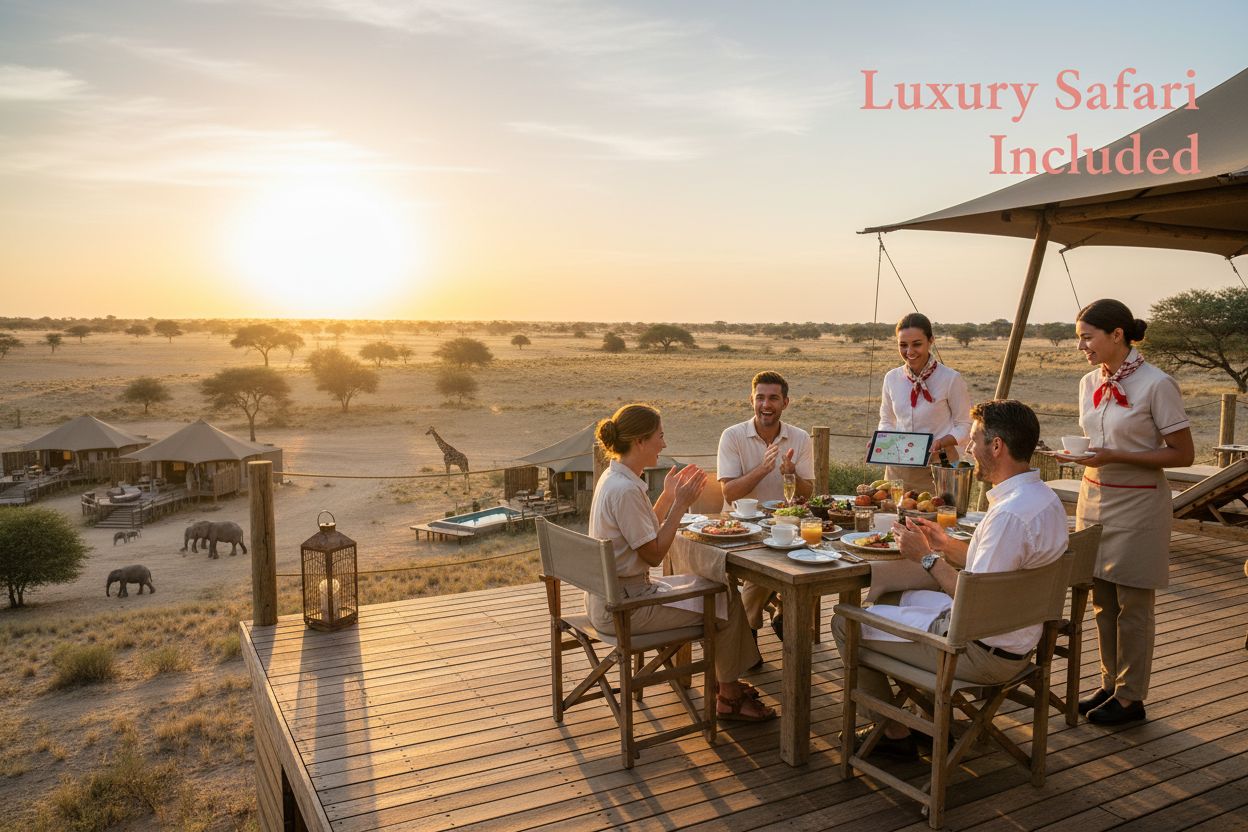
Understanding What is Included in Luxury Safaris
Explore what is included in luxury safaris, from exclusive accommodations to bespoke experiences that cater to discerning travelers.
2026年2月24日
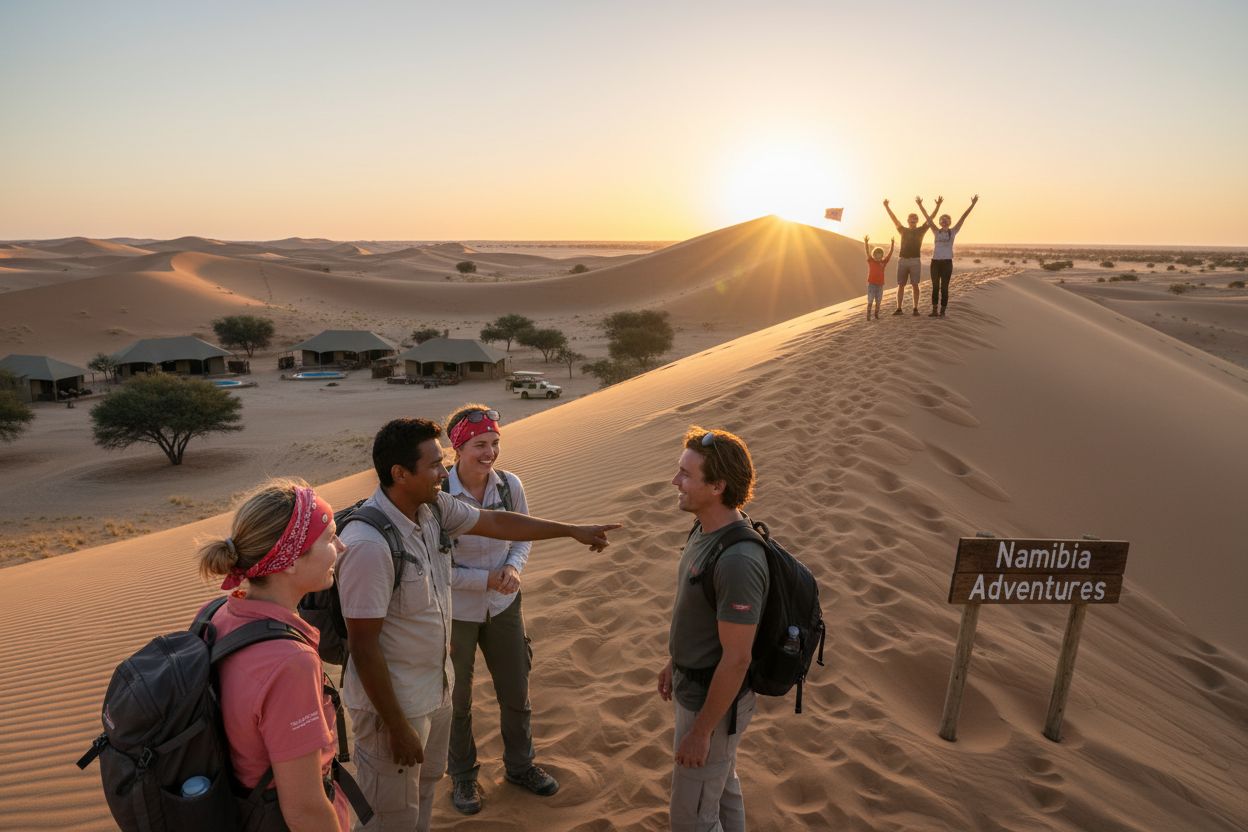
Why Namibia Adventures Matter: An In-Depth Look
Discover why Namibia adventures are essential for luxury travelers seeking unique, immersive experiences in nature and wildlife exploration.
2026年2月23日
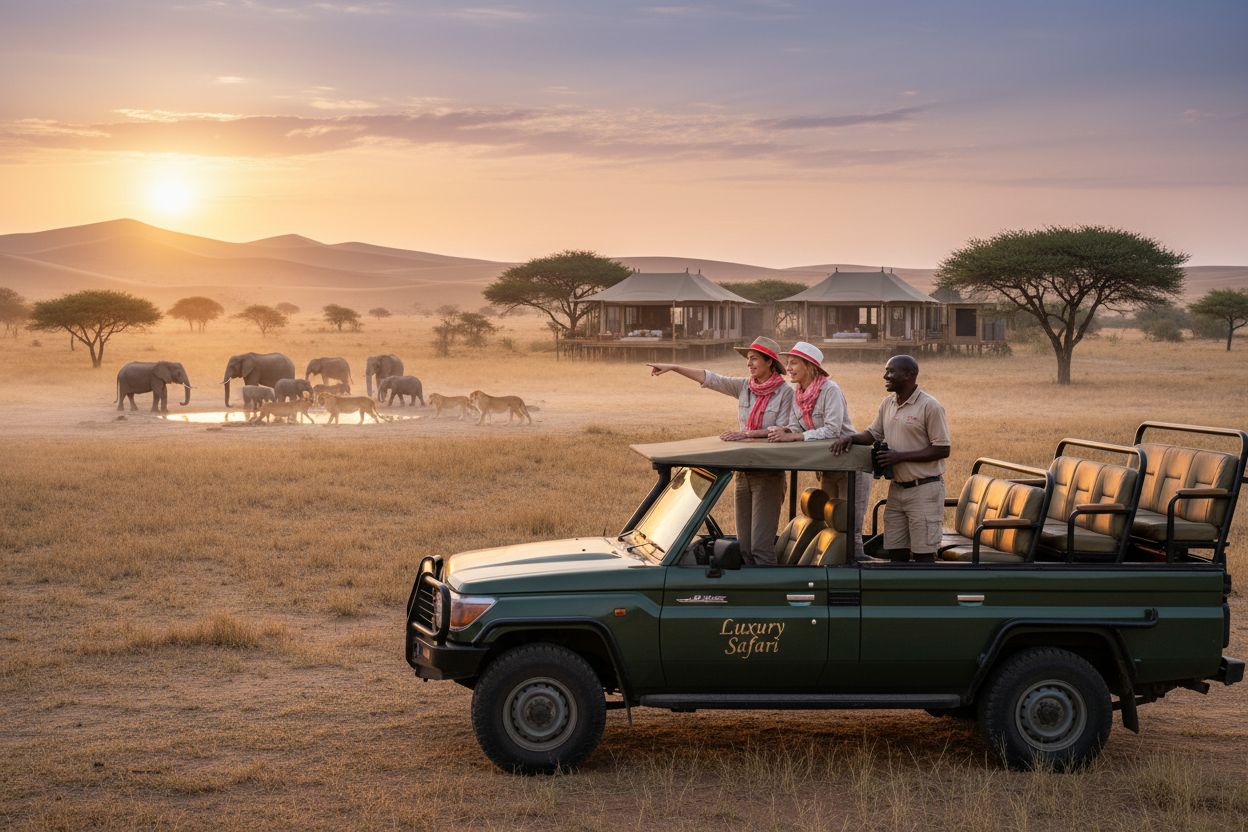
What to Expect on a Luxury Safari: A Comprehensive Guide
Discover what to expect on a luxury safari and gain a deeper understanding of the unique experiences that await you in the wild.
2026年2月22日
Understanding Namibia Safari Costs Explained
Explore Namibia safari costs explained to uncover what influences pricing and what it means for your adventure.
2026年2月21日
Understanding the Role of Safari Experts in Wildlife Travel
Explore the role of safari experts and gain a comprehensive understanding of how they enhance wildlife travel experiences for all types of travelers.
2026年2月20日
Guide organisation safari all inclusive : vivez l'aventure de vos rêves
Découvrez notre guide organisation safari all inclusive étape par étape pour planifier un voyage inoubliable au cœur de la nature.