
Aug 2, 2026
Discover the ultimate Namibia tour with a bespoke 10–14 day luxury loop. Enjoy unforgettable sunsets, wildlife, and personalized experiences.
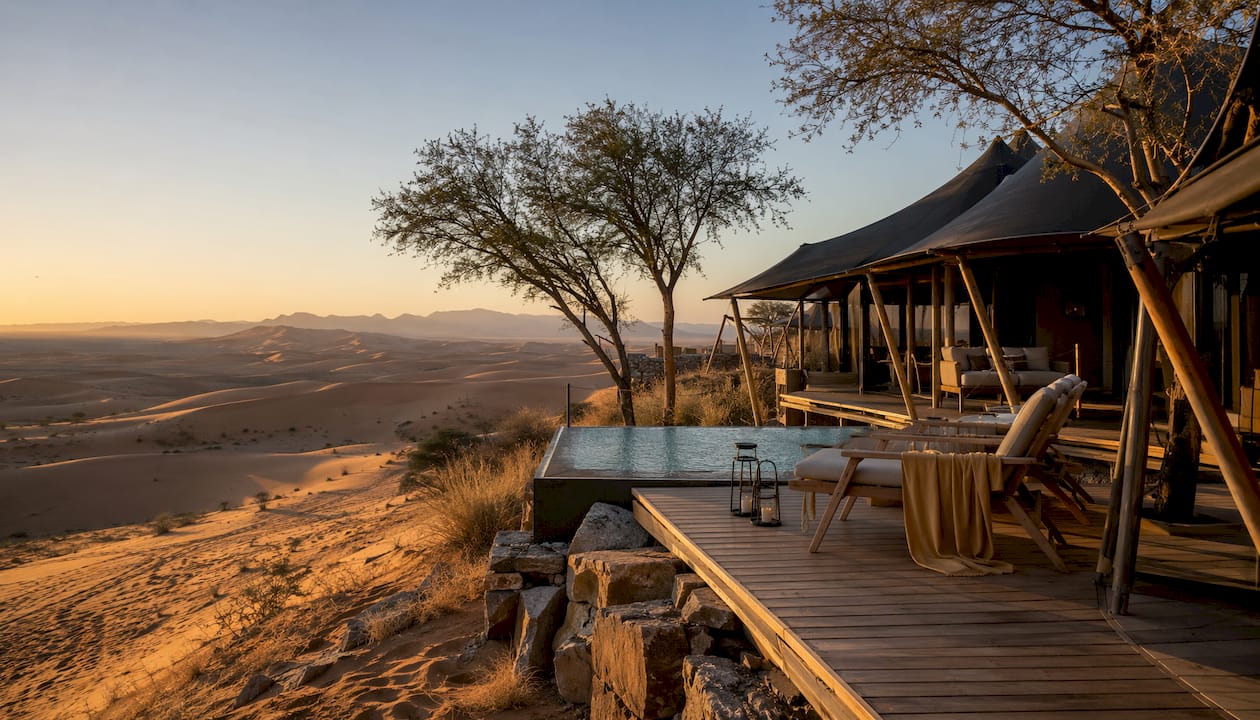
Namibia tour: best 10–14 day luxury loops for 2026
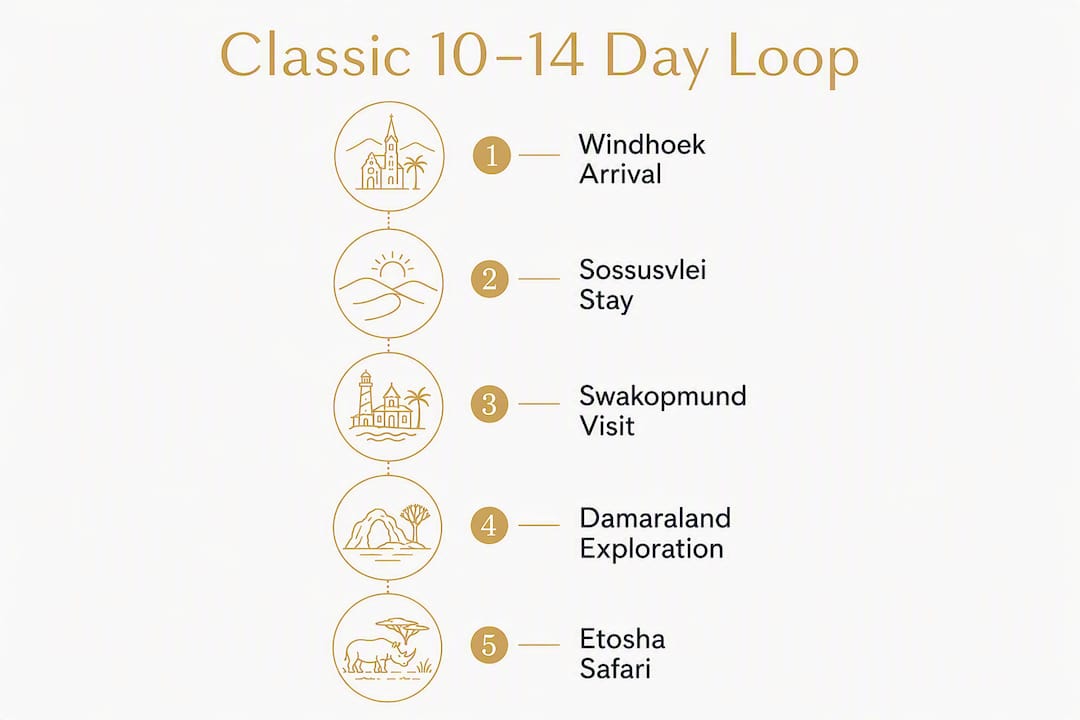
For most first-time visitors, the single best Namibia tour is a 10–14 day bespoke private loop running Windhoek → Sossusvlei → Swakopmund → Damaraland → Etosha → Windhoek. This classic circuit covers approximately 2,400–2,800 km and hits every headline region without the pace-killing transit days that plague over-ambitious itineraries. The format works because it protects two full nights in Sossusvlei for that unmissable dune sunrise, three nights in Etosha National Park for meaningful wildlife encounters, and two nights each in Swakopmund and Damaraland for coast and culture. Secretnamibia specialises in exactly this loop, building bespoke versions with private-reserve access and personalised guiding that the standard group tour simply cannot match.
Why this loop works for luxury travellers:
Two nights at Sossusvlei means you catch the sunrise on Dune 45 and have a relaxed afternoon in Deadvlei without rushing.
Three nights in Etosha spreads your game drives across different waterholes and light conditions, dramatically improving wildlife sighting odds.
Swakopmund acts as a natural rest point mid-loop, breaking the desert driving with coastal air and Sandwich Harbour excursions.
Damaraland adds geological and cultural depth — Twyfelfontein’s rock engravings and desert-adapted elephants are unlike anything else on the continent.
The Skeleton Coast is accessible as a detour or fly-in extension for those with 14+ days.
Pro Tip: Book your Sossusvlei and Etosha nights before anything else. Peak-season inventory at lodges inside or adjacent to these parks fills months ahead, and losing those beds forces you to compromise the entire route.
Table of Contents
What do the three main Namibia itinerary shapes look like?
Which regions should you prioritise on your Namibia safari?
Which tour style fits you best?
When is the best time to visit Namibia?
How do you get to Namibia and what do you need to know before you go?
Where will you sleep, and what should you expect?
Why Secret Namibia delivers a different kind of Namibia experience
Key takeaways
Why bespoke matters more than most travellers expect
Ready to plan your Namibia safari with Secretnamibia?
Further reading and authoritative sources
What do the three main Namibia itinerary shapes look like?
Choosing the right trip length is the first real decision, and it shapes everything else. Here is how the three main formats compare.
Short break (3–5 days)
A long-weekend Namibia trip is genuinely rewarding if you focus tightly. Fly into Windhoek, drive straight to Sossusvlei for two nights, catch the dune sunrise, then spend a night in Swakopmund before flying home. You will not see Etosha or Damaraland, but you will leave with photographs that look impossible. This option suits travellers adding Namibia onto a broader Southern Africa trip or those testing the country before committing to a longer return visit.
Classic 10–14 day loop
This is the format most travellers should choose. A well-paced 14-day itinerary distributes nights roughly as follows: one arrival night in Windhoek, two at Sossusvlei, two in Swakopmund, two in Damaraland, three in Etosha, two reset nights, and one pre-departure night. That adds up to 13 sleeping nights and covers every major region without a single day feeling like pure transit. The 10-day version compresses the same route by trimming reset nights and requires a high-clearance 4x4 for the gravel transfers. Both formats work; the 14-day shape simply breathes better.
Extended 14+ days
Add Fish River Canyon in the south, a Skeleton Coast fly-in, or the Caprivi Strip in the northeast and you are looking at 16–21 days. Fly-in options make sense here: flying between Sossusvlei and the Skeleton Coast, for example, saves two full driving days and opens remote private reserves inaccessible by road. Budget-conscious travellers extending to 14 days on a self-drive can expect costs in the range of N$55,000–N$120,000 for two people before international flights, depending on vehicle and lodge choices.
Itinerary shape | Best for | Typical duration | Budget bracket | Transport mode |
|---|---|---|---|---|
Short dunes and coast | Add-on or taster trip | 3–5 days | Mid-range to luxury | Self-drive or transfer |
Classic loop | First-time, wildlife and dunes | 10–14 days | Mid-range to luxury (expect N$55,000–N$120,000 for two before flights if self-driving) | Self-drive 4x4 or guided |
Extended with add-ons | Repeat visitors, remote access | 14+ days | Luxury | Fly-in or private guided |
Pro Tip: When booking the classic loop, lock Sossusvlei and Etosha first, then fill in Swakopmund and Damaraland. Flexible nights are far easier to adjust than the headline park stays.
Which regions should you prioritise on your Namibia safari?
Namibia is vast, and each region delivers something the others cannot. Knowing what each area offers helps you decide where to spend your precious nights.
Sossusvlei and the Namib-Naukluft National Park
The Namib Desert is the oldest desert on earth, and Sossusvlei sits at its most photogenic heart. The towering apricot-red dunes surrounding Deadvlei — that ghostly white clay pan studded with ancient camel thorn skeletons — produce images that stop people mid-scroll. Two nights at Sesriem gives you one sunrise on Dune 45 or Big Daddy and a second morning for the quieter corners of the park. Sesriem Canyon, just a short drive from the main gate, is worth an hour in the late afternoon when the light turns golden.
Best light: Arrive at the dunes before 6:30 AM. The shadows extend dramatically in the first hour after sunrise.
What to pack: Closed shoes for the dune climb, a wide-brim hat, and a telephoto lens for oryx silhouettes on the ridgelines.
Wildlife note: Oryx, springbok, and ostrich are common; brown hyena sightings are a genuine bonus.
Swakopmund and Walvis Bay
Swakopmund is where the Namib meets the Atlantic, and the collision is spectacular. The town itself is a curious mix of German colonial architecture and Namibian warmth, with excellent seafood and a relaxed pace that makes it the ideal mid-loop reset. The real highlight is Sandwich Harbour, a 45-minute 4x4 drive south of Walvis Bay, where towering dunes roll directly into the ocean. Marine life along this coast is extraordinary: flamingos, pelicans, and Cape fur seals are all visible within a short radius. Swakopmund’s coastal experiences also include quad biking, skydiving, and kayaking with seals — activities that add an adventure dimension to what is otherwise a wildlife-focused trip.
Damaraland
Damaraland is Namibia’s geological and cultural soul. The landscape is rugged, ancient, and deeply compelling: burnt-orange mountains, dry riverbeds, and a silence that feels almost physical. Twyfelfontein, a UNESCO World Heritage Site, holds one of Africa’s largest concentrations of rock engravings, with over 2,000 petroglyphs created by San people on rusty-orange rock surfaces. Desert-adapted elephants roam the dry riverbeds here, having evolved to survive on far less water than their savannah cousins. Two nights is the minimum to do the region justice.
Skeleton Coast
The Skeleton Coast is not for everyone, and that is precisely its appeal. Shipwrecks half-buried in sand, vast Cape fur seal colonies, and a fog-draped coastline that feels genuinely remote make this one of Africa’s most atmospheric destinations. It is best approached as a fly-in extension rather than a driving detour, since the distances are punishing and the roads require serious preparation. If the Skeleton Coast is on your list, build it into a 14+ day itinerary or ask Secretnamibia about fly-in options that pair it with a private coastal camp.
Etosha National Park
Etosha is where the wildlife magic happens. The park’s defining feature is its network of permanent waterholes, which draw extraordinary concentrations of animals during the dry season. Elephants, lions, leopards, black and white rhino, cheetah, and vast herds of zebra and wildebeest all come to drink, often within metres of the floodlit waterhole at your lodge. Splitting three nights across the park’s eastern and central sections gives you the best variety of habitats and waterhole experiences. September and October are the prime months, when water sources outside the park have dried up and animals have no choice but to visit the permanent holes in numbers that feel almost theatrical.
Pro Tip: Position yourself at a waterhole in the late afternoon and simply wait. The animals come to you, and the light at that hour is extraordinary for photography.
Which tour style fits you best?
The style of tour you choose matters as much as the route itself. Here is how the main formats break down.
Self-drive safari. The most popular choice for independent travellers, and genuinely rewarding if you are comfortable with long gravel-road segments and navigating without consistent mobile signal. A 4x4 vehicle is recommended for comfort and safety on Namibia’s extensive unpaved road network. The freedom is real: you set your own pace, linger at a waterhole as long as you like, and choose your own music for the drive. The trade-off is that gravel roads slow progress considerably, and a wrong turn in a remote area can cost hours. Budget roughly N$55,000–N$120,000 for two people for a comfortable 10–14 day self-drive at mid-range lodges, not including international flights.
Guided small-group tour. A professional driver-guide handles all logistics, timing, and on-the-ground problem-solving, leaving you free to focus entirely on the experience. Small-group caps of around 10 travellers mean you get genuine attention during wildlife sightings and can ask questions without shouting over a crowd. An 11-day fully accommodated small-group tour typically includes lodge stays, most meals, and key entrance fees, with pricing around $4,500 per person as a reference point for what full-service logistics cost.
Private luxury safari and private reserves. This is where Secretnamibia excels. A private safari means your own vehicle, your own guide, and an itinerary built entirely around your interests and pace. Private reserves adjacent to national parks offer exclusive game drives, lower vehicle density, and conservation-linked experiences that feel meaningfully different from a standard park visit. The luxury safari features available through Secretnamibia include private tented camps, dedicated trackers, and access to concessions where self-drive visitors simply cannot go.
Fly-in safari. Flying between regions saves two to three full driving days on a 10-day itinerary and opens remote destinations that are impractical by road. This format suits travellers with shorter schedules, those who want to combine Namibia with Botswana or Zimbabwe, or anyone for whom the driving itself is not part of the appeal. Fly-in options are the most expensive format but deliver the highest ratio of wildlife time to transit time.
Pro Tip: If you are unsure between self-drive and guided, consider a hybrid: self-drive the Sossusvlei to Swakopmund leg (straightforward tarmac and well-marked gravel), then join a guided or private vehicle for Damaraland and Etosha where local knowledge makes a measurable difference to sighting quality.
When is the best time to visit Namibia?
Timing your trip correctly can be the difference between a good safari and a magnificent one. Namibia’s seasons are distinct, and each delivers a different experience.
The dry season, running from May through October, is the primary recommendation for wildlife viewing. Animals concentrate at permanent waterholes as surface water disappears, making sightings more predictable and more dramatic. September and October represent the peak of this window in Etosha, when heat and scarcity push animals to the waterholes in extraordinary numbers. The trade-off is that these months are also the most popular, and accommodation books out early.
May through July offers slightly cooler temperatures and excellent photographic light in the Namib Desert. The coastal fog that rolls in from the Atlantic during these months creates an ethereal atmosphere at Sossusvlei and along the Skeleton Coast, though it can also obscure views if you arrive at the wrong moment. The green season (November through April) brings dramatic thunderstorms, lush scenery, and migratory birds, but wildlife viewing is harder because animals disperse across a wider area with more water available.
Season | Months | Wildlife viewing | Dune photography | Coastal weather | Booking pressure |
|---|---|---|---|---|---|
Peak dry | September–October | Excellent | Good | Clear | Very high |
Early dry | May–July | Good | Excellent | Foggy mornings | Moderate |
Late dry | August | Very good | Good | Clear | High |
Green season | November–April | Moderate | Variable | Warm and humid | Low |
Pro Tip: Pack layers regardless of when you travel. Desert mornings in Sossusvlei can be genuinely cold even in September, while midday temperatures regularly exceed 35°C. Sturdy closed shoes, high-SPF sunscreen, and a quality wide-brim hat are non-negotiable.
How do you get to Namibia and what do you need to know before you go?
Practical planning is where many trips stall. Here is what US travellers need to sort before departure.
Getting there. There are no direct flights from the US to Windhoek’s Hosea Kutako International Airport. The most common routing connects through Johannesburg (O.R. Tambo International) or Frankfurt, with total journey times of 18–24 hours depending on your departure city. Book your arrival-night accommodation in Windhoek in advance; arriving exhausted and hunting for a room is not the start you want. Windhoek Luxury Suites is a well-regarded arrival option close to the airport corridor.
Visas and health. US passport holders currently receive a visa-free entry stamp on arrival for stays up to 90 days, but always verify current requirements with the Namibian Embassy in Washington, D.C. before booking. For health, consult your doctor or a travel medicine clinic at least six weeks before departure. Malaria prophylaxis is recommended for the Caprivi Strip and northern regions including Etosha during the green season; the risk is lower in the dry season but not zero. Yellow fever vaccination is required if you are arriving from a country with endemic yellow fever.
Driving realities. Namibia drives on the left. Gravel roads make up the majority of the country’s road network, and they demand respect: reduce speed, watch for corrugations, and never drive after dark. A high-clearance 4x4 is the right vehicle for any itinerary that includes Damaraland or the Skeleton Coast. Refuel whenever you pass a petrol station; gaps of 200 km or more between fuel stops are common in remote areas. For safari safety tips specific to Namibia, Secretnamibia’s planning guides are worth reading before you set off.
Money and communication. The Namibian Dollar (N$) is pegged to the South African Rand, and South African Rand is accepted everywhere. US dollars are not widely accepted outside major hotels. ATMs are available in Windhoek, Swakopmund, and larger towns; carry cash for remote lodges and national park fees. Mobile signal is patchy outside towns, so download offline maps (Maps.me or Google Maps offline) before leaving Windhoek.
Travel insurance. Medical evacuation from a remote Namibian location is expensive. A policy that covers emergency evacuation, trip cancellation, and adventure activities (if you plan to do dune climbing or quad biking) is worth every cent. Confirm your policy covers Southern Africa specifically.
Pro Tip: Download offline maps and a PDF copy of your itinerary before leaving Windhoek. Mobile data is unreliable in Damaraland and along the Skeleton Coast, and having your route accessible without signal prevents real stress.
Where will you sleep, and what should you expect?
Accommodation in Namibia spans a remarkable range, from basic campsites under a billion stars to private-reserve villas with plunge pools overlooking a waterhole. Knowing what each tier delivers helps you set realistic expectations and book the right mix.
Basic campsites. National park campsites (NWR-managed) offer ablution blocks, braai facilities, and a fence between you and the wildlife. They are affordable and atmospheric, but facilities vary and hot water is not guaranteed. Best suited to self-drive travellers who want the full immersive experience and do not mind roughing it slightly.
Mid-range lodges. The backbone of most self-drive itineraries. Expect en-suite rooms, reliable hot water, a restaurant or communal dining area, and a swimming pool. Quality is generally high by international standards, and many mid-range lodges in Namibia punch well above their price point in terms of setting and service.
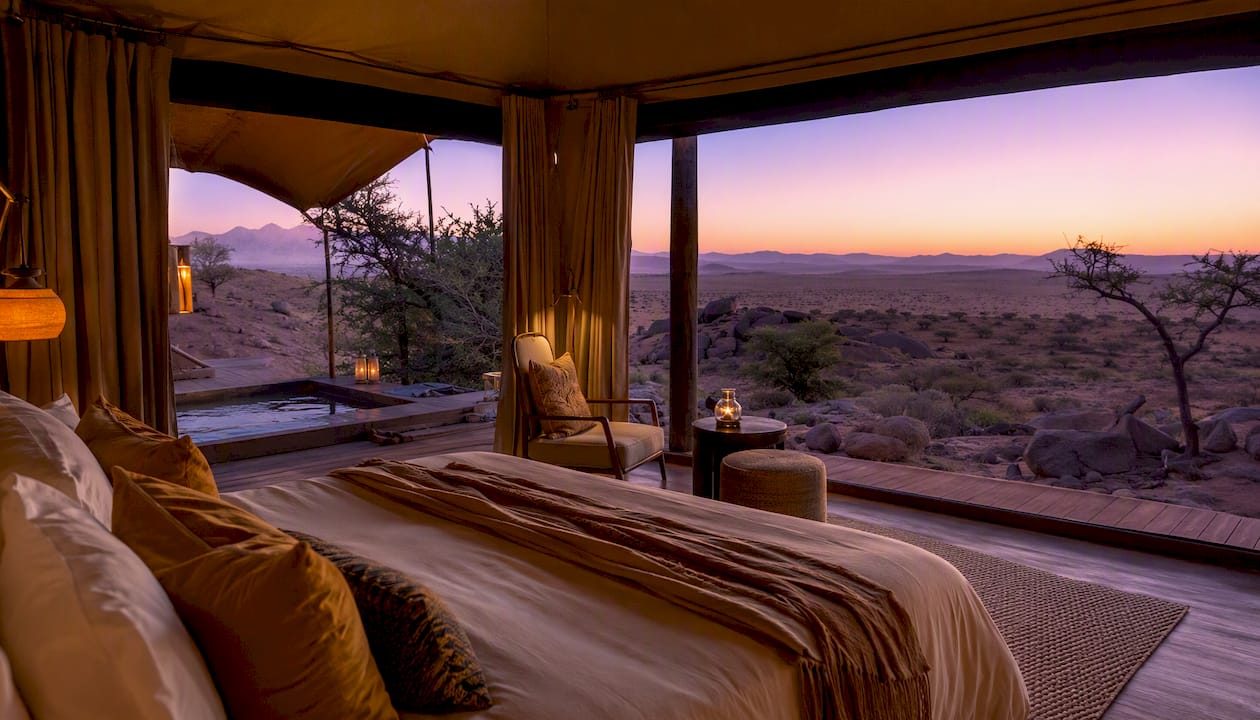
Luxury tented camps. The defining accommodation experience of a high-end Namibia safari. Canvas walls, hardwood floors, outdoor showers, and private decks overlooking the bush or dunes. The best camps feel simultaneously wild and deeply comfortable, with gourmet meals, dedicated guiding, and the kind of silence that city life makes you forget exists. For a full picture of what this tier delivers, Secretnamibia’s guide on what to expect from a luxury safari is genuinely useful reading.
Private-reserve villas and lodges. The top tier. Exclusive-use properties, private game drives, and conservation-linked experiences that are simply not available through standard park access. These properties book out furthest in advance and represent the best value for groups travelling together. Secretnamibia’s luxury group lodge options are worth exploring if you are travelling with family or a small group of friends.
For families with young children, mid-range lodges with fenced camps and structured activities tend to work better than remote tented camps. Accessibility varies significantly; travellers with mobility considerations should ask Secretnamibia directly about specific properties before booking.
Why Secret Namibia delivers a different kind of Namibia experience
Secretnamibia is not a booking platform. It is a bespoke planning service, which means your itinerary is designed around your specific travel dates, interests, group size, and comfort preferences rather than a fixed departure schedule. That distinction matters enormously when you are spending 10–14 days in a country this vast.
The planning process starts with a conversation about what you actually want: are you prioritising wildlife photography in Etosha, the dune experience at Sossusvlei, cultural immersion in Damaraland, or a combination of all three? From there, Secretnamibia builds a route that protects the right number of nights in each region, selects accommodation that matches your comfort level, and arranges private guiding where it adds the most value. Access to private reserves adjacent to national parks is one of the most tangible advantages: these concessions offer exclusive game drives, lower vehicle density, and conservation partnerships that connect your visit directly to wildlife protection work in Namibia.
Trust signals matter when you are investing in a trip of this scale. Secretnamibia’s driver-guides carry deep local knowledge of seasonal animal movements, waterhole activity, and the kind of off-piste moments that do not appear in any guidebook. Conservation partnerships mean that a portion of your trip cost supports the reserves and communities that make these wildlife encounters possible in the first place.
To start planning, submit an enquiry with your preferred travel dates, group size, accommodation style, and must-see list. The team will come back with an itinerary draft and cost estimate, typically within a few business days.
Key takeaways
The most effective Namibia tour for first-time luxury travellers is a bespoke 10–14 day private loop covering Sossusvlei, Swakopmund, Damaraland, and Etosha, booked through a specialist like Secretnamibia who can secure the key nights and add private-reserve access.
Point | Details |
|---|---|
Best route shape | The classic loop (Windhoek → Sossusvlei → Swakopmund → Damaraland → Etosha) covers approximately 2,400–2,800 km and suits most first-time visitors. |
Lock key nights first | Secure Sossusvlei and Etosha bases before any other accommodation; peak-season inventory fills months ahead. |
Best wildlife window | September–October in the dry season delivers prime Etosha waterhole viewing as animals concentrate at permanent water sources. |
Tour style trade-offs | Self-drive offers freedom; guided small-group handles logistics; private luxury adds exclusivity and conservation access. |
Secretnamibia planning | Secretnamibia builds bespoke itineraries with private-reserve access and dedicated guiding for the classic loop and extended add-ons. |
Why bespoke matters more than most travellers expect
The conventional wisdom on Namibia tours is that more regions equals a better trip. Cover the dunes, the coast, the canyon, the desert wildlife, the Caprivi — tick every box and come home satisfied. In practice, the opposite tends to be true. Gravel roads are slower than they look on a map, and the travellers who try to cover six or seven regions in 10 days often arrive at each one already tired, with barely enough time to orient themselves before the next transfer.
Two nights in Sossusvlei is not a luxury. It is the minimum needed to experience the place properly: one sunrise on the dunes, one afternoon in Deadvlei when the light turns the clay pan into something otherworldly. Three nights in Etosha is not padding; it is the difference between a single game drive where you see zebra and wildebeest, and a sequence of drives where you start to read the park’s rhythms, find the waterholes that are most active at different times of day, and genuinely increase your chances of a predator sighting.
Bespoke planning protects this. When an itinerary is designed around your pace rather than a fixed group departure, the guide can extend a morning at a productive waterhole, shift a transfer to avoid midday heat, or add an unscheduled stop at a rock formation that most tour groups drive past. Private-reserve stays amplify this further: exclusive game drives mean the vehicle stops where the wildlife is, not where the schedule says it should be. There is also a conservation dimension worth acknowledging. Private reserves in Namibia often operate in partnership with local communities and wildlife protection programmes, and choosing a conservation-linked safari means your trip actively contributes to the landscapes you came to experience. That is not a marketing claim; it is the practical reality of how the best private reserves in Namibia are funded and managed.
The luxury travel trends shaping 2026 confirm what experienced safari planners have known for years: discerning travellers are moving away from itinerary quantity toward depth of experience. Namibia, with its extraordinary scale and variety, rewards exactly that approach.
Ready to plan your Namibia safari with Secretnamibia?
Secretnamibia’s bespoke planning service gives you something a booking platform cannot: an itinerary built specifically for you, with the right nights locked in the right places and private-reserve access where it genuinely improves the experience. The concrete advantage over a standard group tour is that your guide, your vehicle, and your schedule are yours alone — no compromises on pace, no waiting for the group, no missed morning at a productive waterhole because the departure time is fixed.
To get started, request a custom quote through the Secretnamibia enquiry form. Prepare the following before you reach out: your preferred travel dates, group size, accommodation style (mid-range lodge, luxury tented camp, or private reserve), and a short must-see list. The team will return an itinerary draft and cost estimate, and can advise on flexible cancellation terms for the specific properties on your route. For travellers planning a 2026 departure, the booking window for peak dry-season nights (September–October) is already open. The lodges that matter fill first. Explore the full range of tailor-made safari options and lock your dates before the best properties are gone.
Further reading and authoritative sources
These resources informed the itinerary structures, seasonal advice, and logistics guidance throughout this article. Each is worth bookmarking for your own research.
Namibia road trip itinerary | Africaning — Detailed breakdown of the classic loop with distance data and route order; useful for understanding the scale of each driving segment.
Namibia 2-week itinerary | Inside Namibia — The most thorough night-distribution guide available for the 14-day format, with honest notes on pacing and booking priorities.
10-day Namibia grand loop | Short Stay Guide — Practical 10-day route with vehicle recommendations and transfer realities for first-timers.
Realistic 10-day self-drive guide | She Roams the Globe — Honest daily driving averages and advice on avoiding the common mistake of stacking too many activities on transfer days.
11-day small-group tour | Namibia Adventures — A useful reference for what a fully accommodated guided tour includes and how its pricing compares to self-drive.
Secretnamibia enquiry page — The starting point for bespoke itinerary planning, cost estimates, and private-reserve booking assistance.
Namibian Embassy in Washington, D.C. — Check current visa requirements and entry conditions before booking; official requirements change and no travel article should be treated as a substitute for the primary source.
US Centers for Disease Control and Prevention (CDC) travel health page for Namibia — The authoritative source for malaria risk zones, vaccination requirements, and health precautions for US travellers.
This article provides general travel information and is not a substitute for professional advice. Verify current visa requirements, health precautions, and park regulations with official sources before booking your trip.
Recommended
RELATED
Safari Guides
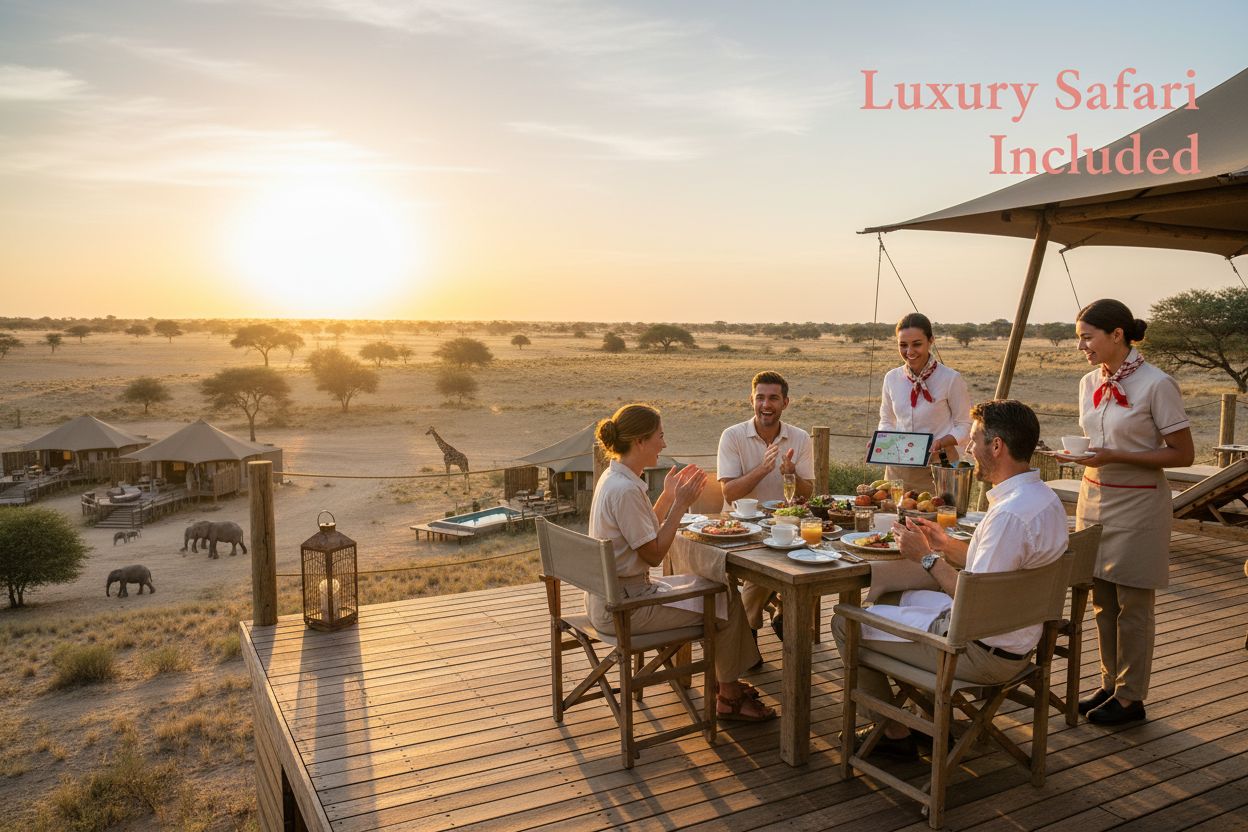
Oct 30, 2025
Understanding What is Included in Luxury Safaris
Explore what is included in luxury safaris, from exclusive accommodations to bespoke experiences that cater to discerning travelers.
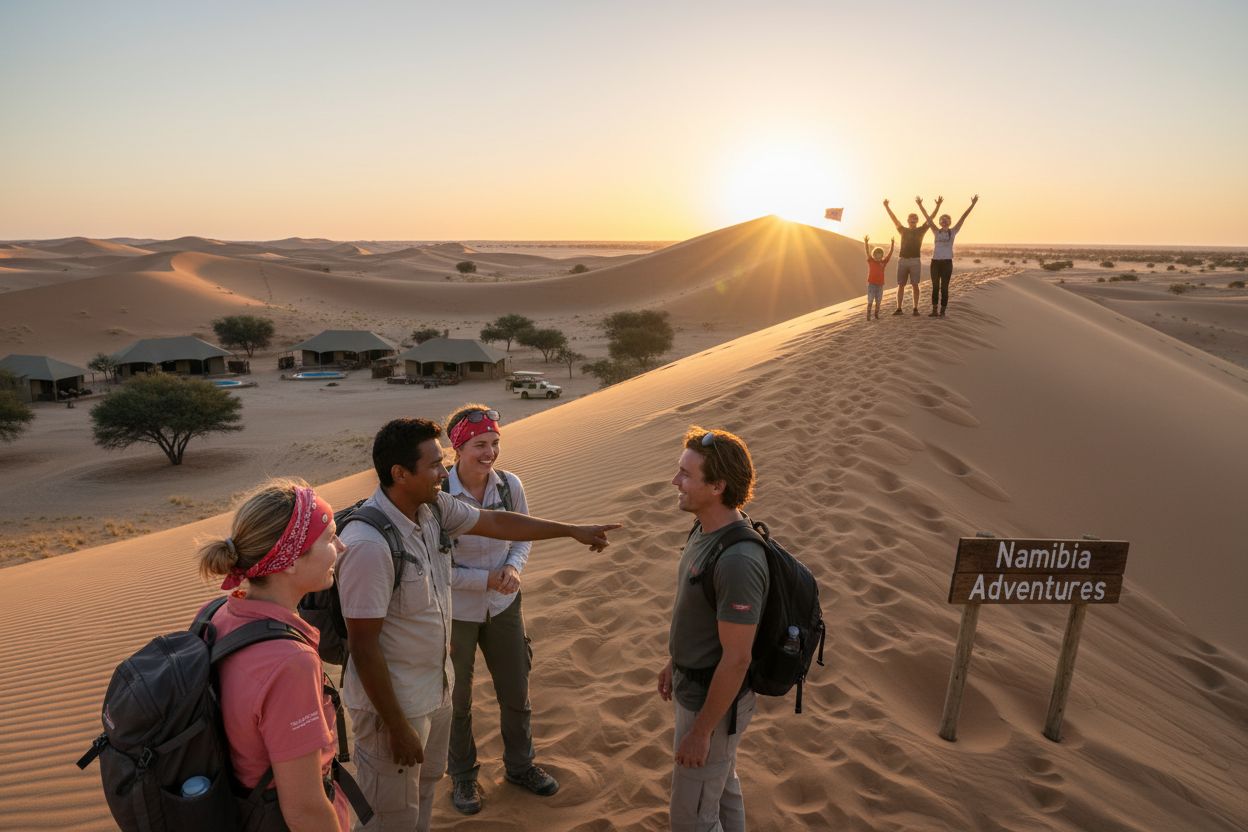
Feb 24, 2026
Why Namibia Adventures Matter: An In-Depth Look
Discover why Namibia adventures are essential for luxury travelers seeking unique, immersive experiences in nature and wildlife exploration.
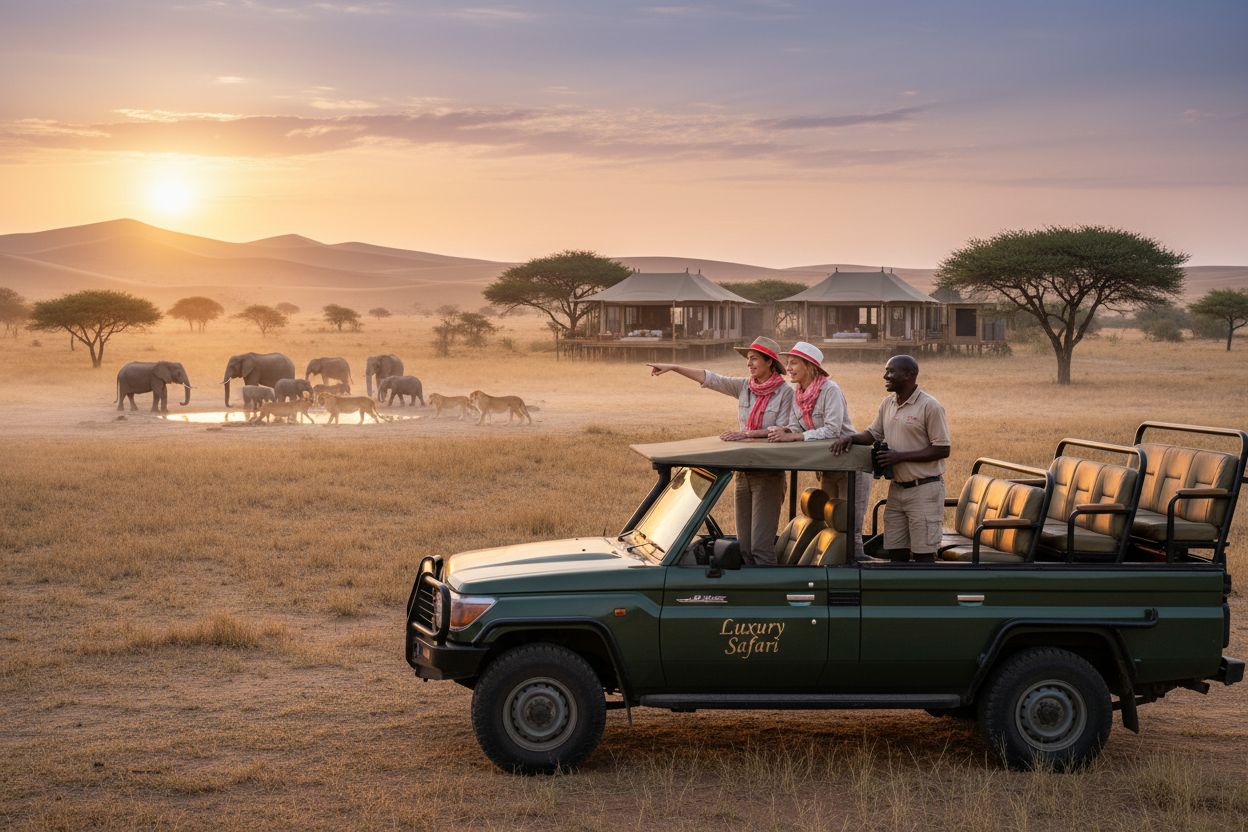
Feb 23, 2026
What to Expect on a Luxury Safari: A Comprehensive Guide
Discover what to expect on a luxury safari and gain a deeper understanding of the unique experiences that await you in the wild.
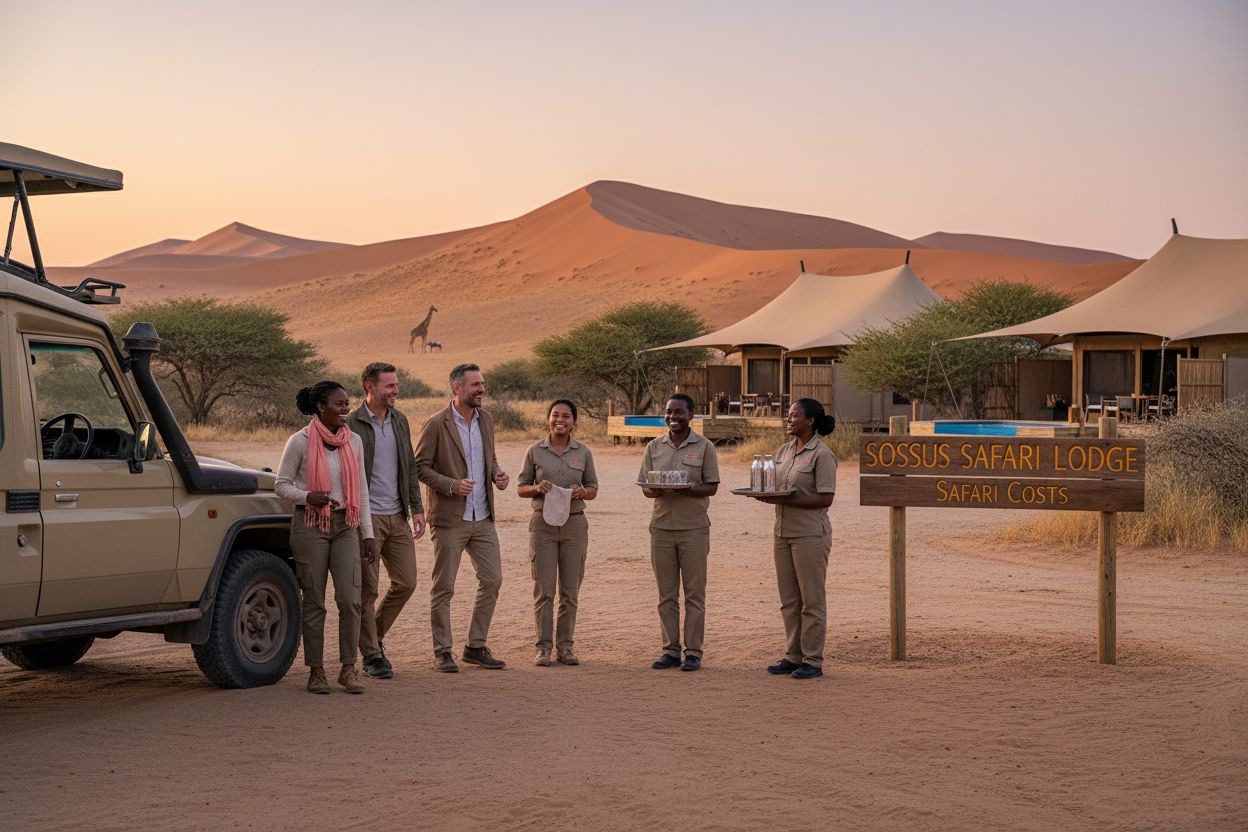
Feb 22, 2026
Understanding Namibia Safari Costs Explained
Explore Namibia safari costs explained to uncover what influences pricing and what it means for your adventure.
Feb 21, 2026
Understanding the Role of Safari Experts in Wildlife Travel
Explore the role of safari experts and gain a comprehensive understanding of how they enhance wildlife travel experiences for all types of travelers.
Feb 20, 2026
Guide organisation safari all inclusive : vivez l'aventure de vos rêves
Découvrez notre guide organisation safari all inclusive étape par étape pour planifier un voyage inoubliable au cœur de la nature.