A Guide to Hiking the Fish River Canyon

A Guide to Hiking the Fish River Canyon

May 10, 2022

Nestled away amidst the remote and arid desert plains lies one of Namibia's most spectacular natural wonders: the Fish River Canyon.


Fish River Canyon


Nestled away amidst the remote and arid desert plains lies one of Namibia’s most spectacular natural wonders: the Fish River Canyon.

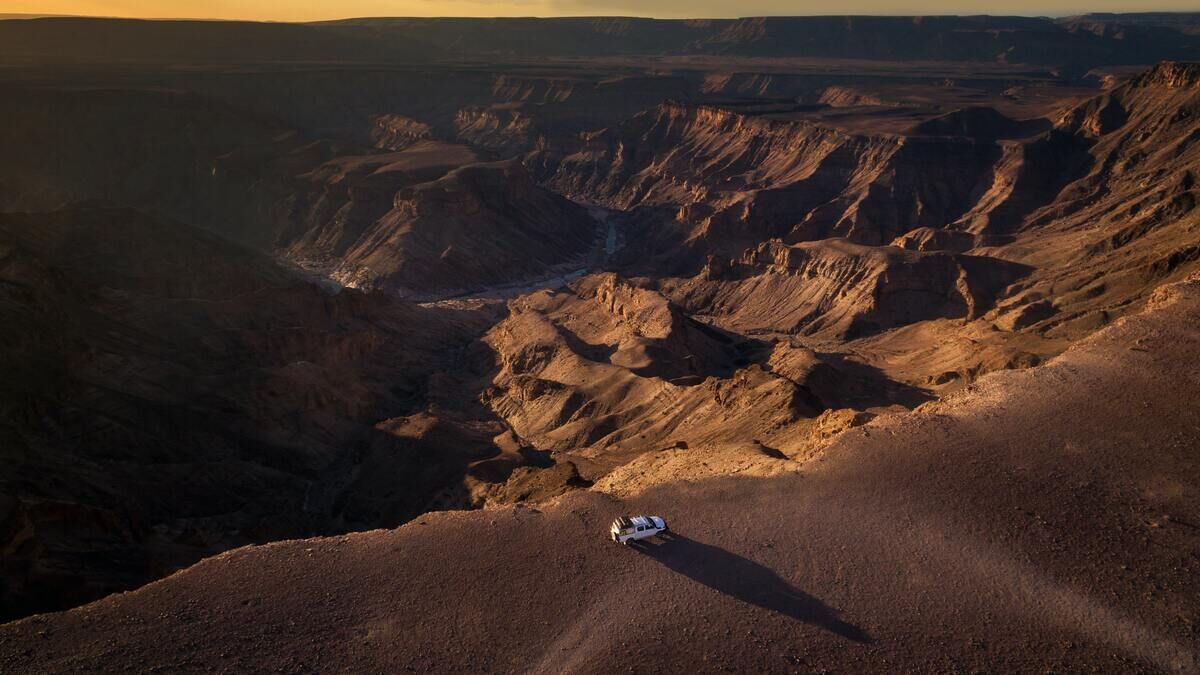
The largest canyon in Africa, and the second largest on the entire planet, the Fish River Canyon spans an impressive 160km and reaches depths of over 500 meters.

Located in Ai-Ais Richtersveld Transfrontier Park, and carved out by Namibia’s longest river, the Fish River Canyon draws hundreds of adventure-seeking visitors each year, each drawn to the challenge of hiking this gigantic wonder and experiencing a profound sense of peace in an unspoiled place, free from the impact of human development.

Owing to the sheer size and vastness of the Fish River canyon, planning a hiking trip can be a tricky task. Where do I start? How do I get there? Do I need a permit? In this guide we’ll take you through everything you need to know about hiking the Fish River Canyon.

How to Get to the Fish River Canyon

How to Get to the Fish River Canyon

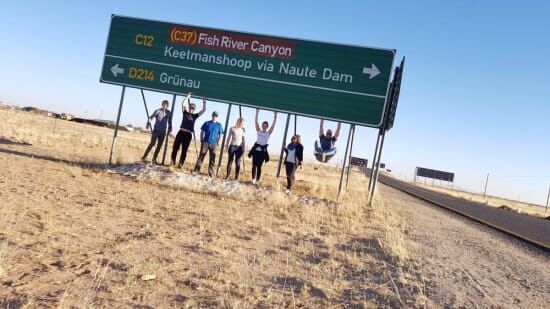
The Fish River Canyon is extremely remote, and the Namibian capital Windhoek is around an 8-hour drive away. Public transport options are extremely limited so it’s important that you have access to your own vehicle, or otherwise ensure you are part of an organised tour before you start packing for your hiking adventure.

If the thought of an arduous hike across arid terrain is off-putting, and you just want to sit back and gaze out over the spectacular scenery of the Fish River Canyon, then you’ll be pleased to know that there are some great lookout spots available at Ais-Ais and Hobas. However, to get to these lookout spots you will again need to be part of organised tour, or have access to your own vehicle, so please keep that in mind.

The Best time to Hike The Fish River Canyon

The Best time to Hike The Fish River Canyon

The best time to hike the Fish River Canyon is during the winter months and the canyon is open for hiking between May-September. Owing to extremely high temperatures, hiking is not permitted outside of these months and most locals would recommend taking on this adventure in June or July, when temperatures are at their most comfortable.

It’s important to note that although daytime temperatures are warm, during the night the mercury in the canyon drops, and temperatures can feel quite chilly, even reaching lows of 5°C in summer. When planning your hiking trip, it’s essential that you bring some warm and comfortable clothes for sleeping as well as a sturdy sleeping bag!

Hiking The Fish River Canyon Trail

Hiking The Fish River Canyon Trail

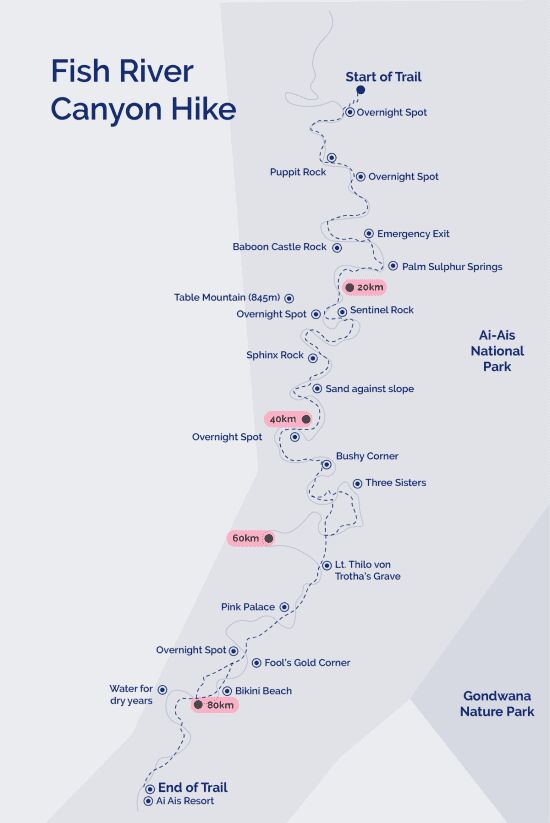
Although marvelling at the beauty of the canyon from one of the dedicated viewpoints is not to be dismissed the best way to truly appreciate the beauty of this natural wonder is to hike the multi-day Fish River Canyon Trail.

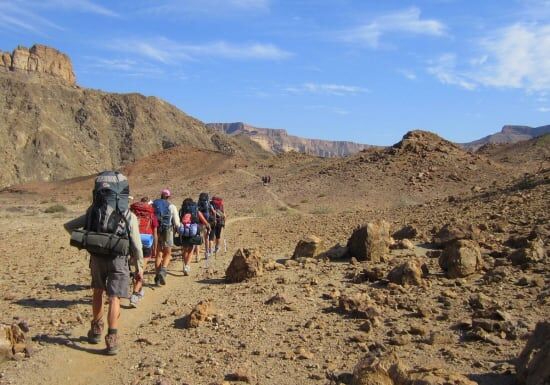
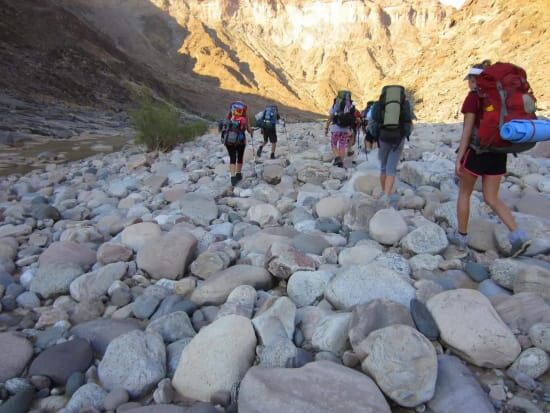
In total, the Fish River Canyon trail, which is the only permitted trail, is 85 km in length and takes around 4-5 days to complete. Hiking this trail is not for the fainthearted; it’s commonly regarded as one of the toughest long-distance walks on the entire continent so be sure you’re in the right physical condition to take it on!

The Trail begins just outside of Hobas, where fearless hikers will embark on a steady descent to the base of the canyon. This part of the hike is generally regarded as the steepest, and most physically demanding, but the rewards for completing this section of the journey are more than worth it!

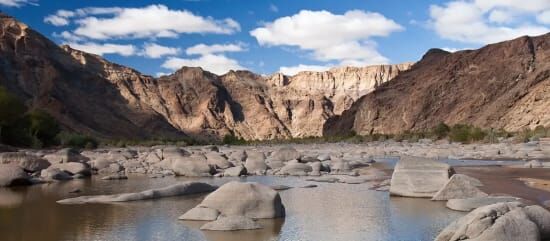
Although progress on day one may be slow as you adjust to the hike, by the evening you will have reached the Fish Riverbed and after a good night’s sleep you will then follow a route all the way to Ais-Ais over the next few days.

As you follow the trail you will be greeted by some truly amazing sights, including tranquil hot springs, jaw-dropping views, and some iconic wildlife. On average you will walk approximately 20km per day but there are several shortcuts along the way that can be taken if you are pushed for time.

This epic hike ends with an ascent to the magnificent Ais-Ais Hot Springs Resort where you can kick back, relax and absorb everything you have witnessed and endured on this epic adventure!

Health, Safety & Permits

Health, Safety & Permits

The Fish River Canyon hike is one of the most challenging multi-day hikes on the entire continent so it’s essential to prepare for this adventure well in advance. Always ensure that your health and overall fitness can stand up to the rigours of the journey and pack plenty of essentials including water, sunscreen and suitable footwear/clothing.

If you’re planning on hiking this incredible landscape, then it’s also important to note that you will need a permit that has to be pre-approved by the Namibian government. Reservations tend to be limited to 30 hikers per day, although this is subject to change so always consult with your Namibia tour specialist before you travel.

For more information about hiking- or visiting the Fish River Canyon- get in touch with SecretNamibia today or check out our amazing self-drive or private guided Namibia safari holidays.

Fish River Canyon


Nestled away amidst the remote and arid desert plains lies one of Namibia’s most spectacular natural wonders: the Fish River Canyon.

The largest canyon in Africa, and the second largest on the entire planet, the Fish River Canyon spans an impressive 160km and reaches depths of over 500 meters.

Located in Ai-Ais Richtersveld Transfrontier Park, and carved out by Namibia’s longest river, the Fish River Canyon draws hundreds of adventure-seeking visitors each year, each drawn to the challenge of hiking this gigantic wonder and experiencing a profound sense of peace in an unspoiled place, free from the impact of human development.

Owing to the sheer size and vastness of the Fish River canyon, planning a hiking trip can be a tricky task. Where do I start? How do I get there? Do I need a permit? In this guide we’ll take you through everything you need to know about hiking the Fish River Canyon.


How to Get to the Fish River Canyon

How to Get to the Fish River Canyon

The Fish River Canyon is extremely remote, and the Namibian capital Windhoek is around an 8-hour drive away. Public transport options are extremely limited so it’s important that you have access to your own vehicle, or otherwise ensure you are part of an organised tour before you start packing for your hiking adventure.

If the thought of an arduous hike across arid terrain is off-putting, and you just want to sit back and gaze out over the spectacular scenery of the Fish River Canyon, then you’ll be pleased to know that there are some great lookout spots available at Ais-Ais and Hobas. However, to get to these lookout spots you will again need to be part of organised tour, or have access to your own vehicle, so please keep that in mind.


The Best time to Hike The Fish River Canyon

The Best time to Hike The Fish River Canyon

The best time to hike the Fish River Canyon is during the winter months and the canyon is open for hiking between May-September. Owing to extremely high temperatures, hiking is not permitted outside of these months and most locals would recommend taking on this adventure in June or July, when temperatures are at their most comfortable.

It’s important to note that although daytime temperatures are warm, during the night the mercury in the canyon drops, and temperatures can feel quite chilly, even reaching lows of 5°C in summer. When planning your hiking trip, it’s essential that you bring some warm and comfortable clothes for sleeping as well as a sturdy sleeping bag!


Hiking The Fish River Canyon Trail

Hiking The Fish River Canyon Trail

Although marvelling at the beauty of the canyon from one of the dedicated viewpoints is not to be dismissed the best way to truly appreciate the beauty of this natural wonder is to hike the multi-day Fish River Canyon Trail.

In total, the Fish River Canyon trail, which is the only permitted trail, is 85 km in length and takes around 4-5 days to complete. Hiking this trail is not for the fainthearted; it’s commonly regarded as one of the toughest long-distance walks on the entire continent so be sure you’re in the right physical condition to take it on!

The Trail begins just outside of Hobas, where fearless hikers will embark on a steady descent to the base of the canyon. This part of the hike is generally regarded as the steepest, and most physically demanding, but the rewards for completing this section of the journey are more than worth it!

Although progress on day one may be slow as you adjust to the hike, by the evening you will have reached the Fish Riverbed and after a good night’s sleep you will then follow a route all the way to Ais-Ais over the next few days.

As you follow the trail you will be greeted by some truly amazing sights, including tranquil hot springs, jaw-dropping views, and some iconic wildlife. On average you will walk approximately 20km per day but there are several shortcuts along the way that can be taken if you are pushed for time.

This epic hike ends with an ascent to the magnificent Ais-Ais Hot Springs Resort where you can kick back, relax and absorb everything you have witnessed and endured on this epic adventure!


Health, Safety & Permits

Health, Safety & Permits

The Fish River Canyon hike is one of the most challenging multi-day hikes on the entire continent so it’s essential to prepare for this adventure well in advance. Always ensure that your health and overall fitness can stand up to the rigours of the journey and pack plenty of essentials including water, sunscreen and suitable footwear/clothing.

If you’re planning on hiking this incredible landscape, then it’s also important to note that you will need a permit that has to be pre-approved by the Namibian government. Reservations tend to be limited to 30 hikers per day, although this is subject to change so always consult with your Namibia tour specialist before you travel.

For more information about hiking- or visiting the Fish River Canyon- get in touch with SecretNamibia today or check out our amazing self-drive or private guided Namibia safari holidays.
RELATED

Safari Guides

Luxury Accomodation In Namibia

Jan 19, 2026

What Are the Top 5 Luxury Safari Experiences in Namibia?

Top 5 luxury Namibia safari experiences: Sossusvlei Dunes for red dune climbs, Etosha National Park for Big Five sightings, Skeleton Coast shipwrecks, Damaraland's 500 desert elephants, Kaokoveld desert lions. Fly-in access via private charters ensures exclusivity at gourmet lodges like Little Kulala. Secret Namibia crafts opulent, crowd-free adventures blending wildlife, scenery, and seamless logistics for ultimate immersion.

Lady looking at sunset in Namib Desert

Jan 19, 2026

What Are the Top Luxury Safaris in Namibia for 2026?

Top luxury Namibia safaris for 2026 feature Serra Cafema, Little Ongava, and Onguma Camp Kala, averaging 12 guests nightly for exclusive desert elephants and privacy. Etosha reserves offer private night drives; Sossusvlei lodges provide dune access and star beds. Fly-in safaris cut travel to 45-90 minutes. Book now for peak July-October season to secure intimate, high-impact wilderness escapes.

Aug 7, 2025

The Ultimate Safari Experience, Discover Namibia’s Most Exclusive and Comfortable Luxury Safaris

Discover the ultimate safari experience in Namibia, highlighting the exclusivity and comfort of luxury and all inclusive safaris with tailored itineraries.

Aug 7, 2025

10 Hidden Gems: Transformative Namibia Safaris Off the Beaten Path

Explore hidden gems in Namibia with off the beaten path destinations through self drive safaris or luxury safaris for an authentic adventure.

Apr 2, 2025

Green Getaways: Celebrating Conservation Month with Sustainable Safari Adventures

As Namibia’s golden horizons stretch endlessly, a new kind of journey awaits—one rooted in purpose and wild beauty. During Conservation Month, sustainable safari adventures offer more than just escape; they offer meaning. From tracking rhinos to staying in solar-powered lodges, every moment helps protect what makes Namibia so extraordinary. This is travel that gives back—to nature, to communities, and to you.

Man standing on sand dune in namibia watching the sun set

Mar 11, 2025

Warm Winters and Wild Wonders: Namibia's Festive Season Like No Other

In Namibia, a white Christmas has a whole new meaning. Instead of snow, imagine vast expanses of gleaming white sand dunes bathed in sunshine. Celebrate the festive season amidst these stunning landscapes.