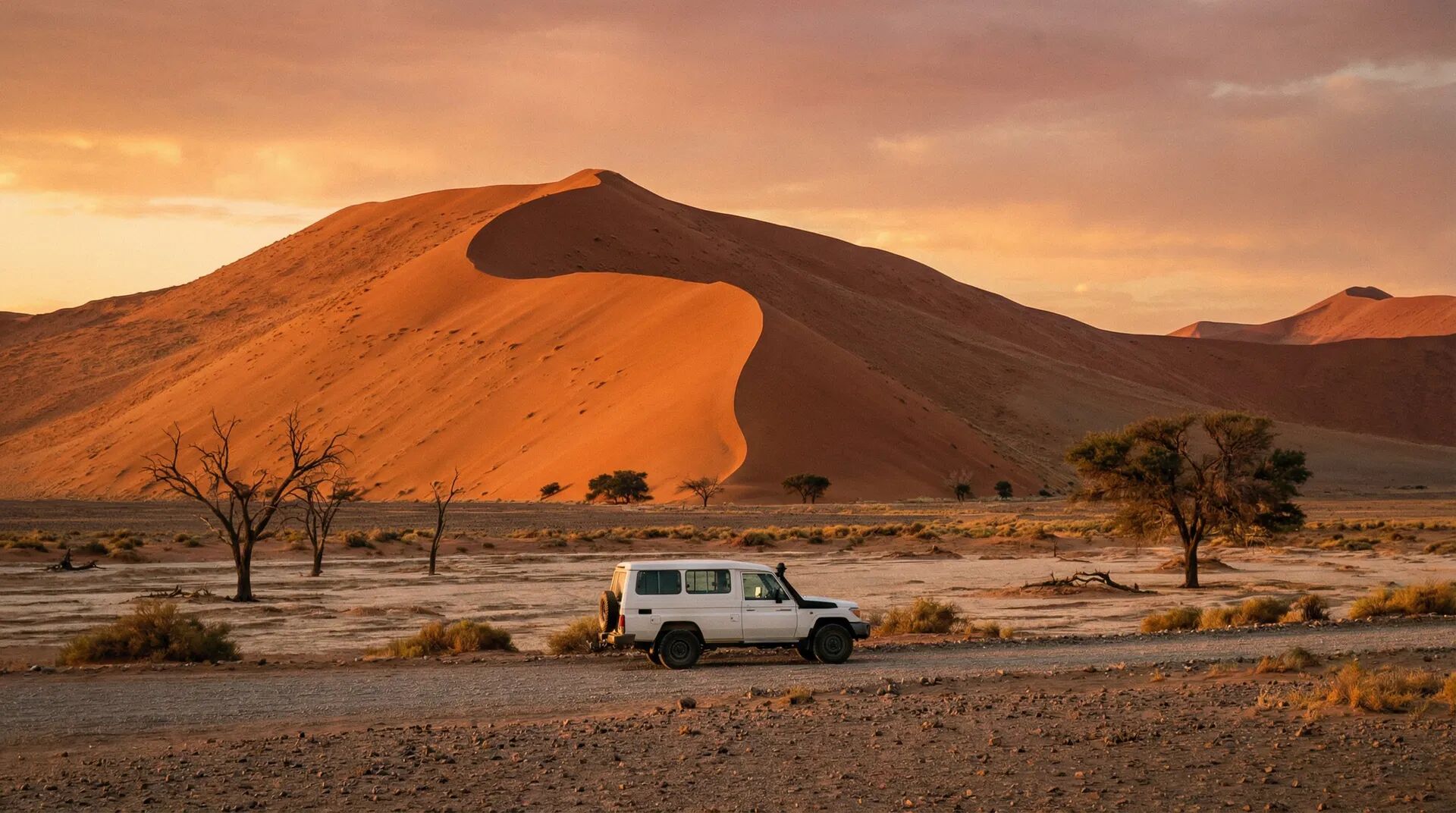
Planning a self-drive safari in Namibia but overwhelmed by rough gravel roads and endless 4x4 options? One wrong choice means breakdowns, discomfort, or missing remote spots like the Skeleton Coast. This guide compares Hilux, Land Cruiser, and Fortuner models, ranks top rentals, and spotlights Secret Namibia's benefits, backed by their 98% on-time delivery rate for over 5,000 adventurers.
What Are 4x4 Rentals in Namibia?
A 4x4 rental in Namibia is more than just a car hire; it is your lifeline and home base for exploring the desert. Unlike standard rentals, these vehicles are specifically modified for off-road conditions. They typically come with reinforced suspension, dual battery systems, and long-range fuel tanks to handle vast distances between gas stations.
Most rentals fall into two categories: equipped and unequipped. Equipped vehicles include rooftop tents, fridges, and camping gear for self-sufficiency. Unequipped models are for travelers staying in lodges who still need the high clearance and traction of four-wheel drive. Whether you choose a manual or automatic transmission, these trucks are built to withstand the harsh gravel and sand that make up the majority of the country's road network.
Why You Need a 4x4 for Namibia's Roads and Safaris
You might wonder if a standard sedan can handle a Namibian road trip. The short answer is usually no. While major highways like the B1 are paved, the most iconic destinations, including Sossusvlei, Etosha National Park, and Damaraland, are accessed via gravel roads. These surfaces vary from smooth hard-pack to corrugated washboards and deep sand.
A 4x4 offers two critical advantages: ground clearance and traction.
- Clearance: High clearance protects the undercarriage from rocks and allows you to navigate ruts without bottoming out.
- Traction: Four-wheel drive is essential for stability on loose gravel and is mandatory for deep sand driving in places like the Kalahari or the final stretch into Deadvlei.
Without a 4x4, you risk getting stuck, damaging the vehicle, or being unable to reach specific lodges and viewpoints.
Comparing 4x4 Vehicle Types for Namibian Adventures
Choosing the right vehicle depends on your group size, budget, and destination. The Namibian rental market is dominated by Toyota because of its reliability and parts availability. While you might see other brands, Toyota models are the standard for a reason.
Here is a quick breakdown of the primary options you will encounter:
| Feature | Hilux Double Cab | Land Cruiser | Fortuner/Prado |
|---|---|---|---|
| Engine | 2.4L / 2.8L Diesel | V6 / V8 Diesel | 2.4L / 2.8L Diesel |
| Comfort | High | Rugged/Basic | Premium (SUV) |
| Fuel Economy | Good | High Consumption | Good |
| Best For | All-round use | Remote expeditions | Families/Lodging |
Toyota Hilux Double Cab: Versatile and Fuel-Efficient
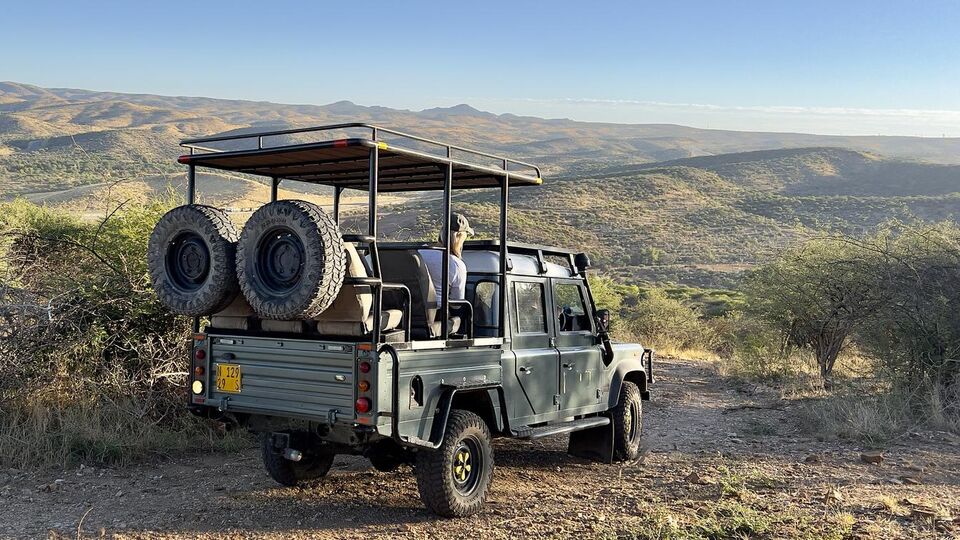
The Toyota Hilux is the undisputed king of Namibian roads. It strikes the perfect balance between capability and cost. These vehicles are robust enough to handle corrugated gravel roads but modern enough to offer air conditioning, Bluetooth, and decent fuel economy.
For most travelers, the 2.4L or 2.8L diesel engines provide plenty of torque. The "Double Cab" configuration seats four adults comfortably, though the rear seat can be a bit upright for long days. It is the standard choice for both camping and lodge-hopping safaris.
Toyota Land Cruiser: Rugged Powerhouse for Remote Tracks
If you plan to tackle the most remote corners of Kaokoland or the Skeleton Coast, the Toyota Land Cruiser (often the 79 Series or 76 Series) is the top choice. It is built for pure utility.
"The Land Cruiser is not about comfort; it is about getting you there and back, no matter what."
These vehicles feature powerful V8 engines and heavy-duty suspension. However, they consume significantly more fuel than a Hilux and often lack modern interior refinements. They are strictly for drivers who prioritize off-road performance over highway comfort.
Toyota Prado or Fortuner: Comfort-Focused SUVs
For families or travelers who are not camping, the Toyota Fortuner and Prado offer a smoother experience. These are SUVs rather than pickup trucks (bakkies), meaning they have a closed cabin that offers better protection against dust ingress for your luggage.
They typically come with automatic transmissions and softer suspension, making long drives on tarmac and good gravel much less fatiguing. While capable off-road, they have slightly lower clearance than a modified Hilux or Cruiser, so they are better suited for lodge-to-lodge itineraries rather than extreme off-roading.
Top 4x4 Rental Picks in Namibia, Ranked and Compared
We have ranked the top rental choices based on reliability, comfort, and suitability for the average self-drive safari. While personal preference plays a role, these rankings reflect what works best for the unique conditions found in Southern Africa.
#1 Toyota Hilux Double Cab: Best All-Rounder
The Hilux takes the top spot because it does everything well. It is affordable to rent, cheaper to fuel, and tough as nails. Parts are available in almost every small town, which is a huge safety factor.
- Pros: Excellent range, good storage in the canopy, reliable.
- Cons: Rear leaf springs can be bumpy when empty.
It is the default recommendation for 80% of travelers.
#2 Toyota Land Cruiser: Top for Luxury Off-Roading
The Land Cruiser ranks second, specifically for those who want the "classic safari" feel and unmatched capability. It is the premium option.
- Pros: Unstoppable off-road, iconic status, high driving position.
- Cons: Expensive rental rates, high fuel consumption, heavy steering.
Choose this if budget is less of a concern and you want the ultimate bush vehicle.
#3 Toyota Fortuner: Ideal for Families
The Fortuner comes in third, serving a specific niche: comfort seekers. If you do not need a rooftop tent, this is likely your best bet.
- Pros: Dust-proof luggage area, comfortable seats, car-like handling.
- Cons: Smaller fuel tank range compared to long-range equipped trucks.
This is perfect for a fly-in, drive-around itinerary staying at luxury lodges.
Key Benefits of Renting with Secret Namibia
Booking a vehicle directly with a rental company can be risky if you don't know the local landscape. Secret Namibia operates differently. We are not just a car rental booking engine; we are luxury travel designers. When you rent through us, you get a curated experience.
We partner exclusively with top-tier fleet providers to ensure you receive vehicles with low mileage and high-quality maintenance records. A breakdown in the desert can ruin a trip, so we prioritize reliability above all else.
Additionally, we integrate your vehicle rental into a complete itinerary. We handle the logistics of matching the right car to your specific route. If you are heading to deep sand areas, we ensure you have the right tires and recovery gear. Our support team is also on standby throughout your journey, providing peace of mind that you have a local expert just a phone call away.
How 4x4 Rentals Work in Namibia
The process of renting a 4x4 here is more involved than picking up a compact car at a European airport. Because of the harsh environment, the handover is detailed and thorough. You aren't just given keys; you are given a briefing on how to survive and maintain the vehicle in the bush.
Booking and Customization Process
You should book your vehicle months in advance, especially for travel between July and October. During this phase, you select your configuration.
- Camping: Comes with rooftop tents, sleeping bags, table, chairs, and kitchen box.
- Lodge: Comes with a clean canopy and spare tire, but no camping gear.
Be specific about your transmission preference (manual vs. automatic), as automatic 4x4s are in high demand and sell out first.
Pickup, Insurance, and Equipping Your Vehicle
When you arrive, expect the handover to take 60 to 90 minutes. The rental agent will walk you through the vehicle's features.
You will check:
- Tires: Ensure there are two spares and the tread is good.
- Tools: Locate the jack, wheel spanner, and warning triangle.
- Damage: Document every existing scratch.
Insurance options usually include "Standard" (high excess) or "Super Cover" (zero excess). Given the high risk of chipped windshields and tire damage on gravel, maximum coverage is strongly recommended.
Driving and Returning the Vehicle
Driving is on the left side of the road. You are responsible for daily maintenance, which includes checking tire pressure and oil levels.
When returning the vehicle, it usually needs to be returned with a full tank of fuel. Some companies require the car to be washed, while others include cleaning in the rental fee. Be sure to clarify this at pickup to avoid cleaning penalties.
Best Practices for Renting and Driving a 4x4 in Namibia
Driving in Namibia requires a shift in mindset. The roads are beautiful but unforgiving. The most important rule is to manage your tire pressure.
- Tar Roads: Keep tires at normal pressure (approx. 2.2 bar).
- Gravel Roads: Deflate tires to roughly 1.8 bar to increase traction and reduce puncture risk.
- Sand: Deflate further to 1.2 to 1.5 bar to float over the surface.
Always drive with your headlights on, even during the day. This makes you visible through the dust clouds kicked up by other vehicles. Finally, respect the speed limits. On gravel, the limit is technically 100 km/h, but you should rarely exceed 80 km/h. The loose surface increases stopping distances dramatically.
Common Mistakes to Avoid with 4x4 Rentals
The biggest mistake travelers make is underestimating travel times. A distance of 300 kilometers (186 miles) might take three hours on a highway, but on a Namibian gravel road, it can easily take five or six hours. Do not trust GPS estimates blindly.
Other common pitfalls include:
- Speeding: This is the leading cause of rollovers. Gravel gives a false sense of security until you hit a soft patch or a sharp bend.
- Ignoring the Fuel Gauge: Gas stations can be 400km apart. Fill up whenever you see a station, even if you still have half a tank.
- Parking Under Trees: In some areas, thorns can puncture tires, and baboons can damage windshield wipers if left unattended.
- Engaging 4x4 on Tarmac: Never use 4H or 4L on paved roads; it causes "wind-up" and can destroy the transmission.
Final Tips for Your Self-Drive Safari Success
A self-drive safari in Namibia is one of the most rewarding travel experiences on earth. To make it a success, preparation is key. Bring an auxiliary cable or USB drive for music, as radio signal is non-existent outside towns. Pack plenty of water, at least 5 liters per person, in the car at all times.
Most importantly, don't rush. The joy of a 4x4 rental is the freedom to stop whenever you want. If you see a herd of oryx or a stunning sunset, pull over safely and enjoy it. With the right vehicle and a solid plan from Secret Namibia, you are set for the adventure of a lifetime (Secret Namibia).
Frequently Asked Questions
How much does it cost to rent a 4x4 in Namibia?
Peak season (July-October) adds 20-30% premiums; book via Secret Namibia for bundled deals averaging 10% savings.
What is the minimum age to rent a 4x4 in Namibia?
International licenses are accepted with English translation if needed.
Can I cross into other countries with a Namibian 4x4 rental?
Cross-border travel to South Africa or Botswana requires pre-approval and extra fees. Secret Namibia handles permits; rentals prohibit Angola or Zambia due to road conditions and insurance limits.
What documents do I need for a 4x4 rental pickup in Namibia?
Bring passport, driver's license, credit card, and booking confirmation. Proof of return flight is often required; full coverage insurance documents are provided on-site.