Aug 14, 2026
Discover the top 12 unforgettable experiences in Namibia, from soaring dunes to stunning wildlife. Your adventure awaits!
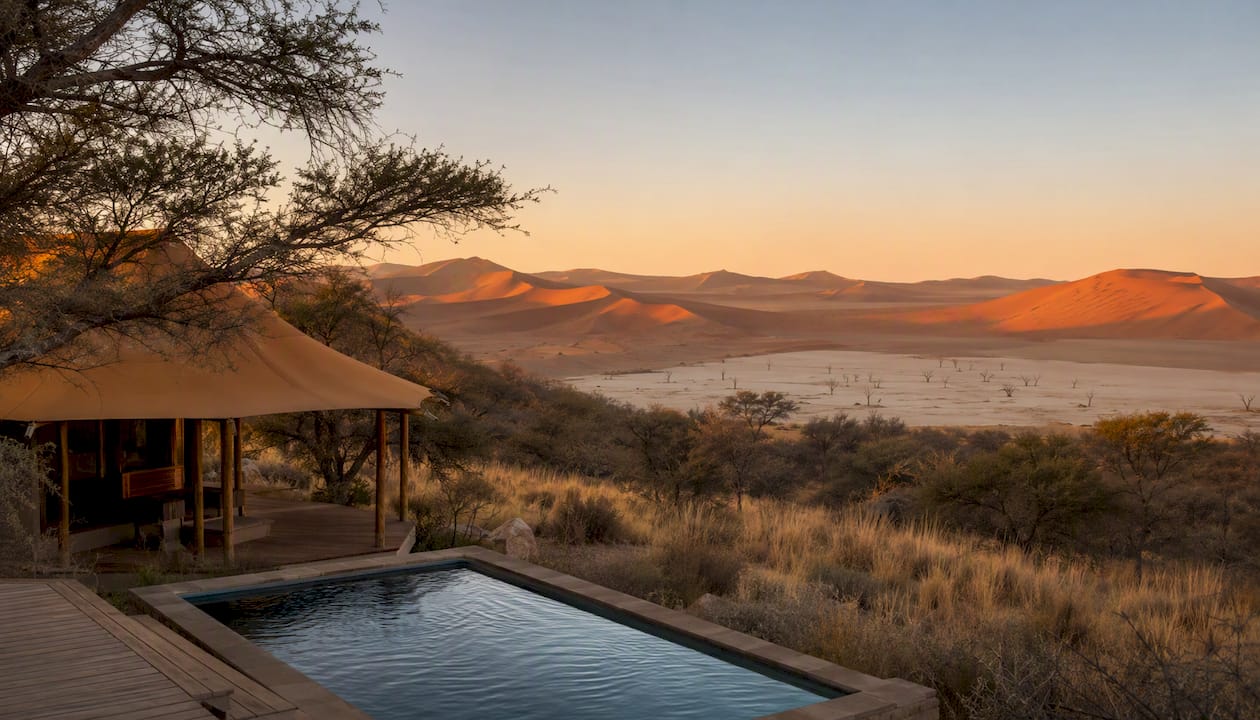
Top 12 things to do in Namibia: your bucket list
Namibia’s most unmissable experiences span six landscapes and reward travellers who budget at least 10–14 days: climbing the crimson dunes at Sossusvlei and Deadvlei at sunrise, watching lion and elephant at Etosha’s waterholes, kayaking with Cape fur seals off Swakopmund, touring the ghost town of Kolmanskop and the shipwreck-strewn Skeleton Coast, stargazing above Spitzkoppe’s granite domes, tracking desert-adapted elephants through Damaraland’s Twyfelfontein, and standing at the rim of Fish River Canyon. Lonely Planet confirms that 10–14 days is the recommended minimum to cover these highlights comfortably, while a three-week loop lets you add the Zambezi Region and deeper Damaraland. Before you travel, check the CDC’s Namibia travel page for current vaccination and health guidance — yellow fever, malaria prophylaxis, and routine vaccines are all worth reviewing with your doctor.
Key takeaways
Namibia rewards travellers who plan with intention: the right trip length, the right vehicle, and the right mix of national park access and private-reserve depth make the difference between a good holiday and a genuinely extraordinary one.
Point | Details |
|---|---|
Budget 10–14 days minimum | Lonely Planet recommends this as the minimum to cover Sossusvlei, Etosha, Swakopmund, and the Skeleton Coast. |
Prioritise Sossusvlei at sunrise | Arrive at the gate when it opens and reach Deadvlei before 8 AM for the best light and manageable heat. |
Add a private reserve to Etosha | Night drives and guided walks at a private lodge reveal wildlife and behaviour that daytime park access cannot match. |
Drive at 80 km/h on gravel | The recommended speed limit on gravel roads reduces blowout risk and keeps you in control on loose surfaces. |
Secretnamibia builds bespoke itineraries | Custom safaris, private-reserve matchmaking, and fly-in logistics tailored to your dates and priorities. |
Table of Contents
Top things to do in Namibia: the numbered bucket list
Sample itineraries by trip length
Why a private reserve changes your Namibia experience
Essential planning and safety before you go
Self-drive, guided tours, or fly-in: how to choose
What Secretnamibia has learned from curating these trips
Plan your Namibia safari with Secretnamibia
Sources
Top things to do in Namibia: the numbered bucket list
National Geographic places Sossusvlei, the Tok Tokkie Trails, desert elephant tracking, and world-class stargazing among Namibia’s core experiences. The list below draws on that consensus and adds the practical detail you need to slot each item into a real itinerary.
1. Climb the dunes at Sossusvlei and Deadvlei
The towering red dunes of Sossusvlei — some rising more than 300 metres — are the image most people associate with Namibia, and they absolutely live up to the expectation. Deadvlei’s bleached camel-thorn skeletons standing against a white clay pan and ochre dune walls make for some of the most photographed scenery on the continent. Arrive at the park gate the moment it opens (around 5:30 AM) to reach Dune 45 and Big Daddy before the heat makes the climb punishing. A standard sedan can reach the main car park; a 4x4 is needed for the final 5 km to Deadvlei itself, or you can take the shuttle. Reserve a full day.
Pro Tip: The best light for photography at Deadvlei lasts only about 45 minutes after sunrise — the shadows cast by the surrounding dunes create extraordinary contrast before the pan floods with flat midday light. Set your alarm accordingly.
2. Safari and waterhole viewing in Etosha National Park
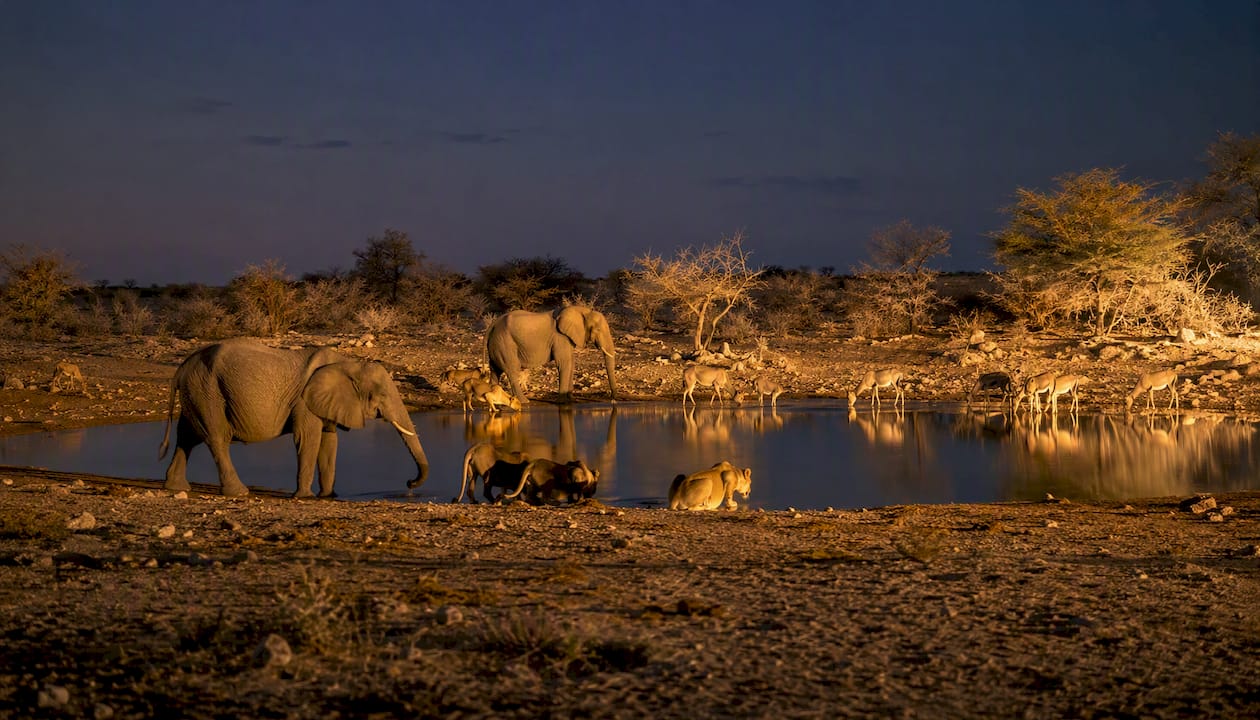
Etosha is one of Africa’s great self-drive safari destinations, built around a vast salt pan and a network of floodlit waterholes where lion, elephant, black rhino, and gemsbok converge after dark. The dry season (May–October) concentrates wildlife dramatically as animals rely on the park’s artificial waterholes. You can self-drive in a standard 2WD vehicle on Etosha’s well-maintained gravel roads, staying in one of the public camps, or base yourself at a private lodge on Etosha’s border for night drives and guided walks that the national park itself does not permit.
3. Kayaking with seals and Sandwich Harbour in Swakopmund and Walvis Bay
Swakopmund is Namibia’s adventure capital, and the Atlantic coast here delivers experiences you won’t find anywhere else on a safari itinerary. Kayaking among the Cape fur seal colony at Pelican Point — roughly 80,000 animals at peak season — is genuinely extraordinary: seals surface beside your paddle and occasionally climb onto the kayak. A few kilometres south, Sandwich Harbour is a tidal lagoon where towering dunes meet the ocean; the only access is by 4x4 with a licensed operator, and the drive through the surf line at low tide is as dramatic as the flamingo-filled lagoon itself. Half-day for seals, full day for Sandwich Harbour.
4. Kolmanskop ghost town and the Skeleton Coast
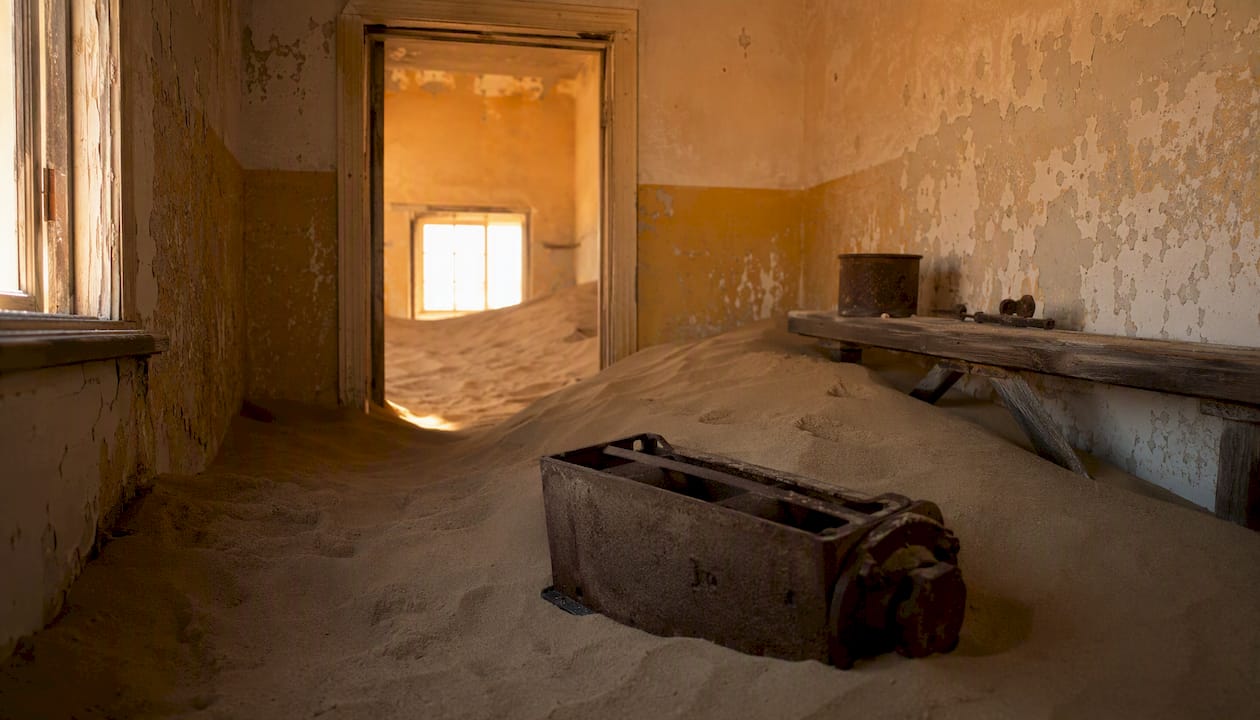
Kolmanskop, a former diamond-mining town near Lüderitz, has been reclaimed by the Namib Desert — rooms half-filled with sand, grand ballrooms with peeling ceilings, and a hospital that once served hundreds of miners now standing silent. Entry requires a permit (available through the Namdeb Diamond Corporation), and morning light flooding through broken windows makes it a photographer’s dream. Further north, the Skeleton Coast takes its name from the whale bones and shipwrecks that litter its fog-shrouded beaches. The southern section is accessible by self-drive; the remote northern wilderness requires a fly-in permit and a licensed operator.
5. Stargazing and rock formations at Spitzkoppe
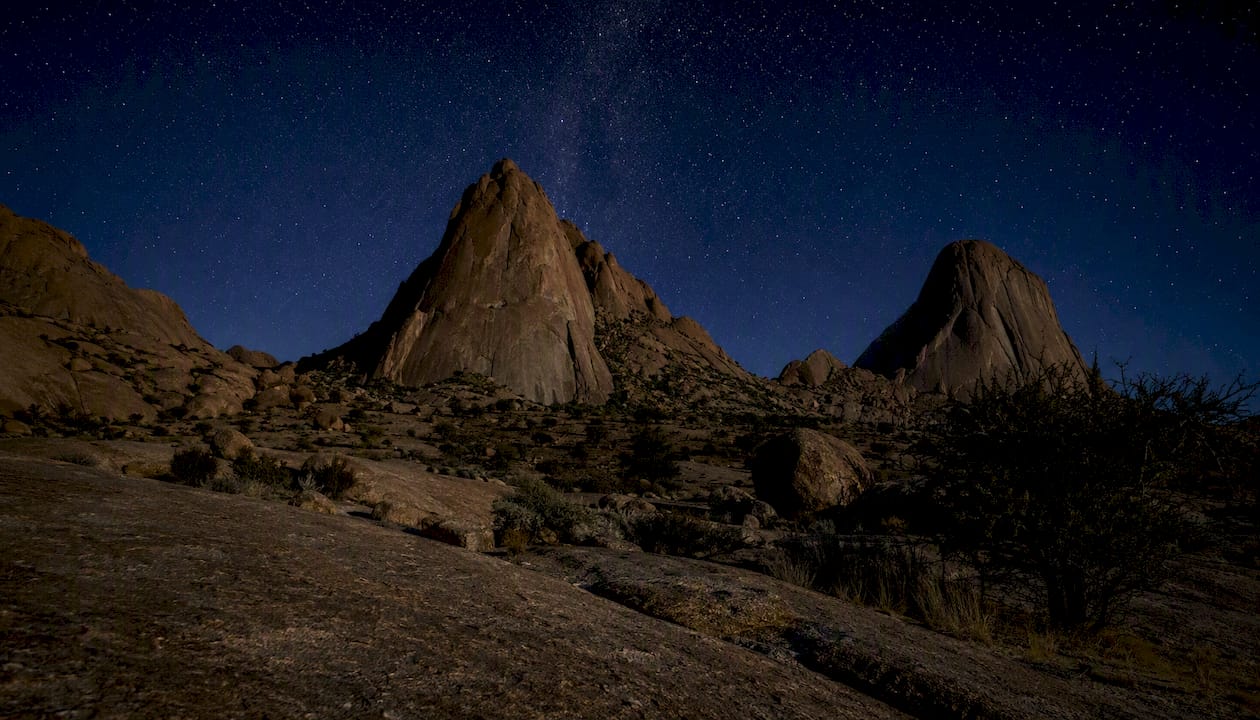
Spitzkoppe’s granite inselbergs rise abruptly from the flat Namib plains, creating a landscape that feels prehistoric. The area is one of southern Africa’s finest stargazing locations — the Milky Way is visible to the naked eye on clear nights, and NamibRand Nature Reserve to the south holds an International Dark Sky Reserve designation that draws astrophotographers from around the world. Camp inside the community conservancy at Spitzkoppe for the full experience: sundowners against the rock faces, then a sky so dense with stars it takes a moment to orient yourself.
6. Desert elephants and rock engravings in Damaraland and Twyfelfontein
Damaraland is one of Namibia’s most rewarding regions for travellers willing to venture off the main circuit. The desert-adapted elephants here — a genetically distinct population that has learned to survive on minimal water — are tracked on foot or by vehicle with specialist guides. Twyfelfontein, a UNESCO World Heritage Site, holds one of Africa’s largest concentrations of rock engravings, with thousands of petroglyphs carved by San hunter-gatherers over thousands of years. The site is accessible by standard vehicle, though the surrounding region rewards a 4x4 for exploring further.
7. Fish River Canyon: viewpoints and the famous hiking trail
Fish River Canyon is the second-largest canyon in the world by volume, and standing at the main viewpoint as the late-afternoon light turns the rock walls copper is genuinely humbling. The multi-day Fish River Canyon hiking trail (roughly 85 km over five days) is one of Africa’s great wilderness walks, open only from May to September and requiring a medical certificate. If a multi-day hike isn’t on your agenda, the viewpoints along the northern rim are accessible by standard vehicle and take half a day from the nearest town, Ai-Ais.
8. The Quiver Tree Forest near Keetmanshoop
The Quiver Tree Forest in southern Namibia is a remarkable landmark — several hundred Aloidendron dichotomum trees, their silver trunks and candelabra crowns scattered across a rocky plain. The trees are named for the San people’s practice of hollowing out the branches to make quivers. The forest is on private farmland and requires a small entrance fee; the best light is at dawn and dusk when the trunks glow gold. It pairs naturally with a visit to the nearby Giant’s Playground, a geological formation of stacked dolerite boulders.
9. Hot-air ballooning over the Namib Desert
Floating above the Namib at first light, watching the dune shadows stretch across the sand sea below, is one of those experiences that simply cannot be replicated from the ground. Balloon flights typically launch from near Sesriem and last around an hour, finishing with a traditional champagne breakfast in the desert. Operators sell out weeks in advance during peak season (July–October), so book this one the moment your travel dates are confirmed.
10. Sandboarding and quad biking in Swakopmund
If you’re after adrenaline, Swakopmund delivers it on the dunes directly behind the town. Sandboarding — either lying face-down on a board or standing — on slopes that drop sharply into the sand is exhilarating and accessible to most fitness levels. Quad biking tours cover similar terrain and can be combined with a visit to the Living Desert, where a guide reveals the extraordinary micro-fauna hidden in the sand: sidewinder snakes, dancing white lady spiders, and fog-basking beetles. Half-day for either activity.
11. Himba village visits and cultural experiences
Namibia’s cultural richness is as compelling as its wildlife, and a respectful visit to a Himba community in the Kunene Region offers genuine insight into one of Africa’s most distinctive cultures. The Himba people are semi-nomadic pastoralists whose ochre-covered skin and intricate jewellery have made them one of the most photographed communities on the continent. Visit Namibia’s official top-ten list emphasises cultural journeys and conservation-focused experiences as essential parts of any Namibia itinerary. Choose operators who work directly with communities and share revenue transparently.
12. Tok Tokkie Trails and guided desert walks in NamibRand
The Tok Tokkie Trails in NamibRand Nature Reserve offer a rare chance to walk through the Namib over two nights, sleeping in simple desert camps and guided by trackers who read the sand for signs of life invisible to the untrained eye. National Geographic highlights these trails as one of Namibia’s must-do adventures. The reserve is also a certified International Dark Sky Reserve, so each evening ends with an astronomy session that reframes the entire landscape. This is the experience that converts a good Namibia trip into an unforgettable one.
Sample itineraries by trip length
Planning what to do in Namibia is largely a question of how much time you have. Here’s how the main regions stack up across three realistic trip lengths.
Trip length | Key highlights covered | What you miss |
|---|---|---|
7 days | Sossusvlei/Deadvlei, Swakopmund, Etosha (2 nights) | Damaraland, Fish River Canyon, Skeleton Coast |
10–14 days | All of the above + Damaraland, Spitzkoppe, Kolmanskop, Fish River Canyon | Zambezi Region, extended Skeleton Coast |
3 weeks | Full circuit including Zambezi/Caprivi, deep Damaraland, Keetmanshoop | Nothing significant |
7-day focused highlights
Days 1–2: Fly into Windhoek, drive south to Sesriem (4.5 hours). Afternoon at Elim Dune, full sunrise session at Deadvlei the next morning.
Days 3–4: Drive north to Swakopmund (4 hours). Seal kayaking and sandboarding.
Days 5–7: Drive to Etosha (4 hours from Swakopmund via Outjo). Two full days of waterhole game drives, fly or drive back to Windhoek.
10–14 day recommended route
This is the Lonely Planet-endorsed sweet spot for covering Namibia’s major regions without feeling rushed. Add Spitzkoppe between Swakopmund and Etosha (one night), then extend south after Sossusvlei to include Kolmanskop and the Quiver Tree Forest before looping back north. Damaraland fits naturally between Etosha and Windhoek on the return leg.
3-week extended loop
Three weeks allows you to add the Zambezi Region (formerly Caprivi Strip) for mokoro canoe trips and floodplain wildlife, spend two nights in Damaraland for a proper desert elephant tracking experience, and include a fly-in to the Skeleton Coast’s northern wilderness. This is the itinerary for travellers who want to see Namibia in full rather than in highlights.
Why a private reserve changes your Namibia experience
National parks like Etosha are magnificent, but they operate under rules that shape — and sometimes limit — what you can do. Gates open at sunrise and close at sunset. Night drives are not permitted. You stay on designated roads, share waterholes with other vehicles, and activities beyond self-driving are minimal. Private reserves and concessions adjacent to these parks operate under a fundamentally different model.
What private reserves offer that national parks cannot:
Night drives with a specialist guide, revealing nocturnal species — aardvark, porcupine, brown hyena — that daytime visitors never see.
Off-road tracking where the concession agreement permits, following lion or rhino spoor away from the main tracks.
Walking safaris with armed guides, which bring an entirely different sensory dimension to the bush.
Exclusive waterhole access at lodges like those adjacent to Etosha, where you can watch wildlife from a hide or a candlelit deck without another vehicle in sight.
Conservation participation — rhino tracking with Save the Rhino Trust, or carnivore research with the AfriCat Foundation, available through specialist private operators.
Accommodation at private reserves typically means canvas-walled suites with private decks, plunge pools overlooking the bush, and dining experiences that move from the lodge to the fire to the open plains depending on the evening. The design language tends toward earthy luxury: natural stone, reclaimed timber, and fabrics that echo the landscape rather than fight it.
Pro Tip: Private reserves adjacent to Etosha, such as those on the park’s southern and western boundaries, offer floodlit waterhole viewing from the lodge itself — meaning you can watch elephant and lion after dark without leaving your seat. This is something no public camp can match.
Conservation and community benefits are real and measurable at the best private reserves. Revenue from lodge stays funds anti-poaching units, supports local employment, and in many cases contributes directly to wildlife research. Choosing a private reserve over a public camp is not simply a comfort upgrade — it is a contribution to the ecosystem you came to see. For a deeper look at private reserve safaris and what distinguishes them from standard park accommodation, Secretnamibia’s planning resources lay out the full picture.
Essential planning and safety before you go
Best time to visit
The dry season (May–October) is the classic wildlife window, particularly for Etosha, where animals concentrate at waterholes and vegetation is low enough for clear sightlines. The shoulder months of May and September offer excellent game viewing with fewer vehicles. Coastal Swakopmund is cool and fog-shrouded year-round; the dunes at Sossusvlei are accessible in all seasons, though summer (November–March) brings extreme heat that makes the dune climb genuinely dangerous by mid-morning.
Health and vaccinations
Check the CDC’s Namibia travel page well before departure — ideally six to eight weeks out. Malaria prophylaxis is recommended for the Zambezi Region and parts of northern Namibia; the south and central highlands carry minimal risk. Routine vaccines (hepatitis A, typhoid) are worth reviewing regardless of your destination within the country.
Money and cards
The Namibian dollar is pegged 1:1 to the South African rand, and rand is accepted across Namibia. Major credit cards work in Windhoek, Swakopmund, and larger towns, but cash is essential in rural areas. ATMs are reliable in urban centres; carry enough cash before heading into Damaraland or the Skeleton Coast, where services can be several hundred kilometres apart.
Driving safety on gravel roads
Namibia is well suited to self-drive itineraries, but gravel roads demand respect. Travel guides recommend keeping speeds to around 80 km/h (50 mph) on gravel surfaces to reduce the risk of losing control on loose stones — a figure Lonely Planet specifically cites in its Namibia driving guidance. Tyre blowouts are the most common self-drive incident; carry two spare tyres, not one.
Permits and park rules
Etosha National Park charges daily conservation fees per person and per vehicle, payable at the gate. Kolmanskop requires a permit from the Namdeb Diamond Corporation, bookable in advance. The Fish River Canyon hiking trail requires a medical certificate and advance booking through Namibia Wildlife Resorts. Some activities — particularly in the Skeleton Coast’s northern wilderness — require a licensed operator and cannot be done independently.
Self-drive, guided tours, or fly-in: how to choose
Namibia rewards self-drivers who plan carefully, but the right transport model depends on your itinerary, comfort level, and budget.
Self-drive suits travellers who want flexibility, enjoy the process of navigating remote roads, and are comfortable with long distances between services. It is the most cost-effective option and gives you complete control over timing — critical for sunrise dune climbs and waterhole visits. The trade-off is that you miss the interpretive depth a guide provides, and some areas (northern Skeleton Coast, remote Damaraland) are genuinely challenging without local knowledge.
Guided overland tours cover more ground with less logistical stress. A specialist guide transforms a game drive from a sighting into a story — tracking behaviour, reading animal signs, and positioning the vehicle for the best light. The limitation is a fixed itinerary shared with other guests.
Fly-in safaris compress the best experiences into fewer days by eliminating long drives. They suit travellers with limited time or those who want to reach the Skeleton Coast’s northern wilderness, which is impractical to access by road. Cost is significantly higher, but the time efficiency is real.
Self-drive rental checklist:
4x4 with high ground clearance (essential for Deadvlei, Damaraland, and Sandwich Harbour approaches)
Two full-size spare tyres
Satellite communicator or personal locator beacon for remote areas
Detailed paper maps as a backup to GPS
Minimum 20-litre jerry can for fuel reserves
Tyre repair kit and compressor
Comprehensive insurance including tyre and windscreen cover
Check tyre pressures before every gravel section — slightly lower pressure (around 1.8–2.0 bar) improves grip and reduces blowout risk on corrugated roads. Many rental companies in Windhoek will brief you on this if you ask.
For a thorough breakdown of self-drive versus guided options across different itinerary types, Secretnamibia’s planning guide covers the decision in detail.
What Secretnamibia has learned from curating these trips
There is a moment that comes up again and again in feedback from travellers who have done Namibia well: standing at a private waterhole after dark, watching a black rhino drink by moonlight with no other sound except the occasional splash, and realising that this is not something you could have found on your own. That moment is the product of a specific combination — the right lodge, the right guide, the right timing — and it does not happen by accident.
At Secretnamibia, the curation approach starts with the question of what kind of traveller you are, not what the standard itinerary looks like. A family with children needs different pacing and lodge types than a couple on honeymoon or a solo photographer chasing the Milky Way above Spitzkoppe. The private game drive experiences Secretnamibia recommends are chosen because they consistently deliver that combination of intimacy and wildlife quality that public parks simply cannot replicate. Luxury paired with authentic encounters is not a contradiction in Namibia — it is, in fact, the point.
Plan your Namibia safari with Secretnamibia
Secretnamibia specialises in bespoke Namibian safaris built around your itinerary, not a template. Whether you want a luxury private-reserve experience with night drives and guided tracking, a self-drive route with hand-picked lodge stops, or a fly-in circuit that reaches the Skeleton Coast’s northern wilderness, the planning team matches you to the right combination of lodges, guides, and timing.
Services include custom itinerary creation, private-reserve matchmaking, fly-in logistics, and luxury lodge bookings across Namibia and Southern Africa. Every itinerary is built around your travel dates, group size, and the experiences that matter most to you. Enquire with Secretnamibia to start building your trip — the team responds with a personalised proposal, not a brochure.
Sources
Before finalising your plans, these resources are worth bookmarking:
This article provides general travel information. Always confirm current visa requirements, park fees, and health guidance with official government and health authority sources before travel.
Recommended
RELATED
Safari Guides
Oct 30, 2025
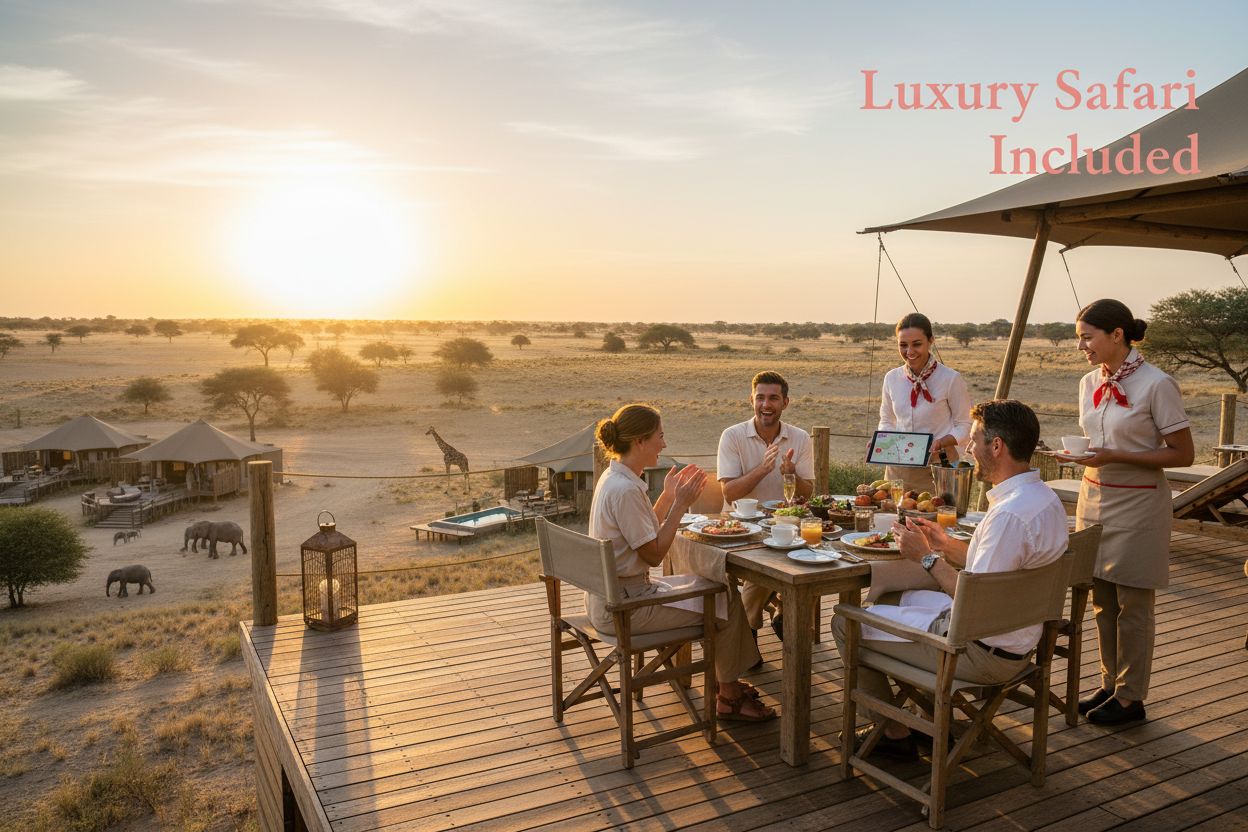
Understanding What is Included in Luxury Safaris
Explore what is included in luxury safaris, from exclusive accommodations to bespoke experiences that cater to discerning travelers.
Feb 24, 2026
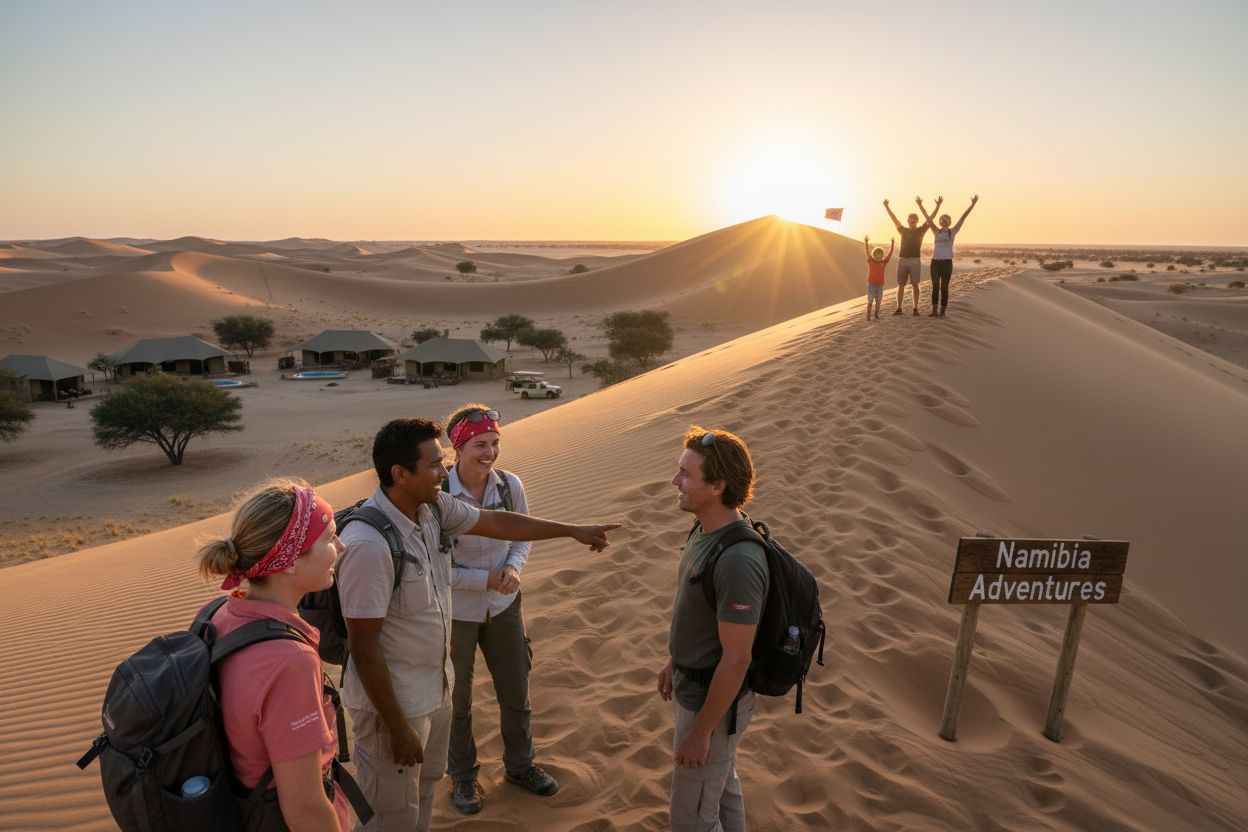
Why Namibia Adventures Matter: An In-Depth Look
Discover why Namibia adventures are essential for luxury travelers seeking unique, immersive experiences in nature and wildlife exploration.
Feb 23, 2026
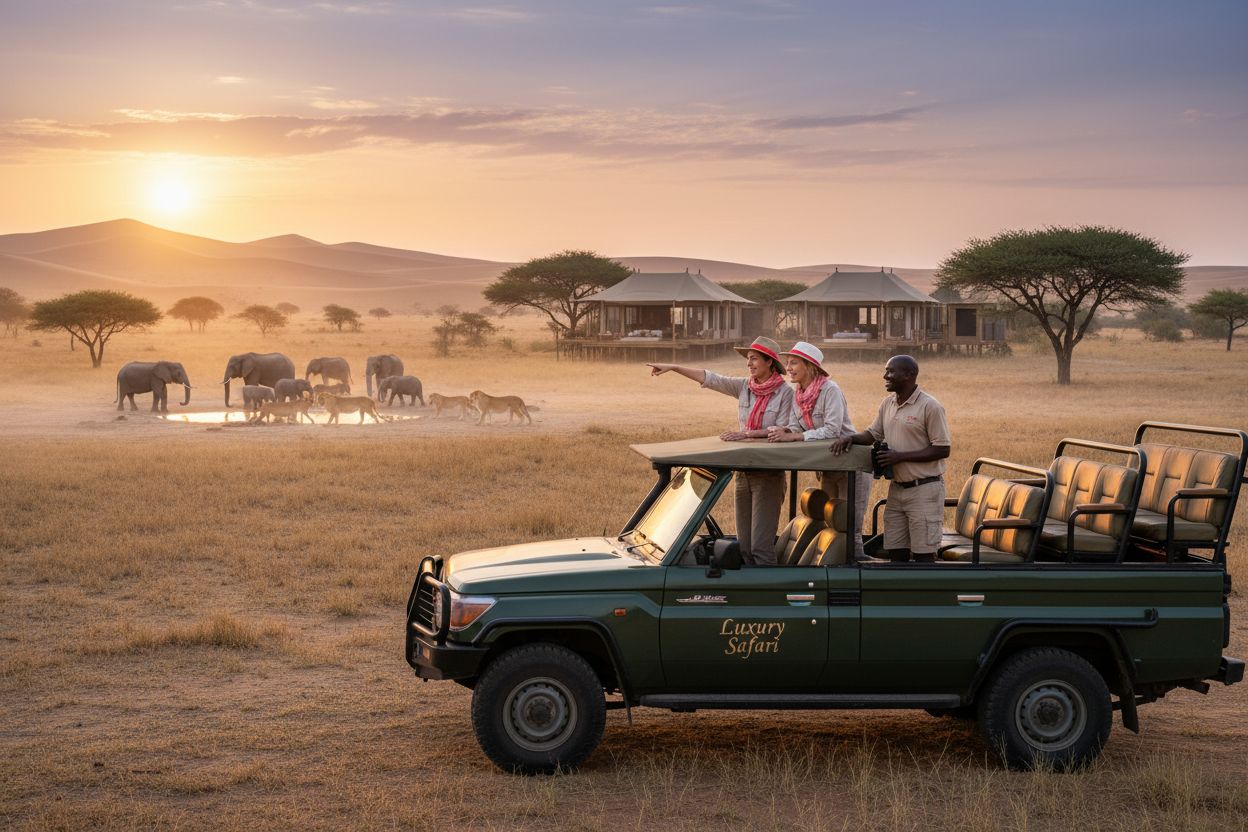
What to Expect on a Luxury Safari: A Comprehensive Guide
Discover what to expect on a luxury safari and gain a deeper understanding of the unique experiences that await you in the wild.
Feb 22, 2026
Understanding Namibia Safari Costs Explained
Explore Namibia safari costs explained to uncover what influences pricing and what it means for your adventure.
Feb 21, 2026
Understanding the Role of Safari Experts in Wildlife Travel
Explore the role of safari experts and gain a comprehensive understanding of how they enhance wildlife travel experiences for all types of travelers.
Feb 20, 2026
Guide organisation safari all inclusive : vivez l'aventure de vos rêves
Découvrez notre guide organisation safari all inclusive étape par étape pour planifier un voyage inoubliable au cœur de la nature.