
Mar 12, 2026
Plan your 2026 luxury Namibia road trip with expert tips on 4x4 selection, bespoke itineraries, safety protocols, and exclusive safari experiences for affluent travelers.
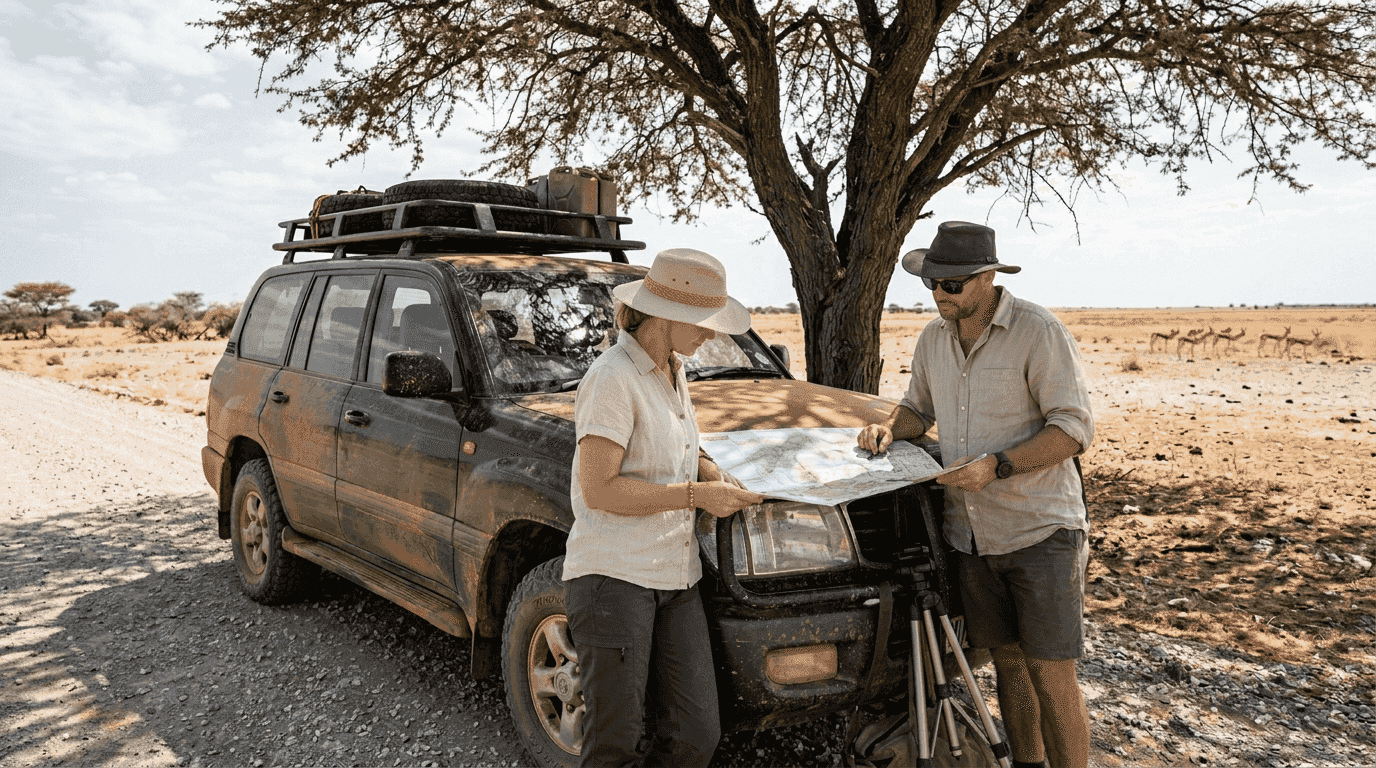
Namibia road trip guide: plan a luxury 4x4 safari 2026
Planning a luxury Namibia road trip in 2026 requires balancing rugged terrain with five-star comfort. Unlike conventional safaris, self-drive adventures demand careful vehicle selection, route crafting, and safety awareness to access remote wilderness while enjoying bespoke amenities. This guide walks you through every essential step, from choosing the right 4x4 to designing a personalized itinerary that maximizes wildlife encounters and relaxation at exclusive lodges.
Table of Contents
Choosing The Right Vehicle For Your Luxury Namibia Road Trip
Crafting Your Bespoke Namibia Itinerary For An Unforgettable Road Trip
Safety And Preparation: Tips For A Secure And Smooth Self-Drive Safari
Maximizing Your Luxury Safari Experience On A Namibia Road Trip
Discover Luxury Namibia Safaris With Secret Namibia
Frequently Asked Questions
Key takeaways
Point | Details |
|---|---|
Vehicle selection | 4x4 vehicles are strongly recommended for navigating gravel roads and accessing remote luxury lodges safely. |
Optimal duration | Two weeks allows balanced exploration of iconic destinations with adequate rest between drives. |
Safety priorities | Drive only during daylight, maintain slower speeds on gravel, and always give wildlife right of way. |
Luxury enhancements | Personalized itineraries, private guides, and exclusive tented camps elevate the self-drive experience significantly. |
Pre-trip essentials | Daily vehicle checks, route planning with fuel stops, and understanding terrain requirements prevent mishaps. |
Choosing the right vehicle for your luxury Namibia road trip
Selecting the proper vehicle transforms your Namibia road trip from challenging to exceptional. The country’s 4x4 vehicle requirements stem from road conditions, with over 80% of roads being gravel or sand. Standard sedans simply cannot deliver the comfort and access affluent travelers expect.
4x4 SUVs provide higher ground clearance, reinforced suspension, and robust tires designed for extended gravel travel. These features prevent bottoming out on uneven surfaces and reduce the jarring vibration that makes long drives exhausting. More importantly, certain premier destinations like Deadvlei in Sossusvlei require 4x4 access, meaning a 2WD vehicle limits your itinerary before you start.
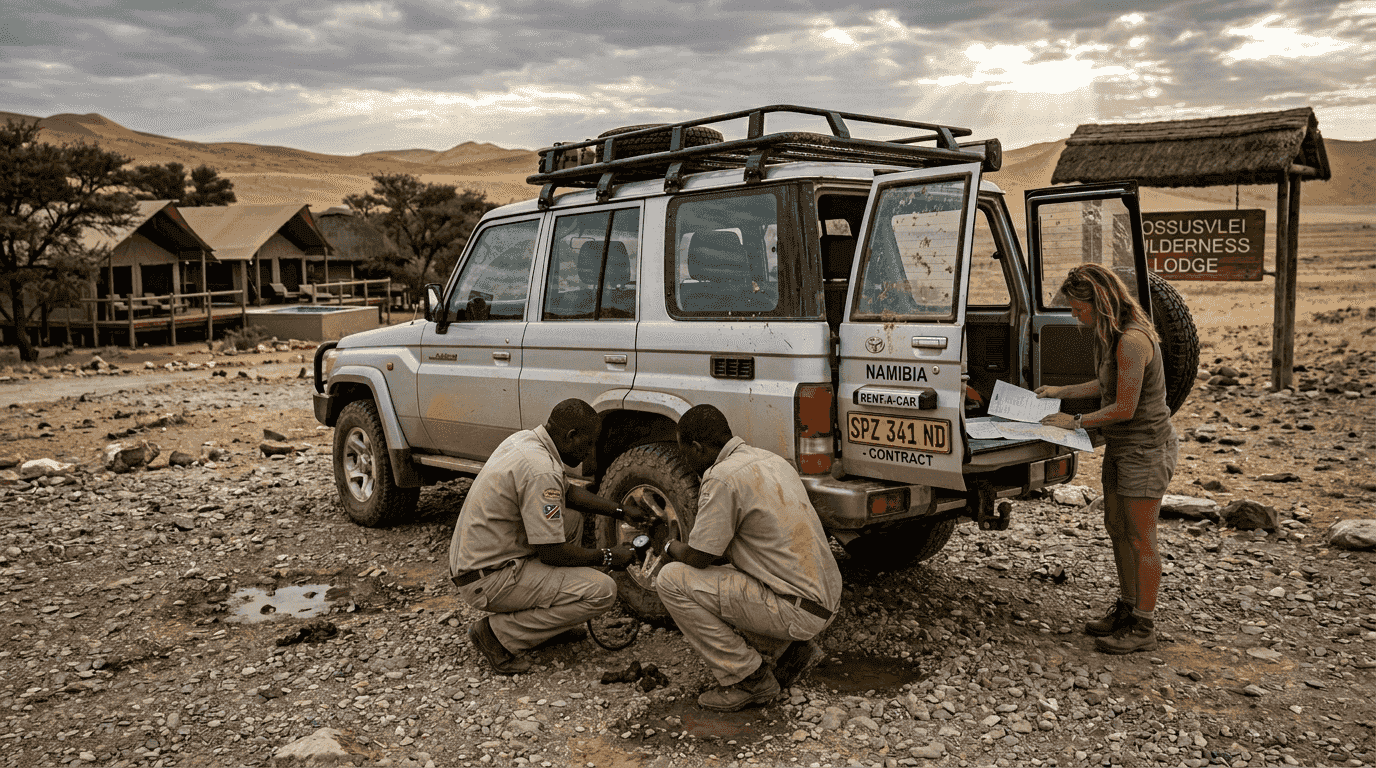
Rental costs vary significantly based on vehicle specifications and included equipment:
Vehicle Type | Daily Rate (USD) | Key Features |
|---|---|---|
Basic 4x4 SUV | 80 to 120 | Standard clearance, manual transmission |
Premium 4x4 | 150 to 200 | Enhanced suspension, camping equipment |
Luxury 4x4 with rooftop tent | 200 to 280 | Full camping setup, GPS, satellite phone |
Rooftop tents deserve special consideration for overlanding enthusiasts. These elevated sleeping platforms keep you safely above ground level while providing surprising comfort with thick mattresses and weather protection. Many luxury travelers appreciate the ability to camp at remote locations without sacrificing sleep quality, then retreat to five-star lodges on alternate nights.
Pro Tip: Book your 4x4 vehicle rental at least three months ahead for 2026 travel. Peak season (June through October) sees limited availability, and premium models with full camping kits disappear quickly.
Choosing a 4x4 also grants psychological freedom. You can spontaneously explore side roads leading to hidden waterholes or dramatic viewpoints without worrying whether your vehicle can handle the terrain. This flexibility proves invaluable when local contacts suggest exclusive wildlife sightings off the main route.
Crafting your bespoke Namibia itinerary for an unforgettable road trip
Designing a personalized two-week Namibia itinerary requires balancing iconic highlights with adequate rest periods. Rushing between destinations defeats the purpose of a luxury safari, where absorbing landscapes and wildlife encounters matters more than ticking boxes.
Start by identifying your non-negotiables. Most affluent travelers prioritize these experiences:
Sossusvlei’s towering red dunes and surreal Deadvlei clay pan at sunrise
Etosha National Park’s abundant wildlife around floodlit waterholes
Skeleton Coast’s dramatic shipwrecks and desert-adapted elephants
Swakopmund’s colonial architecture and adrenaline activities
Damaraland’s ancient rock art and rare black rhino tracking
The itinerary structure emphasizes iconic highlights while allowing spontaneous detours. Allocate three to four hours maximum driving per day to prevent fatigue and create space for unexpected wildlife encounters. Namibia’s distances demand respect, with 250 to 350 kilometers being a comfortable daily range on gravel roads.
Flexibility separates mediocre trips from extraordinary ones. When a lodge manager mentions fresh leopard tracks near a waterhole, you want schedule room to spend an extra morning waiting. Similarly, dramatic cloud formations over the dunes might inspire staying an additional sunset instead of pushing to your next destination.
Pro Tip: Plan your customized safari itinerary around lunar phases. Full moons create magical nighttime game viewing at floodlit waterholes, while new moons deliver spectacular stargazing in the Namib Desert’s dark skies.
Consider facilities scarcity when plotting routes. Long stretches between fuel stations and limited cell coverage mean each day requires careful planning. However, this remoteness creates the authentic wilderness experience luxury travelers seek, provided you prepare properly.
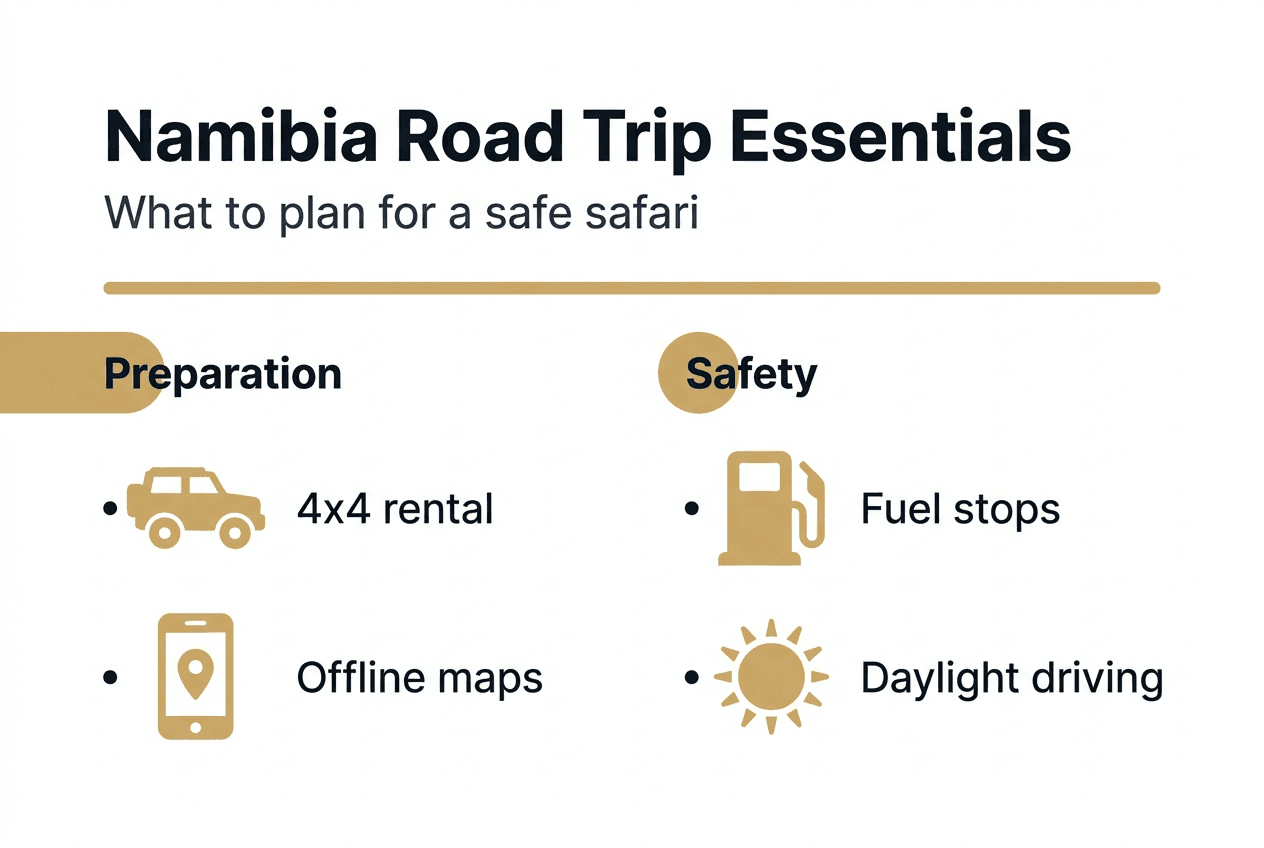
Safety and preparation: tips for a secure and smooth self-drive safari
Understanding Namibia-specific safety protocols prevents avoidable incidents that could derail your luxury road trip. While self-drive safaris prove generally safe, road conditions and wildlife encounters require heightened awareness compared to European or North American driving.
Pre-drive vehicle checks become non-negotiable rituals. Inspect these elements every morning:
Tire pressure and tread depth, adjusting for sand driving when needed
Fuel level with calculations for next station plus 100 kilometer buffer
Spare tire accessibility and jack functionality
Coolant and oil levels, especially critical in extreme heat
Emergency supplies including water, first aid kit, and satellite phone
Gravel road techniques differ fundamentally from paved driving. Reduce speeds and increase following distance to maintain control as loose stones reduce traction. The recommended maximum speed is 80 kilometers per hour, though 60 feels more comfortable on rougher sections. Grip the steering wheel firmly at nine and three o’clock positions to absorb unexpected jolts without losing control.
Wildlife encounters demand complete deference to animals. Elephants, in particular, have absolute right of way and can become aggressive if vehicles approach too closely. Maintain at least 50 meters distance and never position your vehicle between a mother and her young.
Plan your day so you are parked before sunset to minimize risks from nocturnal wildlife and severely reduced visibility on unlit roads.
Night driving presents Namibia’s greatest road safety hazard. Animals freeze in headlights, creating collision risks with everything from springbok to massive oryx. Wandering livestock near settlements adds further danger. Professional guides universally advise against any driving after dusk, and insurance policies often exclude nighttime incidents.
Additional self-driving preparation tips include downloading offline maps before departure, understanding that GPS coordinates work better than street addresses in remote areas, and carrying physical backup maps. Cell coverage exists only near major towns, so inform lodges of your expected arrival times and stick to planned routes.
Maximizing your luxury safari experience on a Namibia road trip
Elevating your self-drive adventure from good to exceptional requires strategic integration of bespoke services that complement your independence. Luxury safari experiences emphasize personalized itineraries rather than group tours, allowing you to pursue specific interests whether wildlife photography, cultural immersion, or pure relaxation.
Personalized itineraries unlock experiences impossible on standard packages. A private astronomer can join you for Milky Way photography sessions at your Namib Desert camp. Expert trackers guide dawn rhino walks in Damaraland’s ancient valleys. Local historians provide context at rock art sites that most tourists simply photograph and leave. These tailored additions transform sightseeing into genuine understanding.
Private driver-guides offer compelling value for portions of your trip:
Deep ecological knowledge that helps spot camouflaged wildlife you would miss
Access to exclusive private reserves and concessions closed to independent travelers
Cultural connections enabling authentic interactions with Himba or San communities
Photographic expertise positioning vehicles for optimal lighting and angles
Stress-free navigation allowing you to focus entirely on experiences
Luxury tented camps deliver the paradox of authentic wilderness immersion with five-star amenities. Canvas walls let you hear lions calling at night while lying under Egyptian cotton sheets. Private decks overlook waterholes where elephants drink at dawn. These camps prove you need not sacrifice comfort to experience raw Africa.
Combining self-drive with guided elements provides optimal flexibility. Drive independently between major regions to maintain freedom, then engage private safari guides for intensive wildlife tracking in prime areas like Etosha or Ongava.
Fly-in safaris complement road trips by efficiently accessing ultra-remote luxury camps. Light aircraft eliminate eight-hour drives, delivering you directly to Skeleton Coast or Kaokoveld properties unreachable by road. This hybrid approach maximizes both adventure and efficiency for time-conscious travelers.
Discover luxury Namibia safaris with Secret Namibia
Transforming these planning insights into your perfect 2026 Namibia road trip requires expert local knowledge and established luxury connections. Secret Namibia specializes in crafting bespoke luxury Namibia safaris that seamlessly blend self-drive freedom with exclusive experiences.
Our team designs personalized itineraries matching your specific interests, whether big cat photography, cultural immersion, or pure relaxation at pristine camps. We arrange private guides, secure bookings at sought-after luxury lodges, and provide 24/7 support throughout your journey. Access our curated selection of luxury wildlife experiences that elevate your safari beyond standard packages. Ready to start planning your unforgettable Namibia adventure? Enquire today for a tailored proposal.
Frequently asked questions
What is the safest time of day to drive on Namibia’s gravel roads?
Driving during full daylight hours provides optimal visibility and safety on gravel roads. Parking before sunset is strongly recommended to avoid nocturnal wildlife activity and severely reduced visibility on unlit roads. Plan daily routes to reach accommodations with at least one hour of daylight remaining as buffer for unexpected delays.
Can I use a standard 2WD vehicle for a Namibia road trip?
While most attractions remain accessible with 2WD, these vehicles have significant limitations on sandy tracks and remote routes. Premier destinations like Deadvlei require 4x4 access, and gravel roads prove far more comfortable in vehicles with higher clearance. 4x4 rentals enhance safety, comfort, and route flexibility substantially.
How long should I plan for a Namibia road trip to see major highlights?
Two weeks represents the optimal duration for experiencing Namibia’s iconic landscapes without rushing. This timeframe allows visiting Sossusvlei, Etosha, the Skeleton Coast, and Damaraland with adequate rest days between drives. Shorter trips require prioritizing specific regions rather than attempting comprehensive coverage, which leads to exhausting daily drives.
Do I need special insurance for self-drive safaris in Namibia?
Comprehensive insurance coverage including gravel road damage, theft, and third-party liability is essential for Namibia road trips. Standard rental agreements often exclude gravel road damage, leaving you liable for expensive repairs. Verify that your policy covers 4x4 vehicles, remote recovery costs, and nighttime incidents if you plan any evening driving despite safety recommendations.
What permits or documents do I need for a Namibia self-drive safari?
International visitors require a valid passport, international driving permit alongside their home license, and vehicle rental documentation. No special permits are needed for most public roads and national parks, though entry fees apply at Etosha and other reserves. Private concessions accessed through luxury lodges handle permissions directly, simplifying logistics for guests.
Recommended
RELATED
Safari Guides
Oct 30, 2025
Understanding What is Included in Luxury Safaris
Explore what is included in luxury safaris, from exclusive accommodations to bespoke experiences that cater to discerning travelers.
Feb 24, 2026
Why Namibia Adventures Matter: An In-Depth Look
Discover why Namibia adventures are essential for luxury travelers seeking unique, immersive experiences in nature and wildlife exploration.
Feb 23, 2026
What to Expect on a Luxury Safari: A Comprehensive Guide
Discover what to expect on a luxury safari and gain a deeper understanding of the unique experiences that await you in the wild.
Feb 22, 2026
Understanding Namibia Safari Costs Explained
Explore Namibia safari costs explained to uncover what influences pricing and what it means for your adventure.
Feb 21, 2026
Understanding the Role of Safari Experts in Wildlife Travel
Explore the role of safari experts and gain a comprehensive understanding of how they enhance wildlife travel experiences for all types of travelers.
Feb 20, 2026
Guide organisation safari all inclusive : vivez l'aventure de vos rêves
Découvrez notre guide organisation safari all inclusive étape par étape pour planifier un voyage inoubliable au cœur de la nature.