
Jul 22, 2026
Explore essential Namibia travel tips to unlock stunning landscapes, ensure safety, and enjoy every moment of your adventure in 2026.
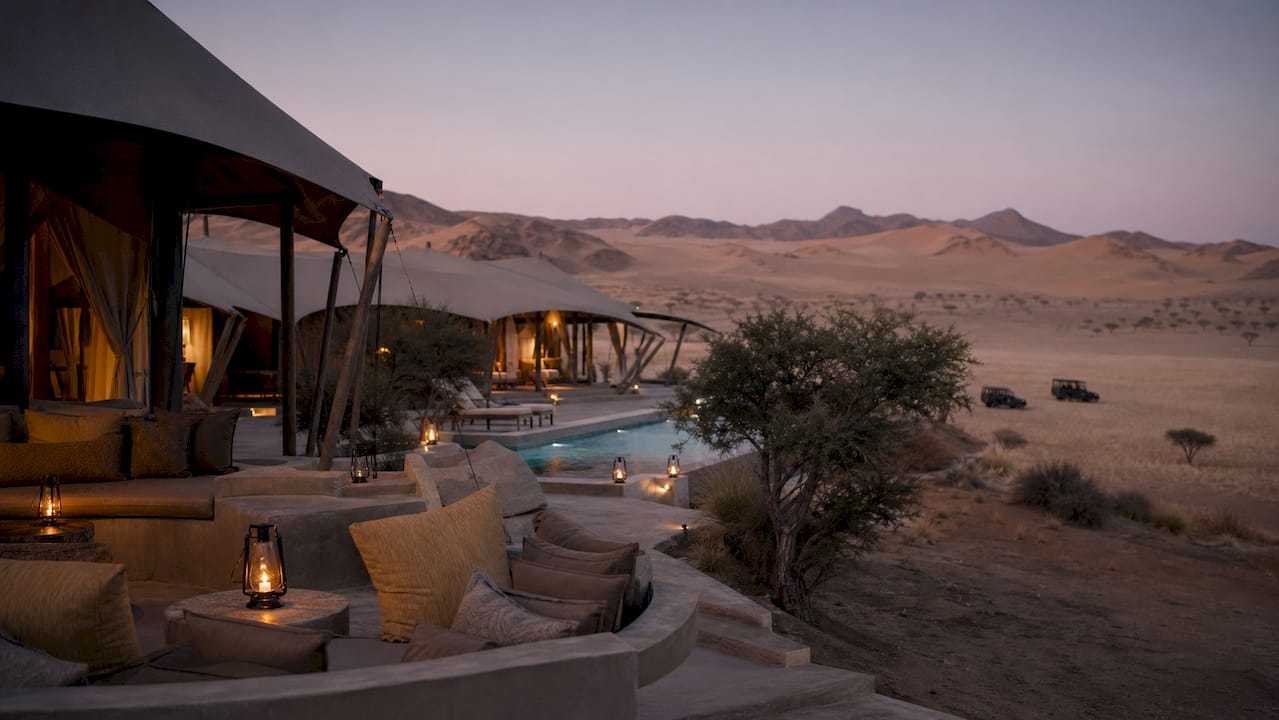
Namibia travel tips: your 2026 independent travel guide
Namibia rewards prepared travelers with some of the most extraordinary landscapes on earth. Towering ochre dunes at Sossusvlei, the vast salt pans of Etosha, the raw desolation of the Skeleton Coast, centuries-old Welwitschia plants in Damaraland — this country delivers on every promise. The essential Namibia travel tips that follow will help you arrive ready, stay safe, and make the most of every golden hour.
Here is what every independent traveler needs to know before landing in Windhoek:
Safety: Namibia is generally safe for tourists. Petty crime exists in urban areas, so keep valuables out of sight and avoid walking alone after dark in city centers.
Trip duration: Plan for at least several days to cover the main highlights without rushing.
Transport: A 4WD vehicle is strongly recommended. Gravel roads require a maximum safe speed of 80km/h to avoid skids and rollovers.
Health: Carry a well-stocked first aid kit and bring sunscreen, insect repellent, and any prescription medications from home. Malaria is a risk in northern regions.
Currency: The Namibian dollar is pegged 1:1 to the South African rand, and both currencies are accepted everywhere. ATMs work reliably in towns; carry cash for remote areas.
Visas: Most nationalities, including US citizens, receive a free visa on arrival for stays up to 90 days. Confirm current requirements before you travel.
Communication: English is the official language, making navigation straightforward for North Americans. Cell coverage spans most of the country but weakens in remote areas.
Cultural etiquette: Ask permission before photographing local people, dress modestly when visiting communities, and greet locals warmly — Namibians are famously welcoming.
Is Namibia safe, and how do you protect your health?
Namibia is one of Africa’s safer destinations for independent travel, with a stable government and a well-developed tourism infrastructure. That said, sensible precautions make a real difference. In Windhoek and Swakopmund, avoid displaying expensive cameras or jewelry in busy markets, and do not walk alone at night in unfamiliar neighborhoods. In rural areas and national parks, the risks shift from crime to environment: extreme heat, vast distances, and limited medical facilities demand thorough preparation.
Wildlife is magnificent here, but animals pose minimal danger when you follow standard safari rules. Never approach animals on foot, never feed them, and always stay in your vehicle during game drives unless a guide instructs otherwise. Etosha’s elephants, lions, and rhinos are wild and unpredictable — respect that distance and you will have nothing to worry about.
Health preparation deserves as much attention as your packing list. The CDC recommends carrying a full travel health kit including prescribed medications in their original packaging, oral rehydration salts, insect repellent, and a suture or syringe kit for use by local health providers if needed. Malaria prophylaxis is advisable if you are visiting Etosha or the Zambezi region between november and april. Travel insurance that covers emergency medical evacuation is essential in a country where the nearest specialist hospital may be hours away.
Pro Tip: Pack SPF 50+ sunscreen from home. Namibia has some of the highest UV levels in the world, and sunscreen is expensive and scarce in small towns and national parks. Bring more than you think you need.
Vaccinations and medical supplies
The CDC’s Namibia packing list recommends travelers discuss the following with their doctor before departure:
Routine vaccinations (measles, hepatitis A and B, typhoid)
Malaria prevention medication for northern regions
Travelers’ diarrhea antibiotic
Motion sickness pills (gravel roads are genuinely bumpy)
Antihistamines and pain relievers
Aloe vera gel for sunburn treatment
Water purification tablets for remote camping
Health note: Namibia’s dry season brings intense sun even when temperatures feel moderate. Tourists at Sossusvlei regularly underestimate UV exposure and suffer serious burns by mid-morning. A wide-brim hat and a long-sleeve UPF shirt are as important as any medication in your kit.
How do you plan your Namibia trip: duration, transport, and flights?
How long should you spend in Namibia?
A good minimum is 10–14 days, which gives you enough time to cover the main highlights without spending every day behind the wheel. If you want to add Fish River Canyon, the Zambezi region, or a fly-in leg to the Skeleton Coast, budget 16–21 days. Namibia’s distances are genuinely vast, and rushing them means missing the country’s greatest gift: the silence and space between destinations.
Getting to Windhoek
Daily international and regional flights serve Hosea Kutako International Airport, about 40 minutes from Windhoek’s city center. Most travelers from the United States connect through Johannesburg (OR Tambo International Airport) or Frankfurt. Book flights early, especially for the dry season peak between june and september, when demand from European and American travelers pushes prices up sharply.
Self-drive versus fly-in safaris
The choice between self-drive and fly-in is the single most consequential decision you will make for your Namibia trip. Self-drive safaris offer maximum flexibility: you set your own pace, stop wherever the light is extraordinary, and explore places that guided tours skip. Fly-in safaris, by contrast, unlock remote regions that are simply unreachable by road. The northern section of the Skeleton Coast National Park, for example, is accessible almost exclusively by small charter aircraft, making a fly-in the only way to experience its haunting desolation.
For most independent travelers, a hybrid approach works beautifully: self-drive the central and southern circuit (Windhoek, Etosha, Damaraland, Sossusvlei), then add a fly-in leg to reach an exclusive lodge in a remote corner.
Pro Tip: When renting a vehicle, look for members of CARAN, the Car Rental Association of Namibia. Member companies meet minimum standards for vehicle quality and service, which matters enormously when you break down 200km from the nearest town.
Vehicle choice and road safety
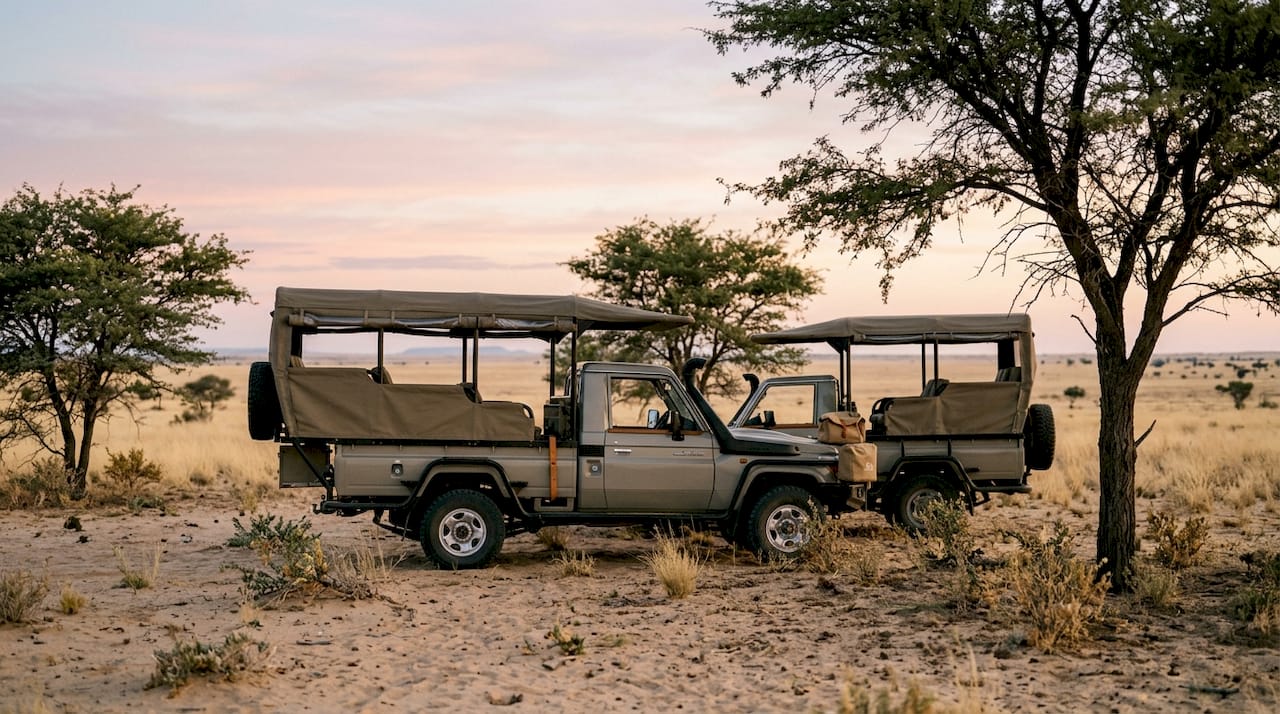
A 4WD with good ground clearance is the right call for most Namibia itineraries. Gravel roads dominate outside the main highways, and their loose surfaces and sharply angled edges catch drivers off guard. Keep your speed at or below 80km/h on gravel, carry at least two spare tyres, and download offline maps before you leave Windhoek. Fuel stations are sparse in the north and west, so fill up whenever you see one.
Key transport planning points:
Carry an international driver’s license alongside your US license
Stock extra water and snacks before leaving any major town
Plan driving days of no more than 300km on gravel to avoid fatigue
Book accommodation in advance during the june to september peak season
Check road conditions in northern regions during the rainy season (november to march), when flooding can make roads impassable
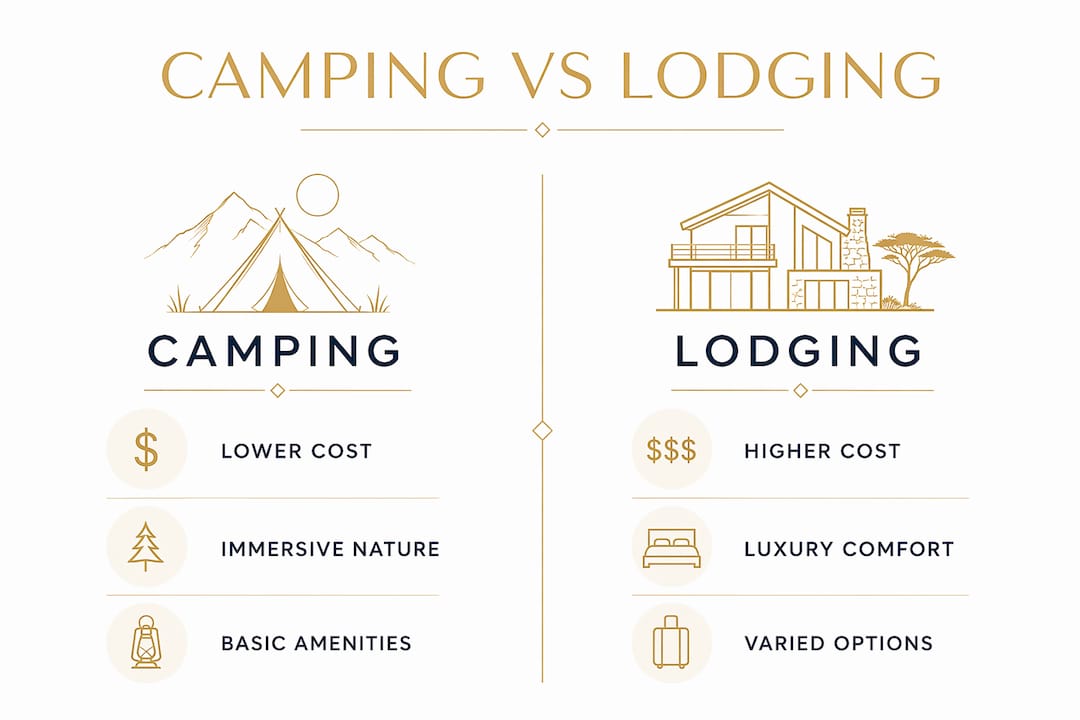
Camping versus lodging: which suits your Namibia trip?
Namibia is genuinely a camper’s paradise, but the lodge experience here is equally extraordinary. The right choice depends on your budget, comfort threshold, and how deeply you want to immerse yourself in the landscape.
Feature | Camping | Lodge / Guest Farm |
|---|---|---|
Cost | Lower; campsites from budget to mid-range | Higher; luxury lodges can be premium |
Comfort | Basic to luxury; varies widely by site | Consistent comfort; en-suite rooms standard |
Nature immersion | High; sleep under the stars, hear the desert | Moderate; beautiful settings, more removed |
Facilities | Braai (barbecue) at most sites; showers vary | Laundry, meals, guided activities included |
Flexibility | High; move freely between sites | Lower; advance booking required |
Safety | Good at established sites; take precautions | Managed environment; staff on site |
Best for | Adventure travelers, budget-conscious, families | Honeymooners, luxury seekers, first-timers |
Camping options range from well-equipped luxury campsites with shady trees and grassy lawns to wild spots in sandy riverbeds under camel-thorn trees. Community campsites in the northwest and northeast are particularly rewarding: they are built with local materials, offer opportunities to meet Namibia’s diverse ethnic groups, and put money directly into local communities. In truly remote areas, wild camping by the road is perfectly acceptable.
Lodge accommodation, meanwhile, spans rustic country hotels to five-star desert retreats. Bush camps and lodges at various price levels each carry a distinct atmosphere. Guest farms offer something different again: small, intimate, and personal, with hosts who often dine with guests and lead their own game drives. Most guest farms have some wildlife on their land and should be booked well in advance, as space is limited.
For a two-week self-drive, a mix of both works well. Camp in Etosha and Sossusvlei for the immersion, and treat yourself to a lodge in Damaraland or Swakopmund for the comfort and local expertise.
A 2-week self-drive road trip itinerary through Namibia
This itinerary covers Namibia’s greatest highlights at a pace that leaves room for spontaneity. Distances are long, so the routing below minimizes backtracking while maximizing variety.
Pro Tip: Stock up on water, snacks, and groceries in Windhoek before you head out. Prices in national parks and small towns are considerably higher, and selection is limited.
Days 1–2: Windhoek
Arrive, collect your 4WD, and spend a day exploring the capital. Visit the Christuskirche, browse the craft markets at the Namibia Craft Centre, and eat well before the road ahead. Use this time to confirm your bookings, download offline maps, and buy any supplies you forgot to pack.
Days 3–5: Etosha National Park
Drive north to Etosha, Namibia’s flagship wildlife destination. The dry season from late june to september delivers the best game viewing, as elephants, lions, zebras, giraffes, and rhinos converge on shrinking waterholes. The floodlit waterhole at Okaukuejo Resort is extraordinary after dark. Stay three nights to do Etosha justice.
Self-drive the park’s well-maintained roads at dawn and dusk
Keep windows up and doors closed at all times inside the park
Book campsites or chalets inside the park for the best wildlife access
Days 6–7: Damaraland
Head southwest into Damaraland, a landscape of dramatic red rock formations, ancient Welwitschia plants, and desert-adapted elephants. Stop at Twyfelfontein, a UNESCO World Heritage site, to see remarkable San rock engravings. This region rewards slow travel.
Day 8: Skeleton Coast and Cape Cross
Drive west to the Skeleton Coast, where the cold Atlantic crashes against barren desert. Cape Cross is home to one of the world’s largest Cape fur seal colonies, a spectacular and slightly overwhelming spectacle of noise, smell, and movement.
Days 9–10: Swakopmund
Swakopmund is Namibia’s adventure capital and a welcome chance to rest and restock. The town has excellent restaurants, a lively craft market, and a surprising German colonial architecture. Activities include sandboarding on the dunes, quad biking, and kayaking with seals. The coastal air is cool and misty — pack a jacket.
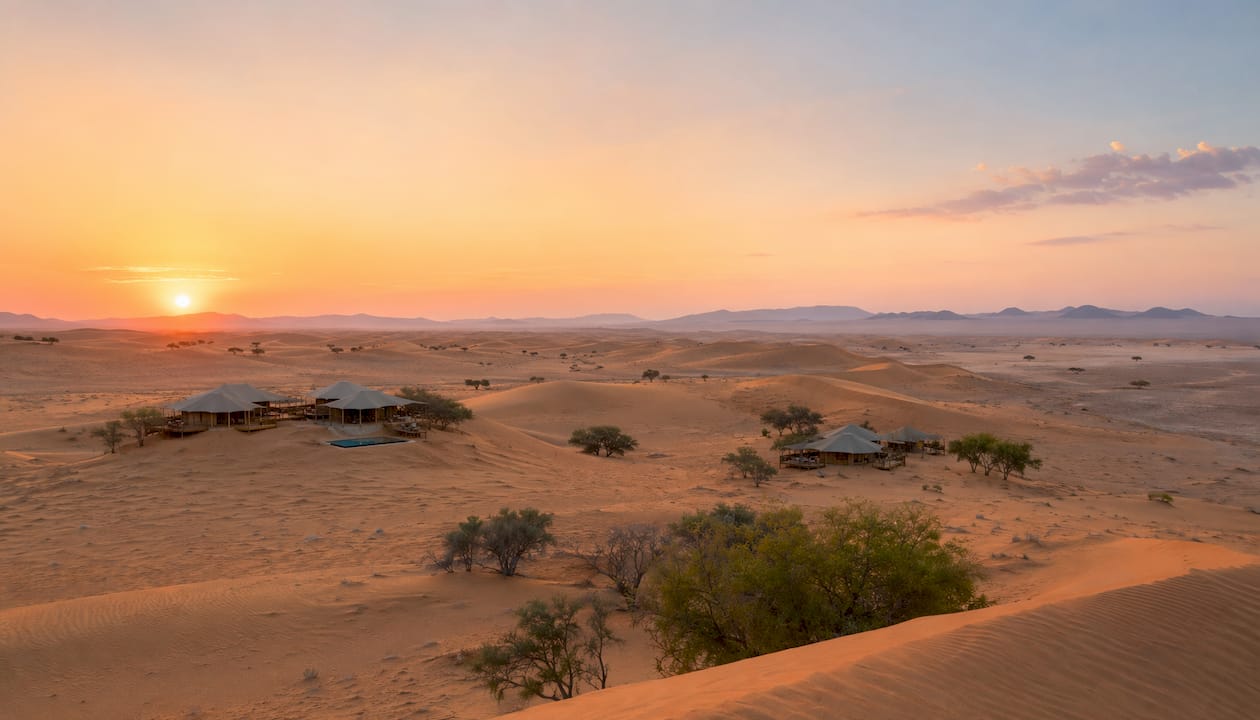
Days 11–12: Sossusvlei and Deadvlei
Drive south to the Namib Desert and the iconic dunes around Sossusvlei. Climb Dune 45 at sunrise before the heat builds, then walk into the bleached clay pan of Deadvlei, where ancient camel-thorn trees stand skeletal against the ochre dunes. Bring more water than you think you need and wear closed-toe shoes for the dune climb.
Days 13–14: Fish River Canyon and return to Windhoek
Head south to Fish River Canyon, one of the world’s largest canyons and a genuinely awe-inspiring sight. The viewpoints along the rim offer perspectives that photographs cannot capture. Drive back to Windhoek for your final night and departure.
Expert Namibia travel tips from Secretnamibia for luxury and adventure safaris
Secretnamibia specializes in exactly the kind of travel that transforms a good trip into an unforgettable one: personalized, expertly planned safaris that blend luxury with genuine wilderness adventure. The difference between booking a standard package and working with a specialist planner shows up in every detail, from the lodge selection to the timing of your game drives.
Why private game reserves change everything
National parks like Etosha are magnificent, but they come with constraints: fixed roads, shared waterholes, and the presence of other vehicles. Private game reserves operate on a different philosophy entirely. Exclusivity is built in, with far fewer guests sharing the landscape. Guides can take you off-road to follow a leopard or position your vehicle for the perfect sighting without worrying about a queue of other cars. Activities like night drives and bush walks, which are not permitted in most national parks, become part of your daily rhythm.
The conservation dimension adds another layer of meaning. Secretnamibia’s approach to conservation-focused safaris connects guests directly with the wildlife protection and community engagement work that sustains these landscapes. You are not just observing Namibia’s wildlife; you are contributing to its future.
What to expect from a luxury Namibia safari
Secretnamibia’s luxury safari experiences are built around three pillars: personalized wildlife encounters, elegant accommodation, and conservation integrity. Here is what that looks like in practice:
Personalized game drives: Your guide tailors every outing to your interests, whether that means tracking desert-adapted lions in Damaraland or spending an hour watching a family of meerkats at their burrow.
Elegant lodges: Think canvas suites with private plunge pools overlooking dry riverbeds, open-air dining under the stars, and interiors that draw on the textures and colors of the surrounding desert.
Fly-in access: Remote lodges in the Skeleton Coast or the Kaokoveld are reached by small charter aircraft, arriving in places where the silence is total and the wildlife encounters are genuinely exclusive.
Conservation engagement: Many lodges support anti-poaching units, rhino monitoring programs, and community development projects that guests can learn about and contribute to directly.
Expert planning: Secretnamibia handles every logistical detail, from airport transfers to inter-lodge flights, so your only job is to be present in one of the world’s most extraordinary landscapes.
If you are planning a trip that goes beyond the standard self-drive circuit, or if you want the assurance of expert local knowledge behind every decision, reach out to Secretnamibia to start building your custom itinerary.
Ready to experience Namibia at its finest? Plan your safari with Secretnamibia and let their team of specialists craft an itinerary that matches your pace, your interests, and your sense of adventure.
Key takeaways
Namibia rewards independent travelers who prepare thoroughly, choose the right vehicle, and time their visit for the dry season between june and september.
Point | Details |
|---|---|
Best time to visit | The dry season (late june to september) offers the best wildlife viewing and most comfortable travel conditions. |
Trip duration | Plan a minimum of 10–14 days to cover the main highlights without excessive daily driving. |
Vehicle choice | A 4WD with good clearance is recommended; keep gravel road speeds at or below 80km/h. |
Health preparation | Bring SPF 50+ sunscreen, insect repellent, and a full first aid kit from home; local supplies are scarce and expensive. |
Currency and cash | The Namibian dollar and South African rand are accepted everywhere; carry cash for remote areas where ATMs are unavailable. |
Recommended
RELATED
Safari Guides
Oct 30, 2025
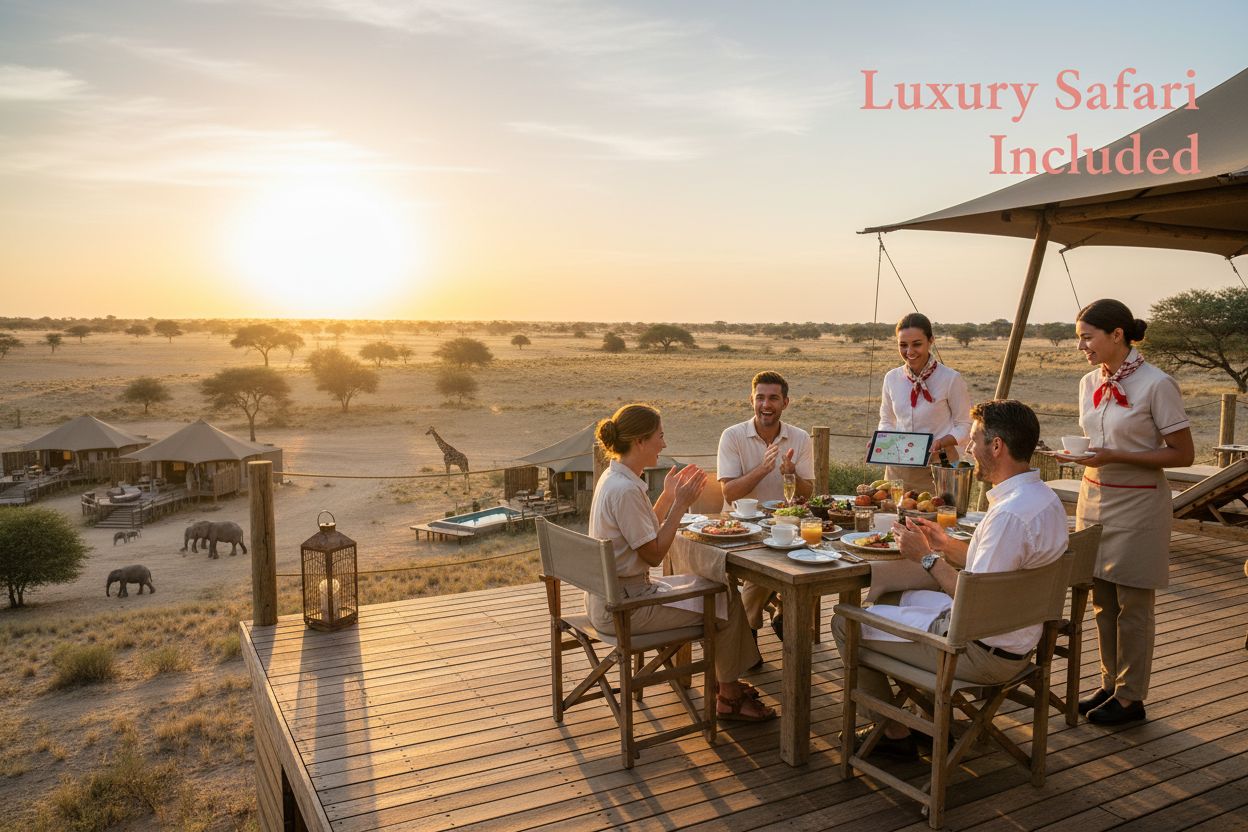
Understanding What is Included in Luxury Safaris
Explore what is included in luxury safaris, from exclusive accommodations to bespoke experiences that cater to discerning travelers.
Feb 24, 2026
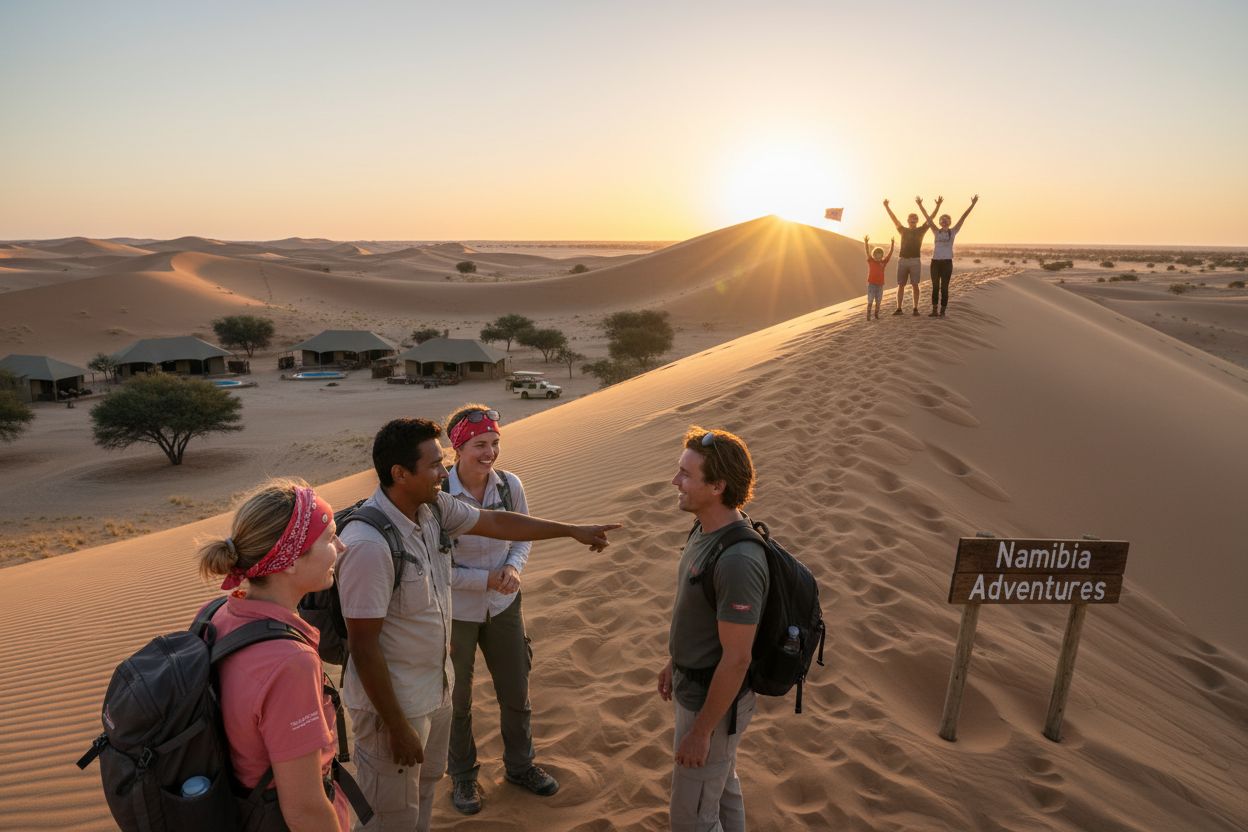
Why Namibia Adventures Matter: An In-Depth Look
Discover why Namibia adventures are essential for luxury travelers seeking unique, immersive experiences in nature and wildlife exploration.
Feb 23, 2026
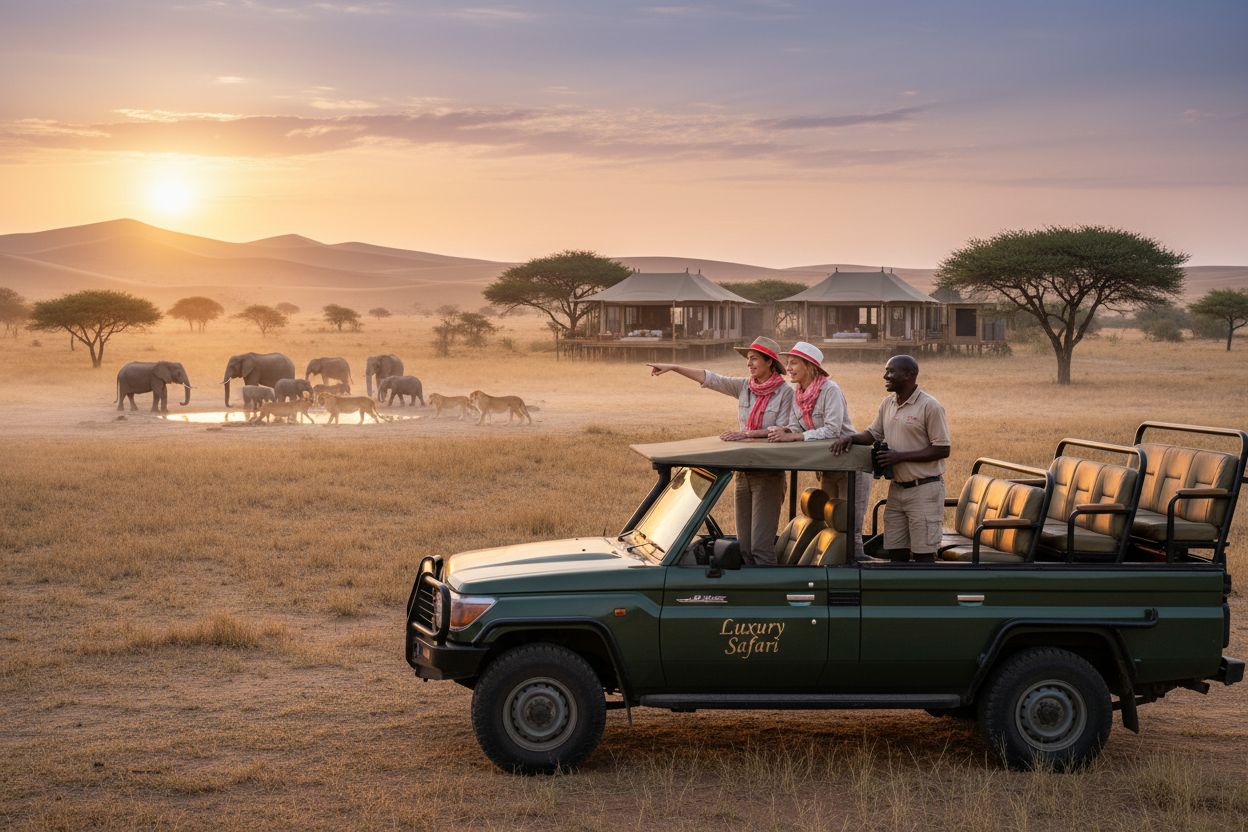
What to Expect on a Luxury Safari: A Comprehensive Guide
Discover what to expect on a luxury safari and gain a deeper understanding of the unique experiences that await you in the wild.
Feb 22, 2026
Understanding Namibia Safari Costs Explained
Explore Namibia safari costs explained to uncover what influences pricing and what it means for your adventure.
Feb 21, 2026
Understanding the Role of Safari Experts in Wildlife Travel
Explore the role of safari experts and gain a comprehensive understanding of how they enhance wildlife travel experiences for all types of travelers.
Feb 20, 2026
Guide organisation safari all inclusive : vivez l'aventure de vos rêves
Découvrez notre guide organisation safari all inclusive étape par étape pour planifier un voyage inoubliable au cœur de la nature.