
Aug 24, 2026
Discover Namibia's stunning landscapes and unique wildlife. Explore must-see spots like Sossusvlei, Etosha, and more on your adventure!
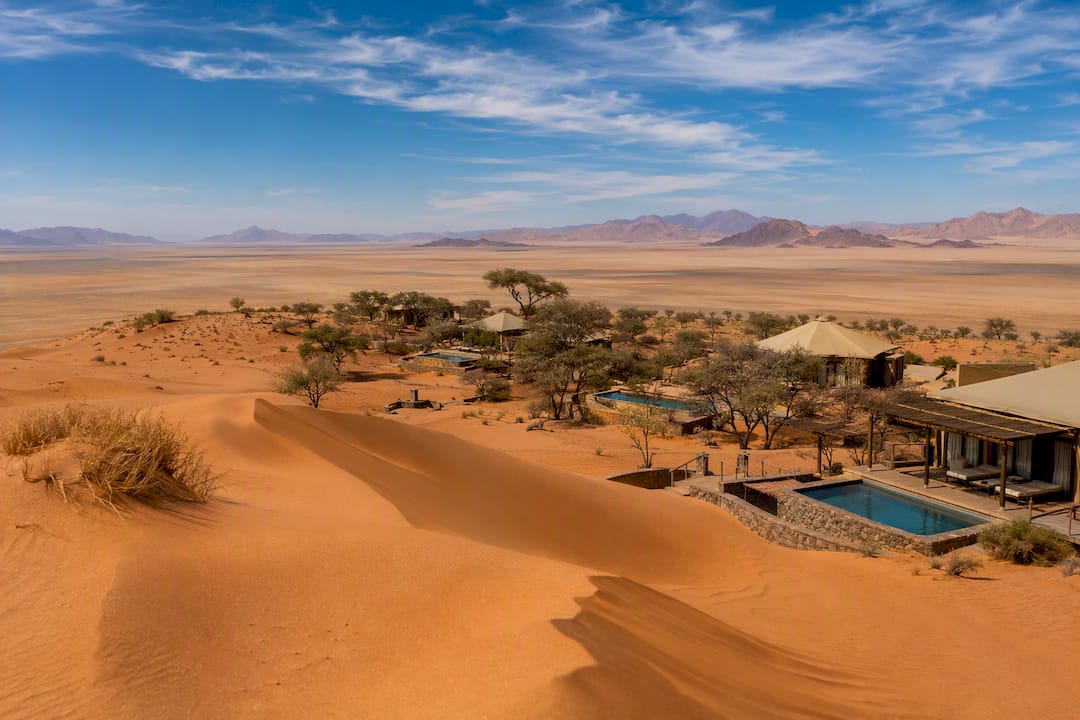
Namibia tourism highlights: 10 must-see places to visit
Sossusvlei, Etosha, the Skeleton Coast, and Damaraland form the backbone of Namibia’s tourism highlights, and the best way to see them is a 7 to 14 day self-drive loop with a night or two in a private reserve or fly-in camp along the way. This country rewards travelers who mix long, golden drives with pockets of real stillness, whether that’s dawn on a dune the color of rust or a private waterhole at last light with nobody else in sight.
The signature stops most itineraries build around:
Sossusvlei and Deadvlei for the tallest dunes in Namib-Naukluft and the skeletal camel thorn trees of the clay pan
Etosha National Park for waterhole wildlife viewing and a genuinely rewarding self-drive experience
Skeleton Coast and Cape Cross for shipwrecks, fog, and one of the continent’s largest seal colonies
Damaraland and Twyfelfontein for ancient rock engravings and desert-adapted elephants
Swakopmund and Walvis Bay for adventure sport, flamingos, and a genuinely good meal after days of gravel roads
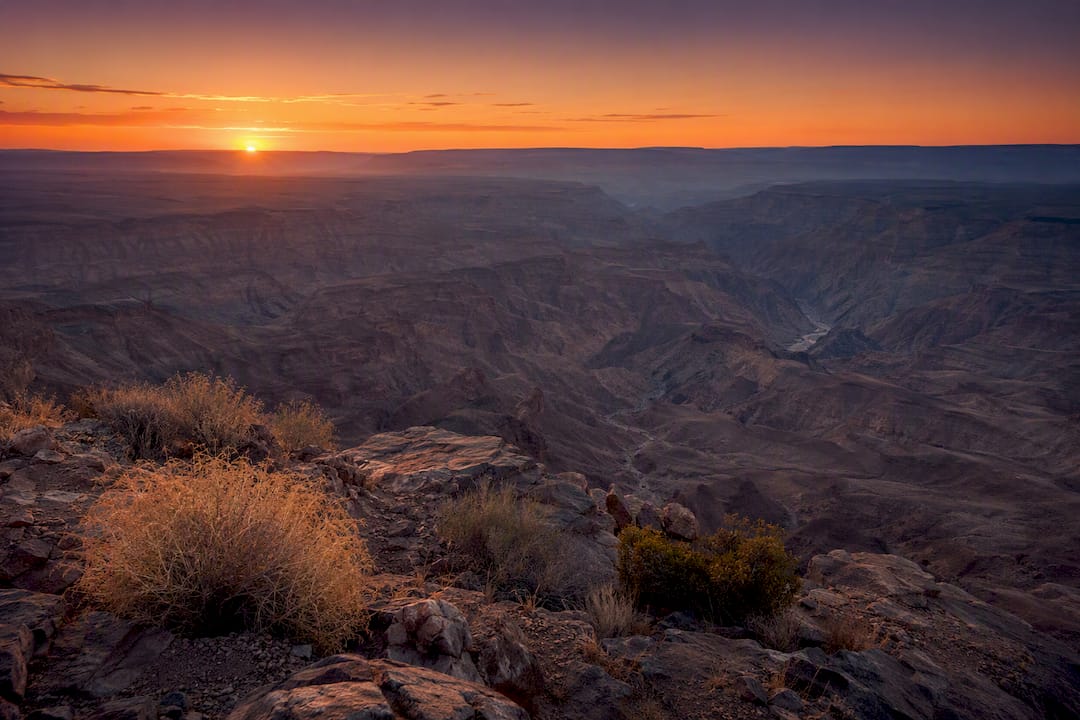
Fish River Canyon for one of the world’s largest canyons, on foot or from the rim
Kolmanskop and Lüderitz for a diamond-rush ghost town and colonial coastline
Spitzkoppe and the Quiver Tree Forest for granite peaks, dark skies, and odd, beautiful flora
Secret Namibia builds bespoke itineraries around exactly this shortlist, threading in private-reserve nights and fly-in legs where they add the most value.
Key Takeaways
Namibia’s tourism highlights reward a 7 to 14 day loop that pairs self-drive flexibility with one or two private-reserve or fly-in nights for closer, quieter wildlife encounters.
Point | Details |
|---|---|
Core highlights | Sossusvlei, Etosha, the Skeleton Coast, and Damaraland anchor most itineraries; add Swakopmund, Fish River Canyon, and Kolmanskop by trip length. |
Vehicle matters | A 4x4 with high clearance and a spare tyre is close to essential on Namibia’s gravel routes and long fuel gaps. |
Season shapes the trip | Dry months concentrate wildlife at Etosha’s waterholes; the Fish River Canyon trail only opens April 15 to September 15. |
Private reserves add access | Walking safaris and night drives, generally barred in national parks, are common in private reserves and often fund conservation directly. |
Bespoke planning | Secret Namibia builds custom 7 to 14 day itineraries mixing self-drive, fly-in legs, and private-reserve nights around your own pace. |
Table of Contents
Namibia tourism highlights worth building a trip around
Why choose a private reserve over a national park?
The private reserve experiences Secret Namibia arranges most
What to expect day to day on safari
How to plan the logistics that make or break the trip
What most bucket lists get wrong about Namibia
Let Secret Namibia build your highlights itinerary
Sources
Namibia tourism highlights worth building a trip around
Namibia rewards a loop, not a checklist. Here’s the region-by-region rundown, along with the practical detail that separates a good visit from a forgettable one.
1. Sossusvlei and Deadvlei
The dunes at Sossusvlei rise higher than almost anywhere on Earth, and the ghostly camel thorn trees at Deadvlei, stranded in a clay pan for centuries, have become one of the most photographed landscapes in Southern Africa. Climbing “Big Daddy,” the tallest dune in the area, rewards you with a view over Deadvlei that photographs cannot quite prepare you for. National Geographic recommends hiking the dunes at sunrise, when the light rakes across the sand and the temperature hasn’t yet climbed past bearable.
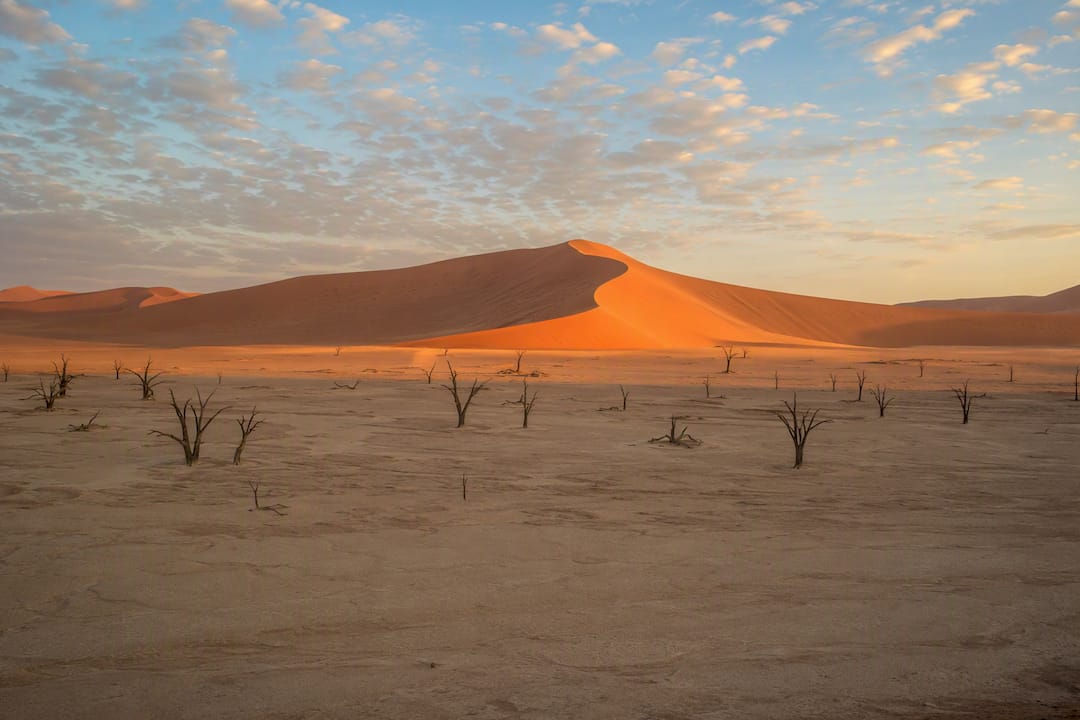
Pro Tip: Arrive at the gate the moment it opens. The dune climb takes longer than it looks, and the desert floor turns to a griddle by mid-morning.
2. Etosha National Park
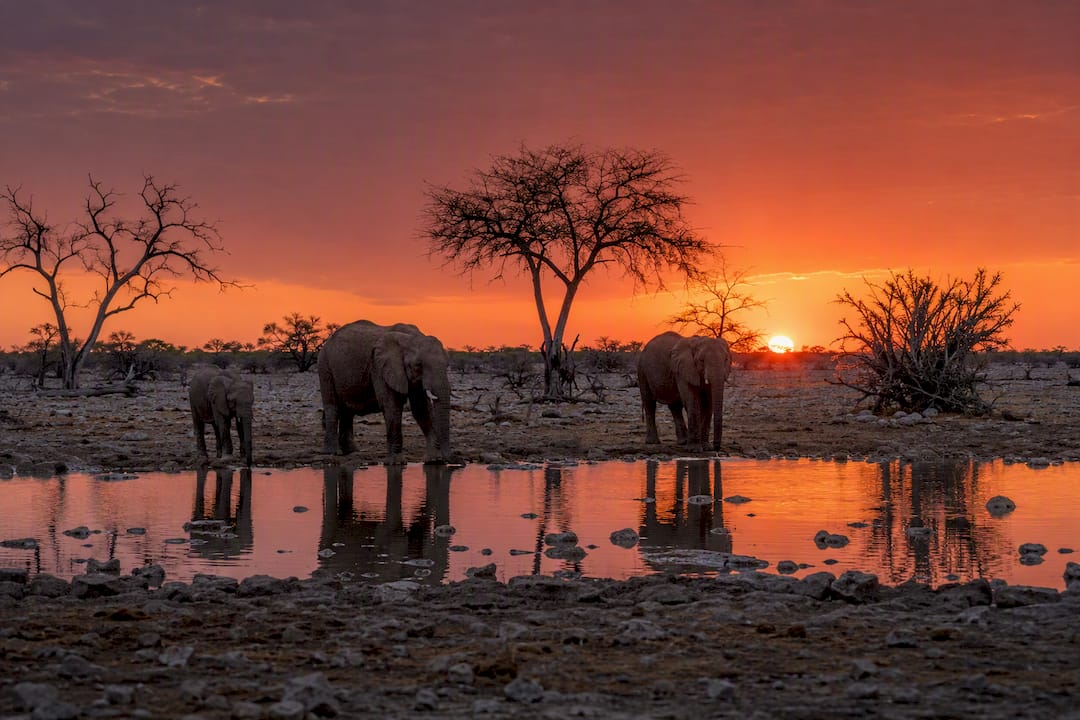
Etosha’s vast salt pan draws wildlife to its waterholes in concentrations you rarely see elsewhere in Africa, particularly through the dry winter months when little other water exists nearby. The park’s infrastructure suits self-drive visitors well, with well-marked loop roads connecting waterholes where you can park, wait, and watch elephant, lion, and rhino come to drink. Etosha rewards patience over mileage: pick two or three waterholes and give each an hour rather than racing between a dozen.
3. Skeleton Coast and Cape Cross
Fog rolls off the cold Benguela current most mornings here, wrecking ships for centuries and giving this stretch its name. Cape Cross holds one of Africa’s largest Cape fur seal colonies, tens of thousands strong and loud enough to hear before you see them. The northern Skeleton Coast is remote enough that fly-in access is often the practical way in, and Secret Namibia’s fly-in safari itineraries reach concessions a standard road trip simply can’t.
4. Damaraland and Twyfelfontein
Twyfelfontein holds one of the densest collections of rock engravings on the continent, a UNESCO World Heritage site where images of rhino, giraffe, and human footprints have survived thousands of years on open rock. Damaraland’s desert-adapted elephants, smaller and more spread out than their savanna cousins, roam dry riverbeds nearby, and a good guide can track them from fresh footprints alone.
5. Swakopmund and Walvis Bay
After days of gravel roads, this coastal pairing feels like a different country. Swakopmund runs on adrenaline: quad biking, skydiving, and sandboarding down dunes that spill almost into the Atlantic. Walvis Bay, ten minutes south, trades adventure for flamingos, thousands of them wading the lagoon at low tide, and a boat cruise here often turns up seals and dolphins in the same afternoon. The German colonial architecture and genuinely excellent seafood make this the trip’s easiest place to slow down for a night or two.
6. Fish River Canyon
Second only to the Grand Canyon in scale among the world’s great canyons, Fish River rewards both the rim-walker and the committed hiker. The multi-day trail through the canyon floor runs only from April 15 to September 15, when temperatures make the five-day trek survivable. Outside that window, stick to the viewpoints. Hobas and the main lookout at sunset need no permit and no fitness test, just a decent pair of shoes and time to sit still.
7. Kolmanskop and Lüderitz
Kolmanskop was a booming diamond town a century ago; today sand fills its ballroom and bowling alley, and the desert has reclaimed most of it, room by room. Lüderitz, the nearby coastal town, still carries its German colonial imprint in pastel facades against a stark Atlantic backdrop. Both make for an easy half-day pairing on the way south toward Fish River Canyon.
8. Spitzkoppe and Quiver Tree Forest
Spitzkoppe’s granite peaks erupt from flat desert like something out of a different geological era, and rock climbers travel here specifically for that improbable, isolated massif. The surrounding area sits under some of the darkest skies on the continent, with NamibRand and the Naukluft region nominated as an International Dark Sky Reserve, so a night away from any town light is worth building into the schedule. Further southeast, the Quiver Tree Forest near Keetmanshoop scatters strange, spiny aloe trees across a boulder-strewn plain, best seen at golden hour when their silhouettes turn almost architectural.
Why choose a private reserve over a national park?
National parks like Etosha give you access, structure, and reliably good wildlife. Private reserves give you something different: freedom. Guided walking safaris, night drives, and off-road tracking are typically off-limits in national parks but permitted in private reserves, where rules are set by the landowner rather than a government body.
That difference shows up everywhere in the experience:
Flexible timing means your morning drive can start before official gate hours or run past sunset
A private vehicle and guide mean you never share a sighting with a queue of other cars
Specialist trackers on foot bring you closer to desert-adapted wildlife than any vehicle can
Many reserves fund anti-poaching units and community conservancies directly through guest fees
Experts note that private reserves offer closer, guided interactions, walking safaris and night drives among them, that carry real value for photography and for understanding conservation on the ground, not just observing wildlife from a distance.
If your itinerary has room for only one splurge, put it here. A single night in a private reserve near Etosha or in the Namib often delivers the most memorable 24 hours of an entire trip.
The private reserve experiences Secret Namibia arranges most
Namibia’s private reserves each carry their own character, shaped by the ecosystem they sit in and the wildlife that ecosystem supports. Secret Namibia builds itineraries around four broad styles, matched to what a traveler wants most from their time in the bush.
Etosha-adjacent private reserves. Bordering the national park’s ecosystem, these properties offer their own waterholes and floodlit viewing decks, letting you watch elephant and rhino from a lodge veranda after dark, something the park itself does not allow. Family suites and multi-generational villas are common here, making it the easiest private-reserve pick for a mixed-age group.
Desert fly-in concessions. Set deep in the Namib or NamibRand, these remote camps schedule game drives and photography walks around the light, not the clock, with sundowners timed to catch the dunes turning color. Access is almost always by light aircraft, which shortens transit time and protects the fragile desert floor from vehicle traffic.
Coastal conservancy lodges. Positioned along the Skeleton Coast or near Cape Cross, these properties combine seal-colony visits and ocean-facing drives with cultural stops in nearby communities, pairing raw Atlantic scenery with a slower, more reflective pace.
Conservancy-based community stays. Run in partnership with local communities, these lodges direct a share of guest fees back into conservation and village development, and typically include guided cultural visits alongside standard game activities.
Across all four styles, expect the same design language: canvas and stone architecture that blends into the landscape, private plunge pools, and suites built to catch either sunrise over the plains or the Atlantic haze rolling in.
What to expect day to day on safari
Days in Namibia’s reserves and camps follow a rhythm rather than a schedule. Mornings start early, often before sunrise, because wildlife moves most in the cool hours; by mid-morning, the heat sends both animals and guests into the shade for a long, unhurried break. Evenings bring sundowners on some open plain or dune crest, drink in hand, watching the light do something no photograph fully captures.
A few things worth knowing before you go:
Waterhole viewing rewards patience. The best sightings often come to those willing to sit quietly for 30 minutes rather than move on after five.
Keep voices down and cameras ready. Desert-adapted wildlife is more easily spooked than the animals you may have seen on a busier East African circuit.
Accommodation ranges from simple campsites to guest farms to boutique lodges with a genuinely personal touch, often just eight or ten suites, where staff learn your name and your coffee order by day two.
The blend of comfort and closeness to nature is what makes Namibia’s private-reserve stays feel different from a standard park visit, whatever budget you’re traveling on.
How to plan the logistics that make or break the trip
Namibia’s distances are real, and the roads that connect its highlights are mostly gravel, so vehicle choice matters more here than in almost any other safari country.
Choose a 4x4 with high clearance and a full-size spare tyre for routes beyond the main tar roads. National Geographic’s traveler guidance treats this as close to essential, not optional, and insiders often recommend carrying a second spare and a jerry can, since some remote stretches go hundreds of kilometers without fuel.
Time your trip to the season you actually want. The dry months (roughly May through October) concentrate wildlife around Etosha’s waterholes, while the wetter months bring greener scenery and stronger birding, though animals disperse more widely.
Respect the Fish River Canyon hiking window of April 15 to September 15 if the multi-day trail is on your list; outside those dates, the rim viewpoints are your only option.
Match itinerary length to trip length: under 7 days suits a tight Sossusvlei to Etosha loop; 7 to 10 days adds Damaraland or the coast; 10 to 14 days allows a relaxed pace through the Skeleton Coast and Damaraland without rushing.
Budget in tiers: campsites and self-catering at the low end, mid-range lodges next, and full luxury reserves at the top, with fly-in legs adding cost but saving the long transit days that eat into a shorter trip.
Pro Tip: Treat the driving itself as part of the trip rather than dead time between stops. Lonely Planet’s own advice is to let the transitions between landscapes register as highlights in their own right, and on Namibia’s open roads, that’s easy advice to follow.
What most bucket lists get wrong about Namibia
Most Namibia lists rank places by fame and stop there. Sossusvlei tops nearly every one, and it earns the spot, but treating it as the trip’s climax misses how much of Namibia’s value sits in the connective tissue between famous stops: a fly-in leg over the Skeleton Coast, a night drive on a private reserve, the long gravel stretch where you see nothing but oryx and horizon for two hours.
The conventional advice to “hit the highlights” also underrates seasonality. A photographer chasing Etosha’s waterholes in the wrong month will find animals scattered and the light flat. Namibia punishes travelers who plan by map alone and rewards those who plan by calendar and pace.
If there’s one priority to fix first, it’s this: decide where the private-reserve nights go before locking the rest of the route. That decision shapes everything else, from vehicle choice to how many days you actually need.
Let Secret Namibia build your highlights itinerary
Reading the list is one thing; sequencing it well, with the right nights in the right places, is where most self-planned trips lose momentum. Secret Namibia designs bespoke 7 to 14 day highlights itineraries that thread fly-in legs into remote Skeleton Coast concessions and private-reserve night drives near Etosha into a single, unbroken flow, so the connective driving days feel deliberate rather than wasted.
A typical custom build might pair three nights self-driving the Sossusvlei to Damaraland corridor with two fly-in nights over the dunes and a final stretch of private-reserve waterhole viewing near Etosha, complete with the personalization benefits that come from planning around what you actually want to see rather than a fixed template. If you’re ready to start shaping your own version of this trip, enquire with Secret Namibia and a planner will work through timing, reserves, and logistics with you directly.
Sources
Recommended
RELATED
Safari Guides
Oct 30, 2025
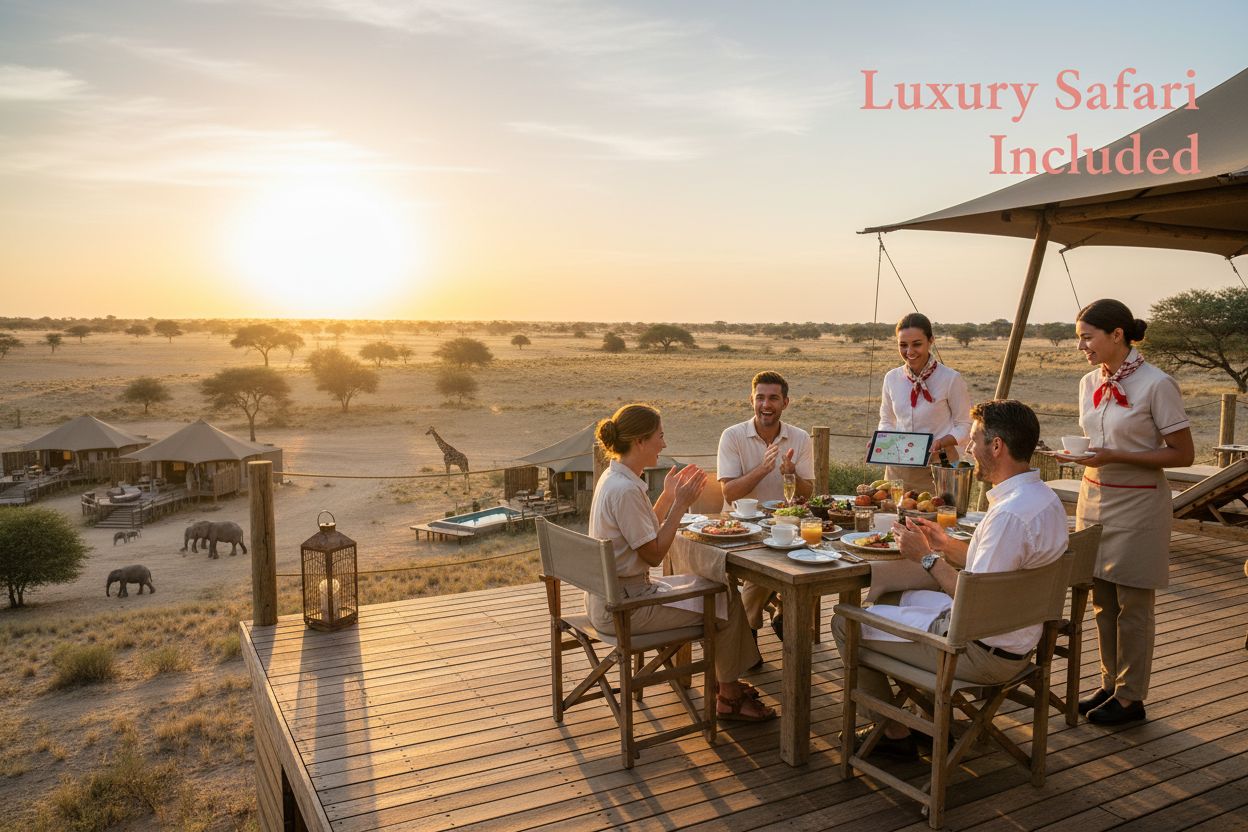
Understanding What is Included in Luxury Safaris
Explore what is included in luxury safaris, from exclusive accommodations to bespoke experiences that cater to discerning travelers.
Feb 24, 2026
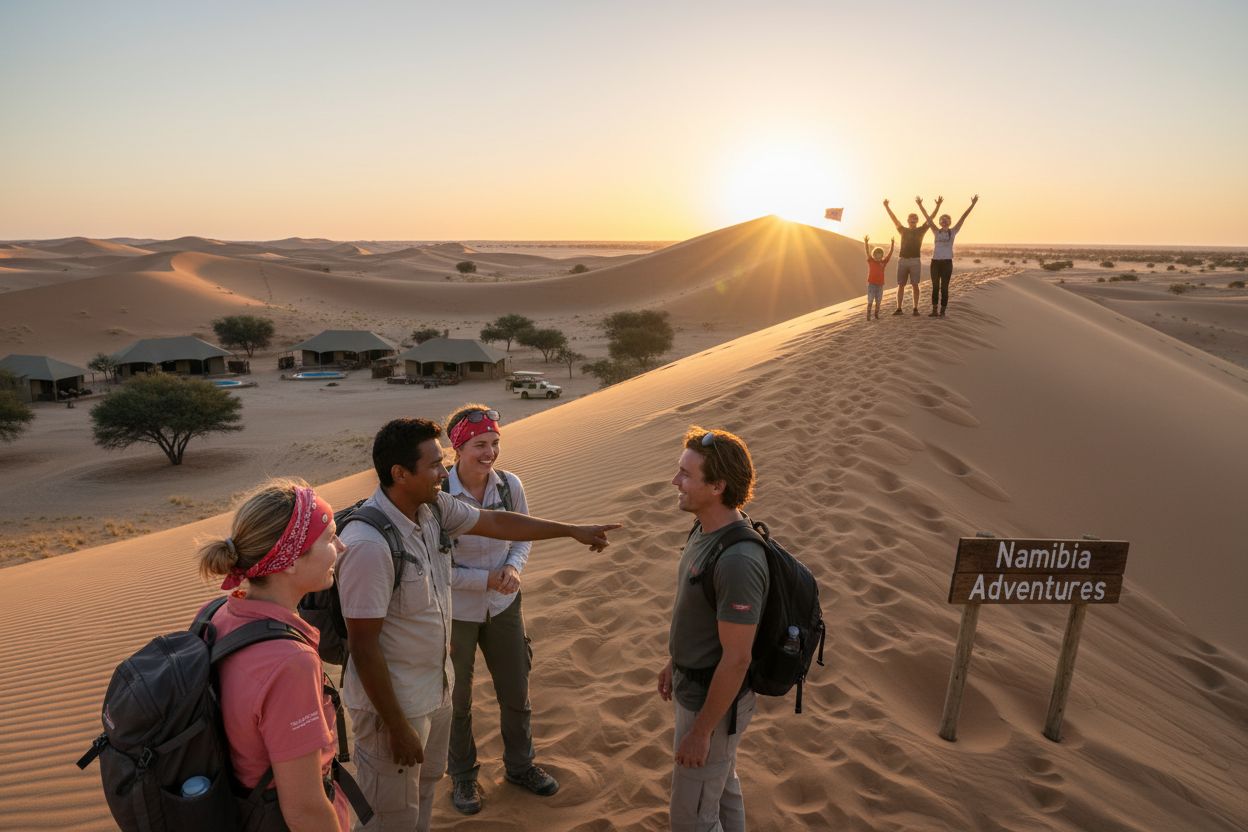
Why Namibia Adventures Matter: An In-Depth Look
Discover why Namibia adventures are essential for luxury travelers seeking unique, immersive experiences in nature and wildlife exploration.
Feb 23, 2026
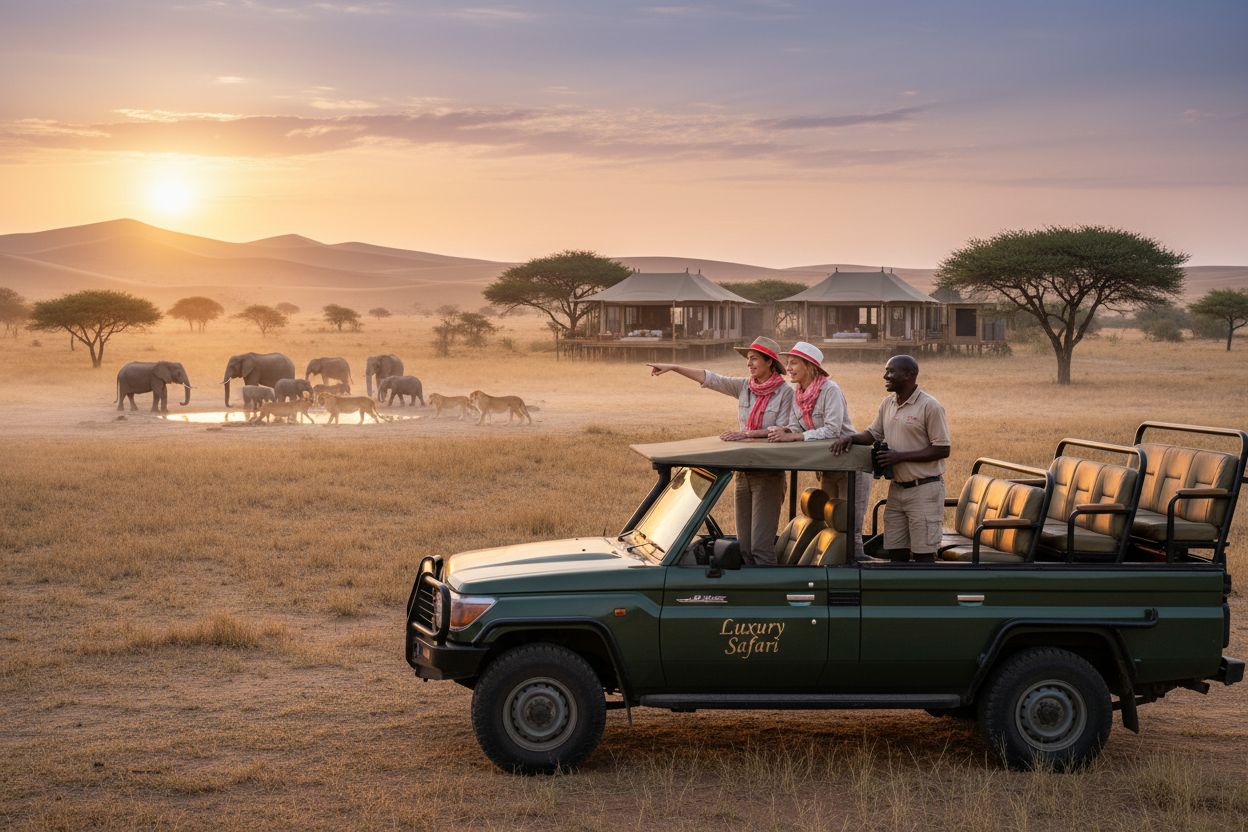
What to Expect on a Luxury Safari: A Comprehensive Guide
Discover what to expect on a luxury safari and gain a deeper understanding of the unique experiences that await you in the wild.
Feb 22, 2026
Understanding Namibia Safari Costs Explained
Explore Namibia safari costs explained to uncover what influences pricing and what it means for your adventure.
Feb 21, 2026
Understanding the Role of Safari Experts in Wildlife Travel
Explore the role of safari experts and gain a comprehensive understanding of how they enhance wildlife travel experiences for all types of travelers.
Feb 20, 2026
Guide organisation safari all inclusive : vivez l'aventure de vos rêves
Découvrez notre guide organisation safari all inclusive étape par étape pour planifier un voyage inoubliable au cœur de la nature.