
2026年7月27日
Discover the ultimate Namibia adventure guide! Plan your self-drive itinerary, explore stunning landscapes, and experience unforgettable safaris.
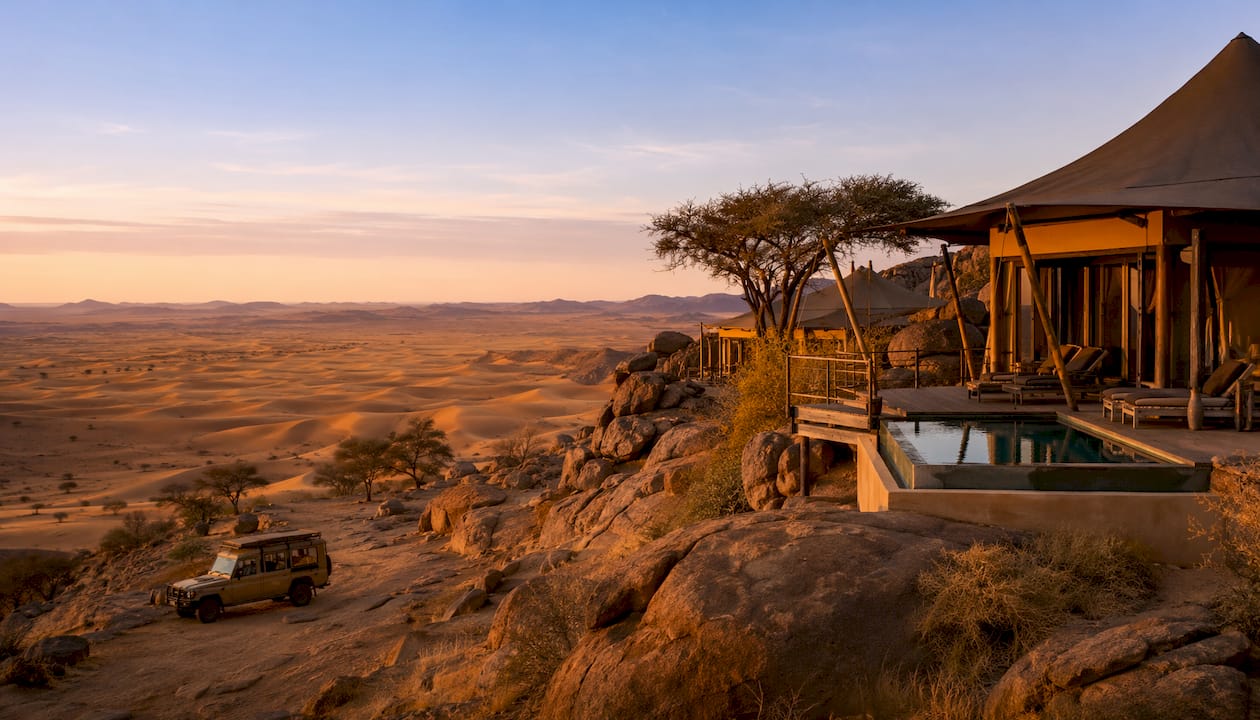
Namibia adventure guide: self-drive, safaris & private reserves
Start here: book your international flights to Windhoek’s Hosea Kutako International Airport, lock at least two nights each at Sossusvlei and Etosha, and decide whether you want the freedom of a self-drive 4x4 loop or the efficiency of a fly-in safari circuit. Those three decisions shape everything else. Namibia rewards bold, well-prepared independent travellers with landscapes so vast and wildlife so concentrated that even a week feels transformative. The Bradt Travel Guide to Namibia and National Geographic both rank it among Africa’s most accessible wilderness destinations for independent exploration, and the numbers back that up: Namibia’s road network is largely navigable in a well-equipped 4x4, and the country’s low population density means you can drive for hours without seeing another vehicle.
Your three trip types at a glance:
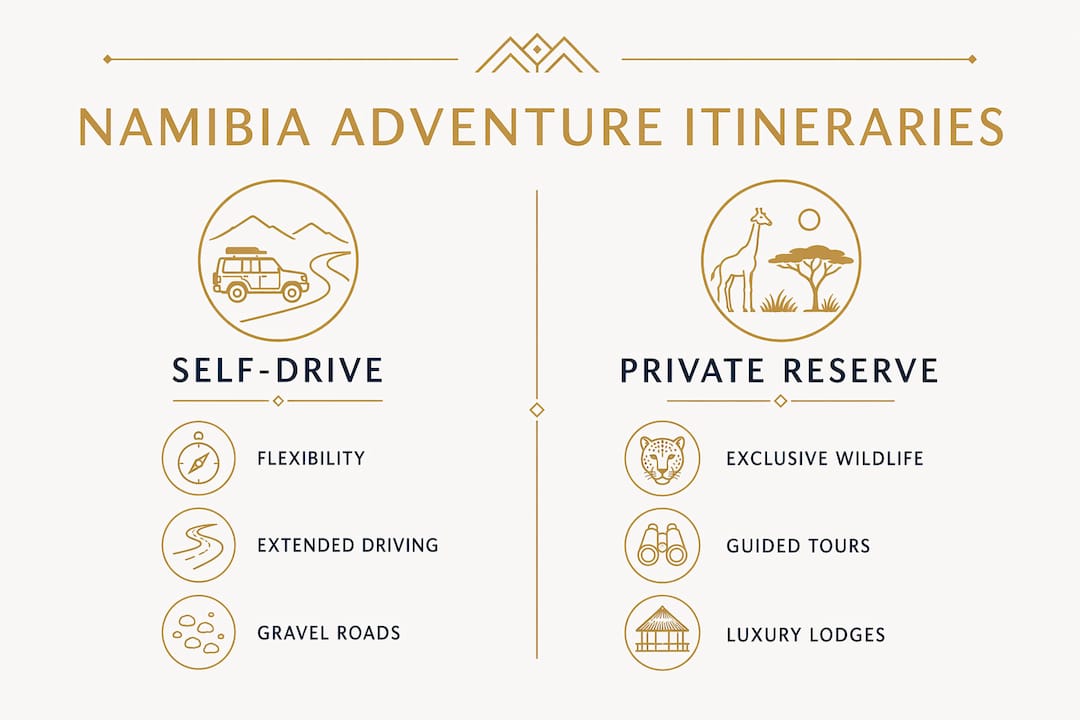
Self-drive loop (7–21 days): maximum freedom, lower daily cost, best for travellers who enjoy planning fuel stops and gravel roads. Ideal for Sossusvlei, Etosha, and Fish River Canyon.
Private-reserve fly-in circuit (5–14 days): time-efficient, exclusive wildlife access, night drives included. Best for photographers, couples, and anyone with a tight schedule.
Mixed self-drive + private reserve (10–21 days): the most popular format. Drive the main corridor, then insert one or two private-reserve nights to break long legs and guarantee a high-quality wildlife window.
Secretnamibia specialises in bespoke itineraries across all three formats, handling permits, private-reserve bookings, and fly-in logistics so you can focus on the experience.
Table of Contents
What do the best Namibia adventure itineraries actually look like?
What are the must-do adventures and where do you find them?
How do you book and manage the practical logistics?
How do you stay safe on roads, around wildlife, and in remote areas?
Why do private reserves give you a fundamentally different experience?
What should you pack for different seasons and activity types?
Key takeaways
What a travel planner actually learns from designing Namibia trips
How Secretnamibia helps you build the trip you actually want
Useful sources and further reading
What do the best Namibia adventure itineraries actually look like?
7-day fast highlights
This is the minimum viable Namibia trip. It covers the two headline destinations and leaves you wanting more, which is exactly the point.
Day 1: Fly into Windhoek, collect your 4x4, drive south toward Sesriem (4.5 hours on tar). Check into your lodge or managed camp.
Day 2: Pre-dawn entry to Sossusvlei. Climb Dune 45 at sunrise, then walk the bleached clay pan of Deadvlei before the heat peaks. Afternoon rest.
Day 3: Drive north toward Swakopmund (5 hours). Afternoon arrival, coastal walk, fresh seafood.
Day 4: Swakopmund activities: sandboarding on the dunes, quad biking, or a kayak trip to see Cape fur seals at Pelican Point.
Day 5: Drive northeast to Etosha (4–5 hours). Afternoon waterhole session at Okaukuejo or Halali.
Day 6: Full day in Etosha National Park. Self-drive waterhole circuit: lion, elephant, rhino, and gemsbok are all realistic sightings in the dry season.
Day 7: Morning game drive, then drive south to Windhoek for your return flight (4 hours).
Realistic driving note: Maps understate actual travel times on gravel roads. Add 30–40% to any GPS estimate on unpaved surfaces.
10–14-day balanced loop
Day(s) | Destination | Nights | Key Activity |
|---|---|---|---|
1–2 | Windhoek to Sossusvlei | 2 | Sunrise dunes, Deadvlei walk |
3–4 | Swakopmund / Walvis Bay | 2 | Coastal adventures, seal colony |
5–6 | Damaraland | 2 | Desert elephant tracking, Twyfelfontein rock art |
7 | Etosha National Park | 3 | Waterhole game drives, floodlit night viewing |
10–11 | Private reserve (mid-trip insert) | 2 | Night drives, off-road tracking, lodge stargazing |
14 | Fish River Canyon / Windhoek | 2–3 | Canyon hike, return drive |
Swap option: Replace Damaraland with Skeleton Coast for a more dramatic coastal experience. Note that the Skeleton Coast’s remoteness makes a fly-in leg worth considering for its most northern sections.
21-day slow and extended circuit
Experienced guides consistently recommend fewer destinations and longer stays. The transformative quiet of Namibia’s deserts reveals itself only when you stop rushing. A three-week itinerary lets you add Kaokoland, the NamibRand Nature Reserve (one of Africa’s designated dark sky reserves), and a multi-day Fish River Canyon hike (the 85 km trail requires a permit and runs May–September only).
An extended multi-week version follows the same backbone as the balanced loop but inserts extra nights at major stops, adds a private-reserve block, and includes rest days mid-trip. Long road transits, unplanned wildlife moments, and night skies you cannot photograph adequately often become the memories travellers talk about most.
What are the must-do adventures and where do you find them?
Sossusvlei and Deadvlei, Namib Desert
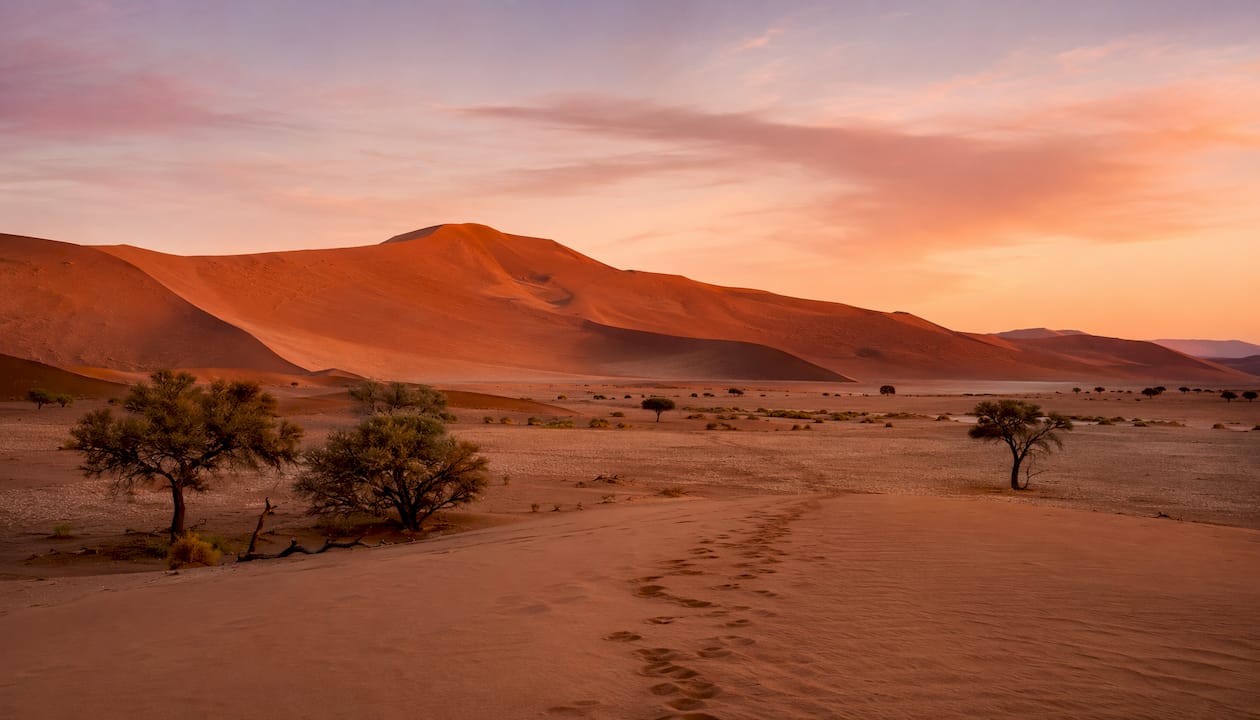
The towering red dunes of Sossusvlei, some rising over 300 metres, are Namibia’s most iconic image. Big Daddy and Dune 45 reward early risers with golden light and cool climbing conditions. Deadvlei’s ancient camel thorn trees, blackened against white clay and red sand, are among the most photographed scenes on the continent. The Namib Sand Sea is a UNESCO World Heritage Site, which tells you something about its ecological significance beyond the visual spectacle.
Time needed: Half a day minimum; a full day if you want to walk to Big Daddy.
Photography tip: Arrive at the park gate before it opens. The first 90 minutes of light are irreplaceable.
Desert elephant tracking, Damaraland
Namibia’s desert-adapted elephants roam the dry riverbeds of Damaraland in small family groups, covering enormous distances between water sources. Guided tracking on foot or by vehicle is one of the most intimate wildlife encounters in Africa. These are not fenced animals.
Time needed: Full day. Most operators offer half-day and full-day options from lodges in the Huab River area.
Etosha National Park
Etosha’s waterhole system concentrates wildlife in the dry months in a way that few parks in Africa can match. The vast salt pan, visible from space, creates a surreal backdrop for elephant herds, black rhino, lion, and hundreds of bird species. Self-drive is entirely viable here: the roads are well-maintained and the waterholes are mapped. Allocate at least two nights, ideally three.
Pro Tip: The floodlit waterhole at Okaukuejo camp operates through the night. Set an alarm for 2 AM and walk out in your pyjamas. You may find a black rhino drinking three metres from the fence.
Skeleton Coast
Dramatic, foggy, and genuinely remote, the Skeleton Coast is where the cold Benguela Current meets the Namib Desert. Shipwrecks, Cape fur seal colonies, and desert-adapted lions make it unlike anywhere else in Africa. The southern section is accessible by self-drive; the northern wilderness area requires a fly-in or a guided expedition.
Time needed: Two to three days minimum to feel the atmosphere.
Tok Tokkie Trails, NamibRand Nature Reserve
A multi-day guided walking trail through the southern Namib, the Tok Tokkie Trails cover 35 km over three days, with nights in simple desert camps. This is one of the few places in Namibia where you walk the landscape rather than drive through it. The NamibRand is also Africa’s first wilderness quiet park, which means the silence is protected as deliberately as the wildlife.
Fish River Canyon
The second-largest canyon in the world, Fish River Canyon in southern Namibia offers a scale that takes a moment to absorb. The viewpoints are accessible by self-drive; the multi-day hiking trail (85 km, May–September, permit required) is one of Africa’s great wilderness walks. Golden hour light on the canyon walls is extraordinary.
Photography tip: Late afternoon from the main viewpoint. The shadows extend across the canyon floor and the scale becomes suddenly clear.
Stargazing, NamibRand and private reserves
Namibia has some of the darkest skies on Earth. The NamibRand Dark Sky Reserve offers observatory-quality conditions, and many private reserve lodges include guided stargazing sessions with telescopes. Pack a warm layer: temperatures drop sharply after sunset, especially June through August.
How do you book and manage the practical logistics?
Flights and arrival
Windhoek’s Hosea Kutako International Airport is the main entry point for international travellers. Most US travellers connect via Johannesburg (O.R. Tambo International) or Frankfurt. Book flights at least four to six months ahead for the peak dry season (June–October). The airport is 45 km from Windhoek city centre; most car hire companies have airport desks.
Transport: self-drive vs fly-in
Self-drive safaris suit travellers who want flexibility and are comfortable with long gravel roads. A 4x4 with high clearance is non-negotiable for most routes outside the main tar roads. Hire tips: take the most comprehensive insurance available, confirm it covers tyre and underbody damage, and always carry a spare jerry can and a quality compressor. Gravel roads slow progress significantly; plan for 80 km/h maximum on good gravel and much less on corrugated surfaces.
Fly-in legs make sense for the Skeleton Coast’s northern wilderness, Kaokoland, and any situation where road time would eat into your wildlife days. Secretnamibia can arrange fly-in connections as part of a mixed itinerary.
Accommodation
Managed campsites: The most affordable option. Operators like Gondwana Collection run well-equipped sites with ablution facilities. Wild camping in the uncontrolled sense is discouraged; managed camping experiences give you immersion without the logistical burden.
Self-catering lodges: Mid-range, widely available along the main tourist circuit.
Private reserve lodges: Premium, all-inclusive, and worth every dollar for the exclusive access they provide.
Permits, park fees, and typical budgets
Etosha and other national parks charge daily conservation fees, payable at the gate in Namibian dollars (NAD). Budget roughly as follows:
Budget level | Daily cost (USD, approximate) | Accommodation style |
|---|---|---|
Backpacker | $70–$90 | Managed campsite, self-catering |
Mid-range | $200–$300 | Lodge, half-board |
Luxury safari | $900–$1,200 | Private reserve, all-inclusive |
Note: These are indicative ranges. Actual costs vary by season, operator, and itinerary. Confirm current park fees with the Namibia Tourism Board before departure.
Seasonality
Month | Wildlife | Landscapes | Photography | Notes |
|---|---|---|---|---|
May–October | Excellent | Dry, golden | Outstanding | Peak dry season; book lodges early |
June–August | Best | Stark, cold nights | Best light | Peak season; coldest nights |
November–April | Good (green) | Lush, dramatic skies | Dramatic | Wet season; some roads flood |
January–March | Calving season | Green Etosha | Challenging | Fewer crowds, lower rates |
Pre-departure booking checklist
Flights and airport transfers confirmed
4x4 hire booked with full insurance (tyre and underbody cover verified)
Etosha and national park accommodation reserved (fills months ahead in peak season)
Private reserve nights locked in
Travel insurance purchased (medical evacuation cover is non-negotiable in remote areas)
Yellow fever vaccination certificate if transiting through a risk country
Namibian SIM card or satellite communicator arranged
USD cash for tips; NAD for park fees and local purchases
How do you stay safe on roads, around wildlife, and in remote areas?
Road safety checklist
Never drive after dark on gravel roads. Wildlife on the road is a serious hazard, and distances between help are vast.
Check tyre pressure before every long gravel leg. The correct pressure, a quality compressor, and a visible spare tyre strategy significantly reduce the risk of getting stranded.
Fill up at every fuel station you pass. Gaps between stations can exceed 300 km on some routes.
Carry at least 20 litres of extra water per person for any remote leg.
Share your daily route with your lodge or a trusted contact each morning.
Wildlife safety rules
Stay in your vehicle in unfenced areas unless a guide instructs otherwise.
Never approach wildlife on foot without a qualified guide.
Keep a minimum distance of 20 metres from large mammals at waterholes.
Do not feed any animal, ever. It habituates them to humans and creates dangerous situations.
At night, use a torch before stepping outside your tent or chalet.
Health and vaccinations
The CDC recommends that travellers to Namibia are up to date on routine vaccinations and consider hepatitis A, typhoid, and malaria prophylaxis depending on their specific itinerary. Malaria risk is highest in the north (Caprivi Strip, Etosha) during the wet season. Consult a travel health clinic at least six weeks before departure.
Namibia’s extreme diurnal temperature swings demand preparation: desert days can reach 40°C while June nights drop near freezing. Carry sun protection, a high-SPF lip balm, and a warm insulated layer for evenings.
Emergency contacts and remote communications
Namibian Police emergency: 10111
Medical rescue (MedRescue Namibia): +264 61 230 505
Most private reserves have satellite phones and emergency protocols; confirm these at check-in.
For remote routes (Kaokoland, northern Skeleton Coast), a personal satellite communicator such as a Garmin inReach is strongly recommended. Cell coverage is absent across large portions of the country.
Responsible travel
Stick to designated tracks in sensitive desert ecosystems. Tyre marks in the Namib can persist for decades.
Buy directly from community craft markets rather than roadside intermediaries where possible.
Ask permission before photographing people, particularly in traditional communities.
Carry out all waste from remote campsites. Leave no trace applies absolutely here.
Choose operators who contribute to conservation programmes and community employment.
Why do private reserves give you a fundamentally different experience?
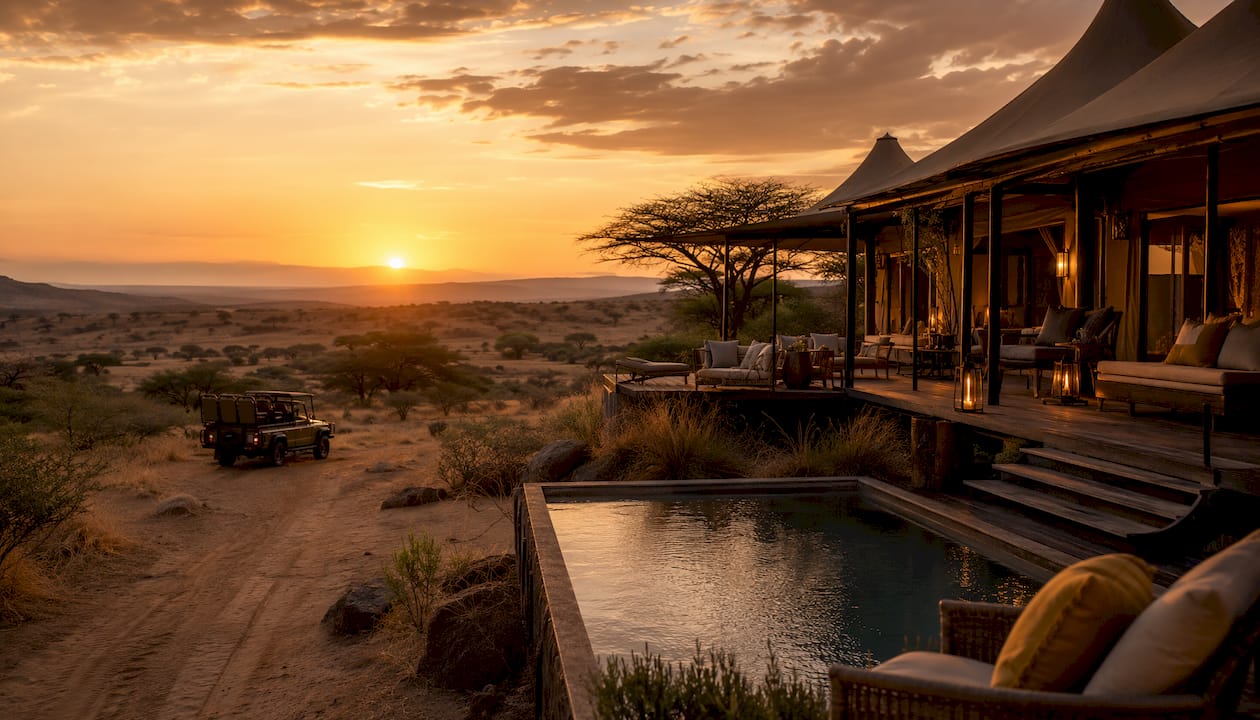
The honest answer: national parks like Etosha are magnificent, but they operate under rules that limit what you can do. You stay on designated roads, you cannot drive after dark, and you share waterholes with dozens of other vehicles during peak season. Private reserves operate under a completely different framework.
What private reserves enable that national parks cannot:
Night drives: Nocturnal game drives reveal leopard, aardvark, brown hyena, and porcupine. These animals are essentially invisible to day-trippers in national parks.
Off-road tracking: Guides can leave the track to follow fresh spoor, getting you within ethical proximity of animals that would otherwise disappear into the bush.
Personalised guiding: Your vehicle, your pace, your interests. A private guide who knows you want to photograph ground squirrels will spend 20 minutes on them without apology.
Lodge-based stargazing: Many private reserves in the NamibRand and southern Namib offer telescope sessions and guided sky tours as standard evening activities.
Conservation contribution: Private reserves in Namibia operate under conservancy agreements that channel revenue into anti-poaching, habitat restoration, and community employment. Choosing a private reserve is a direct conservation act.
When to choose a private reserve over a national park:
If you have a short schedule (five to seven days), a private reserve delivers more concentrated, exclusive wildlife encounters per day than a self-drive national park circuit. For photographers, the off-road access and golden-hour flexibility are worth the premium alone. For families with younger children, the structured, guided environment is safer and more manageable.
Pro Tip: Insert one private-reserve block mid-itinerary rather than saving it for the end. It breaks a long driving leg, guarantees a high-quality wildlife window, and gives you a comfortable buffer if weather or road conditions delay your schedule.
The conservation and community impact of private reserves in Namibia extends well beyond the guest experience. Many conservancies employ local trackers, guides, and camp staff, creating economic incentives for communities to protect wildlife rather than compete with it. That is a story worth being part of.
What should you pack for different seasons and activity types?
Seasonal clothing
June–August (peak dry season): Warm fleece or down jacket, thermal base layer, beanie and gloves for early morning game drives. Daytime temperatures are pleasant; nights are genuinely cold. Water bottles can freeze overnight in open vehicles.
November–April (green season): Lightweight, breathable clothing. A waterproof shell for afternoon thunderstorms. Insect repellent with DEET for malaria-risk areas.
Year-round desert days: High-SPF sunscreen, UV-protective long sleeves, wide-brim hat, quality sunglasses.
Activity-specific kit
Sandboarding and dune activities: Closed-toe shoes, goggles or sunglasses, a buff or neck gaiter for sand.
Hiking (Fish River Canyon, Tok Tokkie Trails): Broken-in trail shoes, trekking poles, a 3-litre hydration pack, blister kit.
Photography: Extra batteries (cold nights drain them fast), lens cloths for dust and coastal fog, a polarising filter for dune shots, a sturdy tripod for night sky work.
Wildlife viewing: Binoculars (8x42 minimum), a field guide to Namibian mammals and birds.
Vehicle and camping essentials
Spare tyre (full-size, not a space-saver) plus a second spare for remote routes
Tyre compressor and puncture repair kit
Recovery gear: sand tracks, tow rope, high-lift jack
Jerry can (20 litres minimum)
Water storage (at least 10 litres per person beyond daily drinking supply)
Portable stove and fuel canisters
Headlamp with spare batteries
First-aid kit including blister treatment, rehydration sachets, and a broad-spectrum antibiotic (prescribed by your travel doctor)
Pre-departure timing
Book peak-season lodge and private-reserve nights at least six months ahead. June–August fills fast.
Reserve Etosha rest camps through the Namibia Wildlife Resorts portal as soon as your dates are confirmed.
Apply for the Fish River Canyon hiking permit (May–September season) at least three months in advance.
Visit a travel health clinic six to eight weeks before departure for vaccinations and malaria advice.
Arrange travel insurance with medical evacuation cover before any deposit is paid.
Pro Tip: Pack a multi-day tours mindset rather than a highlights checklist. The travellers who get the most from Namibia are the ones who build in buffer days and let the landscape set the pace.
Key takeaways
Namibia rewards travellers who plan early, drive prepared, and resist the urge to cram too many destinations into a single trip.
Point | Details |
|---|---|
Book early for peak season | June–August lodges and private reserves fill months in advance; secure accommodation before flights. |
Self-drive vs fly-in decision | Choose self-drive for freedom and budget; choose fly-in or private reserve for time efficiency and exclusive wildlife access. |
Insert a private-reserve night | One mid-itinerary private-reserve stay breaks long drives and guarantees a high-quality, guided wildlife experience. |
Pack for temperature extremes | Desert days reach 40°C; June–August nights drop near freezing. Carry both sun protection and insulated layers. |
Secretnamibia for bespoke planning | Secretnamibia designs custom itineraries combining self-drive, fly-in legs, and private-reserve nights across Namibia. |
What a travel planner actually learns from designing Namibia trips
The single most consistent mistake independent travellers make is treating Namibia like a European road trip where you can add one more stop. You cannot. The distances are real, the roads are demanding, and the country has a way of slowing you down whether you planned for it or not.
The recommendation to insert a private-reserve night mid-itinerary is not a luxury upsell. It is a practical contingency. If a tyre blows on a remote gravel road and you lose four hours, a private-reserve night absorbs that delay without collapsing the rest of your schedule. It also guarantees that even if Etosha was crowded or the light was wrong at Sossusvlei, you have one night of guaranteed, intimate wildlife encounters with a guide who knows the land.
The other lesson: trust the silence. Travellers who slow down and spend an extra night in the NamibRand or along the Skeleton Coast consistently report those unplanned hours as the emotional centre of their trip. A sunrise you watched alone from a dune, a brown hyena crossing the road at 11 PM, the sound of absolutely nothing for an hour. These are not things you can schedule. They happen when you leave room for them.
A planner’s warning: If road conditions change or a seasonal flood closes a route, do not try to push through. Namibia has enough alternative routes and enough to see that a detour is never a failure. Have your lodge’s satellite number saved, know your nearest fuel stop, and carry the flexibility to change direction. The travellers who struggle are the ones who cannot let go of the original plan.
How Secretnamibia helps you build the trip you actually want
Secretnamibia’s bespoke planning service is the practical alternative to spending weeks piecing together permits, private-reserve availability, and fly-in logistics yourself. The team designs itineraries that combine self-drive freedom with private-reserve exclusivity, handling the details that independent travellers most often get wrong: which reserves have genuine night-drive access, which fly-in operators are reliable, and which lodges are worth the premium.
An initial enquiry with Secretnamibia produces a custom itinerary outline, suggested block nights, and a clear breakdown of what is included. You can explore the full range of luxury safari features or go straight to the private reserve and expert planning guide to understand exactly what a bespoke Namibia trip looks like. When you are ready to talk specifics, send an enquiry and the team will build your itinerary from scratch.
Useful sources and further reading
Namibia Tourism Board Travel Guide: The official planning PDF. Best for park fees, regional overviews, and accommodation categories. Use this to verify current entry requirements and conservation fees.
Rough Guides: Namibia travel tips: Practical first-timer advice on driving, packing, and seasonality. Particularly strong on road conditions and the case for slower itineraries.
Rough Guides: How to plan a trip to Namibia: Detailed logistics guide covering vehicle hire, temperature management, and tyre strategy. Read this before you book your 4x4.
Lonely Planet: Guide to Namibia: Strong on Etosha and Skeleton Coast context. Good for understanding which regions suit which travel styles.
UK Government Foreign Travel Advice: Namibia: Entry requirements, visa guidance, and safety advisories. US travellers should cross-reference with the US State Department, but this source is detailed and frequently updated.
CDC: Namibia traveller health: Vaccination recommendations, malaria risk zones, and health precautions. Consult this at least six weeks before departure.
NamibRand Dark Sky Reserve: Background on the reserve’s designation and what it means for stargazing conditions. Useful for planning a stargazing night.
Sossusvlei.org: Detailed information on dune access, shuttle bookings, and timing. Use this to plan your Sossusvlei morning logistics.
UNESCO: Namib Sand Sea: The World Heritage listing with ecological context. Good background for understanding why the Namib deserves more than a single morning.
Secretnamibia: private reserve safaris: Secretnamibia’s own guide to private reserve features, conservation partnerships, and bespoke itinerary options. Start here if you are considering a private-reserve stay.
Secretnamibia: self-drive safaris: Product page for self-drive itinerary support, vehicle logistics, and route planning assistance.
Recommended
相关
萨法里指南
2025年10月30日
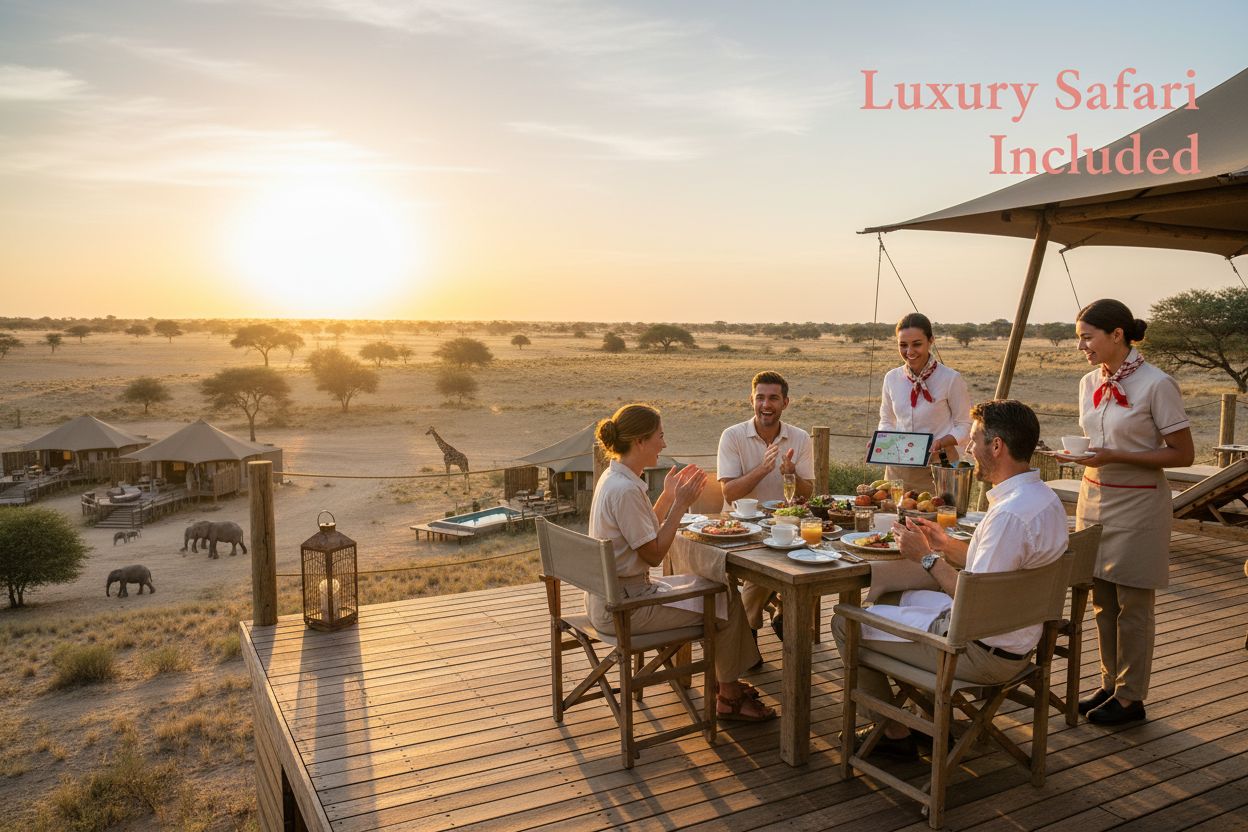
Understanding What is Included in Luxury Safaris
Explore what is included in luxury safaris, from exclusive accommodations to bespoke experiences that cater to discerning travelers.
2026年2月24日
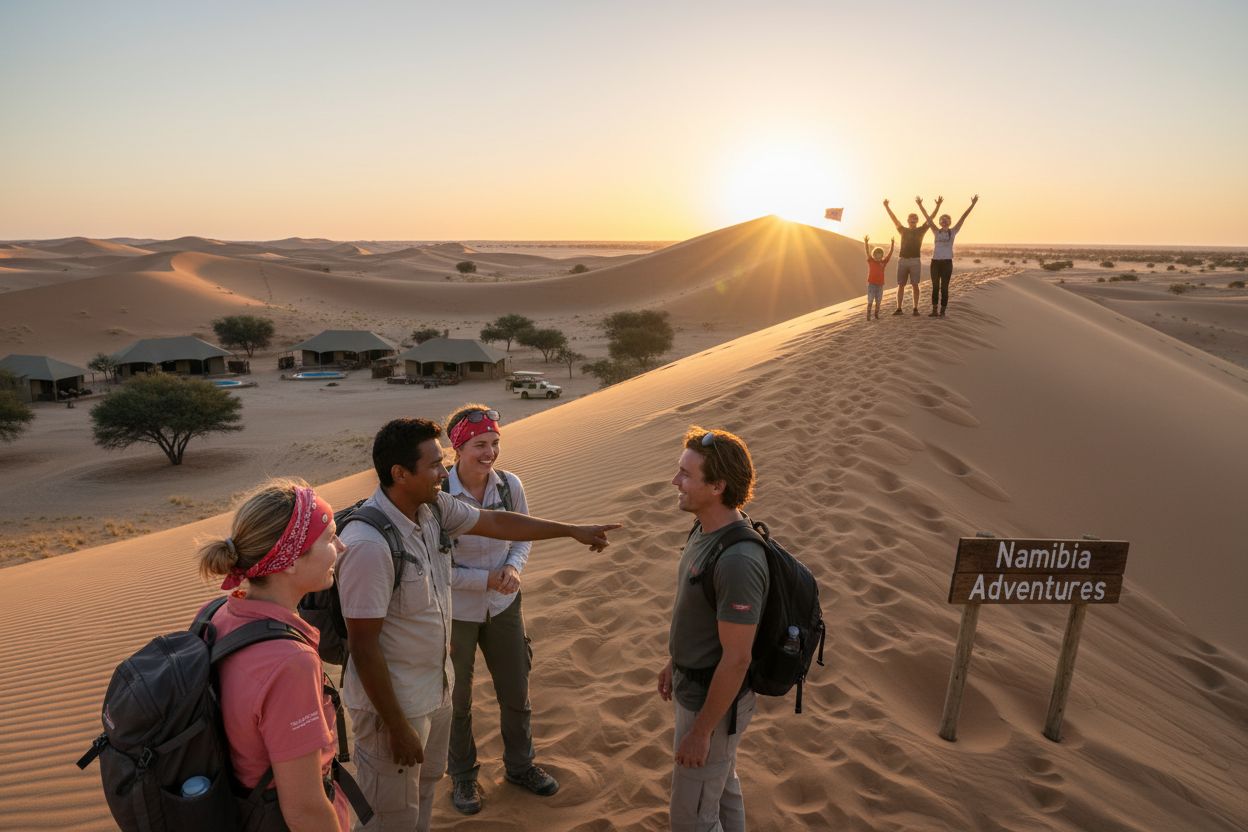
Why Namibia Adventures Matter: An In-Depth Look
Discover why Namibia adventures are essential for luxury travelers seeking unique, immersive experiences in nature and wildlife exploration.
2026年2月23日
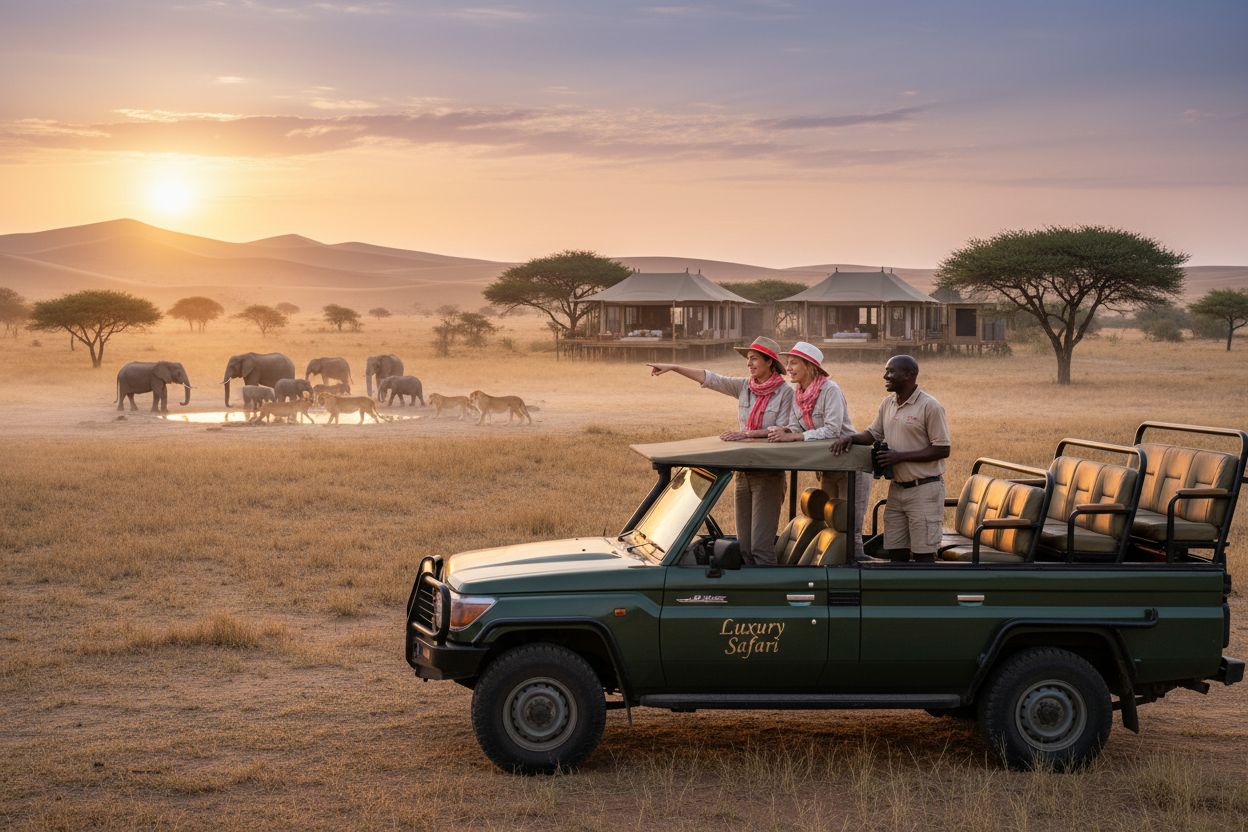
What to Expect on a Luxury Safari: A Comprehensive Guide
Discover what to expect on a luxury safari and gain a deeper understanding of the unique experiences that await you in the wild.
2026年2月22日
Understanding Namibia Safari Costs Explained
Explore Namibia safari costs explained to uncover what influences pricing and what it means for your adventure.
2026年2月21日
Understanding the Role of Safari Experts in Wildlife Travel
Explore the role of safari experts and gain a comprehensive understanding of how they enhance wildlife travel experiences for all types of travelers.
2026年2月20日
Guide organisation safari all inclusive : vivez l'aventure de vos rêves
Découvrez notre guide organisation safari all inclusive étape par étape pour planifier un voyage inoubliable au cœur de la nature.