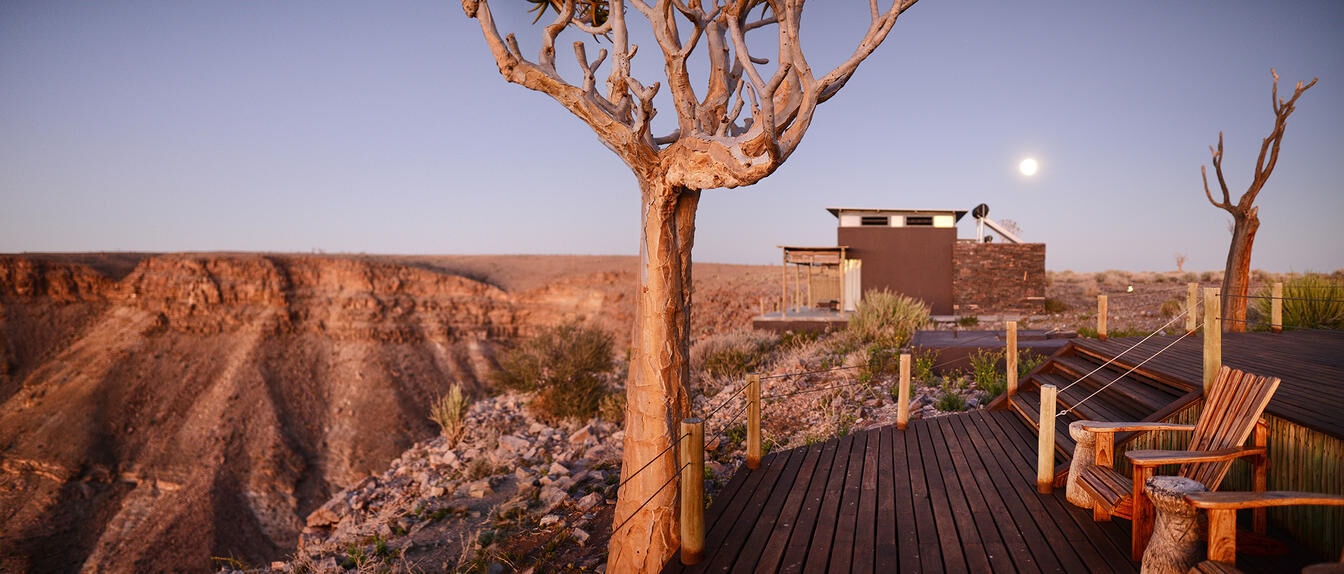
Namibia’s Fish River Canyon ranks as the second-largest on Earth, its 160 km length and 550 m depth dwarfing most visitors’ expectations. This destination guide explores the viewpoints that reward a detour, the five-day Fish River Hiking Trail and its tight seasonal window from April to September, plus the restorative hot springs at Ai-Ais. Includes a direct answer to “How big is the Fish River Canyon?” and routing ideas for self-drive explorers.
Approaching the rim after hours of driving across southern Namibia’s arid plateau, the earth simply falls away. One moment the landscape stretches flat and golden under acacia shade; the next, a colossal gash reveals layered rock strata descending hundreds of metres to a narrow ribbon of river far below. The scale hits physically, a reminder that this southern Namibian landmark has been carved over some 500 million years by water, wind and tectonic forces.
The Geology and Scale of Fish River Canyon
Stretching 160 kilometres in length, up to 27 kilometres wide and plunging 550 metres at its deepest point, the canyon formed through a combination of ancient river erosion and the Gondwana breakup that lifted the African plateau. The Fish River itself snakes along the base for much of the year, reduced to isolated pools during the dry months. Its meanders have exposed rock layers that tell a story reaching back to Precambrian times, with colours shifting from deep reds and ochres to pale quartzites depending on the light.
The silence here carries weight. Stand at the edge at first light and the only sounds are your own breath and the occasional call of a Verreaux’s eagle riding the thermals far below.
Many travellers combine their visit with explorations of the wider luxury safaris that Secret Namibia designs across the country, allowing the canyon to form a dramatic contrast to the dunes of Sossusvlei or the wildlife-rich waterholes of Etosha further north.
How Big Is the Fish River Canyon?
The Fish River Canyon measures approximately 160 kilometres long, reaches a maximum width of 27 kilometres, and drops to a depth of 550 metres at its deepest point. By these dimensions it ranks as the second-largest canyon on the planet after Arizona’s Grand Canyon. Its scale becomes most apparent when viewed from the main viewpoints or during the multi-day hike along its floor, where the towering walls create a sense of profound isolation.
Must-See Viewpoints Along the Canyon Rim
The most accessible and rewarding vantage points lie within a compact area near the northern entrance. Hell’s Corner offers the first dramatic reveal, where the river makes a sharp bend beneath sheer cliffs. Further along, the Main Viewpoint provides the classic postcard panorama, especially striking at sunrise when the rock faces glow with warm light.
Less visited but equally memorable is the Sulphur Springs viewpoint, which requires a short drive on a rough track yet rewards the effort with a perspective looking directly down into a side ravine where steam often rises from geothermal vents. Each stop reveals a different character of the canyon, from the broad sweep of the main gorge to intimate folds where erosion has created natural amphitheatres.
These lookouts are not merely places to take photographs. They invite stillness, a chance to absorb the sheer age and power of the landscape before continuing your Namibian journey.
For those exploring independently, these viewpoints are easily reached via well-maintained gravel roads suitable for most vehicles. Secret Namibia frequently incorporates them into self-drive itineraries that allow travellers to set their own pace through the south.
The Famous Fish River Hiking Trail: What to Expect
Descending more than 300 metres via a steep path near the northern end, the five-day, 85-kilometre trail follows the riverbed to the southern end near Ai-Ais. Hikers carry all their own gear, camp beside natural pools, and navigate boulder fields, sandy stretches and occasional river crossings. The experience is raw and immersive, with nights spent under stars framed by canyon walls that block out all external light.
Wildlife sightings are modest but special: klipspringer on the cliffs, occasional Hartmann’s mountain zebra, and the endemic fish that give the river its name. The real reward lies in the changing light, the satisfaction of self-reliance, and the camaraderie that develops among small hiking groups sharing the same challenging route.
Preparation is essential. Participants must be medically fit, carry a certificate obtained within 40 days of departure, and book permits well in advance through Namibia Wildlife Resorts. The trail is not graded for beginners; solid fitness and previous multi-day hiking experience greatly enhance enjoyment and safety.
Seasonal Window for Hiking and Visiting
The official hiking season runs from 1 April to 30 September, when daytime temperatures remain manageable and the risk of flash flooding drops dramatically. Outside these months the canyon floor can exceed 40 degrees Celsius, and sudden summer thunderstorms make the route dangerous. Even for non-hikers, the cooler winter months deliver the most comfortable conditions for rim walks and photography.
April and May often see lingering water in the pools after the rainy season, while August and September tend to be the driest and clearest. Whatever the month within the window, early starts and late afternoons yield the softest light and fewest other visitors at the viewpoints.
Time your visit for the shoulder weeks of the season and you may have entire stretches of the rim to yourself, hearing only the wind moving through the rocks.
Ai-Ais Hot Springs: Recovery at the Canyon’s Southern End
At the trail’s conclusion lies Ai-Ais, where mineral-rich hot springs bubble from the earth at temperatures reaching 60 degrees Celsius. The name means “burning water” in the local Nama language, and the pools provide welcome relief for tired muscles after days on the trail. The resort offers simple accommodation, shaded campsites and a restaurant, making it an ideal place to rest before rejoining the road network.
Even those who do not hike the full trail can drive to Ai-Ais to enjoy the springs and the southern perspectives of the canyon. The contrast between the cool, clear water of the springs and the arid surroundings creates a soothing end to any southern Namibian exploration.
Routing Ideas for Self-Drive Explorers
Most visitors approach Fish River Canyon from Keetmanshoop or via the scenic B1 from Windhoek, combining it with visits to the quiver tree forest near Keetmanshoop and the ghost town of Kolmanskop further south. A typical loop might begin in Windhoek, head south through the Kalahari fringes, spend two nights at the canyon, then continue to the Sperrgebiet or Lüderitz before returning via the Namib Naukluft.
Self-drive travellers appreciate the freedom to linger at favourite viewpoints or adjust plans according to the light. Well-maintained 4x4 rental vehicles make light work of the final approach roads, and Secret Namibia offers detailed route notes drawn from three decades of combined experience, booking directly with camps and lodges rather than through layers of agents.
For those whose Namibian journey sparks interest in neighbouring countries, our sister brand Encounters Africa specialises in seamless extensions across South Africa, Botswana, Kenya, Tanzania, Rwanda, Uganda, Zambia and Zimbabwe. Their Uganda-focused page at https://encountersafrica.com/destinations/uganda illustrates the breadth of experiences available beyond Namibia’s borders.
Planning Your Fish River Canyon Experience with Secret Namibia
Whether you choose to stand at the rim at dawn, tackle the demanding hiking trail, or simply soak weary limbs in the steaming springs at Ai-Ais, Fish River Canyon leaves an indelible impression. Its vastness recalibrates expectations of what a landscape can be, and its quiet grandeur rewards those who travel with open eyes and patient feet.
Secret Namibia crafts personalised self-drive tours and self-drive tours that weave the canyon into broader Namibian narratives, always tailoring the pace and depth of experience to each traveller’s wishes. With direct relationships across a handpicked collection of properties, we ensure every detail aligns with your interests, whether you travel as a couple seeking solitude or a family drawn to shared adventure.
If the thought of standing above one of Earth’s great geological wonders stirs something in you, we would be delighted to design the perfect Namibian itinerary. For discerning travellers seeking a private safari beyond our set itineraries in Namibia, we invite you to contact us directly. We specialise in designing exceptional, tailor-made journeys for individuals, couples, families, and private groups of up to eight guests. Drawing on our handpicked network of distinguished camps and lodges, we curate every detail with precision and care, creating a seamless, deeply personal safari experience shaped entirely around your preferences, pace, and budget.
Plan your safari: Enquire with Secret Namibia for tailor-made Namibia journeys. For safaris beyond Namibia, in Botswana, South Africa, Kenya, Tanzania, Rwanda, Uganda, Zambia and Zimbabwe, speak to the travel designers at Encounters Africa, Secret Namibia's sister company for the rest of Africa.