
Jul 12, 2026
Discover essential visiting Etosha National Park advice. Maximize your wildlife encounters with tips on timing, accommodation, and guided drives.
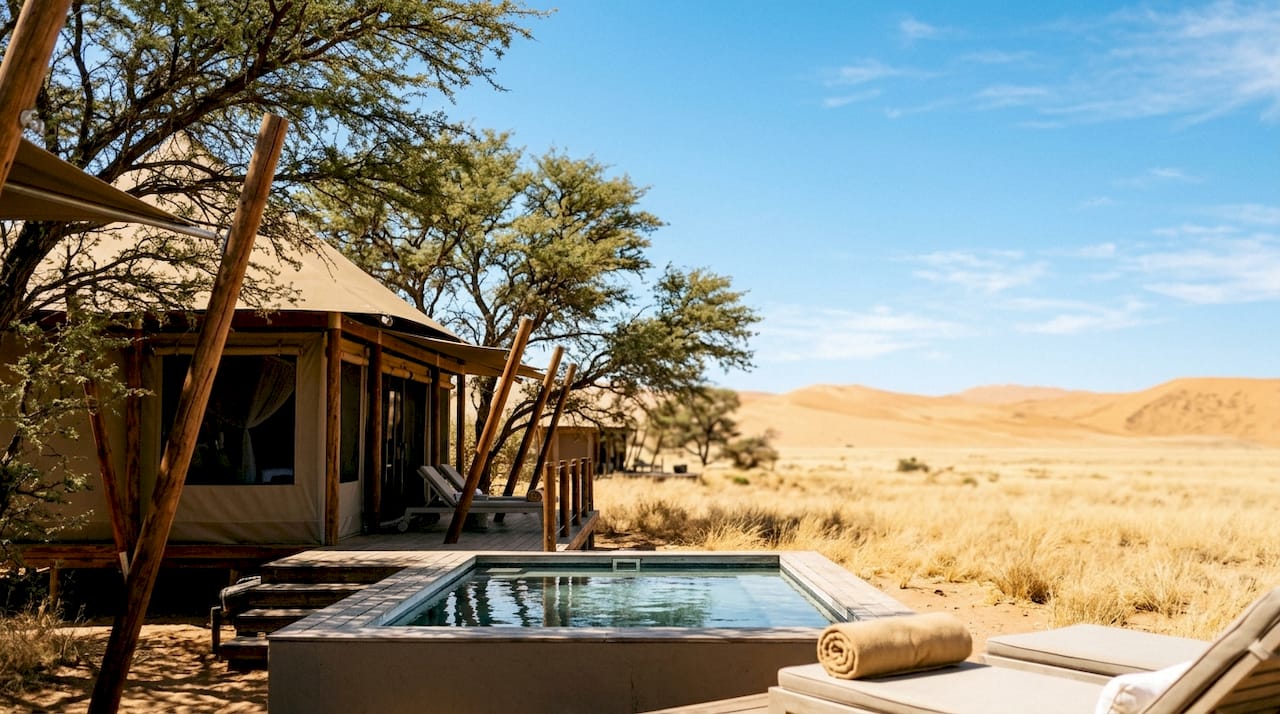
Visiting Etosha National Park: your complete safari guide
TL;DR:
Etosha National Park is one of Africa’s top wildlife sanctuaries, attracting animals mainly during the dry season. Visitors should plan for at least three nights, combining inside and outside lodge stays for optimal experience, and prefer the dry season from July to September for the best wildlife sightings. Self-driving is highly feasible, but night drives and patience at waterholes greatly enhance the safari adventure.
Etosha National Park is defined as one of Africa’s greatest wildlife sanctuaries, a vast, shimmering salt pan surrounded by savanna where lions, elephants, black rhino, and hundreds of bird species converge at ancient waterholes. The best visiting Etosha National Park advice starts with a single truth: timing and patience matter more than anything else. Plan for a minimum of three nights, choose your accommodation wisely, and combine a self-drive with at least one guided night drive. Get those three things right, and Etosha will reward you with wildlife encounters that stay with you for life.
What is the best visiting Etosha National Park advice for first-timers?
The dry season from May to October is prime for wildlife viewing. During this period, surface water disappears across the park, forcing animals to concentrate at the permanent waterholes. You can sit at a single waterhole for an hour and watch elephants, zebra, giraffe, and black rhino arrive in succession. That kind of sighting is almost impossible to replicate in the green season.
A minimum stay of three days is recommended, with four to five days giving you the depth to explore the western, central, and eastern zones without rushing. Two nights is the absolute minimum to avoid a frantic, unsatisfying visit. Four days is the definitive first-timer itinerary, and most experienced safari planners agree on that number.
Accommodation choice shapes your entire experience. Staying inside the park gives you access to floodlit waterholes at night, a genuinely extraordinary experience. Staying outside offers more comfort, better food, and often more luxurious lodging. The best strategy combines both: one night inside for the waterhole magic, and the remaining nights outside for comfort and quality.
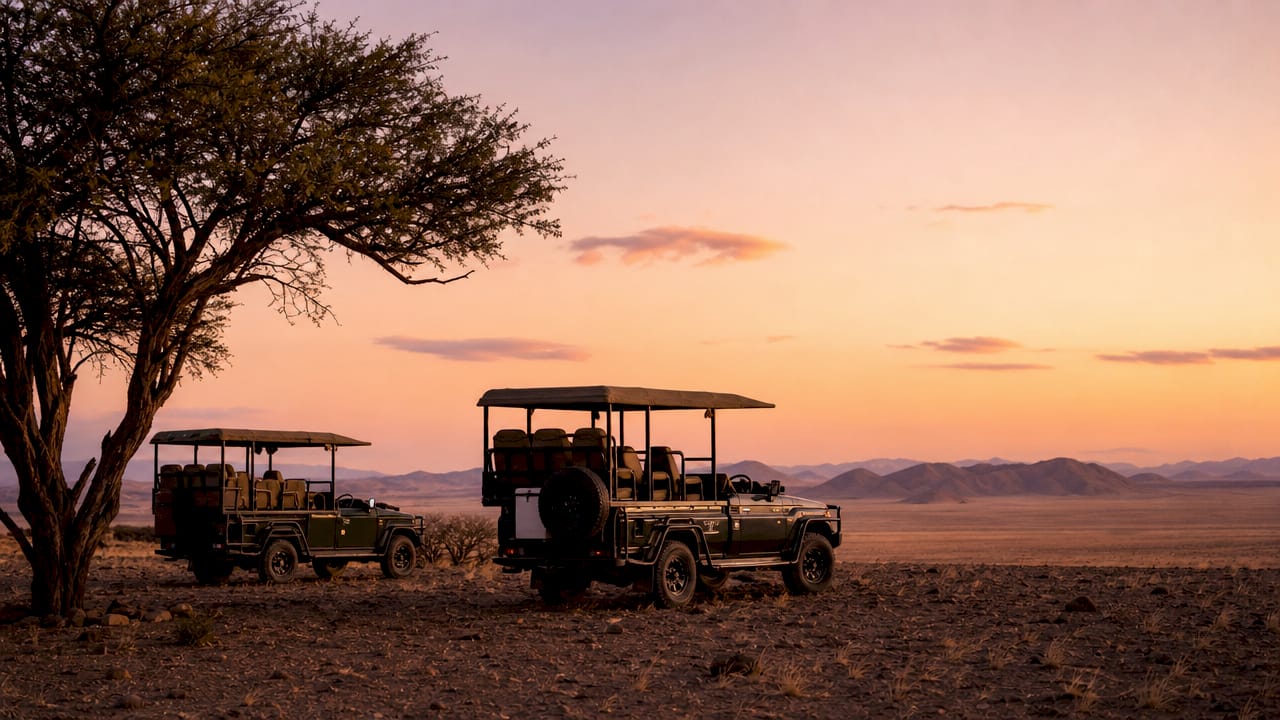
Etosha is also one of the most self-drive friendly parks in Africa. Roads are well-maintained, signage is clear, and you do not need a guide to navigate. That said, a guided night drive adds a dimension that self-drive simply cannot replicate.
When is the best time to visit Etosha?
Choosing your season is the single most consequential decision in planning your Etosha trip. Each season offers a genuinely different experience, and the right choice depends on what you want to see.
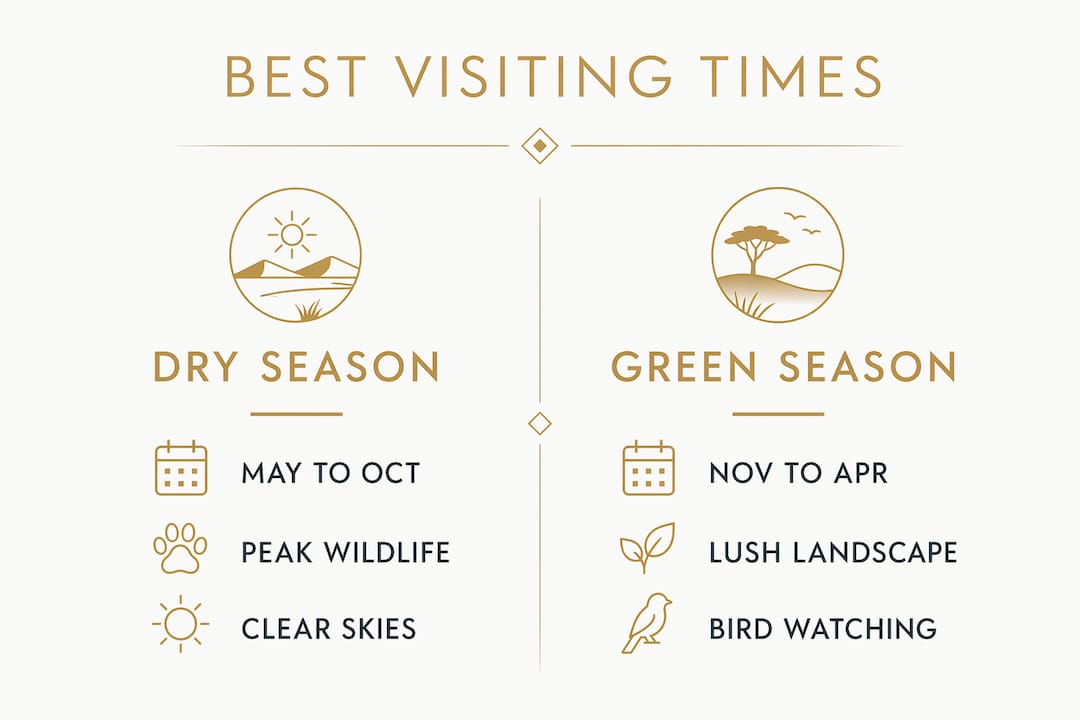
Dry season: May to October
The dry season is when Etosha performs at its most dramatic. Vegetation thins out, waterholes become the only reliable water source, and animals gather in extraordinary numbers. Peak sightings occur between July and September, when predator activity around waterholes intensifies and black rhino sightings at night become almost predictable.
Temperatures vary significantly across this window. June and July nights can drop to around 5°C, so pack a warm layer for early morning drives. October pushes above 35°C during the day, making midday game drives uncomfortable and less productive. July through September offers the most balanced conditions for extended time in the field.
If you are planning to visit during peak dry season, book accommodation 9–12 months in advance. Demand spikes during European and South African school holidays, and waterhole-view chalets inside the main camps sell out fast. Missing out on an inside-park stay because of late booking is one of the most common and avoidable disappointments.
Green season: November to April
The green season transforms Etosha into a lush, photogenic landscape that looks nothing like the dry season version. Migratory birds arrive in force, newborn ungulates appear across the plains, and the light is extraordinary for photography. Wildlife is present but dispersed, since animals no longer need to cluster around waterholes.
Season | Best for | Wildlife concentration | Crowds |
|---|---|---|---|
May to June | Transition, good value | Building | Low to moderate |
July to September | Peak game viewing | Very high | High |
October | Hot but excellent sightings | High | Moderate |
November to April | Birding, photography, scenery | Low to moderate | Low |
The green season suits experienced safari travelers who prioritize scenery and birding over predator sightings. First-timers focused on the Big Five should stick firmly to the dry season.
Where should you stay: inside the park or outside?
This is the question every Etosha planner wrestles with, and the answer is not either-or. It is both.
Inside the park: camps with floodlit waterholes
The four main camps inside Etosha are Okaukuejo, Halali, Namutoni, and Dolomite Camp. Each has its own character and waterhole setup.
Okaukuejo sits in the western zone and has arguably the most famous waterhole in Africa. Black rhino visit regularly at night, and the floodlit viewing area lets you watch them from just metres away.
Halali occupies the central zone and offers a quieter, more intimate atmosphere. Its waterhole is set among rocky outcrops and attracts a wide variety of species.
Namutoni is based in the east near the Fischer’s Pan area, which is exceptional for flamingos and waterbirds during the green season.
Dolomite Camp is the most remote and exclusive, located in the western concession area with access to circuits rarely driven by other visitors.
The trade-off with inside camps is comfort. Facilities are functional rather than luxurious, and dining options are limited. For most travelers, one or two nights inside is the perfect balance.
Outside lodges: luxury and comfort
Outside lodges offer a level of comfort and cuisine that the park camps simply cannot match. Many are positioned on private land adjacent to the park boundary, giving you access to Etosha during the day and a proper lodge experience at night. If luxury is a priority, Etosha’s tailored safari options through operators like Secretnamibia pair outside lodge stays with curated park access for the best of both worlds.
Pro Tip: Book a waterhole-view chalet at Okaukuejo for your first night inside the park. Set an alarm for 2:00 AM and walk to the waterhole. The chance of seeing black rhino in complete silence, under a Namibian sky full of stars, is worth every bit of lost sleep.
Self-drive versus guided safari: which works best in Etosha?
Etosha is one of the few African parks where self-drive genuinely rivals a guided experience for wildlife quality. The road network is excellent, and the waterhole system means you do not need a tracker to find animals.
How to self-drive Etosha successfully
The key to a rewarding self-drive is patience over distance. Driving at 25–30 km/h and spending 30–60 minutes at productive waterholes produces far better sightings than rushing between locations. Most first-timers make the mistake of treating Etosha like a road trip. It is not. It is a stakeout.
Time your drives correctly. The best wildlife viewing windows are the first two hours after gate opening and the last two hours before gate closing. Midday is the least productive time.
Carry enough water. In dry season, carry at least 5 litres of water per person per day. Dehydration affects judgment and shortens your time in the field.
Know your vehicle. A standard 2WD sedan handles most park roads comfortably during dry season. Wet season or the Dolomite circuit requires a 4x4.
Top up fuel before entering. Fuel is available inside the park but costs more than outside. Fill up at the last town before the gate.
Respect gate times. Gates open at sunrise and close at sunset, with times shifting monthly. Being caught outside camp after closing carries penalties and, more importantly, genuine safety risks.
Why guided night drives are worth adding
Night drives operate from the main camps and are led by experienced guides with spotlights. They reveal a completely different Etosha: aardvark, porcupine, brown hyena, and leopard move freely after dark. You can explore nocturnal game drives as a standalone addition to a self-drive itinerary without committing to a fully guided safari.
How to plan your daily Etosha itinerary for maximum sightings
A well-structured itinerary covers the western, central, and eastern zones without backtracking unnecessarily. The western zone around Okaukuejo and the Etosha Pan offers the most dramatic landscapes and the highest density of large predators. The central zone around Halali is excellent for general game. The eastern zone near Namutoni and Fischer’s Pan is best for waterbirds and elephant herds.
For a four-day visit, a logical flow looks like this:
Night 1: Outside lodge near the Andersson Gate (western entrance). Rest after travel, explore the lodge surrounds.
Night 2: Okaukuejo camp. Full day driving the western circuits, evening at the floodlit waterhole.
Night 3: Halali camp. Drive the central zone, add a night drive from Halali.
Night 4: Outside lodge near Namutoni or Von Lindequist Gate. Explore the eastern zone and Fischer’s Pan before departing.
Key waterholes to prioritize include Okaukuejo for black rhino, Chudob near Namutoni for elephant and lion, and Rietfontein for a quieter, often rewarding stop that most visitors skip. Balancing driving time with stationary observation is the discipline that separates a good Etosha visit from a magnificent one.
Pro Tip: Pack a small cooler with snacks and cold drinks. You will not want to leave a productive waterhole to drive back to camp for lunch, and the best sightings often happen between 10:00 AM and noon when most visitors have already retreated.
Key takeaways
Etosha rewards travelers who plan carefully, stay patient at waterholes, and combine at least one night inside the park with comfortable lodging outside.
Point | Details |
|---|---|
Visit in dry season | July to September offers peak wildlife concentration and the most reliable sightings at waterholes. |
Stay four to five days | Four days covers western, central, and eastern zones without rushing any zone. |
Book 9–12 months ahead | Peak season accommodation inside the park sells out fast, especially waterhole-view chalets. |
Combine inside and outside stays | One night inside for floodlit waterhole viewing, remaining nights outside for comfort and cuisine. |
Prioritize patience over distance | Spending 30–60 minutes at productive waterholes delivers better sightings than covering more ground. |
What I have learned from years of planning Etosha safaris
Most travelers arrive at Etosha with a checklist mentality. They want to tick off lion, elephant, rhino, and leopard in three days and move on. I understand the impulse. But Etosha does not work that way, and the visitors who leave most satisfied are the ones who surrendered to its pace.
The waterhole at Okaukuejo at 3:00 AM, with a black rhino drinking in silence ten metres away, is not something you can rush toward. You have to be there, still and quiet, having already waited an hour. That hour of waiting is not wasted time. It is the experience.
I have also seen too many travelers underestimate the value of one night inside the park. They book entirely outside for comfort reasons, which I understand completely. But they miss the floodlit waterhole, and that is the single most unique thing Etosha offers that no other park in Africa replicates in quite the same way.
On the seasonal question, I will always recommend the dry season for first-timers. The green season is genuinely beautiful and far less crowded, but if you have never seen a waterhole with forty elephants arriving at dusk, that needs to come first. Save the green season for your second visit, when you already know what Etosha feels like and you are ready to experience it differently.
Pack layers for early mornings in June and July. Bring a good pair of binoculars. And resist the urge to drive fast. Etosha is a slow safari, and slow is exactly what makes it magnificent.
— Secret
Plan your Etosha safari with Secretnamibia
Etosha is magnificent on its own terms. Paired with expert planning, it becomes something truly extraordinary.

Secretnamibia designs both luxury Etosha safaris and fully supported self-drive itineraries for travelers who want the freedom of the road without the guesswork of logistics. Whether you are looking for a waterhole-view chalet inside the park, a private lodge on the boundary, or a curated route that covers all three park zones in four days, the team at Secretnamibia builds it around your travel style. Explore the full range of self-drive safari options or reach out directly to start planning your 2025 or 2026 Etosha adventure.
FAQ
What is the best time to visit Etosha National Park?
The dry season from july to october is the best time, with peak wildlife concentration at waterholes between july and september. Book accommodation 9–12 months in advance for this period.
How many days do you need in Etosha?
A minimum of three days is recommended, but four to five days allows you to explore the western, central, and eastern zones without rushing.
Can you self-drive in Etosha National Park?
Yes. Etosha is one of Africa’s most self-drive friendly parks, with well-maintained roads and clear signage. A standard 2WD sedan handles most routes comfortably during dry season.
Is it worth staying inside Etosha National Park?
At least one night inside the park is strongly recommended. The floodlit waterholes at camps like Okaukuejo offer nighttime wildlife viewing, including black rhino, that no outside lodge can replicate.
What wildlife can you see at Etosha waterholes?
Etosha’s waterholes attract elephant, lion, giraffe, zebra, black rhino, and hundreds of bird species. Black rhino are most reliably spotted at Okaukuejo’s floodlit waterhole after dark.
Recommended
RELATED
Safari Guides
Oct 30, 2025
Understanding What is Included in Luxury Safaris
Explore what is included in luxury safaris, from exclusive accommodations to bespoke experiences that cater to discerning travelers.
Feb 24, 2026
Why Namibia Adventures Matter: An In-Depth Look
Discover why Namibia adventures are essential for luxury travelers seeking unique, immersive experiences in nature and wildlife exploration.
Feb 23, 2026
What to Expect on a Luxury Safari: A Comprehensive Guide
Discover what to expect on a luxury safari and gain a deeper understanding of the unique experiences that await you in the wild.
Feb 22, 2026
Understanding Namibia Safari Costs Explained
Explore Namibia safari costs explained to uncover what influences pricing and what it means for your adventure.
Feb 21, 2026
Understanding the Role of Safari Experts in Wildlife Travel
Explore the role of safari experts and gain a comprehensive understanding of how they enhance wildlife travel experiences for all types of travelers.
Feb 20, 2026
Guide organisation safari all inclusive : vivez l'aventure de vos rêves
Découvrez notre guide organisation safari all inclusive étape par étape pour planifier un voyage inoubliable au cœur de la nature.