
Apr 13, 2026
Plan a safe and luxurious Namibia safari with expert tips on road safety, health, crime, visas, and wildlife precautions for affluent and family travelers in 2026.
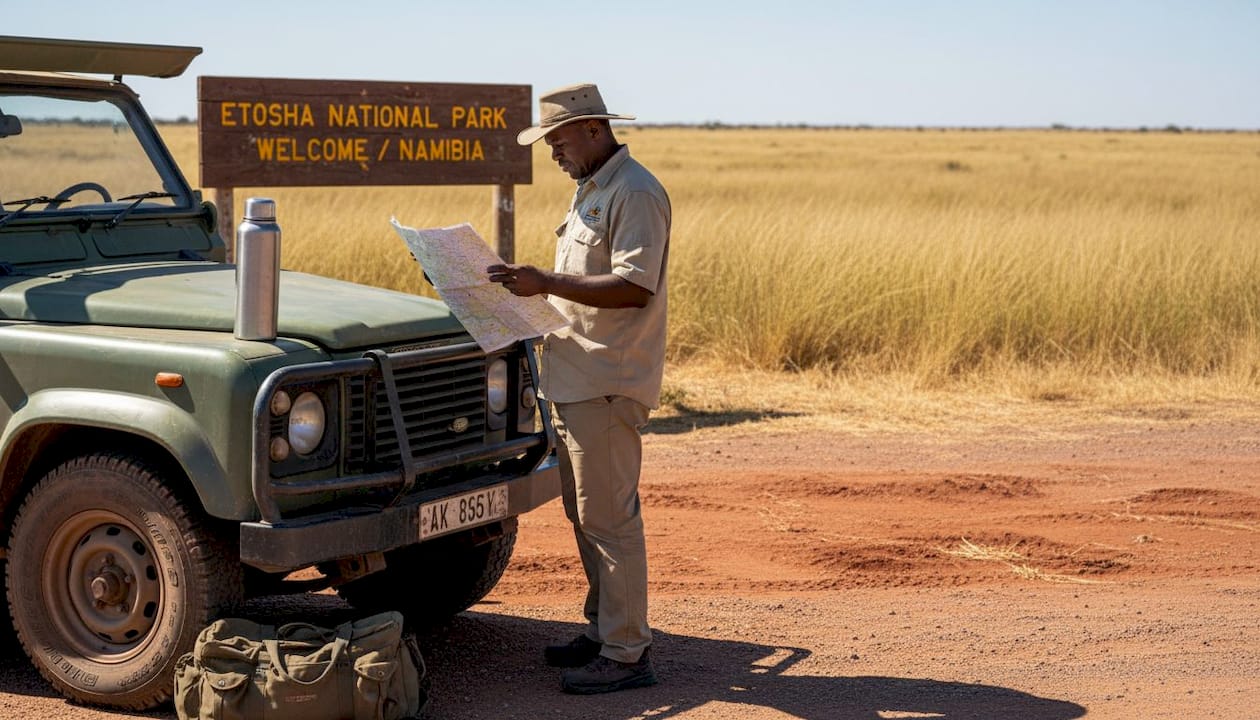
Essential Namibia travel safety tips for a secure safari
TL;DR:
Namibia is generally safe but travelers should remain cautious of petty crime and road safety issues.
Road accidents are common; slow down, avoid night driving, and be well-prepared.
Proper documentation, health precautions, and partner with reputable operators enhance safety during travel.
Namibia is one of Africa’s most magnificent destinations, drawing affluent adventurers and families to its vast red dunes, magnificent wildlife, and remote wilderness. Yet even the most seasoned luxury traveller pauses to ask: how do you balance once-in-a-lifetime experiences with genuine safety and comfort? From Windhoek’s urban streets to the remote gravel tracks of the Namib, Namibia presents a unique set of considerations. Road travel, health precautions, wildlife encounters, and bespoke arrangements all demand your attention. This guide covers the essential safety topics you need to know before setting off on your extraordinary Namibian journey.
Table of Contents
Essential crime and urban safety tips
Road safety and self-drive precautions
Health, medical, and wildlife precautions
Entry requirements and travel documentation
Our perspective: What luxury travelers really need to know about Namibia safety
Travel safely and luxuriously with Secret Namibia
Frequently asked questions
Key Takeaways
Point | Details |
|---|---|
Urban vigilance vital | Most urban risks are preventable with smart habits like secure transfers and careful handling of valuables. |
Drive defensively | Namibia’s gravel roads and fatigue risks mean guided travel or safe self-drive practices are non-negotiable for safety. |
Health comes first | Take malaria precautions as needed, drink bottled water, and secure full travel insurance before departure. |
Prepare your documents | Updated visas, a valid passport, and physical copies of key bookings streamline border entry and emergencies. |
Essential crime and urban safety tips
Namibia is widely regarded as one of Africa’s more stable and welcoming countries. That said, Level 2 ‘increased caution’ is the current US State Department advisory, primarily due to urban petty crime and road safety concerns. This is not a reason to worry unduly, but it is a reason to be informed and prepared before you arrive.
In Windhoek and larger towns like Swakopmund and Walvis Bay, the most common risks are pickpocketing, opportunistic bag snatching, and car break-ins. ATMs are a particular hotspot for petty theft, so use machines located inside banks or well-lit shopping centres during daylight hours. Avoid displaying expensive cameras, jewellery, or cash in busy public areas, and keep your passport and travel documents secured in your lodge safe at all times.
Here are the key urban safety practices to follow:
Walk only in well-lit, busy areas, especially after dark
Use reputable, pre-arranged transfers rather than hailing informal taxis
Store valuables and documentation in your hotel or lodge safe
Avoid using ATMs at night or in isolated locations
Keep car doors locked and windows up when driving through urban areas
Carry only the cash you need for the day
Luxury lodges and five-star hotels in Namibia generally maintain excellent security standards, with guarded perimeters, secure parking, and attentive staff. If you want to travel safely in Namibia, choosing well-reviewed, established properties is one of the most effective decisions you can make.
For families, the same principles apply with added vigilance around children in public spaces. Our family safari safety tips offer more tailored guidance for parents travelling with young ones.
Pro Tip: Premium safari operators typically arrange secure, direct airport-to-lodge transfers, removing the uncertainty of navigating unfamiliar urban areas on arrival. Always confirm your transfer arrangements before you land.
Road safety and self-drive precautions
Namibia’s roads are a defining part of the safari experience, stretching across golden plains and dramatic desert landscapes. However, they demand real respect. Over 2,600 road crashes were recorded by October 2025, resulting in more than 400 fatalities, making road accidents the leading cause of travel-related deaths in the country.
The majority of serious incidents involve speed and driver fatigue on gravel roads. Outside of main towns, most routes are unsealed, and conditions can change rapidly after rain. The golden rule is simple: slow down and rest often.
Follow these numbered precautions for safer road travel:
Maintain 60 to 80 km/h on gravel roads at all times
Never drive after dark, as animals frequently cross roads at night
Take regular rest breaks, especially on long stretches between parks
Carry extra water, fuel, and a first-aid kit in your vehicle
Inform your lodge of your planned route and expected arrival time
Ensure your vehicle has a functioning spare tyre and jack
“The roads between Namibia’s iconic destinations are part of the adventure, but they reward patience and preparation far more than speed.”
For those weighing up their options, here is a quick comparison of guided versus self-drive safari risk profiles:
Factor | Guided safari | Self-drive safari |
|---|---|---|
Road navigation | Expert handles all routing | Traveller responsible |
Breakdown support | Immediate operator assistance | Dependent on own preparation |
Night driving risk | Eliminated by itinerary design | High if not carefully planned |
Wildlife encounter safety | Guide manages all interactions | Traveller must exercise caution |
Fatigue management | Structured rest built in | Self-managed |
If you are planning to explore independently, our self-driving tips for Namibia are essential reading. For those who prefer a curated road journey, you can also plan a luxury Namibia road trip with full expert support built in.
Pro Tip: Always choose a vehicle fitted with a satellite phone or personal locator beacon, and confirm that your rental insurance covers off-road gravel driving and emergency recovery.
Health, medical, and wildlife precautions
While roads present physical hazards, your health and encounters with Namibia’s famous wildlife require just as much vigilance. The good news is that with the right preparation, most health risks are entirely manageable.
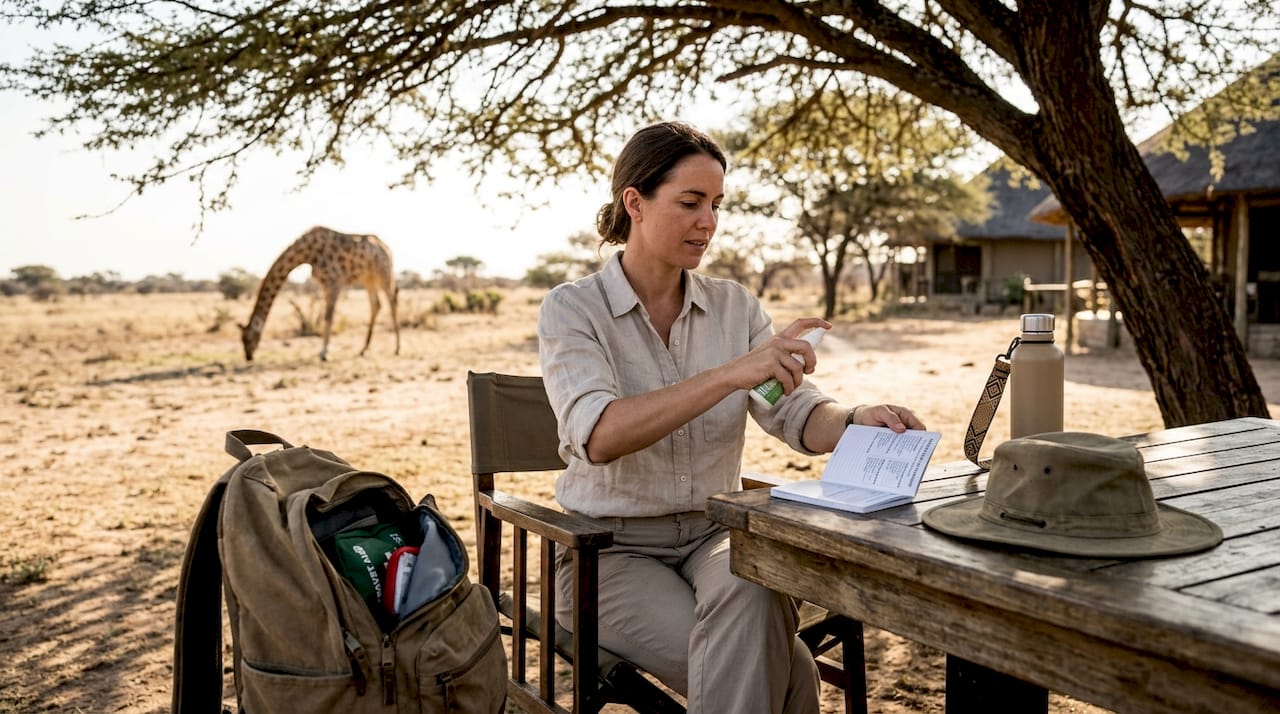
Malaria is a consideration for northern Namibia. Prophylaxis is recommended if you are visiting Etosha National Park or the Caprivi Strip. The risk in southern and central Namibia, including the Namib Desert and Sossusvlei, is very low. Consult your doctor at least four to six weeks before departure to discuss the most suitable medication for your itinerary.
Key health precautions to follow on your safari:
Drink bottled or purified water only, even in luxury lodges
Apply high-factor sunscreen and wear a hat during outdoor activities
Use insect repellent containing DEET in malaria-risk areas
Be aware of rabies risk from contact with wild or stray animals
Carry a personal medical kit with antihistamines, rehydration sachets, and any prescription medications
Wildlife safety is equally important. Namibia’s landscapes are home to elephant, lion, leopard, and black rhino, among many other magnificent species. Never approach animals on foot outside of a guided walk, and always follow your guide’s instructions without question during game drives. Even seemingly calm animals can be unpredictable.
Comprehensive travel insurance for safaris is non-negotiable. Your policy must explicitly cover medical evacuation, as remote lodges can be hours from the nearest hospital. Many luxury properties do have on-call medical support or partnerships with emergency evacuation services, which is one of the genuine advantages of booking through a reputable operator.
For a full packing and preparation checklist, our safari essentials list covers everything from medications to the right clothing for Namibia’s dramatic temperature swings.
Pro Tip: When booking luxury lodges, ask specifically whether they have a medical protocol in place and which emergency evacuation service they partner with. The best properties will answer this without hesitation.
Entry requirements and travel documentation
All safety plans can fall apart without correct documentation, and ensuring smooth border entry is an essential part of your pre-departure checklist. Namibia updated its entry requirements significantly in April 2025, and it is important to understand what applies to you.
For US and UK citizens, visas are available on arrival or online for approximately $90 to $100 USD, a change introduced from 1 April 2025. Your passport must be valid for at least six months beyond your intended departure date from Namibia.
Essential documents to carry at all times:
Valid passport with at least six months remaining validity
Printed or digital proof of visa payment or approval
Return or onward travel ticket confirmation
Proof of accommodation bookings for all nights in Namibia
Comprehensive travel insurance certificate, including medevac cover
Yellow fever vaccination certificate if travelling from an endemic country
Here is a quick comparison of the two visa options for US and UK travellers:
Feature | Visa on arrival | Online e-visa |
|---|---|---|
Where to apply | Namibia border or airport | Online before travel |
Processing time | Immediate on arrival | Several business days |
Cost | ~$90 to $100 USD | ~$90 to $100 USD |
Recommended for | Spontaneous travellers | Those who prefer certainty |
Risk of delay | Low but possible at busy times | Minimal with advance planning |
For a thorough walkthrough of every step from booking to border crossing, our step-by-step Namibia guide is an invaluable resource. Always carry printed confirmations of your bookings, insurance, and visa documentation, as digital access cannot always be guaranteed in remote areas.
Our perspective: What luxury travelers really need to know about Namibia safety
Here is something that general online safety guides rarely tell you: the biggest risks for upscale travellers in Namibia are rarely the ones that make headlines. Petty crime is manageable. The risks that catch people off guard are subtler: underestimating fatigue on long drives between remote lodges, getting closer to wildlife than is wise because the moment feels magical, and assuming that remoteness equals safety when it actually demands more preparation.
General advisories are written for the broadest possible audience. They are a starting point, not a strategy. If you are planning a luxury safari, your safety calculus is different from a budget backpacker’s. Private fly-in arrangements, vetted guides, and fully supported itineraries eliminate most of the variables that lead to incidents. The comfort of a guided experience is not just about luxury. It is genuinely safer.
Our strongest advice is to partner with operators who anticipate your needs before you even think to ask, because in Namibia’s remote wilderness, preparation is everything.
Travel safely and luxuriously with Secret Namibia
Namibia’s extraordinary landscapes deserve to be experienced with complete peace of mind. At Secret Namibia, every bespoke safari we craft is built around your safety and comfort, from vetted local guides and secure transfers to carefully selected lodges with strong medical protocols and emergency support.
Our team of Namibia specialists knows this remarkable country intimately, and we design every itinerary to remove uncertainty without removing the thrill of adventure. Whether you are drawn to a luxury Namibia safari through the Namib Desert or a fully supported family journey through Etosha, we handle every detail. Explore our tailor-made safari experiences and let us create a journey that is as secure as it is unforgettable.
Frequently asked questions
How safe is Namibia for families and luxury travelers?
Namibia is considered one of Africa’s safer destinations for bespoke and family travelers, with most crime being petty and avoidable with basic precautions. Choosing reputable operators and well-secured lodges significantly reduces any meaningful risk.
Do I need malaria medication for Namibia?
You only need malaria medication if you plan to visit northern regions like Etosha or the Caprivi Strip, as prophylaxis is recommended for those areas. Most luxury lodges in southern and central Namibia are in very low-risk zones.
Is self-driving in Namibia safe for tourists?
Self-driving is a popular and rewarding option, but 2,600 crashes recorded by late 2025 highlight the importance of sticking to 60 to 80 km/h on gravel and avoiding all night driving. Guided support is strongly recommended if you are unfamiliar with African road conditions.
What are the new visa rules for Namibia in 2026?
US and UK visitors can obtain a visa on arrival or online for approximately $90 to $100 USD, introduced from April 2025. Your passport must be valid for at least six months beyond your planned departure date.
Recommended
RELATED
Safari Guides
Oct 30, 2025
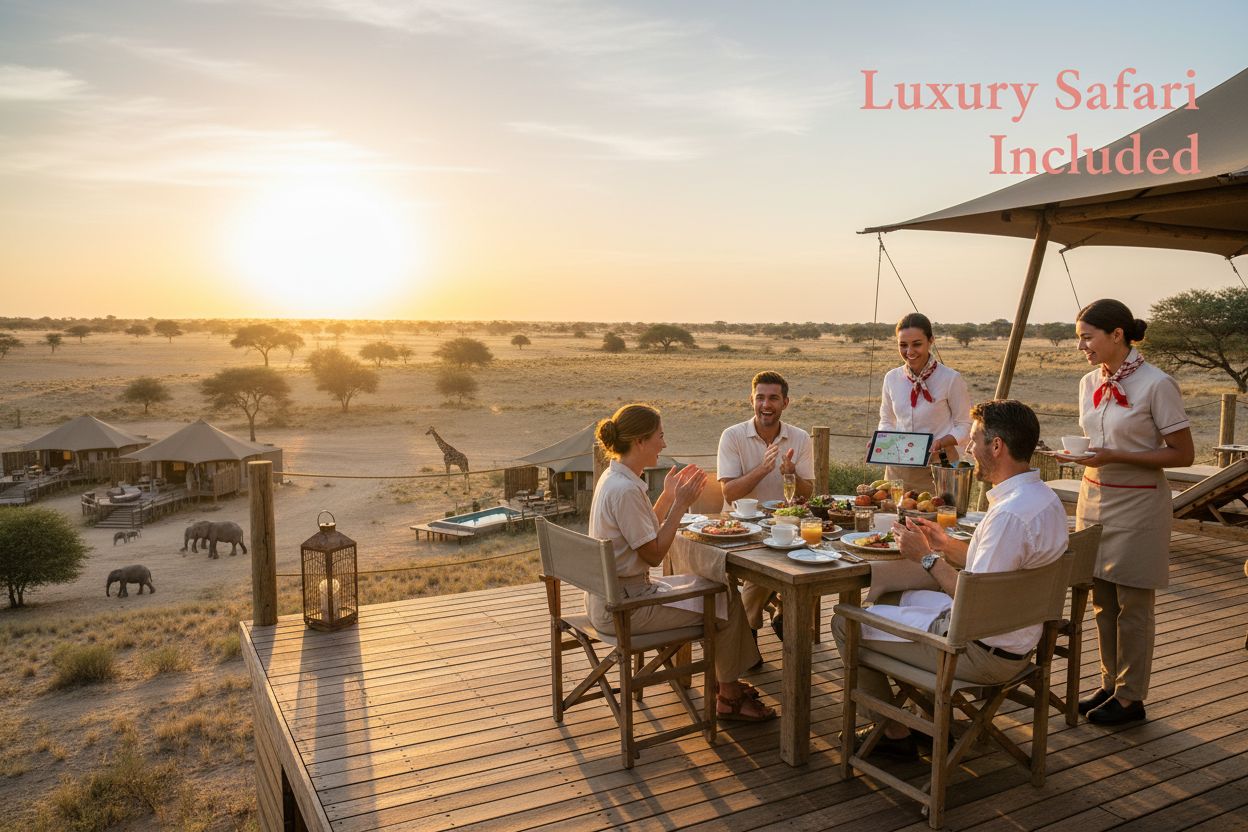
Understanding What is Included in Luxury Safaris
Explore what is included in luxury safaris, from exclusive accommodations to bespoke experiences that cater to discerning travelers.
Feb 24, 2026
Why Namibia Adventures Matter: An In-Depth Look
Discover why Namibia adventures are essential for luxury travelers seeking unique, immersive experiences in nature and wildlife exploration.
Feb 23, 2026
What to Expect on a Luxury Safari: A Comprehensive Guide
Discover what to expect on a luxury safari and gain a deeper understanding of the unique experiences that await you in the wild.
Feb 22, 2026
Understanding Namibia Safari Costs Explained
Explore Namibia safari costs explained to uncover what influences pricing and what it means for your adventure.
Feb 21, 2026
Understanding the Role of Safari Experts in Wildlife Travel
Explore the role of safari experts and gain a comprehensive understanding of how they enhance wildlife travel experiences for all types of travelers.
Feb 20, 2026
Guide organisation safari all inclusive : vivez l'aventure de vos rêves
Découvrez notre guide organisation safari all inclusive étape par étape pour planifier un voyage inoubliable au cœur de la nature.