
Is Self-Driving in Namibia Hard? Gravel Roads, Speed, Tyres and Common Mistakes
Quick answer
Self-driving in Namibia is not technically hard, but it is unforgiving of speed. Tar roads are easy. Gravel needs a steady 60 to 80 km/h, because excess speed is the most cited cause of tourist crashes. Avoid night driving, refuel at every chance, and carry a spare wheel and water. Most confident drivers manage it, including first-timers who go slowly.
At a glance
| Difficulty | Moderate: easy navigation and light traffic, but long distances and gravel that punishes speed |
|---|---|
| Advised gravel speed | 60 to 80 km/h at most, slower on poor surfaces, sand and bends |
| Legal gravel limit | Reported as 100 km/h (many sources say 80); follow posted signs and verify with the Roads Authority or NamPol |
| Night driving | Avoid it outside towns; plan to arrive at your lodge in daylight |
| Vehicle | A 2WD is fine for most main routes; a 4x4 helps on D roads after rain and in the remote north-west |
| Drives on | The left |
| Licence | Valid English-language licence accepted; an International Driving Permit is recommended and cannot be obtained in Namibia |
| Current season note | November to March is the rainy season, when gravel can be very slippery (as of November 2026) |
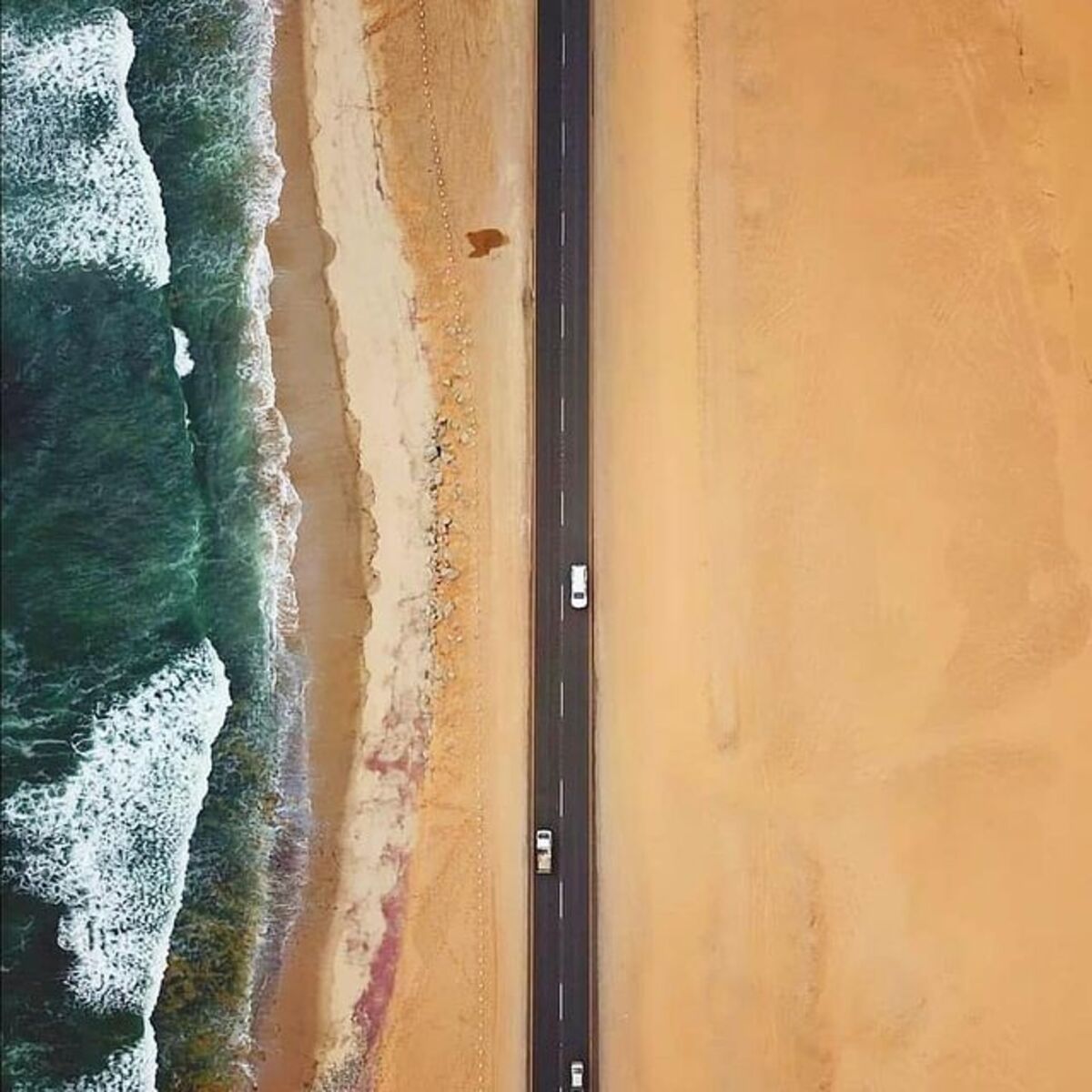
Is self-driving in Namibia hard?
No, not for a confident, patient driver. Navigation is simple, traffic is light outside Windhoek and the main roads are generally in good condition. What makes it demanding is distance, gravel and the temptation to drive too fast on empty roads.
Tar roads between the main towns are straightforward. Graded gravel (C roads) is fine for an ordinary car when driven at the right speed, and rougher D roads need more care. Expert Africa notes that gravel is generally good and suitable for ordinary 2WD vehicles, but potholed or corrugated sections often come just before a stretch is graded, and the joins between tar and gravel at passes are often the worst part.
The Government of Canada's Namibia travel advice is blunt about the risks: fatal accidents are common, they are often related to excessive speed on gravel, tourists are often involved in single-vehicle accidents, and emergency and roadside help is unreliable or non-existent outside Windhoek. That is why the advice below is about slowing down, not about special driving skills.
We plan self-drive trips from Swakopmund, so this guide reflects how we set up routes and what we tell guests to do. For a wider overview, see our Namibia self-drive travel tips.
What speed is safe on gravel?
Aim for 60 to 80 km/h on good graded gravel and never more than 80 km/h, whatever the legal limit says. Go slower on corrugations, sand, bends, fords and anywhere the surface looks loose.
Legal limit versus safe speed
Sources disagree on the legal gravel limit. The CBRTA Namibia Handbook, attributing the figures to the Roads Authority, lists 60 km/h in urban areas, 120 km/h on tar and 100 km/h on gravel. Wikipedia's page on speed limits in Namibia and the Safaribookings blog also give 100 km/h. Many operator pages quote 80 km/h as the limit, which probably confuses the recommended maximum with the legal one.
We treat 100 km/h as the likely legal limit but ask travellers to check with the Roads Authority or Namibian Police (NamPol) and obey every posted sign. The legal limit is a ceiling, not a target. Most gravel in Namibia is not safe at 100 km/h for a visitor in an unfamiliar vehicle.
A practical speed guide by road type
Namibia grades its roads by letter: B roads are tar, C roads are graded gravel, and D roads are lesser gravel or sand tracks. The figures below are one operator's opinion (desert-tracks) and match our own caution, but they are not official limits. As of November 2026.
| Road type | Surface | Sensible speed |
|---|---|---|
| B roads | Tar | 100 to 110 km/h, within the posted limit |
| C roads | Graded gravel | 60 to 80 km/h |
| D roads | Gravel or sand | 30 to 50 km/h |
| Salt roads on the coast | Compacted salt | 40 to 60 km/h, slippery in fog |
Expert Africa advises an absolute maximum of 80 km/h and says not to try to keep up with locals, who often travel far faster on roads they know well. We agree. Let them pass.
Why slow driving still gets you there
Plan with realistic speeds. Wild Wings Safaris suggests dividing distance by 80 km/h on tar and 60 km/h on gravel. Desert-tracks says to allow five hours, not four, for a 340 km leg. Also slow down when a vehicle overtakes you at speed, because stones can be thrown at your windscreen.
What tyre pressures should you use?
There is no official Namibian figure, so use the pressures on the placard in your rental car's door jamb and ask the rental company for its advice at pickup. Many operators suggest a modest reduction on gravel for ride comfort and grip.
The Goarid blog suggests 2.0 to 2.2 bar on tar and about 1.8 bar on sand or gravel. Expert Africa says many locals reduce pressure by about 10 to 20 per cent on gravel for ride and traction. These are operator guidelines, not rules, and the right figure depends on the vehicle, the load and the surface.
Our routine for rental cars
- At pickup: ask what pressure the company wants on tar and on gravel, and note the figures. Different models and tyre types have different recommendations.
- Locate the spare and the jack before you leave the depot, and check the spare's condition and pressure. Ask for a demonstration of how the jack works.
- Check pressures every morning or at each fuel stop, by eye at least, since gravel punctures and slow leaks are common.
- Steer around large, sharp stones. Punctures are repeatedly named as a main risk by operators, so slow speed is your best protection.
- Ask about cover: find out whether your rental insurance covers tyres and windscreens. They are the damage most often caused on gravel, and cover varies by company.
We have not verified guidance on re-inflating before returning to tar, or pressures for soft sand, so ask your rental company or guide before leaving the main roads.
Is night driving advisable?
No. Avoid driving outside towns after dark. Namibia's roads are often unfenced, animals are hard to see, and help is far away.
The Government of Canada advises against night-time driving outside urban centres. A UK Foreign Office consular blog (from 2012, so dated) urged visitors to avoid night travel because animals on the road are a bigger hazard than drowsy drivers. Operators such as namibia-safaris.com and desert-tracks name dusk and dawn as the riskiest times, when kudu and warthog are moving and fencing is inconsistent. Advanced Car Hire advises building itineraries around daylight driving and scanning the road edges in the early morning and late afternoon.
A worked example of daylight planning
Suppose your next lodge is 400 km away, with about 150 km of tar and 250 km of gravel. Using the Wild Wings formula, that is roughly 1.9 hours on tar and 4.2 hours on gravel, so about six hours of driving. Add an hour for fuel, photographs and a picnic stop and you need seven hours.
| Step | Time |
|---|---|
| Tar, 150 km at 80 km/h | About 1 hour 55 minutes |
| Gravel, 250 km at 60 km/h | About 4 hours 10 minutes |
| Stops, fuel, photographs | About 1 hour |
| Total | About 7 hours |
Check sunset for your travel date, count back at least seven hours plus a buffer of an hour or two, and that is your latest departure. Do not shorten the plan to fit. Choose a closer lodge, or split the day. Our itineraries are built on this basis, with a driving day planned around daylight rather than the other way round.
What about fuel range and distances between stations?
Top up at every opportunity and never let the tank fall below about half on remote routes. Fuel stations can be far apart, and a few stretches have no fuel at all.
We cannot give a verified table of distances here, because station locations, opening hours and stock change, so confirm the next fuel stop with your lodge or us before each long leg. What we can say is where to be careful. Operators flag the following stretches as places to fill up beforehand and to check fuel availability ahead.
| Area | Why it needs planning | Our rule |
|---|---|---|
| Solitaire to Sesriem (Sossusvlei) | Remote, with few fuel points | Fill up at the last station before the desert |
| Khorixas to Palmwag and Damaraland | Long gravel legs with sparse services | Start with a full tank and confirm the next stop |
| Opuwo to Epupa (Kaokoland) | Remote and slow driving | Fill up in Opuwo and allow extra margin |
| Aus to Rosh Pinah | Remote southern desert | Fill up before leaving and check ahead |
| Skeleton Coast and Kunene | Very few services | Ask us before you go |
Other things to check: pump opening hours, whether the station accepts cards, and whether an attendant fills the car (a small tip is customary). Ask your rental company whether jerry cans are available. Also confirm whether your car takes diesel or petrol before filling, as the wrong fuel ends a trip.
Are there police checkpoints?
Yes, NamPol roadblocks do occur, so carry your documents and stay calm and polite. Most are routine checks of licences, vehicles and sobriety.
We have not verified where checkpoints are, what fines apply or the exact practice at roadblocks, so do not rely on us for those. Keep these with you in the car: your passport (or a clear copy), your driving licence, and the rental agreement and vehicle papers. The Government of Canada says a valid English-language licence is accepted and that an International Driving Permit is strongly recommended, particularly for licences not in English. It also says the permit cannot be obtained in Namibia, so arrange it at home.
Rules that are easy to break by accident
- Seat belts are mandatory for all occupants (CountryReports).
- Using a mobile phone while driving is prohibited (Travel Butlers).
- Wild Wings says dipped headlights are required by day on trunk, main and district roads. Please check this, but keeping them on is sensible anyway.
- Drink-driving: IDP-USA lists a 0.05 per cent limit, which is unverified. The safe rule is not to drink and drive at all.
Speeding fines are set in bands, and 100 km/h gravel stretches and 60 km/h town limits are where visitors are caught out. Keep to the limits in towns, because locals sometimes ignore them and you should not follow.
What should you do with wildlife on the road?
Slow down at once, do not swerve and do not brake hard. On gravel, a sudden swerve is more dangerous than the animal.
Advanced Car Hire says to slow immediately when animals are near the road and to avoid swerving hard. Africar advises avoiding sudden steering and hard braking and keeping to 80 km/h or less so you can react to game crossings. Kudu and warthog are the usual risk at dusk, and in the north you may meet livestock on unfenced roads. Expect cattle, goats and donkeys near settlements.
Step by step when an animal is near the road
- Lift off the accelerator as soon as you see an animal, a herd or a movement in the verge.
- Brake in a straight line, progressively. Keep both hands on the wheel.
- If it is a large animal such as an elephant, stop and stay well back. SafariFind advises at least 20 metres from large mammals such as elephants and buffalo.
- Remember animals often come in groups. If one crosses, expect others behind it.
- If you hit an animal, stop safely, switch on your hazard lights and call your rental company. A police report is likely to be needed for insurance, so check the procedure at pickup. We have not verified the official reporting process.
Free-roaming desert elephants are possible in parts of Damaraland and Kunene. If you plan to drive there, read about Damaraland and ask us about conditions before you go.
Can a first-timer do it?
Yes, with limits. A first-time self-driver who is a competent driver, willing to go slowly and keen to be at the lodge by mid-afternoon, can do a classic route. Nervous drivers or anyone who wants to cover big distances quickly should consider a guided or fly-in trip.
The standard routes (Windhoek, Sossusvlei, Swakopmund, Damaraland and Etosha) can be done in an ordinary 2WD on tar and graded gravel, according to operators including desert-tracks and Safaribookings. A 4x4 gives more comfort and clearance on D roads after rain and in the remote north-west. Manual and automatic cars are both available. Namibia drives on the left, which is familiar to UK, Australian and South African visitors and takes a day to adjust to for American ones. Pedestrians also make fatal mistakes by looking the wrong way when crossing.
What the crash data says, and does not say
Namibia's road toll is high. The MVA Fund recorded 2,630 crashes, 4,271 injuries and 412 deaths between January and September 2025, a 25 per cent rise in deaths on 2024 (MVA Fund). The Namibian reported 1,333 crashes, 2,273 injuries and 229 deaths from 1 January to 21 June 2026. These are national figures, mostly on national roads and among locals. They do not isolate tourists, so they do not measure your risk as a careful visitor, but they are a good reason to drive defensively and to leave plenty of space.
Namibiaexperience advises first-timers not to drive after dark or speed on gravel, to carry offline and paper maps, and to plan regular breaks. We add one more: do not plan more driving than you would at home. Long days cause fatigue, and fatigue causes mistakes.
What are the common rollover causes?
The most common cause is driving too fast on gravel. Several operators call it the leading cause of tourist accidents, and the Canadian advice says excessive speed on gravel is behind many fatal crashes. We have not found trustworthy original statistics on the share of crashes that are rollovers, so we do not quote any.
How a rollover usually happens
CountryReports says that sand patches and bends taken too fast can easily cause a rollover or spinout. The typical sequence is a loss of grip followed by a panic reaction. In our view, the three reactions to guard against are:
- Braking in a bend. Release the accelerator before the curve and take it much slower. Namibia-holidays notes that nearly every bend is signed for a reason.
- Overcorrecting. Roads often have sloping sand shoulders, and some paved roads have no safety lane. If a wheel drops off the edge, ease off and steer gently back rather than yanking the wheel. Please confirm technique with your rental briefing or a guide.
- Swerving for an animal or pothole. On loose gravel, a hard swerve at 100 km/h can tip a loaded vehicle.
Other factors that raise the risk
- Wet roads. The rainy season runs from November to March, and the Canadian advice says gravel becomes very slippery and a 4WD may be necessary outside cities. We are in that season now (as of November 2026), so go slower than usual and check conditions daily.
- A puncture at speed. Tyre failure at high speed is plausible as a cause, which is another argument for 80 km/h at most.
- Corrugations. These reduce control, so slow down on them.
- Fatigue and alcohol. Long distances tire drivers, and drink-driving is a concern on major roads.
How can you make self-driving in Namibia easier?
Plan fewer kilometres per day, choose a route with a realistic pace, and get a thorough vehicle briefing. That removes most of the risk.
Our routes are designed around daylight driving and realistic distances. The Namibia Highlights Safari runs 11 days from US$3,272 per person (as of November 2026) through Sossusvlei, Swakopmund, Damaraland and Etosha. For a shorter first trip with fewer driving days, the 5 Day Etosha National Park Self Drive Safari is from US$2,210 per person.
If you would rather not drive the long gravel legs, the Desert Dune and Wildlife Safari is a 7-day fly-in trip from US$7,310 per person. Fly-in and guided options suit nervous drivers. If your trip continues into Botswana, Victoria Falls or South Africa, we plan those parts as well. For route ideas, see our 14-day self-drive guide.
Frequently asked questions
Do I need a 4x4 to self-drive in Namibia?
Not for most main routes. Operators including Expert Africa and desert-tracks say an ordinary 2WD copes with tar and graded gravel to Sossusvlei, Swakopmund, Damaraland and Etosha. A 4x4 gives extra clearance and comfort on D roads after rain and in remote areas of the north-west. In the rainy season, ask us about current road conditions.
Do I need an International Driving Permit for Namibia?
The Government of Canada says a valid English-language licence is accepted, and an International Driving Permit is strongly recommended, particularly if your licence is not in English. It adds that you cannot get one in Namibia, so arrange it before you travel. Check requirements with your rental company and Namibian authorities before you go.
Which side of the road do you drive on in Namibia?
Namibia drives on the left. That feels natural for UK, Australian and South African visitors and takes some adjusting for Americans and Europeans. Take extra care at junctions, and when pulling out after a stop. Pedestrians also sometimes make fatal mistakes by looking the wrong way when crossing, so take care in towns.
Should I keep up with local drivers on gravel?
No. Expert Africa notes that locals often drive far faster on roads they know well, sometimes at 120 km/h. A visitor in an unfamiliar, loaded rental car has less margin. Hold your own speed, preferably 80 km/h or less, and let faster vehicles pass. When one overtakes, slow down to protect your windscreen from flying stones.
What should I do if I get a puncture in Namibia?
Slow down gradually, keep a firm grip on the wheel and stop on firm, flat ground well off the road. Before leaving the depot, learn where the spare wheel and jack are and how they work. If you cannot change the wheel, call your rental company. Cover for tyres varies, so check yours at pickup.
What should I carry in the car?
Carry a good spare wheel and jack, plenty of drinking water, and offline or paper maps, as phone signal is patchy outside towns. Namibiaexperience also advises regular breaks. Add a full tank before remote legs, your documents, and the rental company's emergency number. Emergency and roadside help is unreliable outside Windhoek, according to the Canadian government.
Is the rainy season a bad time to self-drive in Namibia?
It is harder but not impossible. The Government of Canada says driving conditions deteriorate from November to March, when gravel roads can become very slippery, and a 4WD may be necessary outside cities. Slow down further, give yourself more time, and check conditions before each leg. Talk to us about routes that suit the season.
Sources
- Namibia travel advice (Government of Canada) travel.gc.ca
- MVA Fund marks 20 years of road safety awareness mvafund.com.na
- Road crashes claim 229 lives in six months (The Namibian, 24 June 2026) namibian.com.na
- Namibia Handbook (CBRTA) cbrta.co.za
- Speed limits in Namibia (Wikipedia) en.wikipedia.org
- Traffic and Road Conditions in Namibia (CountryReports) countryreports.org
- Namibia: self-drive tips and tricks (Expert Africa) expertafrica.com
- Namibia: road surfaces and descriptions (Expert Africa) expertafrica.com
- Guide to Driving in Namibia: 10 Useful Self-Drive Tips (Safaribookings) safaribookings.com
- Driving Tips for Namibia (Goarid) goarid.com
- What do I need to know about driving in Namibia? (Wild Wings Safaris) wild-wings-safaris.com
- Safety First: Essential Tips (Advanced Car Hire) advancedcarhire.com
- Namibia Self-Drive Safaris (desert-tracks) desert-tracks.com
- Is It Safe to Self-Drive in Namibia? (Namibia Experience) namibiaexperience.com
- Namibia driving rules (IDP-USA) idp-usa.com
- Facts for the Visitor (Travel Butlers) travelbutlers.com