
Is Namibia Safe for Tourists? Crime, Roads, Wildlife and Health Risks Explained (2027)
Quick answer
Yes, Namibia is generally safe for tourists who take sensible precautions. The US rates it Level 2, “exercise increased caution”, for crime and health (advisory of 15 May 2026), while Australia's Smartraveller shows green, “exercise normal safety precautions”. The main risks are opportunistic theft in Windhoek and driving, especially on gravel roads and after dark.
At a glance
| US advisory | Level 2, “Exercise increased caution”, with Crime and Health indicators (issued 15 May 2026) |
|---|---|
| Australian advisory | Green, “Exercise normal safety precautions” (updated 11 March 2026) |
| UK advice | Text-based FCDO advice with no numbered level; read the live page before you travel |
| Main crime risk | Non-violent crimes of opportunity, most often reported in Windhoek |
| Main physical risk | Driving, particularly on gravel and after dark |
| Malaria | Common in northern Namibia (Smartraveller); ask a travel doctor |
| Insurance | Travel insurance with medical evacuation cover is advised by the US State Department |
| Entry | Online visa-on-arrival portal for eligible nationalities; 3 blank passport pages; check current rules before travel |
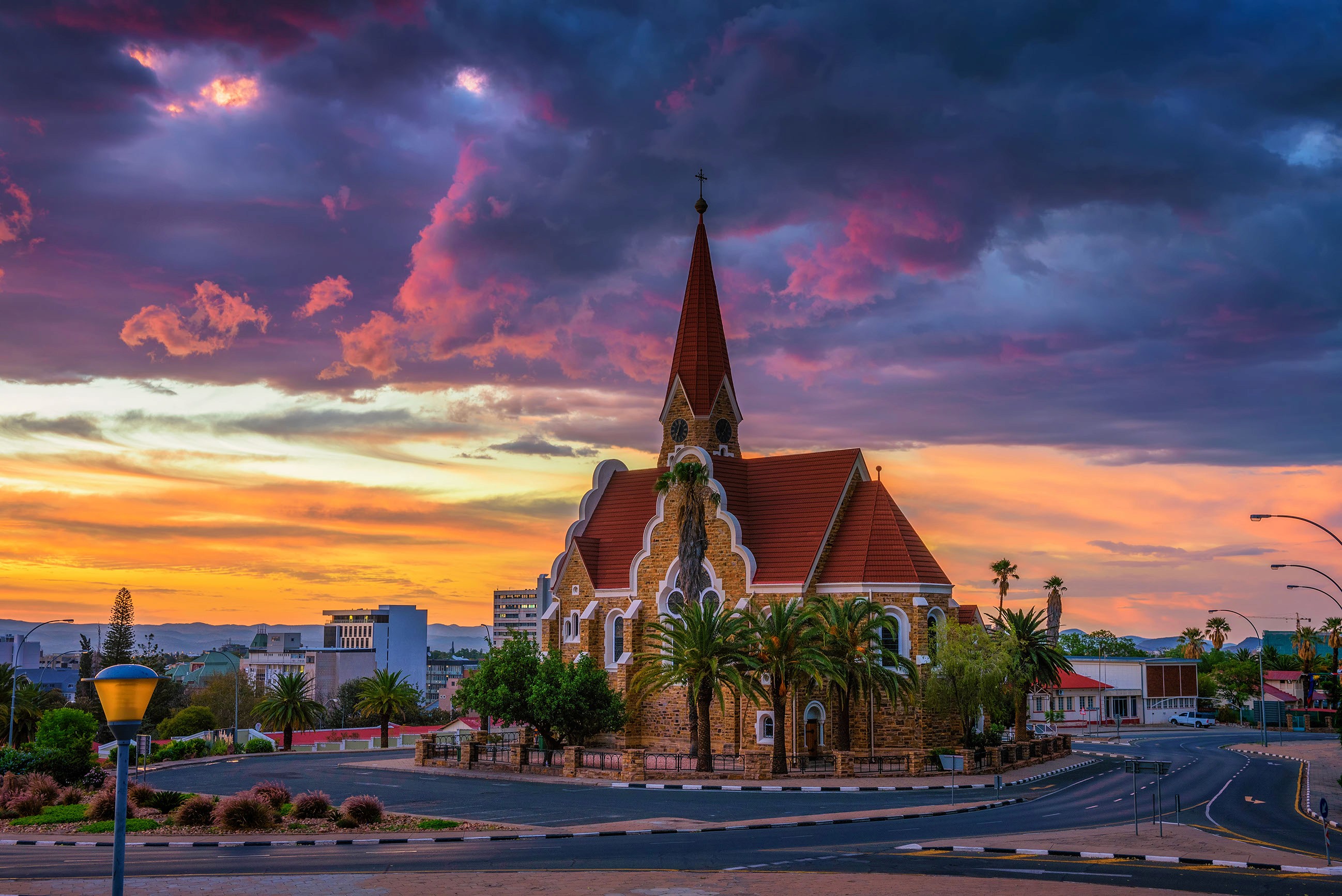
Namibia is generally safe for tourists, but the risks are not the ones most people expect. Crime is mostly opportunistic and concentrated in towns. In our view, as a Swakopmund-based safari company, the bigger day-to-day exposure is the road, because a typical trip means hundreds of kilometres of driving, often on gravel, in a country with few people and long distances between hospitals.
This guide sets out what the official advisories say, then goes through the questions travellers ask us most. Where we have not been able to verify a figure or rule against an official source, we say so rather than guess.
What does the official advisory level say?
The US State Department rates Namibia Level 2, “Exercise increased caution”, with risk indicators for crime (C) and health (H). The current advisory was issued on 15 May 2026 and records no change to the level or indicators. Australia's Smartraveller shows green, “Exercise normal safety precautions”, updated on 11 March 2026.
| Government | Rating | Date | What it highlights |
|---|---|---|---|
| United States (State Department) | Level 2, Exercise increased caution; Crime and Health indicators | Issued 15 May 2026; travel guidance dated 28 May 2026 | Non-violent crimes of opportunity are common; limited health facilities outside big cities; do not travel after dark outside cities; avoid hitchhiking |
| Australia (Smartraveller) | Green, Exercise normal safety precautions | Updated 11 March 2026 | Use taxis with the Namibia Bus and Taxi Association logo; malaria common in the north; driving can be dangerous; follow park rules and warden advice |
| United Kingdom (FCDO) | Text-based advice, no numbered level | Check the live page | We could not confirm the current wording while preparing this guide, so please read the Safety and security, Health and Entry pages yourself |
How should you read Level 2?
Level 2 is not a warning against travel. The US Embassy in Windhoek has said Level 2 is common worldwide, citing the UK, France and Germany as examples, and that the level does not restrict travel or visa processing. It is a prompt to use ordinary street sense and to plan for limited medical facilities.
Why do the US and Australia differ?
The US sits one step above Australia, which uses its lowest level. Australia previously asked travellers to exercise a high degree of caution (in 2022), so its advice has relaxed since. Neither government places Namibia in a high-risk category. Check your own government's advice, and ignore older pages: some security-information sites still display a 2022 “Level 1” notice that is out of date.
Is Windhoek safe?
Windhoek is safe enough to visit with ordinary city precautions, but it is the place where crime affecting tourists is most often reported. The US advisory describes non-violent crimes of opportunity as common, and the embassy has received reports of foreigners robbed by drivers of taxis hailed on the street in Windhoek. Operator sources such as Naturally Namibia say the same, adding that Swakopmund and Walvis Bay see less.
What are the main risks in the city?
- Smash-and-grab. The US advisory warns that bandits may use smash-and-grab tactics to steal valuables. Keep bags and phones out of sight, doors locked and windows shut in traffic.
- Street-hailed taxis. Do not flag one down. Ask your hotel or lodge to book a taxi, and use cabs showing the Namibia Bus and Taxi Association logo, as Smartraveller advises.
- Walking after dark. The advice from the US is not to walk alone at night. Take a booked taxi, even for a short hop to dinner.
- Cash machines and bag snatching. Secondary sources suggest using ATMs inside banks or malls. We agree, and we would withdraw cash during daylight.
Which neighbourhoods should you avoid?
We have not verified police crime statistics at neighbourhood level, so we will not name hotspots in this guide. The practical answer is to stay in a well-reviewed hotel or guesthouse, ask the front desk what to avoid on foot, and keep your city time short. Our Windhoek destination page covers where guests usually stay.
Our 11-day Namibia Highlights Safari is a self-drive trip that starts and ends in Windhoek with one night in the city each way. It is from US$3,272 per person (as of November 2026; check the trip page for what is included), and the rest of the route is spent in Sossusvlei, Swakopmund, Damaraland and Etosha.
Is road safety the real risk?
For most visitors, yes. Official sources point the same way: the US advises against travelling after dark outside cities, and Smartraveller says driving can be dangerous. Operators commonly report that single-vehicle rollovers on gravel, caused by driving too fast, are the most typical tourist incident. We have not verified national road-death figures, so we do not quote any here.
Why are gravel roads the problem?
Gravel surfaces are loose, and a car that feels stable at speed can lose grip in a moment, especially in corners, on sand patches or when you swerve. Secondary sources such as Inside Namibia recommend keeping below about 80 km/h on gravel, carrying a spare tyre and carrying ample water. We give the same advice, and treat the upper limit as a ceiling, not a target.
- Slow right down for oncoming vehicles, which throw up dust and stones.
- Do not brake hard or steer sharply if the car starts to slide. Ease off the accelerator and steer gently.
- Check your spare tyre, jack and wheel brace at pick-up, and ask the rental company to show you how they work.
- Read your rental agreement for exclusions covering rollovers and tyre or windscreen damage.
Why not drive after dark?
Wildlife and stray livestock wander onto roads at night, and you see them late. The US advises against travel after dark anywhere outside the cities. We plan daily drives so that guests arrive at their lodge in good daylight, and we suggest you treat mid-afternoon as the time to be close to your destination.
What rules and numbers should you confirm?
Traffic drives on the left. Speed limits for tar, gravel and towns, fuel-stop spacing and sunset times vary through the year, so confirm them with your rental company at pick-up and check them against your route. In remote regions, fill up whenever you pass a fuel station, rather than waiting until the gauge is low.
If you want to see wildlife without long gravel stretches, our 5 Day Etosha National Park Self Drive Safari is from US$2,210 per person (as of November 2026). For the park itself, see our safari safety tips guide.
Is it safe for women and solo travellers?
Namibia can be done solo, including by women, using the same precautions that official sources give everyone. We have not found an official source that publishes solo-female-specific data, so we will not claim statistics. Operator sources say violent crime against tourists is rare, but they do not break the figures down by gender.
What practical advice applies?
- Avoid walking alone after dark, and avoid hitchhiking or offering lifts.
- Use booked or clearly marked taxis rather than street-hailed ones.
- Be cautious of people who seem to ask for help at the roadside, and keep doors locked and windows shut until you are sure.
- Keep valuables out of sight in cars, and use your hotel safe for your passport.
Is self-drive sensible when you are alone?
The challenge for a solo driver is less crime than logistics. Alone, you cannot share long driving days, and a puncture or breakdown in a remote area is harder to deal with without a second person. If that worries you, a guided trip or a fly-in itinerary removes most of the driving risk. Our 7-day Namibia Highlights Fly In Safari is from US$6,615 per person (as of November 2026) and covers Sossusvlei, Damaraland and Etosha by light aircraft. Also read your own government's page for any gender or LGBTQ+ specific wording.
Is Namibia safer than South Africa?
We cannot give you a verified like-for-like answer, and we would rather say so than quote a misleading number. Namibia's advisory levels (US Level 2, Australia green) are not high, but we have not compared them with South Africa's current ratings for this guide. Homicide rates from aggregator sites are not reliable enough to compare, and we have not checked official figures from national police or statistical sources.
What we can say from experience planning trips is how the two travel experiences differ. A Namibian trip spends most of its time in remote rural areas, lodges and national parks, with short stops in a few towns. That means fewer exposure points for urban crime, but more exposure to driving and distance. Neither country is a case of safe versus unsafe, and Namibia is not zero risk.
If your trip crosses borders, Secret Namibia also plans Botswana, Victoria Falls and South Africa safaris. Check each country's advisory separately, because the risks differ.
Is it safe to camp in the wild?
We do not recommend camping outside designated sites. We have not verified a single national rule on wild camping, and the position varies between national parks, communal conservancies and private farms. Assume you need permission from the landowner or the managing authority, and that in national parks you must stay in official campsites and observe gate-closing times.
What are the wildlife risks at a campsite?
Namibia's wildlife is real, and not confined to parks. Elephants and lions are present in the north-west and in Etosha, hyenas and jackals visit campsites, and desert-adapted elephants move through parts of the north-west. Keep food locked in the vehicle, never sleep with food in your tent, and follow the advice of campsite staff and wardens. Smartraveller asks visitors to follow park rules and warden advice.
What about safety standards?
The US advisory notes that safety inspections for tourism equipment and facilities are rare. That matters for adventure activities and budget camps, so check reviews, ask how guides are trained and look at equipment before you commit.
If you want a night with wildlife close by and less risk, a lodge or permanent camp is the simpler answer. Onguma Bush Camp is one example, and our Etosha South page describes the area around the park's southern gate.
What happens if you break down?
Your first call is to your rental company's assistance line, and you should know where that number is before you leave the depot. We have not verified national emergency numbers for this guide, so confirm them with your rental company at pick-up. The steps below are our general guidance, and your rental company's own procedure takes priority.
- Get off the road if you can, switch on the hazard lights and put out a warning triangle if the car has one.
- Call the rental assistance line and give your location. Mobile coverage has gaps in remote areas, so note your route and the nearest landmark before you drive.
- Stay near the vehicle in remote areas, in the shade, with your water. A car is easier to spot than a person, and walking in the heat is risky.
- Treat offers of help with care. The US advises caution with people who seem to ask for help at the roadside. The same logic works in reverse, so keep doors locked and windows shut until you are comfortable. Help from your rental company or lodge is the safest source.
- For a puncture, change the tyre only on firm, level ground. Know how to do it before you leave.
- After a crash, contact the rental company and the police, keep your documents and take photographs. We have not verified the claim steps for the Motor Vehicle Accident Fund, so ask your rental company how they work.
What should you carry?
Water, a charged phone with a car charger, a paper map, a torch, a first-aid kit and a full-size spare. Ask your rental company about satellite phones or trackers for remote routes, and what they cost. Tell your next lodge your expected arrival time each morning so that someone notices if you do not turn up.
Your insurance matters here as well. The US State Department advises travel insurance with medical evacuation cover, because anyone injured is likely to need to reach a major city for care.
What are the health and wildlife risks?
The main health risks are malaria in the north, limited medical facilities outside the big cities, and heat and sun. The US advisory carries a Health indicator because the country is sparsely populated, and facilities may lack basic medication supplies outside the cities. Smartraveller says malaria is common in northern Namibia and that HIV/AIDS is common.
Do you need malaria protection?
It depends on where you go. Etosha and the north are the areas to ask about, and the south and the coast are a different picture. We are not doctors and have not verified current CDC zoning for 2026, so please talk to a travel clinic well before you leave about prophylaxis, repellent and bite avoidance.
Do you need vaccination certificates?
The US Embassy says yellow-fever certificates are needed for travellers from endemic areas, and that Americans are sometimes stopped and asked for one. Check the rule against your route, and carry the certificate if it could apply.
How dangerous is the wildlife?
Wild animals are dangerous when people ignore the rules. We have not verified injury or fatality data for parks, so we do not quote any. Stay in your vehicle except at signed rest camps and viewpoints where leaving is permitted, keep a respectful distance, never approach elephants or lions on foot and follow the warden's advice.
What about entry rules and documents?
The US advisory says to apply through Namibia's online visa-on-arrival portal where it applies to you. Cost, eligibility and recent changes need checking with the Namibian Ministry of Home Affairs before you travel. Smartraveller says you need three blank passport pages and must declare cash above NAD 50,000.
What is the simplest way to stay safe in Namibia?
Concentrate on the three things that matter most: avoid driving after dark, drive gravel roads slowly, and treat Windhoek like any city. The table below summarises where the risks sit and what to do. The ratings are our own judgement as a locally based company, not official figures.
| Risk | Where | Our view | What to do |
|---|---|---|---|
| Theft and smash-and-grab | Windhoek, and to a lesser extent Swakopmund and Walvis Bay | Most common crime concern | Valuables out of sight, doors locked, booked taxis, daytime ATMs |
| Road crashes and rollovers | Gravel roads and long open-road stretches | The main physical risk | Slow on gravel, no night driving, check tyres, rental insurance exclusions |
| Breakdown in a remote area | North-west, desert and coast routes | Manageable with planning | Assistance number, water, route shared with lodges, stay near the vehicle |
| Malaria | Northern Namibia | Seek medical advice | Travel clinic, repellent, covered clothing at dusk |
| Wildlife | Parks, conservancies and campsites | Low if rules are followed | Stay in vehicle, designated campsites, listen to wardens |
| Limited medical care | Outside the main cities | Plan for it | Insurance with evacuation cover, a first-aid kit, regular medication supplies |
Most of the risk comes down to planning. A route with realistic daily distances, a decent vehicle and lodges that expect you by a known time takes much of the risk out of the trip, and that is the planning we do for guests every day.
Frequently asked questions
Is Namibia safe for Americans?
The US State Department rates Namibia Level 2, “Exercise increased caution”, for crime and health, as of its May 2026 advisory. The US Embassy in Windhoek says Level 2 is common worldwide and does not restrict travel or visa processing. Americans should take ordinary precautions, avoid driving after dark outside cities, and buy insurance that includes medical evacuation.
Is it safe to hail a taxi in Windhoek?
We advise against it. The US Embassy has received reports of foreigners robbed by drivers of taxis hailed on the street in Windhoek. Ask your hotel or lodge to book a taxi, and look for cabs displaying the Namibia Bus and Taxi Association logo, which Smartraveller recommends. Avoid sharing a cab with strangers late at night.
Is Namibia a good first self-drive destination?
Many first-time self-drivers do well in Namibia, provided they plan carefully. Roads are generally quiet, but gravel, distances and wildlife demand attention. Keep daily drives short, avoid night driving, check the spare tyre, and agree breakdown procedures with your rental company. If you are unsure, a guided or fly-in option removes most of the driving.
Do I need travel insurance for Namibia?
Yes, we recommend it. The US State Department advises travel insurance that includes medical evacuation, because health facilities are limited outside the big cities and an injured traveller is likely to need to reach a major city for care. Read the policy for gravel-road driving exclusions, remote-area cover and any activity limits.
Is Swakopmund safe to walk around?
Secondary sources say crime affecting tourists is lower on the coast than in Windhoek, though it is not absent. We are based in Swakopmund and suggest ordinary town precautions: keep valuables out of sight, do not walk alone late at night, use booked taxis after dark and lock your car. We have not verified local crime statistics.
Do I need malaria tablets for Namibia?
Smartraveller says malaria is common in northern Namibia. Whether you need tablets depends on the areas and months of your trip, so speak to a travel doctor well before you go. We have not verified current CDC zoning for 2026, and we are not medical professionals, so we do not give prophylaxis advice.
Are Namibia's national parks dangerous?
They are safe when you follow the rules. Smartraveller asks visitors to follow park rules and warden advice. Stay in your vehicle except at signed rest camps and viewpoints where you may get out, keep your distance from elephants and lions, and use designated campsites. We have not verified injury statistics for Namibian parks.
Sources
- Namibia Travel Advisory (US State Department, issued 15 May 2026) travel.state.gov
- Travel Advisories index (US State Department) travel.state.gov
- Travel Advisory, Namibia, updated 23 December 2024 (US Embassy Windhoek) na.usembassy.gov
- US Embassy Clarifies Travel Advisory and Visa Policy na.usembassy.gov
- Travel to Namibia (US Embassy Windhoek) na.usembassy.gov
- Namibia Travel Advice and Safety (Smartraveller, Australian Government) smartraveller.gov.au
- Namibia travel advice (FCDO, UK Government) gov.uk
- Is Namibia safe to travel to? (Naturally Namibia, secondary source) naturallynamibia.com
- Is Namibia Safe in 2026? (Inside Namibia, secondary source) inside-namibia.travel