In Namibia's dry season, Etosha's waterholes become the stage where elephants, lions and rare black rhino converge. Understand the vast salt pan's scale, why staying put often yields better sightings than driving, and how floodlit viewing transforms after-dark encounters. Includes a clear answer to when is the best time to visit Etosha National Park.
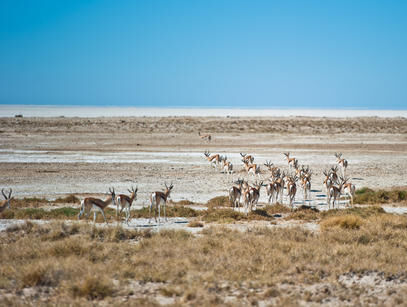
The dry months draw wildlife to Etosha National Park's precious water sources with magnetic inevitability. Rather than chasing animals across the landscape, travellers who position themselves thoughtfully at these gathering points witness raw dramas unfold. The immense Etosha Pan stretches 120 kilometres at its widest, a shimmering white expanse that underscores the preciousness of every drop in this arid realm.
Understanding Namibia's Dry Season Rhythm in Etosha
As the rains depart, usually by late April, the land begins its slow transformation. Grasses turn golden then brittle, trees shed leaves, and the vast Etosha Pan reveals its true scale, a salt-crusted basin so large it can be seen from space. This is when water becomes the undisputed currency of survival, pulling creatures from far across the park to a handful of reliable springs and man-made boreholes.
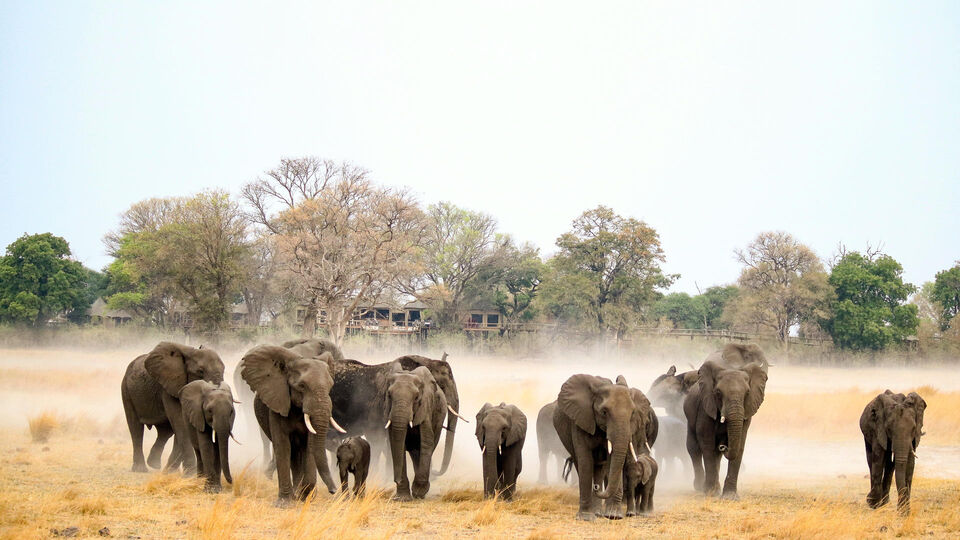
The concentration of animals creates theatre on a grand scale. A single waterhole might host a family of elephants drinking in unison, their trunks moving like grey serpents, while nearby a black rhino approaches cautiously under cover of dusk. The dry season concentrates life in ways the wet months simply cannot match, turning each water point into a living tableau of predator and prey, dominance and deference.
The dry season does not diminish Etosha. It distils it, revealing the essential patterns of survival that the rains obscure.
Why Animals Come to the Waterholes Instead of You Going to Them
In the dry season, the strategic choice for discerning travellers is patience over pursuit. Etosha's animals must return to water daily, sometimes multiple times, especially during the harshest months from June to October. By selecting a waterhole with good visibility and simply waiting, you allow the bush to come to you in its own unhurried rhythm.
This approach yields more authentic encounters than endless driving. A pride of lions may rest in the shade for hours before rising to drink, their movements economical in the heat. Herds of springbok and zebra arrive in nervous waves, constantly scanning for danger. The subtle shifts in tension, the sudden stillness before a predator strikes, these moments reward the stationary observer far more than those constantly on the move.
Experienced guides understand these patterns intimately. They know which waterholes attract specific species at certain times of day, based on wind direction, recent sightings and seasonal behaviour. This knowledge transforms a simple wait into a masterclass in African ecology.
The Advantages of Strategic Positioning
Staying at one waterhole allows your eyes to adjust to the surroundings, noticing the smallest movements in the bush. It also reduces disturbance, allowing animals to behave more naturally. The cumulative experience over several hours often delivers deeper satisfaction than a checklist of fleeting glimpses from a moving vehicle.
During peak dry season, between July and September, water sources can see hundreds of animals in a single day. The numbers speak for themselves: one popular borehole might record over 300 elephant visits in 24 hours when conditions are at their driest.
The Scale of Etosha's Salt Pan and Its Influence on Wildlife
Etosha's great pan covers approximately 4,700 square kilometres, an area larger than many European countries. This immense white bowl, formed over millennia, creates a dramatic backdrop that emphasises the scarcity of water. When the pan is completely dry, which it is for most of the year, it reflects sunlight with blinding intensity, making the surrounding vegetation seem even more vital by comparison.
The pan's scale affects animal movement in profound ways. Many species avoid crossing its open expanse during daylight hours, preferring to skirt the edges where waterholes offer both hydration and cover. This natural funneling brings different herds into closer proximity than they might otherwise experience, creating opportunities for interaction that travellers rarely witness elsewhere in Namibia.
From the elevated viewpoints at certain waterholes, the pan stretches to the horizon like a frozen sea. The optical illusions created by heat haze can make distant animals appear to float above the surface, adding an almost otherworldly quality to game viewing during the dry months.
Standing at the edge of this ancient basin, one feels the true weight of Namibia's arid heart. The pan does not merely contain the landscape, it defines it.
When Is the Best Time to Visit Etosha National Park?
The best time to visit Etosha National Park is during the dry season from May to October. This period offers the highest concentration of wildlife around waterholes, with July through September typically delivering the most reliable sightings due to minimal surface water elsewhere in the park. The cooler months of June and July also provide more comfortable temperatures for game drives, while the hotter September and October bring dramatic light and increased animal activity as the drought intensifies.
November to April brings the wet season, when animals disperse across the park following the rains. While this period offers lush landscapes, newborn animals and impressive thunderstorms, wildlife viewing becomes more challenging as water is plentiful and animals no longer need to congregate at specific points. For those primarily interested in observing large mammal concentrations and predator-prey interactions, the dry season remains the clear choice.
Read more in our detailed guide to the best time to visit Etosha explained.
How Floodlit Waterholes Transform Night Viewing
As daylight fades, many waterholes take on an entirely new character under subtle floodlighting. These carefully positioned lights, often powered by solar or low-impact generators, illuminate the scene without disturbing the natural behaviour of nocturnal visitors. The transition from day to night viewing reveals a parallel world of activity that most travellers never experience.
Black rhinos, notoriously shy during daylight hours, frequently emerge after dark to drink in relative peace. Their powerful forms appear almost prehistoric in the artificial glow, moving with surprising delicacy as they navigate the rocky edges. Leopards may pad silently into view, their spotted coats catching the light as they scan for prey or simply quench their thirst.
The experience of sitting quietly in a hide or from a lodge deck as the night deepens creates an intimacy difficult to achieve during daytime hours. The sounds become more pronounced, the splash of water carrying clearly through the darkness, while the calls of jackals and hyenas provide an ever-changing soundtrack to the unfolding drama.
Practical Considerations for Night Viewing
Not all waterholes offer floodlit viewing, and availability varies between different camps and concessions around Etosha. The most effective setups use red or amber lighting that minimises disturbance to animal vision while still allowing clear observation. Thermal imaging and infrared options at some properties further enhance the experience without any visible light at all.
Patience remains essential after dark. Animals may take hours to appear, but the reward of witnessing a black rhino mother and calf drinking together under starlight creates memories that last far beyond the journey itself.
Planning Your Etosha Waterhole Experience
Choosing the right accommodation makes all the difference to your Etosha waterhole encounters. Properties with private access to less-visited waterholes or those offering elevated viewing platforms provide distinct advantages during the dry season. The most rewarding stays balance comfort with proximity to these vital gathering points.
Consider how different times of day might suit your interests. Morning hours often see high elephant activity, while late afternoon brings predators. Evening sessions at floodlit sites reveal the secretive side of Etosha's wildlife. A well-planned itinerary might include several days dedicated to different waterholes, allowing for a comprehensive understanding of the ecosystem.
Secret Namibia specialises in curating these thoughtful Namibia journeys. For those looking to extend their African experience beyond our borders, our sister brand Encounters Africa creates seamless connections into neighbouring countries including Tanzania.
Creating Your Namibian Safari Journey
The dry season transforms Etosha from a vast wilderness into a concentrated spectacle of life centred around its precious water sources. By understanding the rhythms of this remarkable place, from the immense scale of its salt pan to the subtle advantages of patient observation, travellers gain access to experiences that resonate long after returning home.
Whether watching a herd of elephants silhouetted against the white pan at sunset or observing the silent approach of a black rhino under floodlights, these encounters capture the essence of Namibia's wild heart. The waterholes do not simply provide hydration, they offer windows into the complex relationships that sustain this ancient landscape.
For discerning travellers seeking a private safari in Namibia beyond our set itineraries, we invite you to contact us directly. We specialise in designing exceptional, tailor-made journeys for individuals, couples, families, and private groups of up to eight guests. Drawing on our handpicked network of distinguished camps and lodges, we curate every detail with precision and care, creating a seamless, deeply personal safari experience shaped entirely around your preferences, pace, and budget. Our team books directly with camps and lodges rather than through layers of agents, bringing three decades of combined experience to every Namibia journey we create.
If your interests extend to the broader wonders of Southern and East Africa, we encourage you to explore what our sister brand Encounters Africa offers across the region. Whether your heart belongs to Namibia's deserts and wildlife or you dream of combining this with experiences in other iconic African landscapes, the right journey begins with a conversation.
Plan your safari: Enquire with Secret Namibia for tailor-made Namibia journeys. For safaris beyond Namibia, in Botswana, South Africa, Kenya, Tanzania, Rwanda, Uganda, Zambia and Zimbabwe, speak to the travel designers at Encounters Africa, Secret Namibia's sister company for the rest of Africa.