
Jul 24, 2026
Discover the ultimate 14-day self-drive road trip to Namibia. Explore breathtaking landscapes, iconic attractions, and rich wildlife.
Road trip to Namibia: your 14-day self-drive guide
Fourteen days is the sweet spot for a road trip to Namibia. You’ll cover the iconic circuit — Windhoek, the Namib Desert at Sesriem and Sossusvlei, the Atlantic coast at Swakopmund, the ancient landscapes of Damaraland, and the wildlife-rich waterholes of Etosha National Park — without the grinding pace that turns a dream trip into a delivery run. A 14-day self-drive itinerary strikes the ideal balance between seeing the country’s top attractions and actually absorbing them. Anything shorter and you’re skimming; three weeks and Namibia starts to feel less like a checklist and more like a country you actually know.
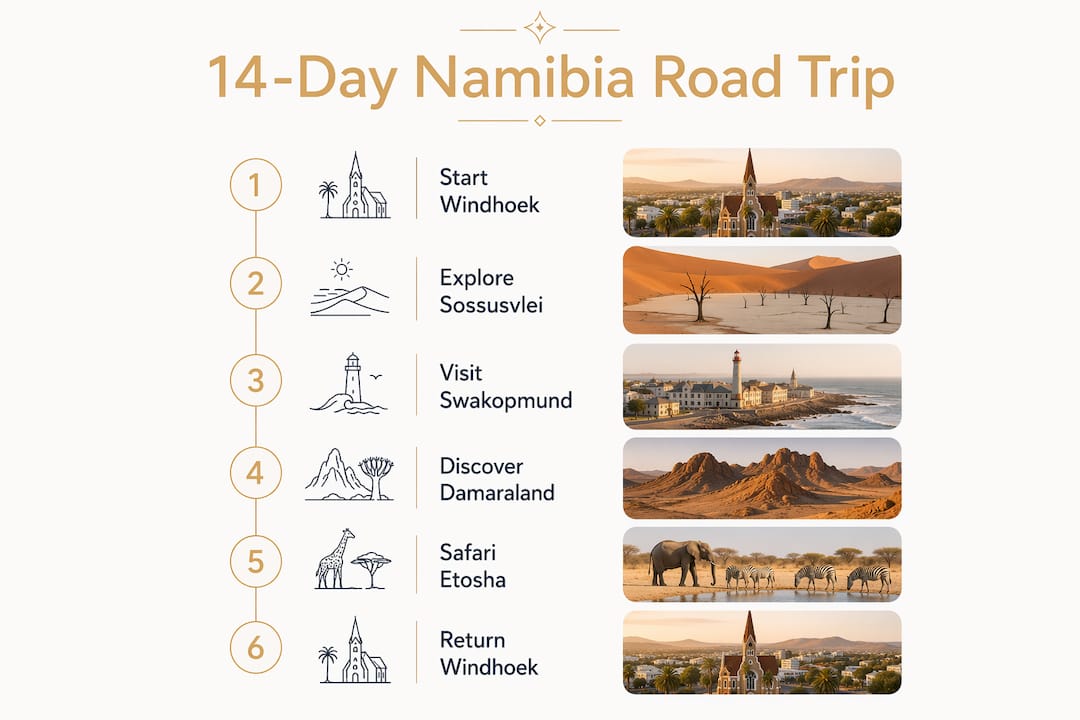
Here’s what the classic loop looks like at a glance:
Windhoek (Days 1): Arrival, vehicle collection, supplies. Airport to city is roughly 45 minutes.
Sesriem and Sossusvlei (Days 2–3): The towering orange dunes, Deadvlei’s ghostly camel thorn trees, Sesriem Canyon. Around 5–6 hours from Windhoek on a mix of tarred and gravel road.
Swakopmund (Days 4–5): Atlantic coast, sandboarding, seafood, and the Skeleton Coast gateway. Approximately 5 hours via Solitaire.
Damaraland (Days 6–7): Ancient rock engravings, desert-adapted elephants, and vast silence. Gravel roads; allow a full day.
Etosha National Park (Days 8–10): Wildlife at floodlit waterholes, black rhino, elephant, lion, and giraffe. Long but manageable driving legs between camps.
Windhoek (Day 11): Buffer night before your flight. Never drive from Etosha to the airport on the same day.
A 4x4 high-clearance vehicle is strongly recommended, especially if you plan to visit Damaraland, the Skeleton Coast, or any remote gravel tracks. The dry season from May to October offers the best road conditions and wildlife viewing. Book your vehicle at least 4–6 months ahead; quality 4x4s sell out fast.
Table of Contents
How do you plan the timing and logistics for a Namibia road trip?
What vehicle do you need, and what are Namibia’s roads really like?
What does a detailed 14-day Namibia itinerary look like?
What are your accommodation options along the route?
What safety and practical advice do you need for driving Namibia?
Secretnamibia makes your Namibia self-drive exceptional
Key takeaways
How do you plan the timing and logistics for a Namibia road trip?
When to go
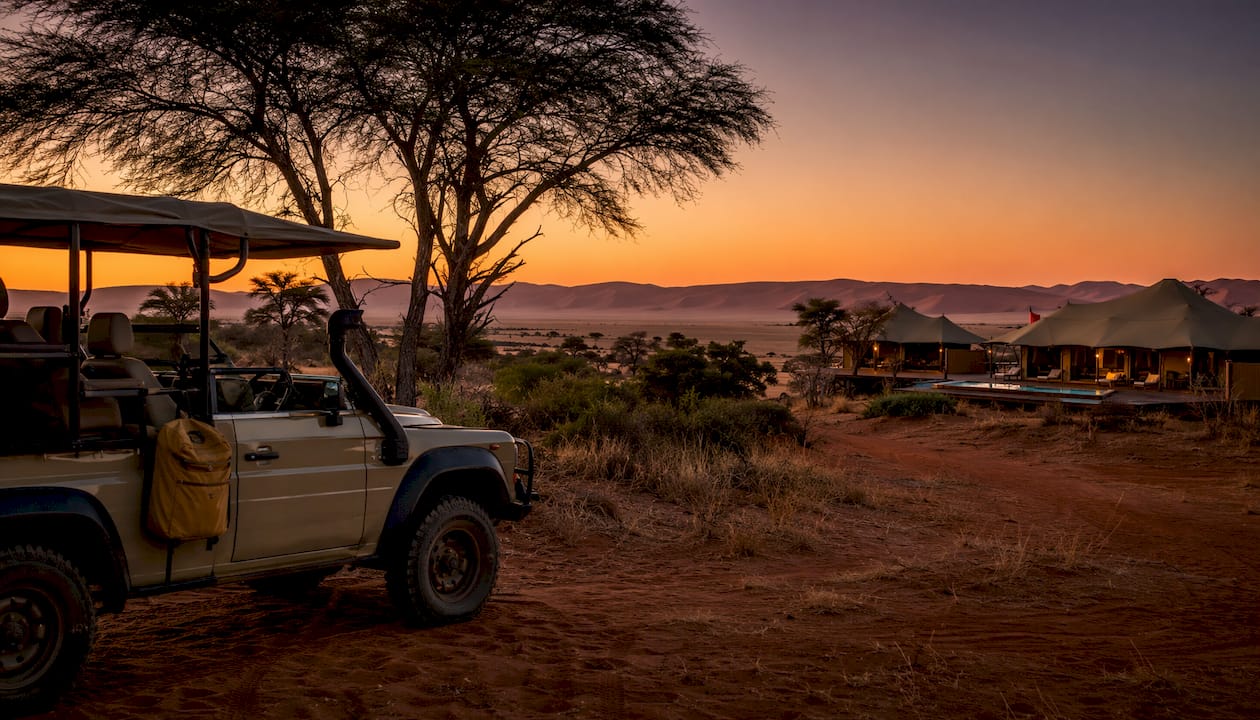
The dry season from May to October is the ideal window for a self-drive safari. Temperatures during this period range from 5–22°C (41–72°F), roads are more predictable, and wildlife congregates around waterholes in Etosha, making sightings almost guaranteed. June through August can be genuinely cold at night, particularly if you’re camping near Sesriem, so pack layers regardless of how hot the afternoons feel.
November to April brings the green season. The desert blooms, birding improves dramatically, and lodge rates can drop. The trade-off is that storms can turn gravel roads into muddy obstacles, and some tracks become impassable. If this is your first self-drive in Africa, the dry season is the safer debut.
Getting to Namibia
Most international travelers fly into Hosea Kutako International Airport, roughly 45 km east of Windhoek. Direct connections from the US typically route through Johannesburg or Frankfurt. UK travelers should check current entry requirements before departure, as visa rules and passport validity conditions apply. US citizens generally receive a visa-free entry stamp on arrival for stays up to 90 days, but always verify current conditions with the Namibian embassy before you travel.
Border crossings and transfrontier routes
If your itinerary extends into Botswana or Zimbabwe via the Kavango Zambezi Transfrontier Conservation Area, you’ll need to declare this to your rental company and carry the relevant cross-border permits. Most standard rental agreements restrict vehicles to Namibia only. Confirm in writing before you sign.
Pre-trip logistics checklist
Obtain an International Driving Permit alongside your US driver’s license.
Download offline maps (Maps.me and Google Maps offline both work well) before leaving Windhoek; cell coverage disappears fast outside towns.
Purchase a local SIM card in Windhoek for data and emergency calls on the MTC or TN Mobile networks.
Book park entry permits for Etosha and Sossusvlei in advance through Namibia Wildlife Resorts.
Carry USD cash as a backup; card acceptance is unreliable at remote fuel stations.
Pro Tip: Book your 4x4 rental at least 4–6 months before departure. Quality high-clearance vehicles are in short supply during peak dry season, and last-minute options are often older, less reliable models that can leave you stranded on a remote gravel road.
What vehicle do you need, and what are Namibia’s roads really like?
Choosing the right vehicle
The vehicle decision shapes your entire trip. A standard 2WD sedan can technically complete the classic loop in dry conditions if you stick to the main tarred B roads and well-graded gravel, but it limits you significantly. A high-clearance 2WD opens up more of the gravel network. A 4x4 is essential for accessing remote areas like the Skeleton Coast, Kaokoland, and any soft sand sections near Sossusvlei’s inner dunes.
The most popular choice among experienced self-drivers is a 4x4 double-cab with a rooftop tent. It combines transport and accommodation, gives you access to remote campsites, and handles Namibia’s varied surfaces with confidence. That said, it’s not automatically cheaper once you factor in rental costs, campsite fees, fuel consumption, and insurance. Run the numbers against lodge-based options before you commit.
Namibia’s road network
Namibia’s roads fall into three broad categories. The tarred B roads connect major towns and are generally in good condition. The gravel C and D roads form the backbone of the tourist circuit and require a completely different driving style. Sand tracks in areas like the Namib dune sea demand genuine 4x4 technique.
On gravel, safe speeds sit between 60–80 km/h, and navigation apps consistently underestimate drive times by 20–30%. Corrugations, the rhythmic ridges that form on gravel roads, can make a vehicle skate at speed. Dust reduces visibility. Wildlife crosses without warning. Plan for every gravel leg to take meaningfully longer than your map suggests.
Statistic callout: GPS apps underestimate gravel road drive times by up to 30%. A route that looks like three hours on Google Maps can easily become four and a half on Namibian gravel, especially after rain or on an ungraded track.
Road safety essentials
Never drive after dark. Animals wander onto roads, and help can be very far away.
Respect the 60 km/h speed limit in towns and 120 km/h on tarred roads.
Watch for oryx, kudu, and cattle, particularly at dawn and dusk.
Keep a safe following distance behind other vehicles on gravel to avoid windscreen chips.
Carry at least two spare tires; sharp rocks cause punctures with little warning.
For a deeper look at self-driving in Namibia, including vehicle setup and route-specific advice, Secretnamibia’s guide covers the practical detail that most generic travel sites skip.
What does a detailed 14-day Namibia itinerary look like?
The table below maps the full circuit with driving distances, road types, and the main draws at each stop. Use it as your planning skeleton, then build flexibility around it.
Days | Location | Drive from previous stop | Road type | Main highlights |
|---|---|---|---|---|
1 | Windhoek | Arrival | Tarred | Supplies, vehicle collection, city orientation |
2–3 | Sesriem and Sossusvlei | 5–6 hours | Tarred then gravel | Sossusvlei dunes, Deadvlei, Sesriem Canyon |
4–5 | Swakopmund | Approximately 5 hours via Solitaire | Tarred and gravel | Skeleton Coast, sandboarding, Cape Cross seal colony |
6–7 | Damaraland | — | Mostly gravel | Twyfelfontein rock engravings, desert elephants, Brandberg |
8–10 | Etosha National Park | ~300 km, 4 hours | Tarred | Waterhole game drives, lion, elephant, black rhino, giraffe |
11 | Windhoek | — | Tarred | Buffer night before departure |
Day-by-day highlights
Day 1: Windhoek. Collect your vehicle, stock up at a Woermann Brock or Checkers supermarket, and sleep. Do not drive into the dark on arrival day. Windhoek’s guesthouses in the Klein Windhoek area are comfortable and well-positioned for an early start.
Days 2–3: Sesriem and Sossusvlei. Sossusvlei is the image everyone carries of Namibia: colossal orange dunes, the bleached white pan of Deadvlei, and dead camel thorn trees that have stood for centuries. Go at sunrise. The light goes flat quickly, and the heat by mid-morning is punishing. If you stay inside the Sesriem gate at the Sesriem campsite or Sossus Dune Lodge, you gain access before the gates open to outside visitors, which makes a real difference at Deadvlei. Drive to the 2WD parking area, then take the shuttle for the final sandy section unless you’re confident in deep sand driving.
Days 4–5: Swakopmund. The Atlantic coast arrives as a genuine shock after the desert. Swakopmund is a charming colonial town with excellent seafood, a lively craft market, and a full menu of adventure activities. The Skeleton Coast north of town is raw and beautiful. Cape Cross, about 120 km north, hosts one of the largest Cape fur seal colonies in the world. The smell is extraordinary. Sandboarding on the dunes outside town is worth a morning, and a Sandwich Harbour tour from Walvis Bay, driving between dune walls and ocean, is one of those Namibia experiences that doesn’t feel quite real while it’s happening.
Days 6–7: Damaraland. This is Namibia’s most underrated region for many first-timers. The Twyfelfontein rock engravings are among Africa’s richest collections of ancient rock art. Desert-adapted elephants roam the dry riverbeds, and the Brandberg massif, Namibia’s highest mountain, dominates the horizon. Roads here are gravel and slow; budget a full day for the drive from Swakopmund and arrive with daylight to spare.
Days 8–10: Etosha National Park. Etosha is wonderfully accessible for first-time safari travelers. You drive between waterholes, cut the engine, and wait. Elephants arrive like a weather system. Giraffes fold themselves down to drink. The floodlit waterhole at Okaukuejo Rest Camp is famous for black rhino sightings after dark. Etosha entrance fees are approximately N$150 (~$8) per adult per day, with a separate vehicle fee. Budget this into your overall costs. Three nights here is the minimum to do the park justice; two nights will feel rushed.
Day 11: Windhoek. A buffer night in Windhoek before your flight is not optional. The drive from Etosha to the airport is long, and flight delays or a flat tire on the way can turn a tight schedule into a missed connection. Use the evening to return your vehicle, have a final meal, and decompress.
Daily practical tips
Start driving by 6:30 AM on dune days to catch sunrise light at Sossusvlei.
Carry at least 5 liters of water per person daily, more in summer.
Fuel stops are spaced 150–300 km apart depending on the route; fill up whenever you see a station.
Keep a cooler box stocked with cold water and snacks to avoid unnecessary stops in heat.
Tell your accommodation where you’re heading on remote driving days.
What are your accommodation options along the route?
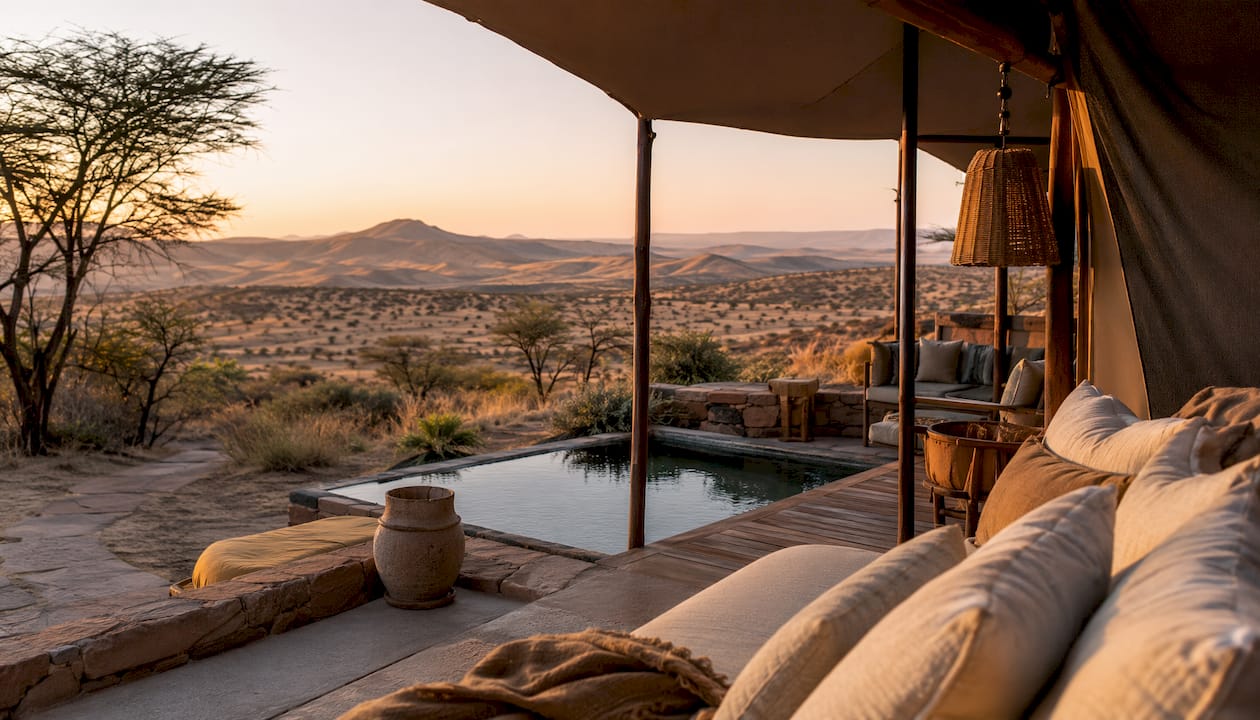
Namibia offers a genuinely wide spectrum, from bare-bones campsites under a sky so dark it feels theatrical, to lodge rooms that wouldn’t look out of place in an architectural magazine. The choice shapes the experience as much as the route itself.
Camping
Camping is the most immersive way to experience Namibia’s landscapes. Namibia Wildlife Resorts operates campsites inside the major parks, including Sesriem, Okaukuejo in Etosha, and Halali. Private campgrounds along the route offer more facilities, often with power points, hot showers, and small shops. Campsites typically charge $18–40 per person per night, making camping the most budget-conscious option on the circuit. The trade-off is comfort, particularly in winter when temperatures near Sesriem can drop sharply overnight.
A 4x4 with a rooftop tent is the classic camping setup. It keeps you off the ground, away from insects and small animals, and gives you the freedom to stop wherever the light or the wildlife demands it.
Lodges and guesthouses
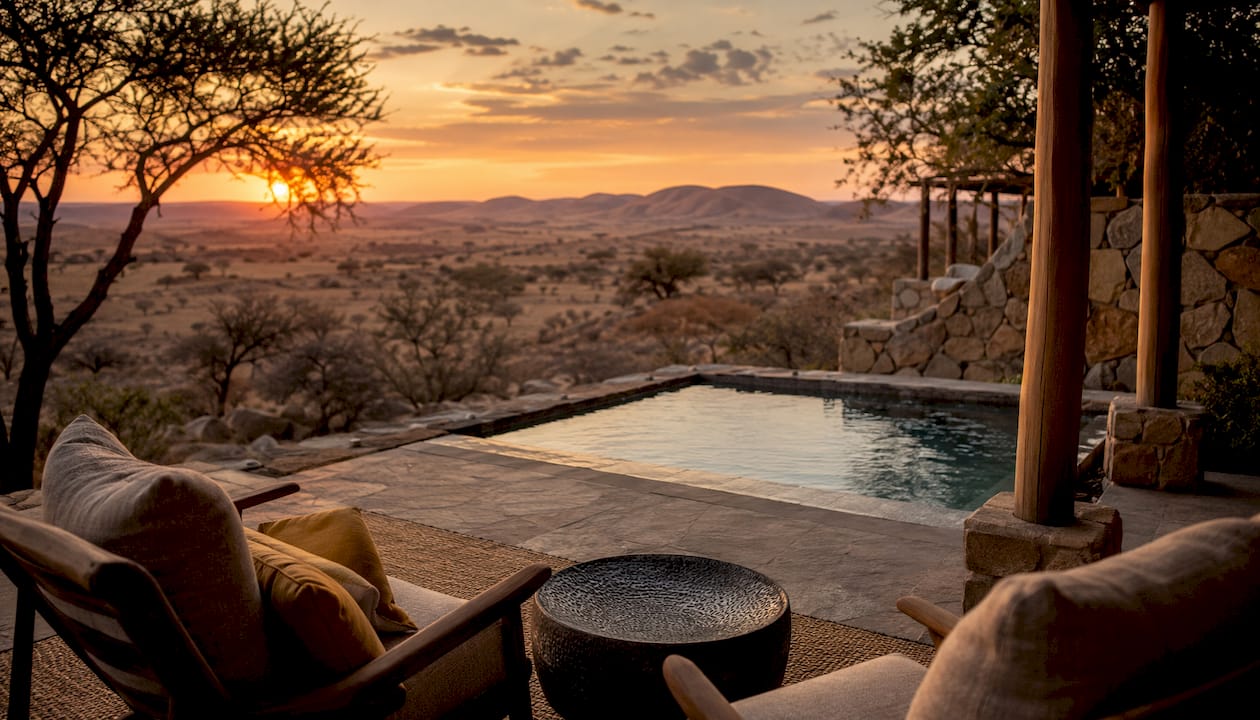
Lodges along the Namibia circuit range from simple guesthouses at around $80–130 per night to spectacular desert camps where the architecture itself is part of the experience. Lodges from $150 per night upward typically include dinner and breakfast, which simplifies planning considerably on long driving days. Luxury camps in areas like the NamibRand Nature Reserve, a vast private reserve bordering the Namib-Naukluft Park, offer an entirely different level of seclusion and service.
Book lodge accommodation at least three to four months ahead for the dry season, particularly for Sesriem and Etosha. Popular camps sell out, and the alternatives are often a long drive away.
Popular accommodation hubs along the route
Windhoek: Klein Windhoek guesthouses; good base for pre-trip supplies and post-trip buffer nights.
Sesriem: Campsites inside the gate for early dune access; Sossus Dune Lodge for comfort without leaving the park.
Swakopmund: Town guesthouses and hotels; the most urban stop on the circuit.
Damaraland: Remote lodges and campsites; book early as options are limited.
Etosha: Namibia Wildlife Resorts camps at Okaukuejo, Halali, and Namutoni; private lodges just outside the park gates.
For a curated overview of the best lodges in Namibia across all budget levels, Secretnamibia’s lodge guide covers the options that consistently deliver on both location and experience.
What safety and practical advice do you need for driving Namibia?
Road safety
The single most important rule is simple: do not drive after dark. Animals, including oryx, kudu, cattle, and donkeys, wander onto roads without warning, and a collision at speed in a remote area is a serious emergency. Plan your daily driving to finish well before sunset, ideally by 5:00 PM. This is not overcaution; it’s how experienced Namibia travelers structure every day.
Speed on gravel is the other major risk. The posted limit may be 80 km/h, but your safe speed depends on the road surface, how recently it was graded, the load in your vehicle, and the wind. Corrugations can cause a vehicle to skate sideways at speeds that feel perfectly reasonable. Slow down, and add time buffers to every gravel leg.
Tyre management
Carry at least two spare tires and your own compressor. Sharp rocks cause punctures regularly on Namibian gravel, and rental companies often recommend lowering tyre pressure for better traction and comfort on corrugated roads. A compressor lets you reinflate before returning to tarred roads. Without two spares, a second puncture in a remote area leaves you genuinely stranded.
Health and medical preparation
The CDC recommends that travelers to Namibia be up to date on routine vaccinations and consider hepatitis A and typhoid vaccines. Malaria prophylaxis is recommended for the Kavango and Zambezi regions in the north and northeast; Etosha and the main tourist circuit carry lower risk but check current guidance before you travel. Medical facilities in Windhoek are adequate; outside the capital, clinics are sparse and hospitals are far apart. Comprehensive travel insurance that covers medical evacuation is not optional on a remote self-drive trip.
Navigation and communication
Download offline maps before leaving Windhoek. Maps.me works well for Namibia’s gravel network and updates more reliably than Google Maps in rural areas. A GPS unit loaded with Namibia maps is an additional layer of security on remote routes. Cell coverage on the MTC network reaches most towns and some main roads, but disappears entirely in large stretches of Damaraland and the Skeleton Coast. A satellite communicator like a Garmin inReach is worth considering if you’re driving genuinely remote legs alone.
Packing checklist for Namibia conditions
Minimum 5 liters of water per person per day; more if camping
Two spare tires and a compressor
Basic tool kit and tow rope
Jump leads
First aid kit with blister treatment, rehydration sachets, and antihistamines
High-SPF sunscreen and lip balm
Warm layers for cold desert nights (May through August)
Headlamp with spare batteries
Physical paper maps as a backup to digital navigation
Pro Tip: Plan two-night minimum stays at every major stop. One-night stops make Namibia feel like a relay race. Two nights at Sesriem, two in Swakopmund, two in Damaraland, and at least two in Etosha give you the breathing room to actually experience each place rather than just pass through it.
Secretnamibia makes your Namibia self-drive exceptional
Planning a road trip of this scale takes real expertise. Choosing the right vehicle category, sequencing the stops to avoid brutal back-to-back driving days, knowing which lodges are genuinely worth the premium and which are trading on location alone — these are decisions that separate a memorable trip from an exhausting one.
Secretnamibia specializes in exactly this kind of bespoke self-drive planning. Rather than handing you a generic itinerary and wishing you luck, the team builds your route around your travel style, your pace, and the experiences that matter most to you — whether that’s waking up inside the Sesriem gate for first light on the dunes, spending an extra night at a private reserve in NamibRand, or adding a fly-in leg to a remote corner of the country that most self-drivers never reach. The self-drive safari packages cover the full spectrum from independent camping circuits to fully supported luxury lodge itineraries, with expert guidance at every stage. If you want your Namibia trip planned by people who know the roads, the lodges, and the rhythms of this extraordinary country, get in touch with the Secretnamibia team and start building your itinerary today.
Key takeaways
A 14-day self-drive circuit covering Windhoek, Sossusvlei, Swakopmund, Damaraland, and Etosha is the most rewarding way to experience Namibia’s iconic landscapes and wildlife on your own terms.
Point | Details |
|---|---|
Ideal trip length | Fourteen days covers the classic circuit without rushing; seven days is the minimum, three weeks for deeper exploration. |
Best travel window | The dry season from May to October offers temperatures of 5–22°C, better roads, and concentrated wildlife at waterholes. |
Vehicle choice | A 4x4 high-clearance vehicle is essential for Damaraland and the Skeleton Coast; book at least 4–6 months ahead. |
Driving reality | GPS apps underestimate gravel road drive times by up to 30%; plan two-night minimum stays at each major stop to avoid fatigue. |
Secretnamibia | Offers bespoke self-drive itineraries from camping circuits to luxury lodge routes, with expert planning support throughout. |
Recommended
RELATED
Safari Guides
Oct 30, 2025
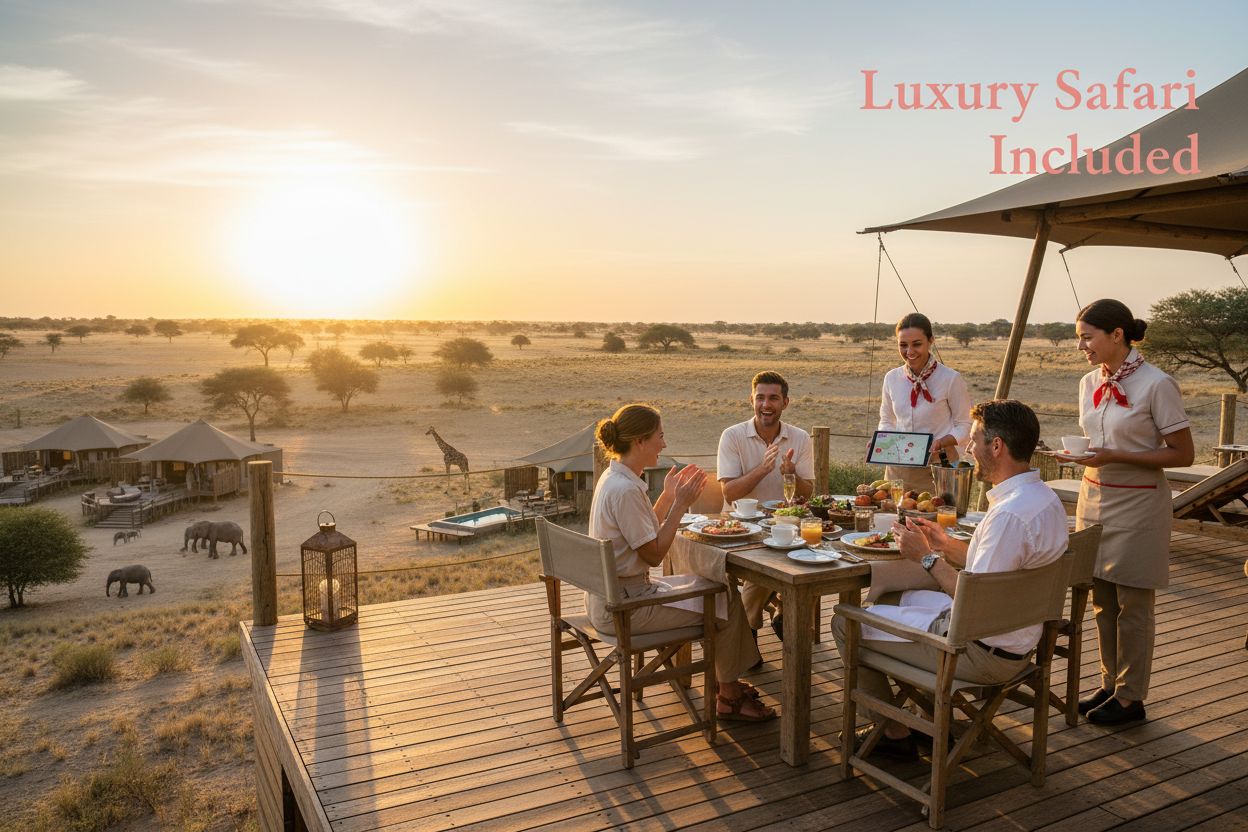
Understanding What is Included in Luxury Safaris
Explore what is included in luxury safaris, from exclusive accommodations to bespoke experiences that cater to discerning travelers.
Feb 24, 2026
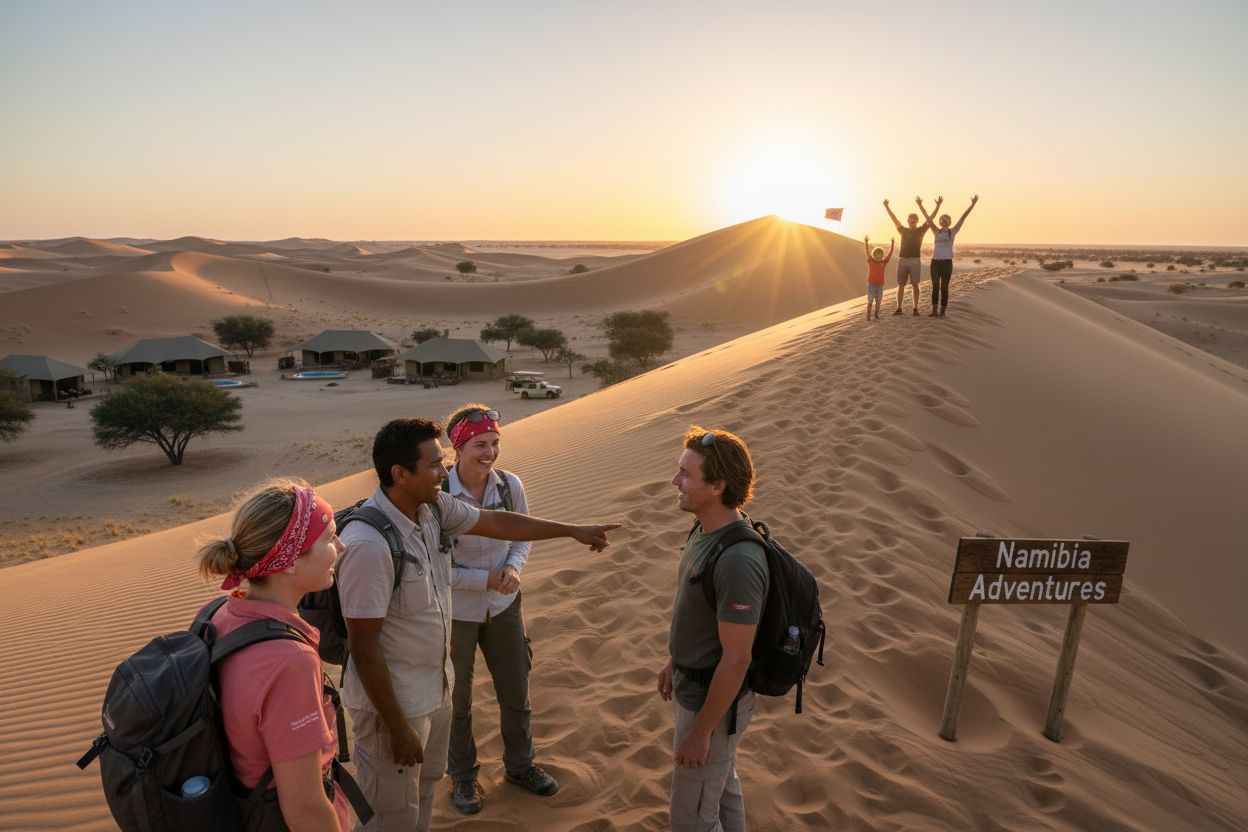
Why Namibia Adventures Matter: An In-Depth Look
Discover why Namibia adventures are essential for luxury travelers seeking unique, immersive experiences in nature and wildlife exploration.
Feb 23, 2026
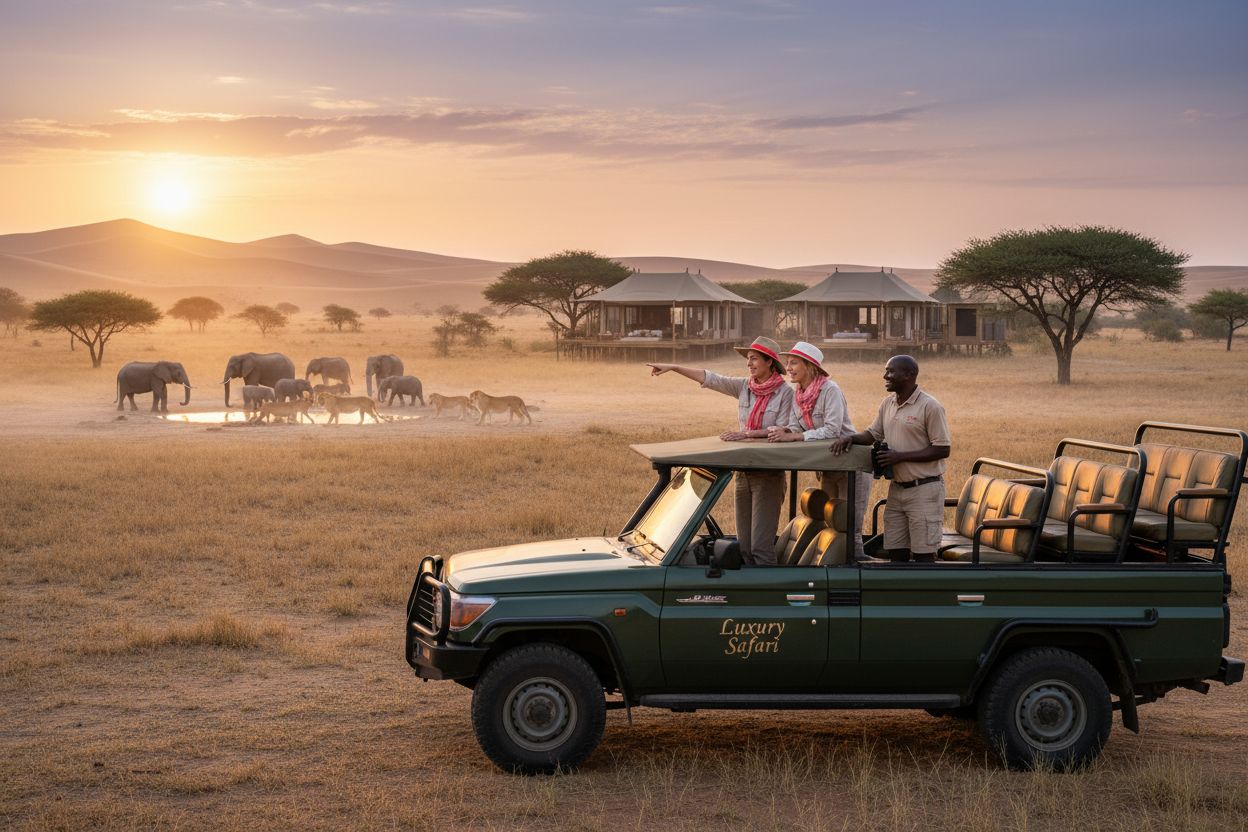
What to Expect on a Luxury Safari: A Comprehensive Guide
Discover what to expect on a luxury safari and gain a deeper understanding of the unique experiences that await you in the wild.
Feb 22, 2026
Understanding Namibia Safari Costs Explained
Explore Namibia safari costs explained to uncover what influences pricing and what it means for your adventure.
Feb 21, 2026
Understanding the Role of Safari Experts in Wildlife Travel
Explore the role of safari experts and gain a comprehensive understanding of how they enhance wildlife travel experiences for all types of travelers.
Feb 20, 2026
Guide organisation safari all inclusive : vivez l'aventure de vos rêves
Découvrez notre guide organisation safari all inclusive étape par étape pour planifier un voyage inoubliable au cœur de la nature.