
2025年5月14日
What is Fish River Canyon? Discover its dramatic geology, safari activities, and why it’s unmissable for luxury and adventure travellers in Namibia.
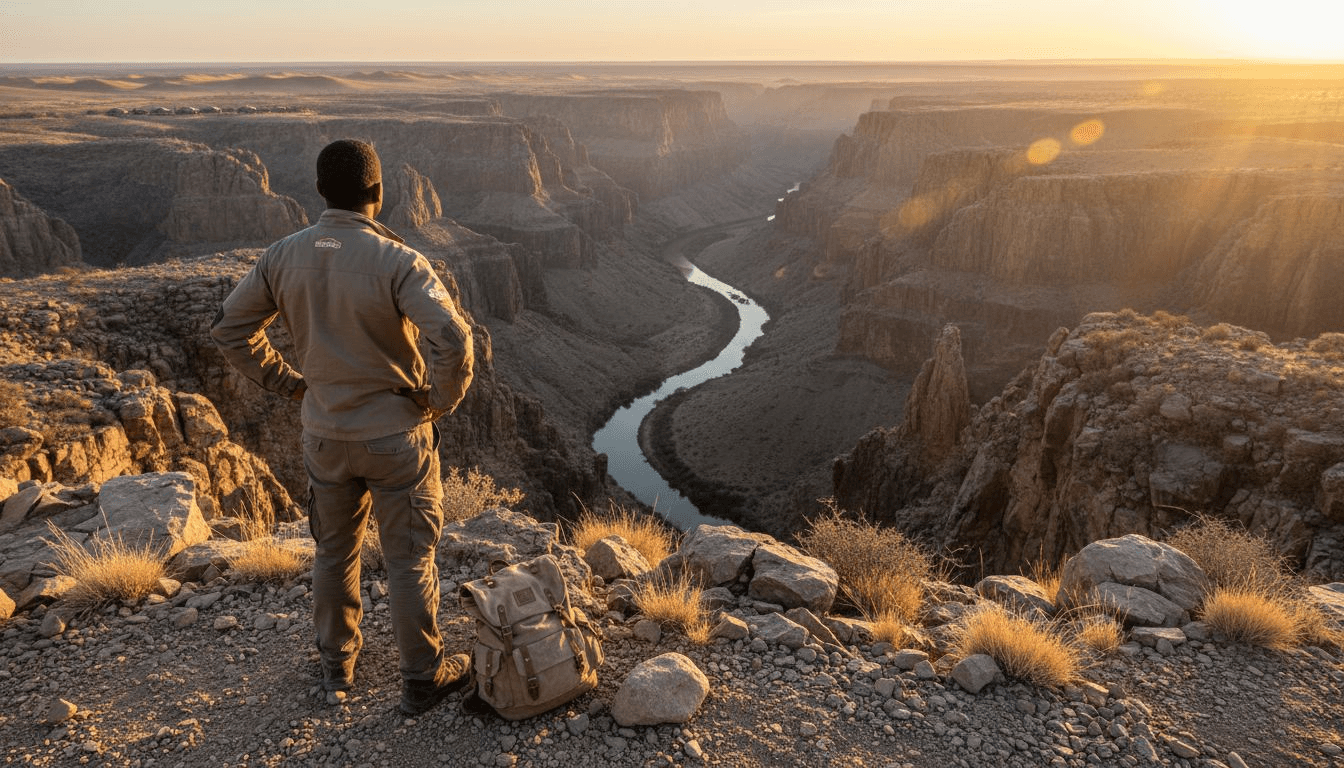
What Is Fish River Canyon? Namibia’s Rugged Marvel
Most south-african safari itineraries overlook the sheer scale of Fish River Canyon, yet this geological wonder stretches an astonishing 160 kilometres across southern Namibia. For discerning European and North American travelers, the canyon’s rugged terrain and rich wildlife offer a rare blend of adventure and exclusivity. Discover why Fish River Canyon, with its dramatic depths and luxury safari options, stands as Africa’s largest canyon and a must-see destination for those seeking a truly remarkable wilderness experience.
Table of Contents
Fish River Canyon Defined And Debunked
Geological Features And Ancient Formation
Wildlife, Vegetation, And Natural Wonders
Adventure Activities And Visitor Experiences
Best Times, Safety, And Luxury Safari Access
Key Takeaways
Point | Details |
|---|---|
Unique Geology | Fish River Canyon is a significant geological formation shaped by tectonic activity, not merely a desert landscape. |
Adventure Opportunities | The canyon offers a range of adventure activities, from challenging hikes to relaxation at hot springs. |
Biodiversity | An ecological sanctuary, Fish River Canyon is home to over 835 plant species and diverse wildlife adapted to aridity. |
Visitor Guidelines | Strict access protocols are in place to ensure safety and protect the delicate ecosystem, including mandatory permits. |
Fish River Canyon Defined And Debunked
Fish River Canyon stands as a phenomenal geological marvel nestled in southern Namibia, representing an extraordinary landscape that challenges common perceptions about canyon formations. Stretching across an impressive 160 kilometres, this natural wonder defies typical canyon expectations with its remarkable scale and unique geological characteristics.
Contrary to popular misconceptions, Fish River Canyon is not simply a desert landscape but a complex geological system shaped by millions of years of tectonic activity and climatic transformations. The canyon forms a central feature of the Ai-Ais Richtersveld Transfrontier Park, revealing intricate geological processes that have carved this spectacular gorge. Its dimensions are truly staggering - reaching nearly 27 kilometres in width and plunging almost 550 metres deep, making it the largest canyon in Africa and one of the most significant geological formations on the continent.
While many travellers mistakenly compare Fish River Canyon to the Grand Canyon, the two are distinctly different geological phenomena. The Namibian canyon’s formation involves unique regional tectonic shifts and erosional processes specific to southern Africa’s landscape. Unlike its North American counterpart, Fish River Canyon presents a more rugged, less stratified appearance, with rock formations that tell a complex story of geological evolution spanning hundreds of millions of years.
Key characteristics that distinguish Fish River Canyon include:
To clarify distinctions between Fish River Canyon and the Grand Canyon, here is a comparative overview:
Feature | Fish River Canyon (Namibia) | Grand Canyon (USA) |
|---|---|---|
Length | 160 kilometres | 446 kilometres |
Maximum Width | 27 kilometres | 29 kilometres |
Maximum Depth | 550 metres | Over 1,800 metres |
Main Formation Process | Tectonic activity, regional erosion | Primarily river and tectonic uplift |
Landscape Appearance | Rugged, less stratified rock layers | Layered, clearly stratified rock walls |
Key Location | Ai-Ais Richtersveld Transfrontier Park | Grand Canyon National Park |
Notable Features | Ediacaran fossils, Precambrian layers | Prominent sandstone, widespread vistas |
Extraordinary length of 160 kilometres
Maximum width of 27 kilometres
Depth reaching approximately 550 metres
Formation primarily through tectonic and erosional processes
Located within the Ai-Ais Richtersveld Transfrontier Park
Pro Tip: When visiting Fish River Canyon, bring high-quality binoculars and a geological guidebook to fully appreciate the intricate landscape and understand its remarkable formation processes.
Geological Features And Ancient Formation
Fish River Canyon represents a geological time capsule that unveils an extraordinary narrative of Earth’s transformative processes spanning hundreds of millions of years. Its formation traces back over 650 million years to the development of a sedimentary basin associated with late Gondwana orogeny, revealing a complex landscape shaped by tectonic shifts, glacial movements, and persistent erosional forces.
The canyon demonstrates remarkable evidence of Cenozoic tectonic events, including significant NE-SW and N-S graben formations, which contributed to its dramatic vertical profile. These geological processes created a landscape characterised by deep meandering channels and spectacular rock exposures. The ancient Fish River gradually carved through progressively uplifted terrain, leaving behind intricate rock formations that serve as a testament to the region’s dynamic geological history.
Unique geological characteristics of Fish River Canyon include:
Rock layers dating back to the Precambrian era
Evidence of multiple tectonic uplift episodes
Presence of significant Ediacaran fossil deposits
Complex sedimentary structures reflecting multiple geological periods
Exposed rock strata revealing millions of years of geological transformation
The canyon’s geological composition represents a remarkable archive of Earth’s transformative processes, with rock formations that tell a story of continuous landscape evolution. From glacial periods to tectonic shifts, each layer represents a chapter in southern Africa’s extensive geological narrative, offering geologists and researchers an unparalleled window into the planet’s ancient history.
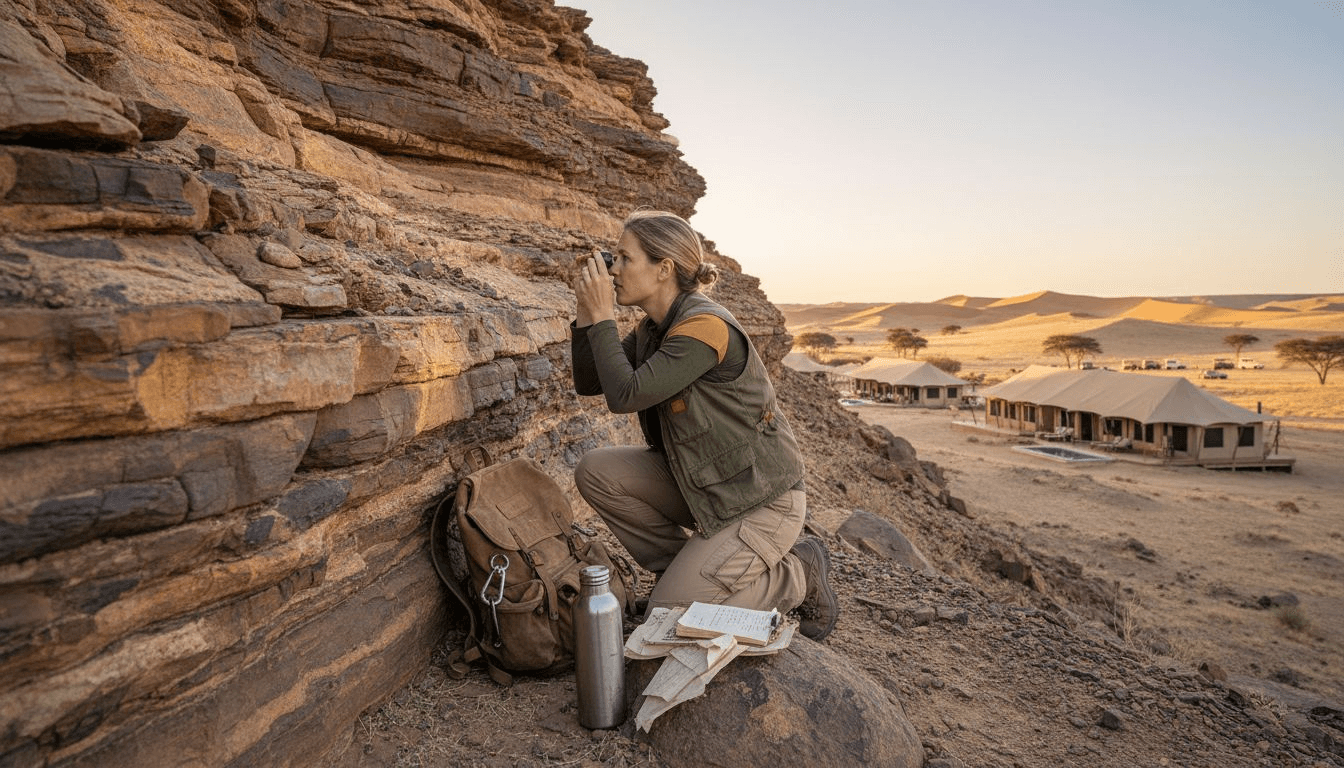
Pro Tip: When exploring Fish River Canyon, carry a hand lens and geological field guide to help identify and understand the intricate rock formations and their historical significance.
Wildlife, Vegetation, And Natural Wonders
Fish River Canyon represents a remarkable ecological sanctuary, hosting an extraordinary biodiversity with 835 documented plant species across its topographically diverse landscape. This rugged terrain supports a complex ecosystem characterised by rare succulents, endemic flora, and unique transitional vegetation zones that have adapted to the region’s challenging environmental conditions.
The canyon’s habitat diversity supports an impressive range of wildlife specifically adapted to arid environments, including specialized antelope species, diverse bird populations, fascinating reptiles, and intricate invertebrate communities. These resilient creatures have developed remarkable survival strategies, enabling them to thrive in one of southern Africa’s most demanding landscapes. Conservation efforts in the region focus on meticulously mapping and protecting rare and endemic species while understanding the delicate interactions between vegetation, wildlife, and the overall environmental stability of the canyon ecosystem.
Unique ecological features of Fish River Canyon include:
Rich succulent plant diversity
Endemic flora found nowhere else in Namibia
Specialized wildlife adapted to extreme arid conditions
Complex microhabitats within canyon terrain
Transitional vegetation zones supporting diverse ecological interactions
The canyon’s natural environment represents a living museum of ecological adaptation, where every rock formation, plant, and animal species tells a story of survival and resilience. From microscopic invertebrates to larger mammals, the ecosystem demonstrates an intricate balance of life that has evolved to withstand harsh climatic conditions and limited resources.
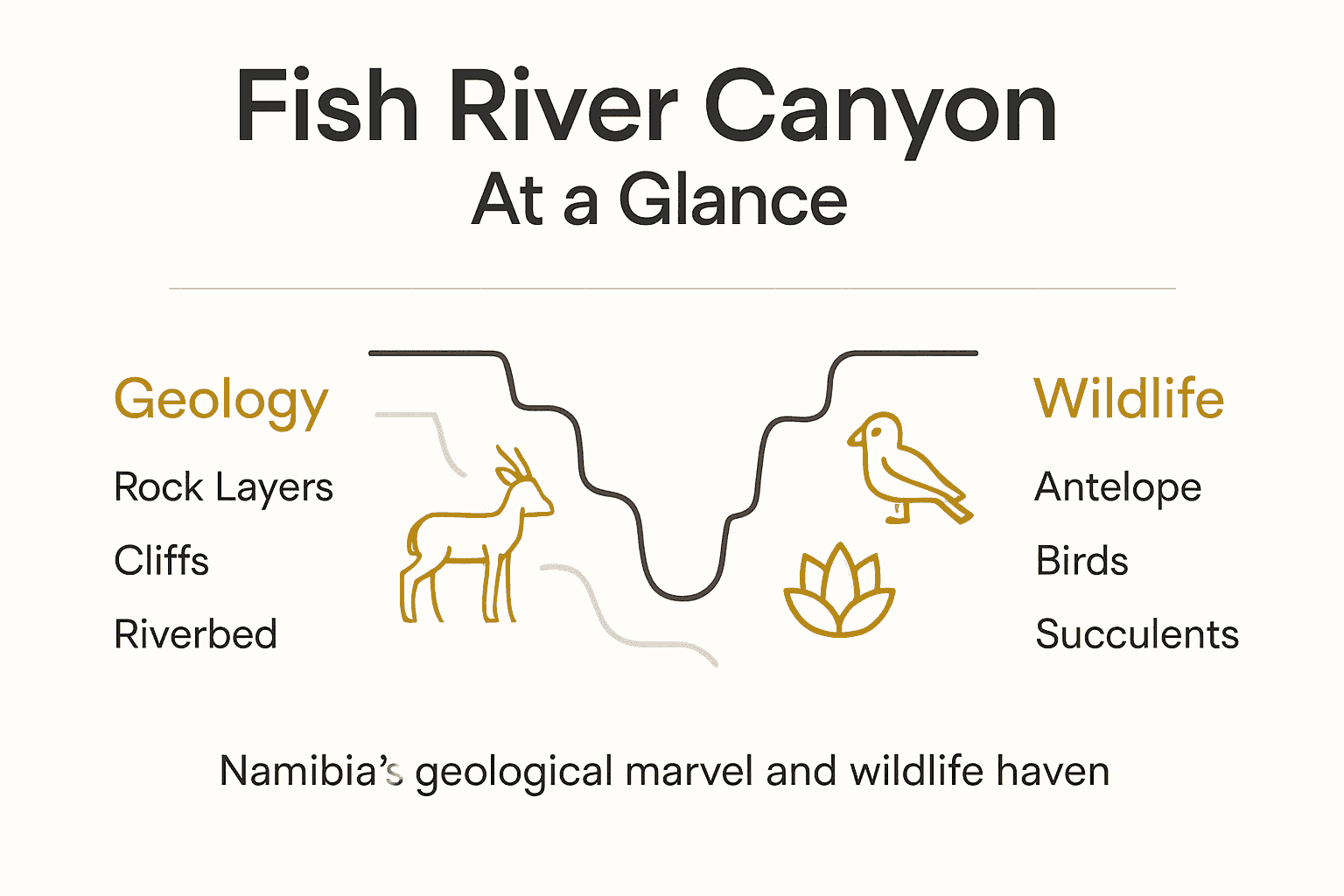
Pro Tip: Bring high-quality binoculars and a regional wildlife identification guide to maximise your wildlife viewing experience and understand the unique adaptations of Fish River Canyon’s inhabitants.
Adventure Activities And Visitor Experiences
Fish River Canyon offers adventurers an unparalleled wilderness experience with globally renowned adventure tourism options that cater to diverse traveller preferences. The multi-day Fish River Canyon Hiking Trail stands as the crown jewel of visitor activities, providing intrepid explorers an immersive journey through one of southern Africa’s most spectacular landscapes.
Visitor experiences range from structured guided tours to self-directed exploration, accommodating various travel styles and fitness levels. Adventurers can engage in a multitude of activities that showcase the canyon’s natural beauty, including:
Challenging multi-day hiking expeditions
Guided walking tours with expert naturalists
Birdwatching in unique ecological zones
Photography expeditions capturing dramatic landscape vistas
Relaxing at natural hot springs in Ai-Ais
Camping under spectacular starry skies
The canyon’s adventure offerings are carefully balanced between providing extraordinary experiences and maintaining strict environmental preservation protocols. Visitors must adhere to carefully designed regulations that protect the fragile ecosystem while allowing meaningful engagement with this remarkable natural wonder. From professional hikers to casual nature enthusiasts, Fish River Canyon presents a landscape that challenges, inspires, and transforms travellers’ understanding of wilderness exploration.
7 Namibian adventure activities for luxury travelers demonstrate the region’s exceptional potential for unforgettable experiences, with Fish River Canyon representing a pinnacle of natural adventure.
Pro Tip: Book your hiking permits well in advance and ensure you are physically prepared with appropriate gear and fitness levels for the challenging terrain.
For those planning a visit, the following table summarises adventure activities and ideal timing:
Activity | Season (Best Months) | Fitness Level Needed | Unique Benefit |
|---|---|---|---|
Multi-day hiking trail | May to September | High | In-depth canyon immersion |
Guided walking tours | May to September | Moderate | Geology and flora insights |
Birdwatching | April, September | Low | Spot rare desert species |
Hot spring relaxation | April to October | Low | Natural wellness experience |
Landscape photography | Year-round | All levels | Dramatic light conditions |
Best Times, Safety, And Luxury Safari Access
Planning a visit to Fish River Canyon requires strategic timing and careful preparation, with the official hiking season carefully regulated between April and September to ensure visitor safety and optimal environmental conditions. These months offer cooler temperatures and more stable terrain, making them ideal for exploring this remarkable landscape.
Visitor safety is paramount in this challenging environment, with strict access protocols designed to protect both travellers and the fragile ecosystem. Key safety considerations include:
Mandatory hiking permits for trail access
Seasonal restrictions during extreme weather periods
Required fitness assessments for multi-day hiking expeditions
Limited daily visitor numbers to prevent environmental strain
Mandatory guide accompaniment for certain routes
Luxury safari experiences at Fish River Canyon seamlessly blend adventure with comfort, offering travellers sophisticated access to one of Namibia’s most breathtaking natural landscapes. The Essential Guide to Luxury Safari in 2025 highlights the unique opportunities for high-end exploration, where professional guides, exclusive accommodations, and tailored experiences transform a challenging environment into an unforgettable journey.
The canyon’s unique accessibility requires meticulous planning, with professional tour operators offering comprehensive packages that include transportation, expert guidance, high-end equipment, and carefully curated experiences that prioritise both safety and extraordinary adventure.
Pro Tip: Book your canyon expedition during the shoulder seasons of April or September to enjoy optimal weather conditions and fewer crowds while experiencing premium safari experiences.
Discover Fish River Canyon With Expert Guidance and Luxury Comfort
Exploring Fish River Canyon’s rugged beauty can be thrilling but also challenging without the right preparation and insider knowledge. This extraordinary landscape demands respect for its geological complexity and environmental sensitivity, requiring visitors to navigate permit regulations, seasonal conditions, and physically demanding trails. If you want to experience this natural marvel without compromising on safety, comfort, or authenticity, expert planning is essential.
Unlock the full potential of your Fish River Canyon adventure with Secret Namibia. Our bespoke safari experiences combine in-depth local knowledge, personalised itinerary design, and luxury accommodation options perfectly suited for exploring Namibia’s crown jewel locations like Fish River Canyon. Whether you seek a challenging multi-day hiking expedition or a more relaxed journey through the canyon’s breathtaking vistas, our expert team ensures you travel with confidence and style. Begin your unforgettable journey today by visiting Secret Namibia to tailor your exclusive luxury safari experience and secure your spot in one of Africa’s most spectacular natural wonders.
Frequently Asked Questions
What is Fish River Canyon?
Fish River Canyon is a massive geological formation located in southern Namibia, stretching approximately 160 kilometres in length and reaching depths of up to 550 metres. It is one of the largest canyons in the world, notable for its rugged landscape and unique geological characteristics.
How was Fish River Canyon formed?
Fish River Canyon was formed through millions of years of tectonic activity and erosion. Its formation dates back over 650 million years, involving glacial movements and tectonic shifts that carved the canyon’s deep, meandering channels and exposed rock layers.
What kinds of wildlife can I find at Fish River Canyon?
The canyon is home to a wide range of wildlife adapted to arid conditions, including specialized antelope species, various bird populations, and unique reptiles. The rich biodiversity supports approximately 835 documented plant species, contributing to a complex ecosystem.
What activities can I do when visiting Fish River Canyon?
Visitors to Fish River Canyon can engage in various activities, including multi-day hiking trails, guided walking tours, birdwatching, photography expeditions, and relaxing at natural hot springs. The adventure offerings cater to different fitness levels and are designed while prioritising environmental preservation.
Recommended
相关
萨法里指南

2025年10月30日
Understanding What is Included in Luxury Safaris
Explore what is included in luxury safaris, from exclusive accommodations to bespoke experiences that cater to discerning travelers.
2026年2月24日
Why Namibia Adventures Matter: An In-Depth Look
Discover why Namibia adventures are essential for luxury travelers seeking unique, immersive experiences in nature and wildlife exploration.
2026年2月23日
What to Expect on a Luxury Safari: A Comprehensive Guide
Discover what to expect on a luxury safari and gain a deeper understanding of the unique experiences that await you in the wild.
2026年2月22日
Understanding Namibia Safari Costs Explained
Explore Namibia safari costs explained to uncover what influences pricing and what it means for your adventure.
2026年2月21日
Understanding the Role of Safari Experts in Wildlife Travel
Explore the role of safari experts and gain a comprehensive understanding of how they enhance wildlife travel experiences for all types of travelers.

2026年2月20日
Guide organisation safari all inclusive : vivez l'aventure de vos rêves
Découvrez notre guide organisation safari all inclusive étape par étape pour planifier un voyage inoubliable au cœur de la nature.