
2025年5月27日
Role of safari guides explained: discover guide types, required skills, legal standards, risks, and tips for choosing in Namibia’s luxury safaris.
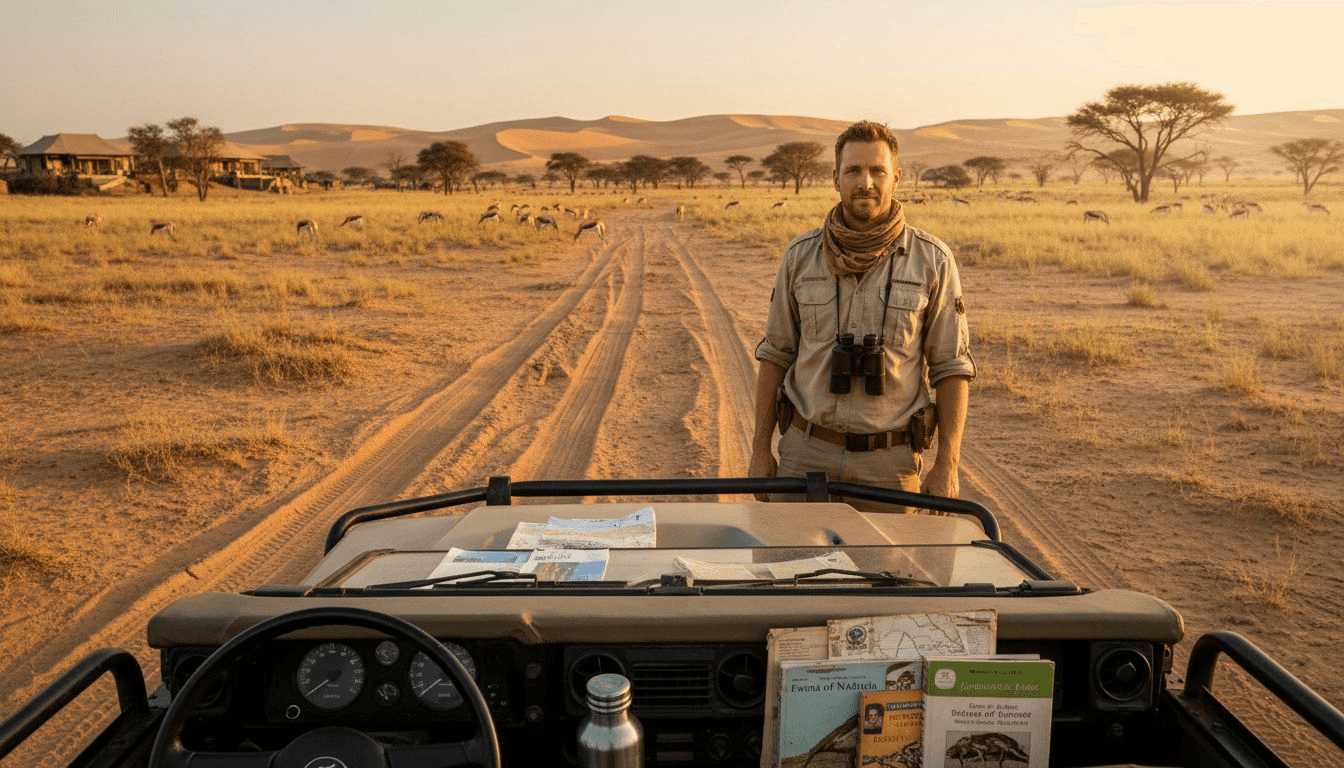
Role of Safari Guides – Key to Luxury Namibian Travel
Not all Namibian safaris deliver the unforgettable experiences affluent Canadian, American, and European travellers expect, and the difference often comes down to one key professional—the safari guide. In fact, research finds that guides account for over 70 percent of guest satisfaction on wilderness trips, far surpassing even luxury accommodations. A skilled south-african or Namibian guide transforms each game drive into a rich, insightful adventure, revealing hidden stories of the wild while ensuring comfort and safety with a personalised touch.
Table of Contents
What Makes A Safari Guide Essential
Types Of Safari Guides In Namibia
Core Skills And Qualifications Required
Legal Standards And Certification Processes
Critical Responsibilities And Client Safety
Risks, Mistakes And Choosing The Right Guide
Key Takeaways
Point | Details |
|---|---|
Role of Safari Guides | Safari guides are essential for providing immersive experiences, safety, and cultural and environmental education in Namibia’s wilderness. |
Types of Guides | There are various types of safari guides, including indigenous local, professional naturalists, and cultural interpreters, each offering unique expertise and experiences. |
Qualifications Required | Professional safari guides must possess advanced ecological knowledge, communication skills, and safety training, often validated by certifications such as FGASA. |
Selecting the Right Guide | Choosing a knowledgeable and compatible guide is crucial, as their expertise and interpersonal skills significantly influence the quality of the safari experience. |
What Makes a Safari Guide Essential
In the vast and intricate landscapes of Namibia, safari guides are far more than mere tour leaders. They are the essential bridge connecting travellers to the raw, untamed wilderness, transforming a simple journey into an extraordinary experience. Safari guides play a pivotal role in delivering informative, entertaining, and safety-conscious tours, serving as cultural interpreters, environmental educators, and skilled navigators.
Their expertise extends far beyond simply pointing out wildlife. These professionals are comprehensive storytellers who decode the intricate ecosystems, animal behaviours, and complex cultural narratives of Namibia. A skilled safari guide understands the subtle language of the wilderness - recognising animal tracks, predicting wildlife movements, and creating immersive experiences that reveal the deeper rhythms of nature. They ensure guest safety while simultaneously providing rich, contextual insights that transform a standard wildlife viewing into an educational and emotional journey.
The most exceptional safari guides possess a remarkable combination of skills. They are part naturalist, historian, linguist, and entertainer, capable of reading the landscape as intimately as a book. Their knowledge encompasses local ecology, wildlife biology, conservation challenges, and cultural heritage. This multidimensional expertise allows them to craft personalised experiences that resonate with each traveller’s unique interests and curiosities, whether that involves tracking elusive desert-adapted elephants, understanding indigenous San hunting techniques, or explaining the delicate balance of Namibia’s remarkable ecosystems.
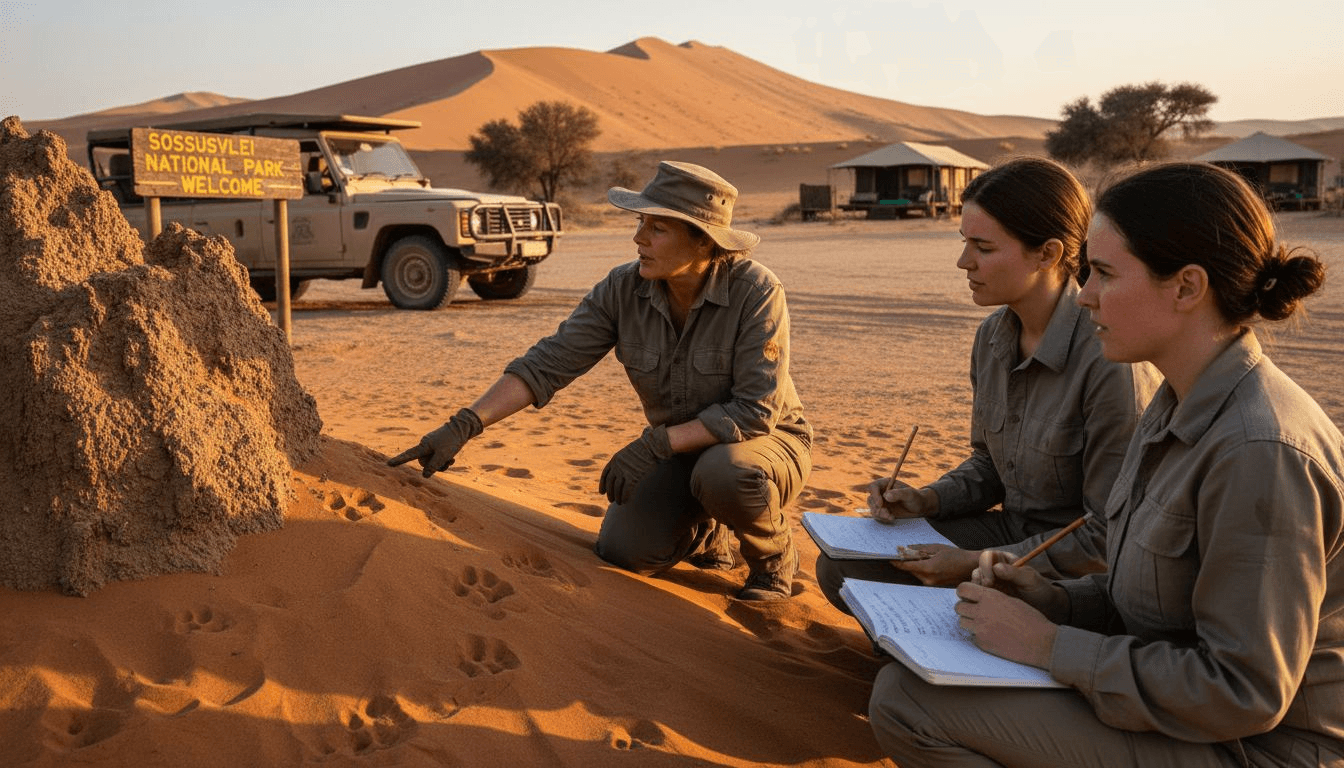
Pro tip: When selecting a safari experience, prioritise guides with deep local knowledge and passionate storytelling abilities, as they will dramatically enhance your understanding and appreciation of Namibia’s extraordinary wilderness.
Types of Safari Guides in Namibia
Namibia’s safari landscape features several distinct types of safari guides, each offering unique expertise and specialised experiences. Comprehensive safari guides range from local indigenous experts to highly trained professional naturalists, ensuring travellers receive immersive and authentic wilderness encounters tailored to their interests and requirements.
The primary categories of safari guides in Namibia include indigenous local guides, professional naturalist guides, specialist wildlife guides, and cultural interpretation guides. Indigenous local guides, often from communities like the San or Himba, bring extraordinary traditional knowledge about the landscape, animal behaviours, and survival techniques passed through generations. These guides offer an unparalleled understanding of the terrain, sharing insights about traditional tracking, medicinal plant uses, and ancestral connections to the wilderness that no academic training could replicate.
Professional naturalist guides represent another critical category, typically holding advanced ecological and zoological qualifications. These guides specialise in detailed scientific interpretations of wildlife ecosystems, providing in-depth explanations about animal interactions, migration patterns, conservation challenges, and complex environmental dynamics. They are especially valuable for travellers interested in comprehensive scientific understanding of Namibia’s unique biodiversity, from desert-adapted species to intricate predator-prey relationships in varied landscapes like Etosha National Park and the Namib Desert.
Wildlife and photographic guides constitute a specialised subset, catering to wildlife enthusiasts and professional photographers. These experts understand animal behaviour, predict movement patterns, and position guests optimally for extraordinary wildlife encounters and photographic opportunities. They possess advanced knowledge about lighting, composition, and animal tracking, transforming a standard safari into an extraordinary visual storytelling experience.
Pro tip: When booking a safari, request detailed information about your guide’s background and specialisation to ensure your experience matches your specific interests and expectations.
Here is a comparison of common types of safari guides in Namibia and the unique experiences they offer:
Guide Type | Distinctive Expertise | Typical Activities Led | Ideal For |
|---|---|---|---|
Indigenous Local Guides | Traditional tracking and ancestral lore | Bush walks, cultural demonstrations | Visitors seeking authenticity |
Professional Naturalist | Advanced ecology and wildlife knowledge | Detailed wildlife interpretation tours | Science-focused travellers |
Wildlife & Photographic | Animal behaviour and photography skills | Photo safaris, positioning for sightings | Enthusiast photographers and observers |
Cultural Interpretation | Heritage, language, and anthropology | Village visits, cultural history tours | Guests interested in local cultures |
Core Skills and Qualifications Required
Becoming a professional safari guide in Namibia requires an extensive and rigorous set of skills that go far beyond simple wildlife observation. Structured field guide training programs emphasise a comprehensive blend of theoretical knowledge, practical expertise, and critical safety competencies that transform passionate individuals into world-class wilderness interpreters.
The fundamental skill set for safari guides encompasses multiple critical domains. Technical competencies include advanced ecological knowledge, wildlife identification, tracking abilities, and comprehensive understanding of animal behaviours and ecosystem dynamics. Professional guides must demonstrate exceptional communication skills, multilingual capabilities, and the ability to translate complex scientific concepts into engaging narratives that captivate diverse international audiences. Physical fitness, first aid certification, and advanced driving skills are equally crucial, particularly when navigating challenging terrains like the Namib Desert or remote wilderness regions.
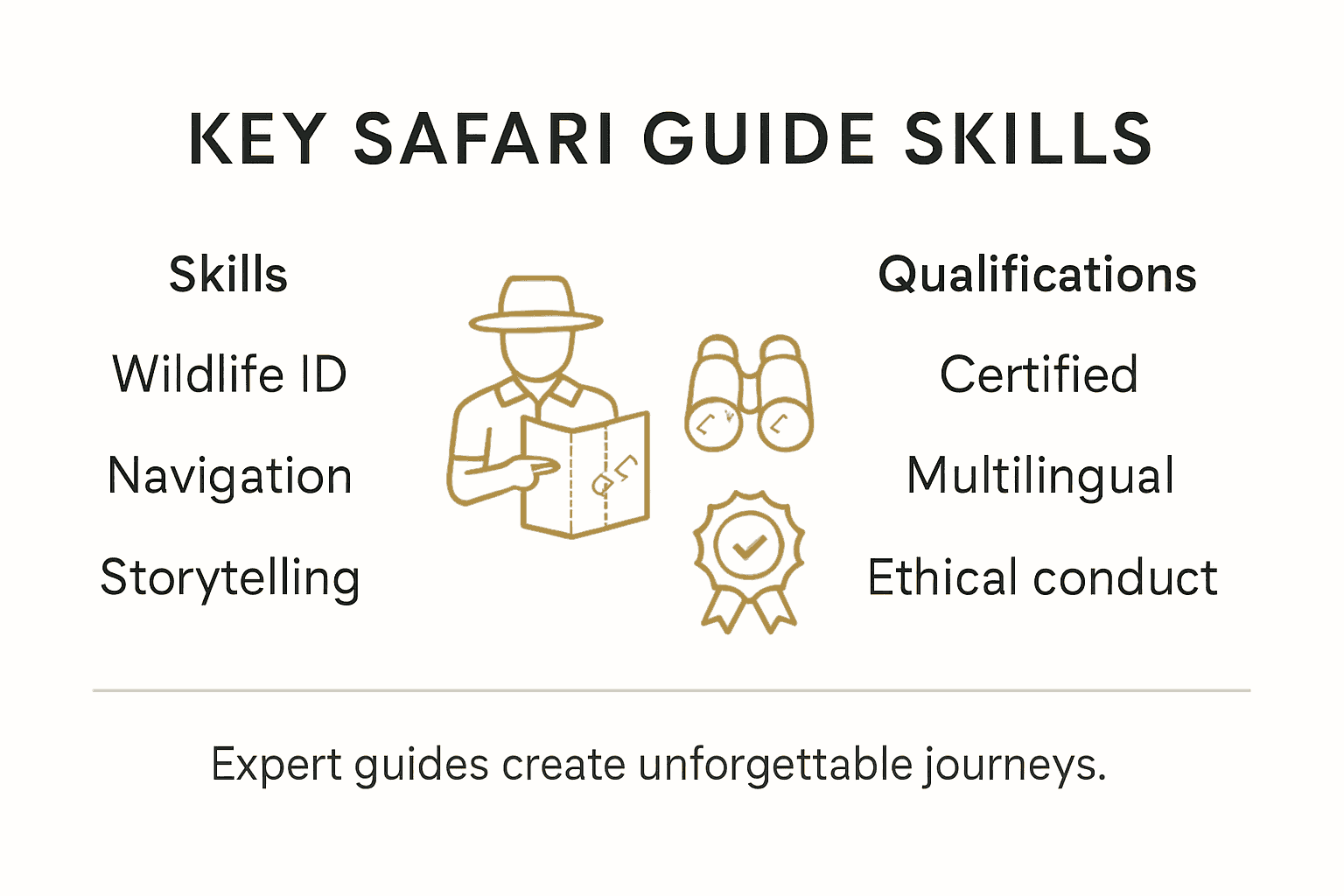
Specialised qualifications are paramount in the Namibian safari industry. Most professional guides hold internationally recognised certifications from bodies like the Field Guides Association of Southern Africa (FGASA), which mandate extensive training in wildlife management, conservation principles, and guest safety protocols. These qualifications typically require candidates to complete multiple levels of assessment, including written examinations, practical field assessments, and continuous professional development. Advanced guides often specialise further, obtaining additional credentials in areas such as photographic guiding, ornithological expertise, or specific ecosystem specialisations that distinguish them in a competitive professional landscape.
Beyond formal qualifications, exceptional safari guides possess intangible qualities that cannot be learned in classrooms. Emotional intelligence, situational awareness, crisis management skills, and an almost intuitive connection with wildlife and wilderness environments are hallmarks of truly outstanding guides. They must seamlessly blend scientific precision with storytelling artistry, transforming each safari experience from a mere observation tour into an immersive journey of discovery and understanding.
Pro tip: When evaluating a safari guide’s credentials, look beyond formal certificates and assess their genuine passion, storytelling ability, and depth of local ecological knowledge.
The following table summarises essential skills, qualifications, and personal traits required of professional safari guides:
Skill/Qualification | Description | Impact on Safari Quality |
|---|---|---|
Advanced Wildlife Knowledge | Understanding species and ecosystems | Enables insightful animal encounters |
FGASA or Equivalent Cert. | Accredited field guiding certification | Ensures professionalism and safety |
First Aid & Emergency Skills | Critical response to injuries or incidents | Protects guests in remote settings |
Storytelling & Communication | Translating facts into engaging narratives | Enhances guest learning and enjoyment |
Emotional Intelligence | Managing group dynamics and client emotions | Improves group cohesion and wellbeing |
Legal Standards and Certification Processes
Namibia maintains stringent legal frameworks governing safari guide operations, ensuring both visitor safety and professional standards. Legal regulations for safari guides are comprehensively outlined in the Namibia Tourism Board Act, which establishes robust requirements for registration, operational protocols, and ethical conduct within the tourism industry.
The certification process involves multiple rigorous stages designed to validate a guide’s comprehensive competence. Accredited training programs offered through institutions like the Namibia Academy for Tourism and Hospitality provide structured curricula covering critical areas such as wildlife ecology, cultural heritage interpretation, sustainable tourism practices, emergency response, and first aid. These programs require candidates to complete both theoretical examinations and practical field assessments, ensuring that only highly qualified professionals receive official certification.
Legal compliance extends beyond initial certification, with ongoing professional development and periodic re-assessments mandated by regulatory bodies. Safari guides must maintain current registrations, undergo regular skills evaluations, and demonstrate continued adherence to safety standards and ethical guidelines. These requirements help preserve the high-quality reputation of Namibia’s safari tourism sector, protecting both wildlife environments and visitor experiences. The legal framework also encompasses comprehensive insurance requirements, background checks, and strict guidelines for wildlife interaction and conservation practices.
The regulatory landscape includes nuanced provisions that distinguish between different categories of guides, each with specific qualifications. Specialised credentials exist for wilderness guides, photographic guides, cultural interpretation guides, and wildlife tracking experts, each demanding unique skill sets and knowledge domains. This granular approach ensures that guides are not just generalists, but possess deep, contextualised expertise relevant to their specific safari specialisation.
Pro tip: Always verify a safari guide’s current legal certification and ask to see their official registration documents before booking your wilderness experience.
Critical Responsibilities and Client Safety
The role of a safari guide extends far beyond mere wildlife observation, encompassing a comprehensive set of critical responsibilities that directly impact client safety, environmental preservation, and overall expedition quality. Safari guides serve as the primary guardians of visitor wellbeing, combining deep ecological knowledge with sophisticated risk management skills to navigate the unpredictable and potentially challenging wilderness environments of Namibia.
Primary safety responsibilities include comprehensive threat assessment and proactive risk mitigation. Guides must continuously evaluate environmental conditions, wildlife behaviour, and potential hazards, making instantaneous decisions that protect clients in dynamic and sometimes dangerous settings. This involves advanced skills such as reading animal body language, understanding territorial behaviours of predators, recognising subtle environmental warning signs, and maintaining precise communication protocols. Guides are trained to manage encounters with dangerous wildlife, implement emergency extraction procedures, and provide immediate first aid interventions in remote locations where medical assistance might be hours away.
Beyond physical safety, safari guides bear significant ethical and environmental responsibilities. They serve as critical ambassadors for conservation, educating clients about ecosystem fragility, wildlife preservation, and sustainable interaction with natural habitats. This educational role involves translating complex ecological principles into engaging narratives that inspire environmental consciousness. Guides must consistently demonstrate respect for wildlife, maintain minimal intervention protocols, and ensure that tourist activities do not disrupt natural behaviours or cause undue stress to animal populations. Their responsibilities include monitoring client behaviour to prevent inappropriate interactions, protecting both human and animal participants in the wilderness experience.
Psychological and emotional safety represent another crucial dimension of a safari guide’s responsibilities. Navigating diverse client expectations, managing group dynamics, and providing supportive leadership in potentially stressful wilderness situations require exceptional interpersonal skills. Guides must remain calm under pressure, adapt communication styles to different cultural backgrounds, and create an atmosphere of confidence and security. This involves not just technical competence, but also emotional intelligence, cultural sensitivity, and the ability to transform potentially intimidating wilderness experiences into moments of wonder and personal growth.
Pro tip: Always discuss safety protocols and guide qualifications with your safari operator before departure, and ensure your guide demonstrates a comprehensive understanding of both wildlife dynamics and emergency response techniques.
Risks, Mistakes and Choosing the Right Guide
Selecting the right safari guide represents a critical decision that can fundamentally transform your Namibian wilderness experience. The wrong guide can turn a potentially extraordinary adventure into a disappointing and potentially risky expedition, making thorough guide selection an essential preparatory step for any luxury safari traveller.
Common risks associated with inexperienced or poorly qualified guides include misinterpreted wildlife encounters, missed photographic opportunities, and potential safety compromises. Safari experiences can be significantly impacted by guide communication and expertise, with travellers often underestimating the complexity of wildlife interactions and the nuanced skills required to navigate wilderness environments safely. Inexperienced guides might fail to read subtle animal behavioural cues, mismanage group dynamics, or lack the deep ecological understanding necessary to provide meaningful interpretations of the landscape and its inhabitants.
Discerning travellers should employ a comprehensive vetting process when selecting a safari guide. This involves examining professional credentials, requesting detailed references, understanding their specific specialisations, and assessing their communication skills. Key evaluation criteria include verifiable professional certifications, demonstrable field experience, language capabilities, and proven track records of safety and client satisfaction. Additionally, potential clients should seek guides with specialised knowledge relevant to their specific interests, whether that involves wildlife photography, ornithological expertise, cultural interpretation, or specific ecosystem understanding.
Psychological and interpersonal compatibility represents another crucial yet often overlooked dimension of guide selection. An exceptional safari guide does more than navigate terrain and identify wildlife; they create immersive narratives, manage group expectations, and transform potentially challenging wilderness experiences into moments of profound personal connection and understanding. Travellers should seek guides who demonstrate emotional intelligence, cultural sensitivity, and the ability to adapt their communication style to diverse client backgrounds and expectations.
Pro tip: Request a preliminary video consultation with potential guides to assess their communication style, passion, and expertise before committing to your safari experience.
Unlock the Full Potential of Your Namibian Luxury Safari with Expert Guides
Choosing the right safari guide is the key to transforming your adventure into an unforgettable journey. As highlighted in our in-depth exploration of the Role of Safari Guides – Key to Luxury Namibian Travel, guides with advanced skills, local ecological knowledge and passionate storytelling unlock rich insights about Namibia’s wilderness while ensuring your safety and comfort. Avoid the common pitfalls of inexperienced guides by trusting professionals who understand the delicate balance of wildlife behaviour, cultural heritage and client wellbeing.
At Secret Namibia, we specialise in crafting bespoke luxury safari experiences that prioritise not only breathtaking landscapes such as the Namib Desert and Etosha National Park but also pair you with highly qualified, certified guides tailored to your interests. Whether you seek immersive wildlife encounters, expert photographic guidance or deep cultural interpretation, our personalised planning service connects you with safari guides whose expertise transforms your holiday into a profound and safe wilderness experience. Explore our detailed luxury safari collections and start your journey today to experience Namibia’s raw beauty confidently and richly with the right expert by your side.
Frequently Asked Questions
What is the role of a safari guide?
A safari guide serves as an essential connection between travellers and the wilderness, providing safety, knowledge, and immersive storytelling that enriches the safari experience.
What qualifications should I look for in a safari guide?
When selecting a safari guide, seek those with recognized certifications, extensive wildlife and ecological knowledge, and exceptional communication skills to enhance your understanding of the experience.
How do different types of safari guides impact the safari experience?
Different types of safari guides, such as indigenous local guides, professional naturalists, and wildlife photographers, offer unique expertise and insights, catering to varied interests and enhancing the overall quality of the safari.
Why is the selection of a safari guide important for safety?
Choosing the right safari guide is crucial for safety, as experienced guides are trained to assess threats, manage wildlife interactions, and respond to emergencies effectively, ensuring a safe and enjoyable experience.
Recommended
相关
萨法里指南
2025年10月30日
Understanding What is Included in Luxury Safaris
Explore what is included in luxury safaris, from exclusive accommodations to bespoke experiences that cater to discerning travelers.
2026年2月24日
Why Namibia Adventures Matter: An In-Depth Look
Discover why Namibia adventures are essential for luxury travelers seeking unique, immersive experiences in nature and wildlife exploration.
2026年2月23日
What to Expect on a Luxury Safari: A Comprehensive Guide
Discover what to expect on a luxury safari and gain a deeper understanding of the unique experiences that await you in the wild.
2026年2月22日
Understanding Namibia Safari Costs Explained
Explore Namibia safari costs explained to uncover what influences pricing and what it means for your adventure.
2026年2月21日
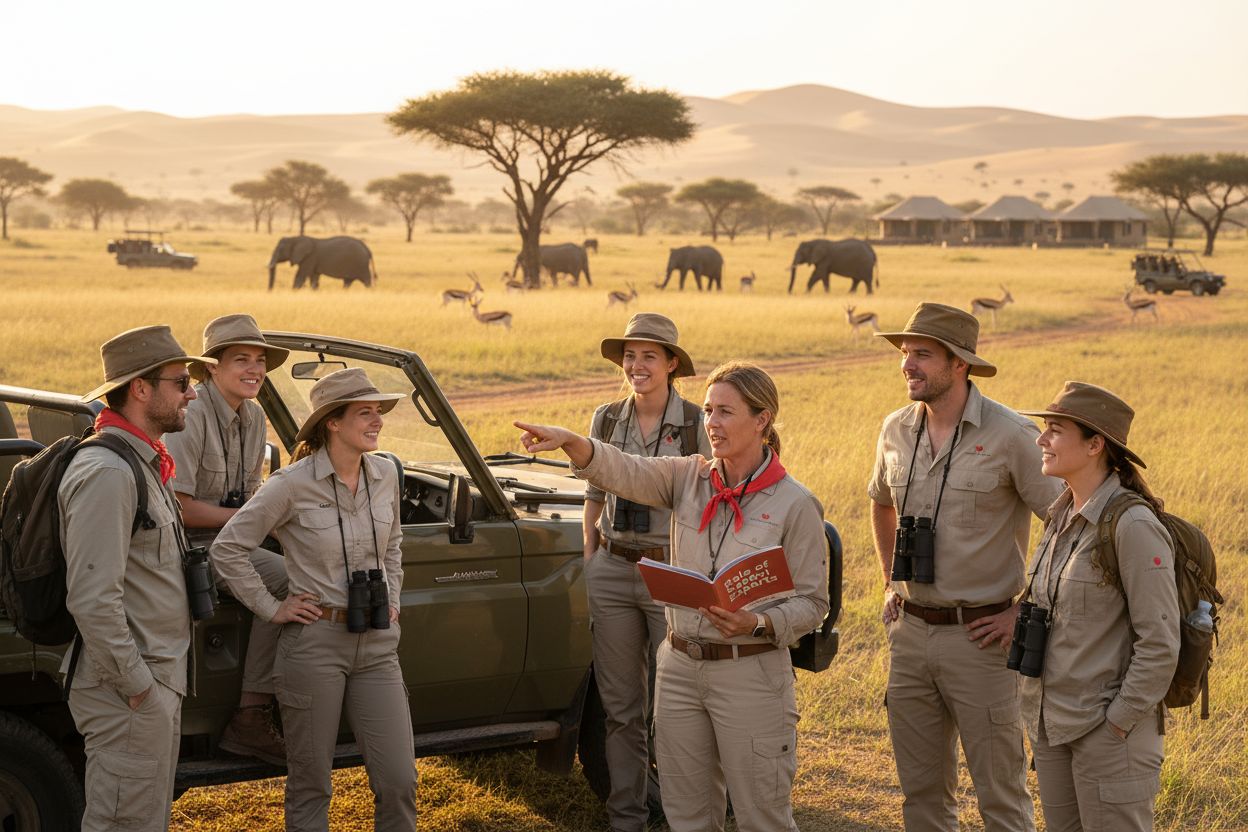
Understanding the Role of Safari Experts in Wildlife Travel
Explore the role of safari experts and gain a comprehensive understanding of how they enhance wildlife travel experiences for all types of travelers.
2026年2月20日
Guide organisation safari all inclusive : vivez l'aventure de vos rêves
Découvrez notre guide organisation safari all inclusive étape par étape pour planifier un voyage inoubliable au cœur de la nature.