
Feb 28, 2025
Discover the role of private reserves in Namibia's safari tourism, conservation initiatives and legal framework. Learn how they offer exclusivity and support wildlife protection.
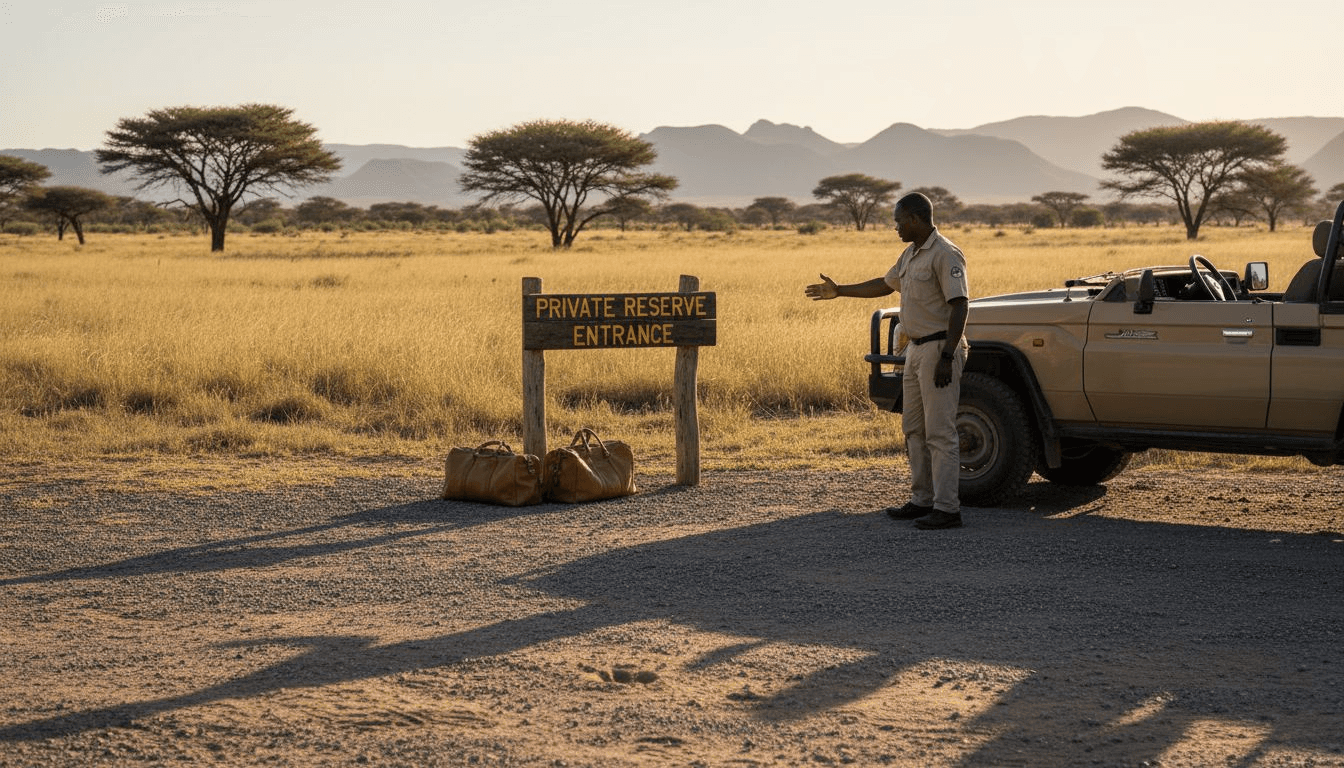
Private Reserves in Namibia: Luxury Safaris and Conservation Impact
Setting foot in Namibia’s private reserves reveals an exclusive world where luxury, conservation, and adventure meet in harmony. Discerning travellers from Europe and North America find these privately owned conservation spaces offer unique privacy paired with innovative wildlife management and world-class safari experiences. Here, you can expect personalised encounters, eco-luxe accommodations, and meaningful connections with expert conservationists, making every journey both memorable and impactful for biodiversity and local communities.
Table of Contents
Defining Private Reserves In Namibia
Types Of Private Reserves And Distinctions
Main Features And Luxury Safari Offerings
Legal Framework And Management Principles
Conservation Contributions And Economic Value
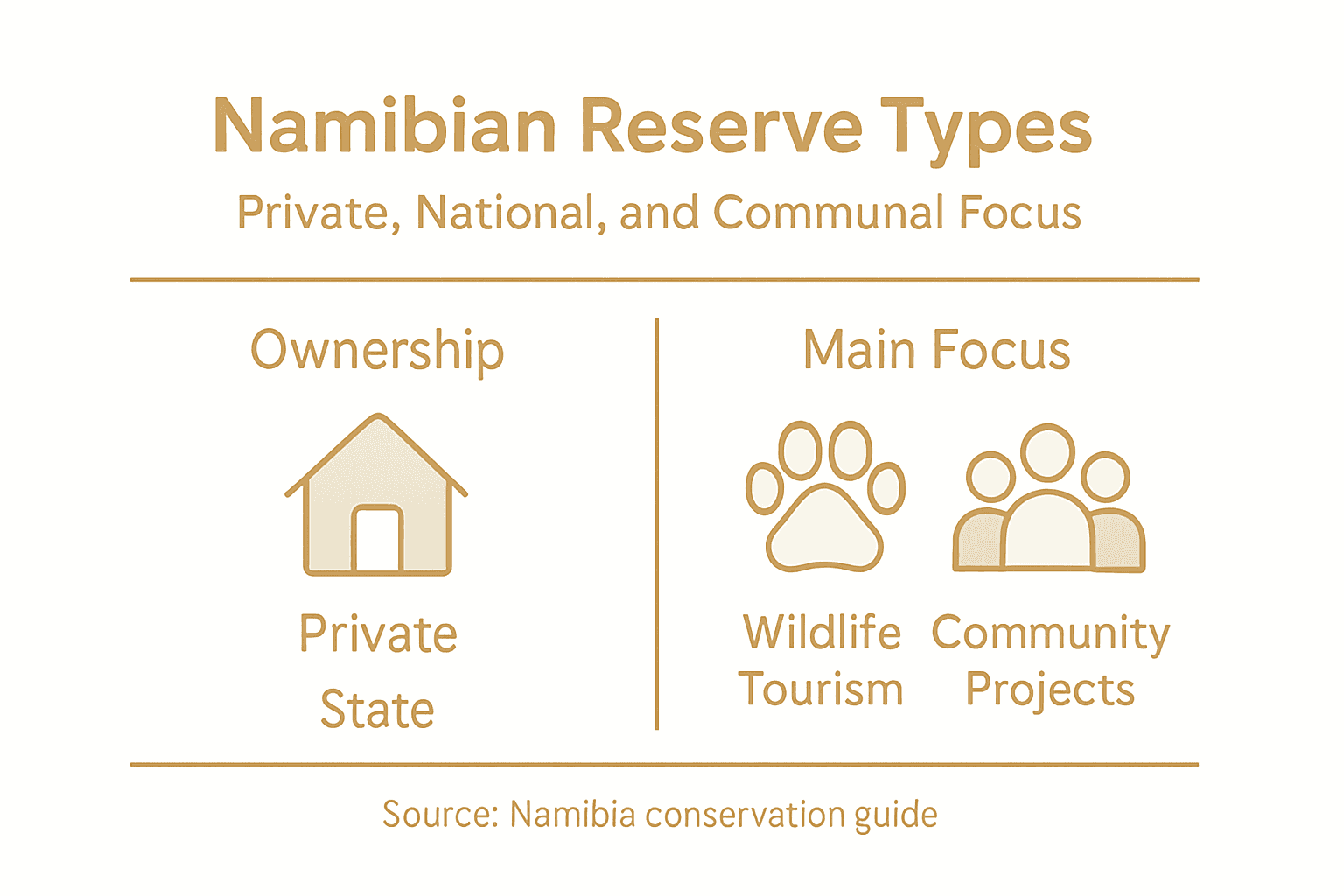
Comparing Private, National And Communal Reserves
Key Takeaways
Point | Details |
|---|---|
Private Reserves Enhance Conservation | Private reserves in Namibia combine wildlife conservation with economic development, creating incentives for landowners to protect biodiversity. |
Diverse Ownership Models | Types of private reserves, including freehold conservancies and collective reserves, each play unique roles in Namibia’s conservation landscape. |
Luxury Safaris Support Conservation | Luxury safari offerings generate significant revenue that directly contributes to wildlife protection and community benefits. |
Legal Framework Facilitates Collaboration | The robust legal framework encourages partnerships among landowners, communities, and government, ensuring sustainable management of resources. |
Defining private reserves in Namibia
Private game reserves in Namibia represent a sophisticated approach to wildlife conservation and sustainable tourism. Unlike traditional national parks managed exclusively by government entities, these privately owned conservation spaces offer innovative strategies for protecting biodiversity and generating economic opportunities.
These reserves are distinctive land management ecosystems characterised by several key attributes:
Privately funded and managed conservation areas
Large contiguous land parcels dedicated to wildlife preservation
Flexible operational frameworks allowing targeted conservation strategies
Direct economic contributions through eco-tourism and sustainable wildlife management
The legal framework supporting private reserves in Namibia enables landowners to transform previously agricultural landscapes into vibrant wildlife habitats. By integrating conservation with economic opportunities, these reserves create powerful incentives for environmental stewardship. Private game reserves contribute significantly to Namibia’s broader conservation landscape, complementing state-run protected areas and community conservancies.
Private reserves typically encompass extensive territories ranging from several hundred to thousands of hectares. Their management approaches often involve sophisticated ecological monitoring, species protection programs, and carefully controlled tourism experiences that minimise environmental disruption while generating revenue for continued conservation efforts.
Pro tip: When visiting a private reserve, engage with local conservation staff to understand the nuanced ecological restoration work happening behind the scenes.
Types of private reserves and distinctionsIn Namibia’s sophisticated conservation landscape, private reserves represent a nuanced category of protected lands with distinct characteristics. Conservation lands encompass multiple ownership models, each contributing uniquely to the country’s environmental protection strategies.
The primary types of private reserves in Namibia include:
Freehold Conservancies: Privately owned land where individual landowners manage wildlife and tourism enterprises
Collective Private Reserves: Multiple landowners collaborating to create larger, interconnected conservation areas
Commercial Conservancies: Reserves that generate income through sustainable tourism and wildlife management
Research-Oriented Reserves: Focused on scientific study and ecological monitoring
Each reserve type offers distinct advantages in Namibia’s conservation ecosystem. Private reserves complement national parks by providing flexible management approaches and creating economic incentives for wildlife preservation. Unlike government-managed national parks, these private reserves can implement more personalised and innovative conservation strategies.
The legal framework supporting these reserves enables landowners to transform previously agricultural landscapes into vibrant wildlife habitats. This approach creates powerful economic and ecological synergies, allowing private landowners to become critical partners in Namibia’s environmental protection efforts. These reserves often focus on specific ecological niches, wildlife species, or research objectives, adding complexity and depth to the nation’s conservation strategy.
Pro tip: When exploring private reserves, inquire about their specific conservation focus to understand the unique ecological contributions of each reserve.
Main features and luxury safari offerings
Luxury safaris in Namibia’s private reserves represent the pinnacle of wildlife experiences, offering unparalleled access to some of Africa’s most pristine wilderness landscapes. Luxury lodges emphasize exclusive wildlife encounters with carefully curated experiences that blend comfort, conservation, and extraordinary natural beauty.
The hallmark features of these luxury safari offerings include:
Exclusive Access: Private concessions with limited guest numbers
Personalised Experiences: Tailored wildlife viewing and expert-guided encounters
High-End Accommodation: Luxurious suites with panoramic wilderness views
Immersive Wildlife Interactions: Off-road game drives, walking safaris, and night wildlife tracking
Gourmet Dining: Sophisticated cuisine featuring local and international culinary traditions
Private reserves distinguish themselves through extraordinary attention to detail and guest experience. Accommodations often feature private plunge pools, open-air viewing decks, and architectural designs that seamlessly integrate with the surrounding landscape. Guests can expect highly personalised services, including dedicated guides, intimate game drives with professional trackers, and unique experiences like rhino monitoring or specialised photography expeditions.
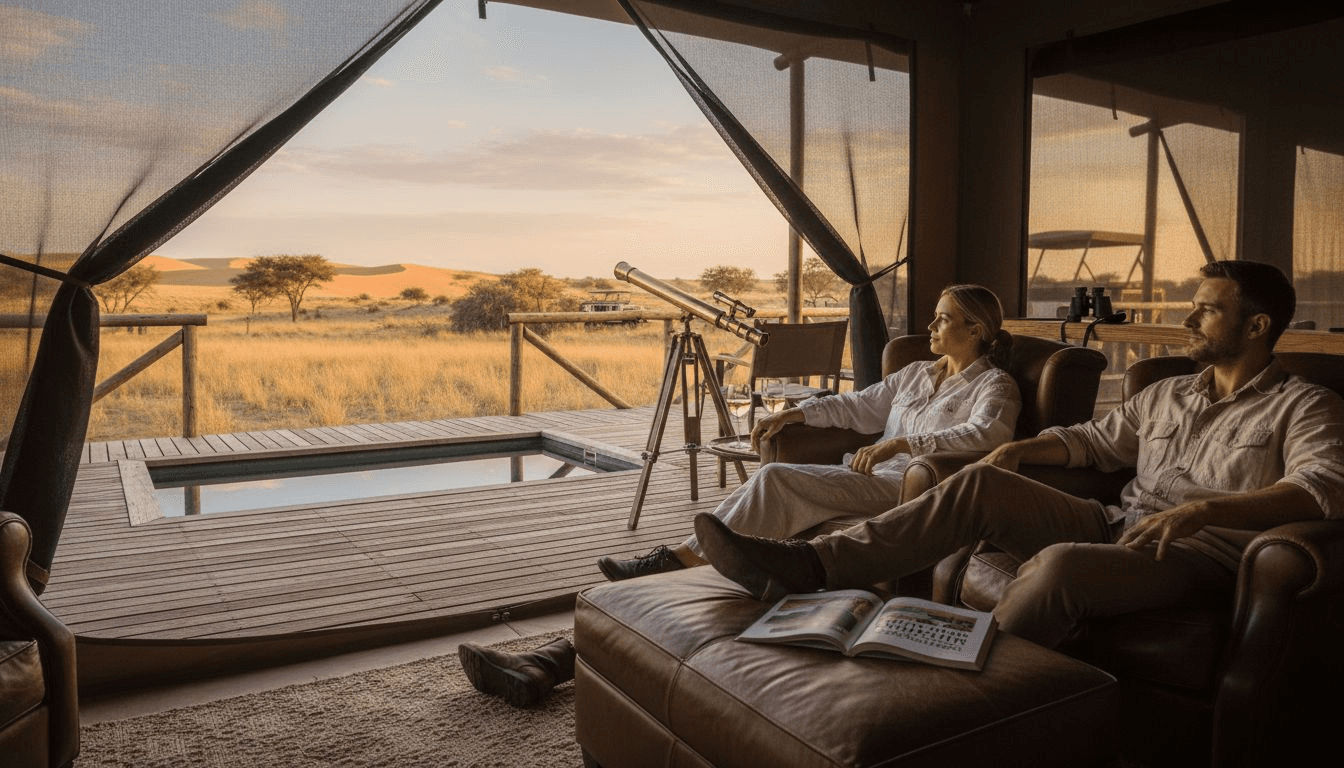
These luxury safari offerings go beyond traditional tourism, creating meaningful connections between travelers and Namibia’s extraordinary ecosystems. By combining world-class comfort with deep conservation commitments, private reserves offer transformative experiences that support wildlife protection and local community development.
This table outlines business and environmental impacts of luxury safari features in Namibian private reserves:
Luxury Feature | Guest Experience Impact | Conservation/Business Impact |
|---|---|---|
Exclusive Access | Personal, crowd-free encounters | Supports high-value, low-impact tourism |
Personalised Activities | Unique, tailored experiences | Increases visitor engagement value |
Gourmet Dining | Enhanced comfort and satisfaction | Attracts high-spending clientele |
Eco-focused Design | Immersive nature connection | Promotes sustainable architecture |
Pro tip: Request a pre-arrival consultation with your safari lodge to customise your wildlife viewing experience and conservation activities.
Legal framework and management principles
Namibia’s approach to private reserve management represents a sophisticated legal ecosystem that balances conservation, economic development, and community interests. Legal governance integrates complex environmental policies to ensure sustainable wildlife protection and responsible land use.
The core management principles for private reserves include:
Regulatory Compliance: Adherence to national environmental legislation
Sustainable Resource Management: Implementing approved conservation strategies
Community Engagement: Collaborative approaches with local stakeholders
Ecological Monitoring: Continuous assessment of wildlife and habitat conditions
Economic Viability: Balancing conservation goals with sustainable tourism
The Ministry of Environment, Forestry and Tourism plays a critical role in overseeing these reserves. Community-Based Natural Resource Management policies mandate that private conservancies develop comprehensive management plans aligned with national conservation objectives. These plans must demonstrate a clear commitment to biodiversity preservation, community benefits, and ecological sustainability.
Private reserves operate within a complex legal framework that requires ongoing collaboration between government agencies, local communities, and private landowners. This approach ensures that conservation efforts are holistic, addressing ecological, social, and economic dimensions of wildlife protection. Registered conservancies must meet stringent reporting requirements, undergo regular environmental assessments, and demonstrate tangible contributions to national conservation goals.
Pro tip: Request to review a private reserve’s conservation management plan to understand their specific ecological commitments and community engagement strategies.
Conservation contributions and economic value
Private reserves in Namibia represent a groundbreaking model of ecological preservation that simultaneously generates significant economic value. NamibRand Nature Reserve exemplifies successful conservation economics, demonstrating how sustainable tourism can directly support wildlife protection.
The key economic and conservation contributions include:
Biodiversity Protection: Preserving critical wildlife habitats and endangered species
Job Creation: Generating employment for local communities in conservation and tourism
Sustainable Tourism: Developing high-value, low-impact wildlife experiences
Ecosystem Restoration: Rehabilitating degraded landscapes through strategic management
Research Opportunities: Supporting scientific studies and ecological monitoring
Private reserves create complex economic ecosystems that extend far beyond traditional tourism models. By integrating conservation with economic development, these reserves generate revenue streams that directly fund wildlife protection, habitat restoration, and community development programs. The economic model allows for self-sustaining conservation efforts, reducing reliance on external funding and creating meaningful economic opportunities for local populations.
The long-term impact of these reserves extends beyond immediate financial benefits. They serve as critical buffers for national parks, create wildlife corridors, and provide essential research platforms for understanding ecological systems. Moreover, they demonstrate a sustainable approach to land use that balances environmental preservation with economic development, offering a replicable model for conservation strategies worldwide.
Pro tip: Consider supporting private reserves through sustainable tourism to directly contribute to wildlife conservation and local community development.
Comparing private, national and communal reserves
Namibia’s conservation landscape represents a sophisticated mosaic of protected areas with distinct management approaches and objectives. Conservation networks integrate multiple reserve types, each contributing uniquely to biodiversity protection and sustainable development.
Key distinctions between reserve types include:
National Parks:
Strictly government-managed
Emphasis on ecological preservation
Limited human intervention
Focused on research and public education
Private Reserves:
Individually or collectively owned
Blend conservation with luxury tourism
More flexible management strategies
Generate direct economic returns
Communal Conservancies:
Community-governed territories
Prioritise local economic benefits
Sustainable wildlife resource utilisation
Empower rural communities
Each reserve type operates within a complex legal framework that balances ecological preservation with socio-economic development. Private reserves often demonstrate greater flexibility in management, allowing for innovative conservation approaches that can be quickly implemented compared to more bureaucratic national park systems.
Namibia’s conservation network creates a complementary system where different reserve types support each other’s objectives. This integrated approach allows for more comprehensive wildlife protection, community involvement, and sustainable development strategies that extend beyond traditional conservation models.
Here is a summary of how different types of protected areas in Namibia contribute to conservation and local development:
Reserve Type | Ownership & Management | Primary Focus | Key Community Benefit |
|---|---|---|---|
National Parks | Government-managed | Ecological preservation | Public education programmes |
Private Reserves | Individual/collective owners | Flexible conservation/tourism | Local job creation |
Communal Conservancies | Community-governed | Wildlife/resource use balance | Revenue for local projects |
Pro tip: When visiting different reserve types, engage with local management to understand their unique conservation and community development strategies.
Experience Namibia’s Private Reserves with Bespoke Luxury Safaris
Private reserves in Namibia provide a unique blend of luxury, conservation, and immersive wildlife encounters. If you are seeking exclusive access to some of Africa’s most pristine wilderness areas while supporting sustainable tourism and wildlife preservation, you understand the challenge of balancing authentic experiences with ecological responsibility. These private conservancies offer personalised safaris where every detail from off-road game drives to gourmet dining is tailored to your wishes.
Discover how Secret Namibia can help you craft the perfect luxury safari itinerary that honours Namibia’s conservation efforts and delivers unforgettable moments in private reserves. Benefit from expert support to explore freehold and collective private reserves with expert guides, exclusive accommodations, and deep ecological engagement. Visit Secret Namibia now to start planning your bespoke safari adventure. Explore our full range of luxury safaris and unlock exceptional wildlife experiences within Namibia’s premier private reserves today.
Frequently Asked Questions
What are private reserves in Namibia?
Private reserves in Namibia are privately owned conservation areas that focus on wildlife preservation and sustainable tourism, differing from government-managed national parks.
What types of accommodations can I expect in luxury safaris at private reserves?
Luxury safaris typically offer high-end accommodations with features such as panoramic views, private plunge pools, and immersive wildlife experiences tailored to enhance guest comfort and satisfaction.
How do private reserves contribute to wildlife conservation?
Private reserves contribute to conservation by protecting biodiversity, creating job opportunities for local communities, and generating revenue for wildlife protection and habitat restoration through sustainable tourism.
What is the legal framework governing private reserves in Namibia?
The legal framework for private reserves includes compliance with national environmental legislation, sustainable resource management, community engagement, and strict ecological monitoring to ensure responsible land use and wildlife protection.
Recommended
RELATED
Safari Guides
Oct 30, 2025
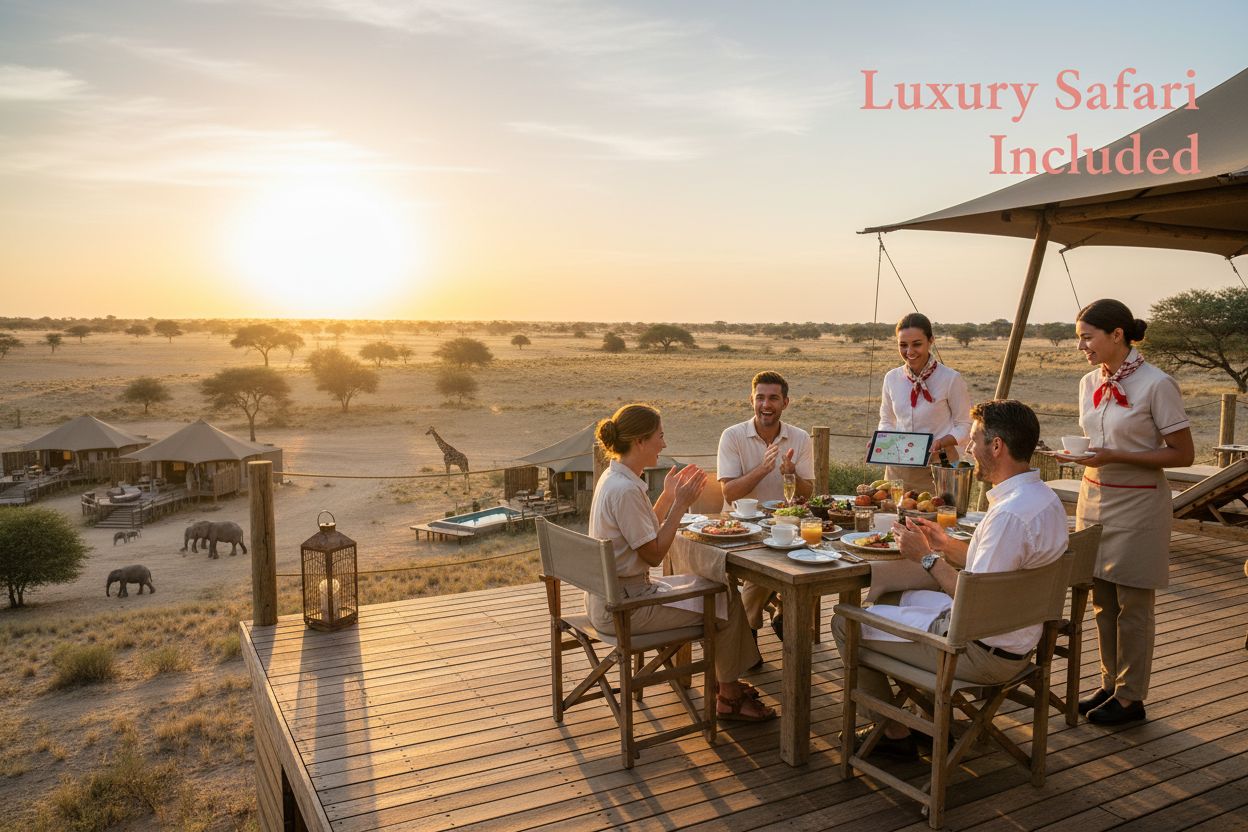
Understanding What is Included in Luxury Safaris
Explore what is included in luxury safaris, from exclusive accommodations to bespoke experiences that cater to discerning travelers.
Feb 24, 2026
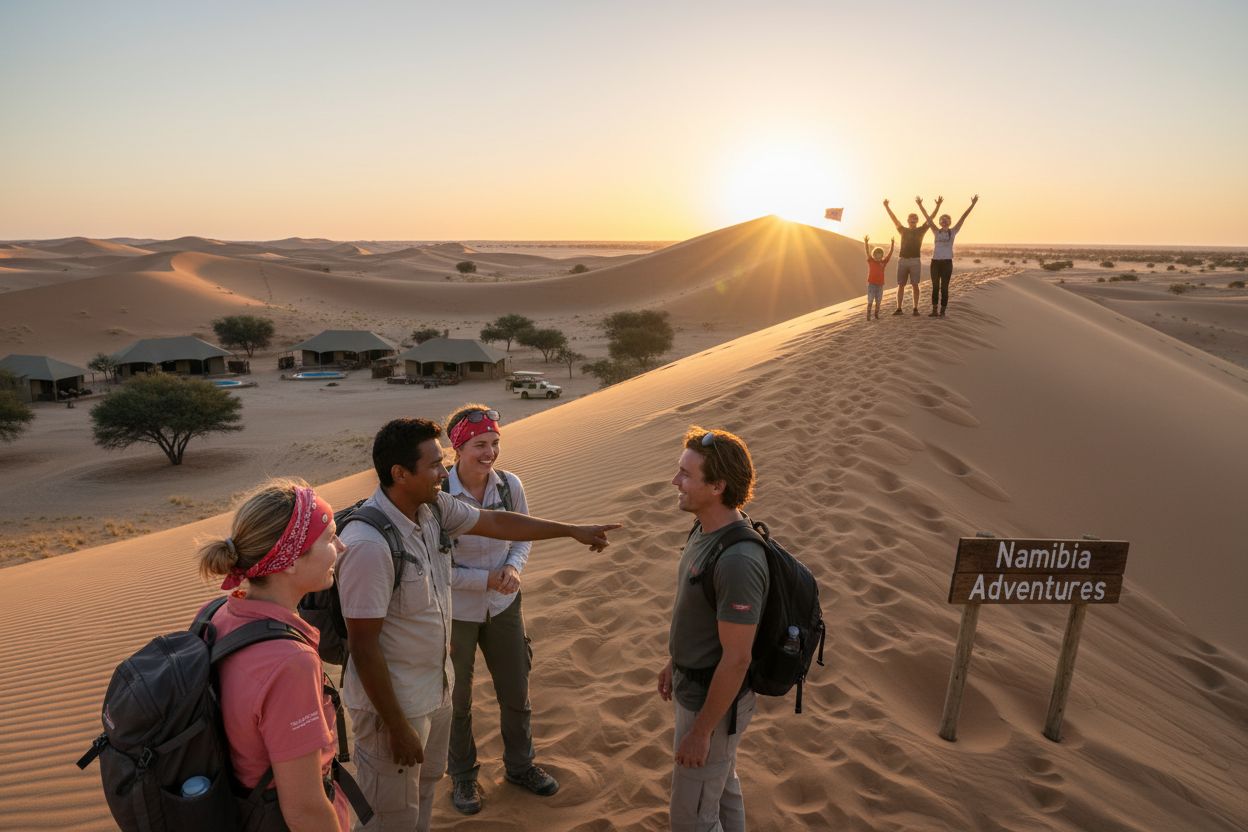
Why Namibia Adventures Matter: An In-Depth Look
Discover why Namibia adventures are essential for luxury travelers seeking unique, immersive experiences in nature and wildlife exploration.
Feb 23, 2026
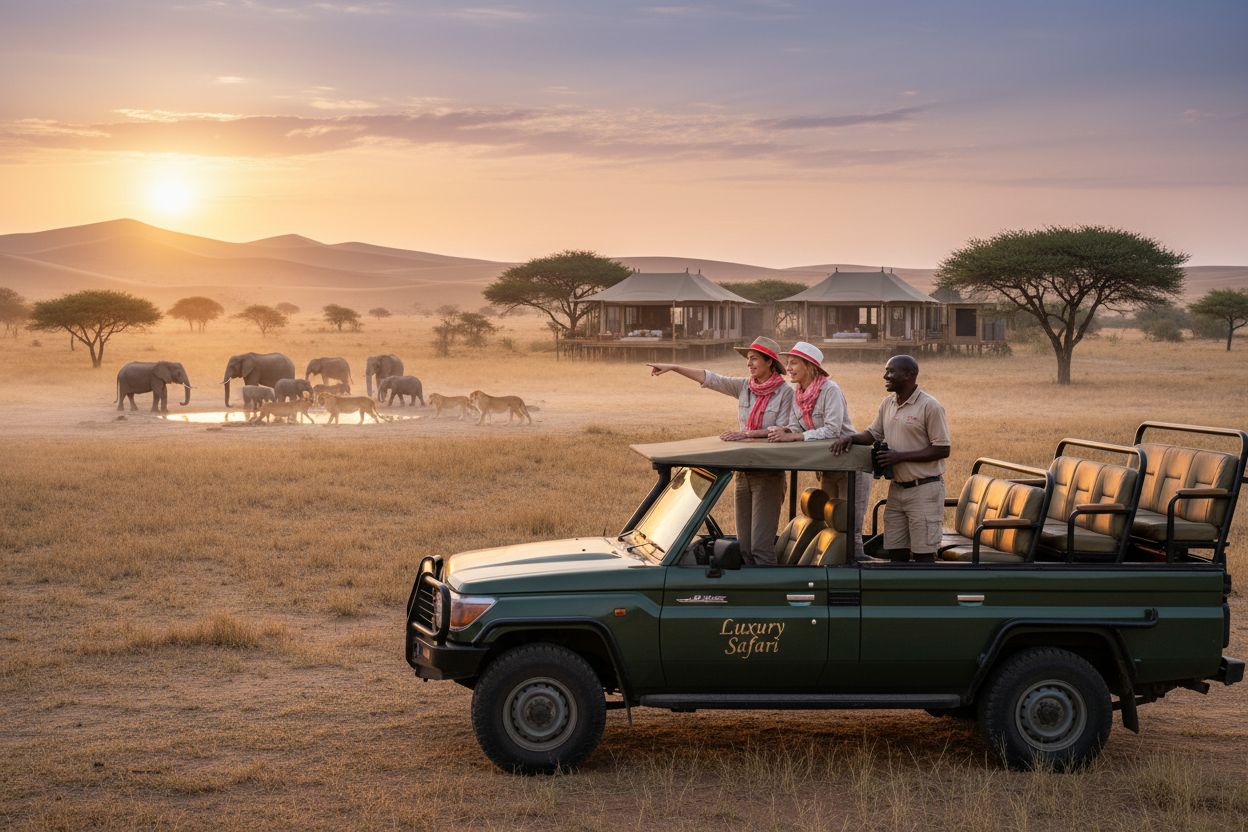
What to Expect on a Luxury Safari: A Comprehensive Guide
Discover what to expect on a luxury safari and gain a deeper understanding of the unique experiences that await you in the wild.
Feb 22, 2026
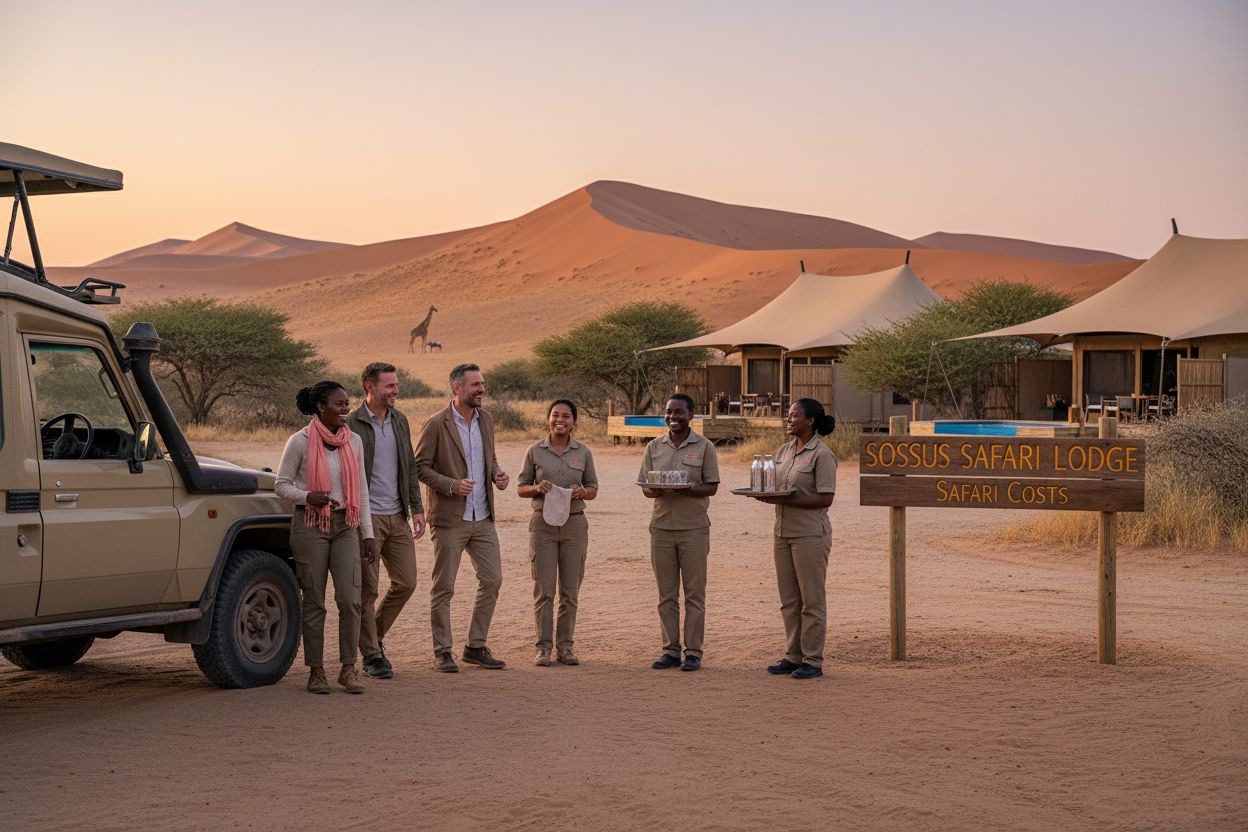
Understanding Namibia Safari Costs Explained
Explore Namibia safari costs explained to uncover what influences pricing and what it means for your adventure.
Feb 21, 2026
Understanding the Role of Safari Experts in Wildlife Travel
Explore the role of safari experts and gain a comprehensive understanding of how they enhance wildlife travel experiences for all types of travelers.
Feb 20, 2026
Guide organisation safari all inclusive : vivez l'aventure de vos rêves
Découvrez notre guide organisation safari all inclusive étape par étape pour planifier un voyage inoubliable au cœur de la nature.